Lucy Liu in 1999: The Breakthrough Year That Revealed a Future Hollywood Icon
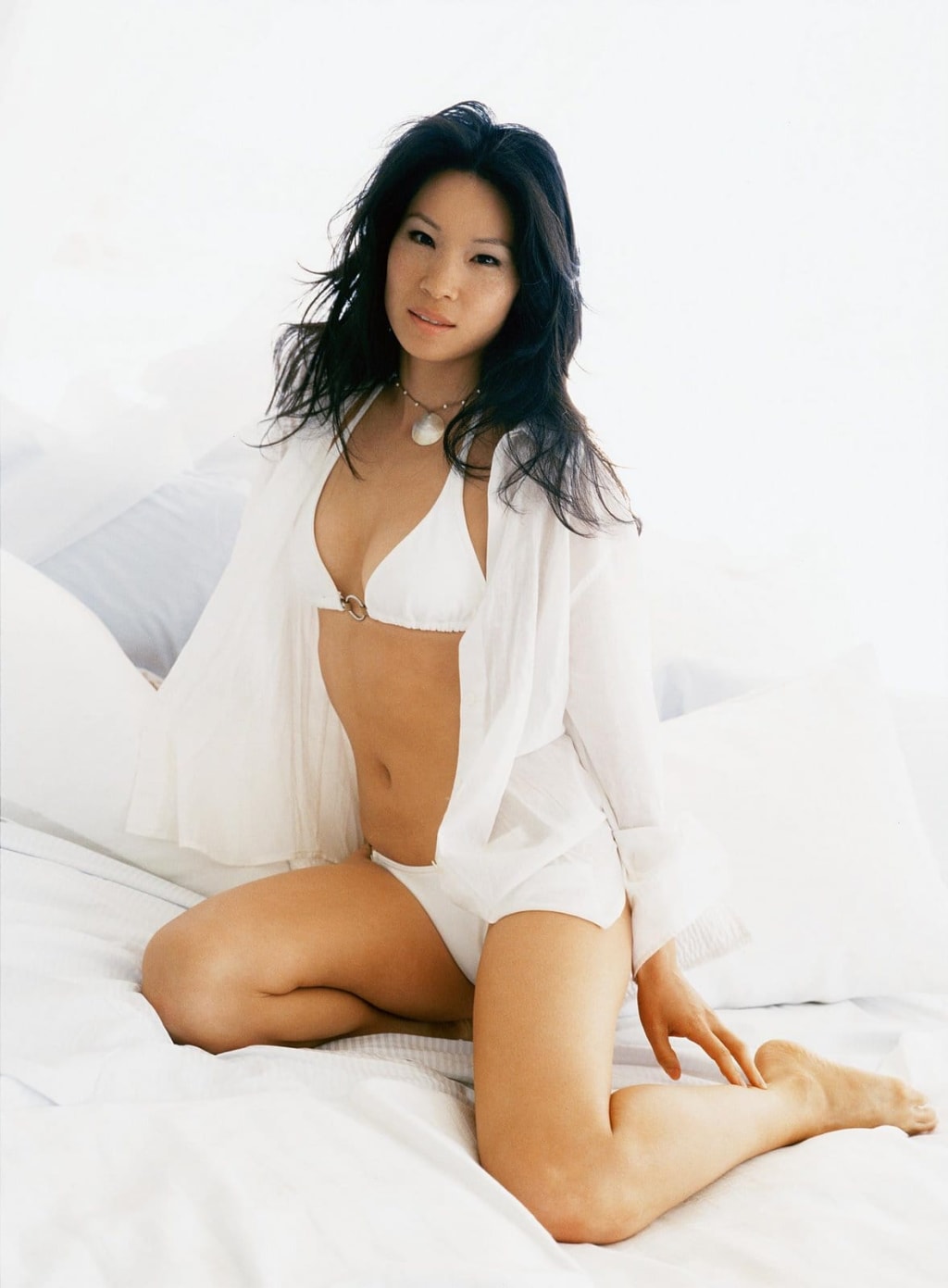
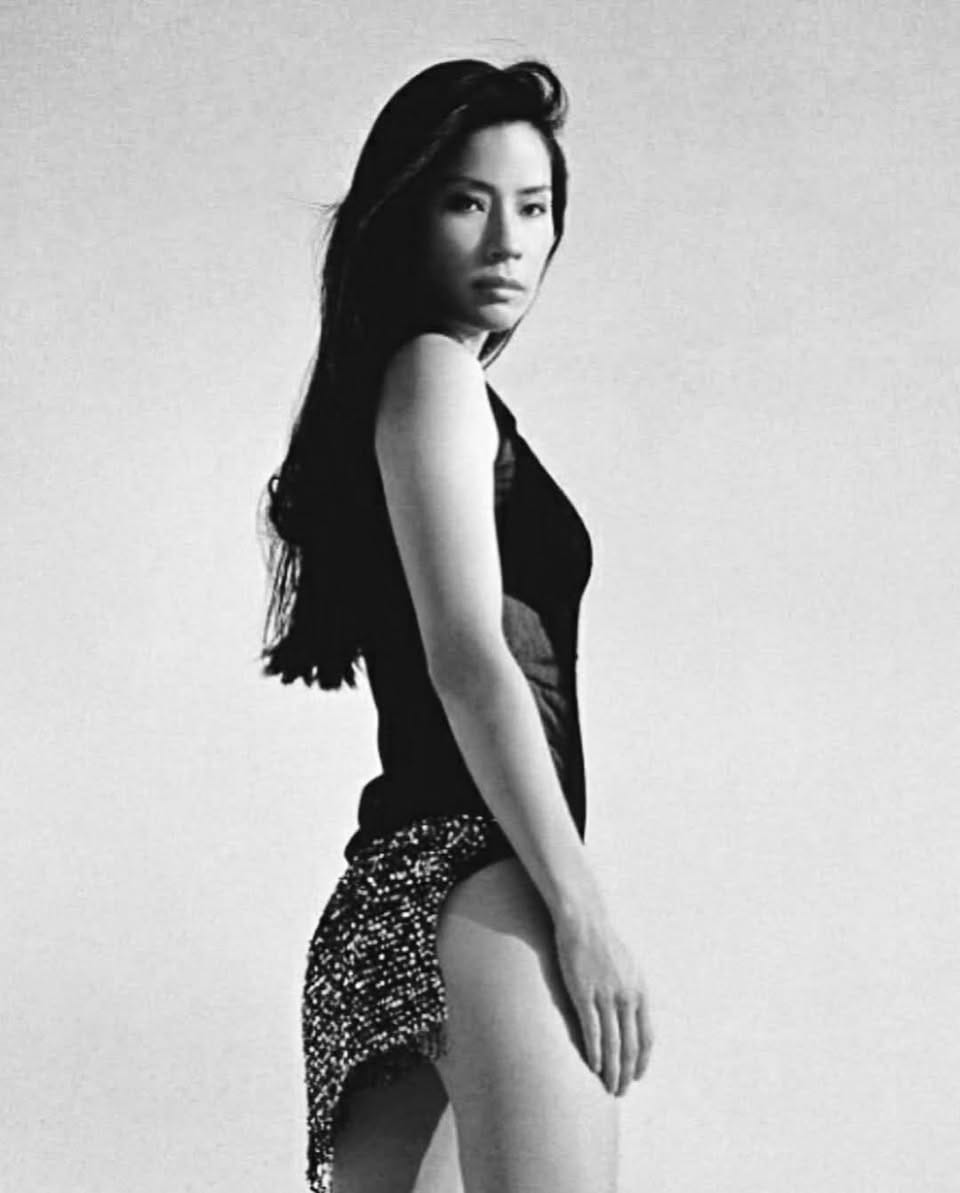
In photographs from 1999, Lucy Liu already appears completely at ease with attention.
Her expression is controlled but warm. Her styling is elegant without appearing overly calculated. Whether photographed in a polished editorial portrait, an Ally McBeal promotional image, or on the Emmy Awards red carpet, she carries herself with the assurance of someone who understands the camera without allowing it to define her.
That confidence now seems prophetic.
By the end of the following year, Liu would be one of the three stars of Charlie’s Angels, standing alongside Cameron Diaz and Drew Barrymore in one of Hollywood’s largest action releases.
Within a few more years, she would portray the elegant and lethal O-Ren Ishii in Kill Bill: Vol. 1, appear briefly as sensational murder suspect Kitty Baxter in the Academy Award-winning musical Chicago, and establish herself as an internationally recognizable performer.
In 1999, however, that future was only beginning to take shape.
Liu’s portrayal of Ling Woo on Ally McBeal had transformed a specially created supporting character into one of the show’s most memorable personalities. The performance earned her a Primetime Emmy nomination for Outstanding Supporting Actress in a Comedy Series, while the neo-noir thriller Payback allowed her to bring a similarly commanding energy to the big screen.
The year also marked an important visual transition.
Liu was no longer appearing publicly only as another working actor within an ensemble. Awards photography and fashion coverage increasingly presented her as a star in her own right.
Looking back decades later, she identified the 1999 Emmy Awards as one of her earliest major red-carpet appearances. Wearing a gown designed by costume designer Joseph A. Porro, she attended with her mother as her guest.
The surviving images capture more than late-1990s fashion.
They show a performer standing at the precise moment when professional opportunity, public recognition, and cultural significance were beginning to converge.
Why 1999 Was Such an Important Year for Lucy Liu

Lucy Liu had already worked for years before 1999.
She had appeared in television series including L.A. Law, ER, The X-Files, Beverly Hills, 90210, and the sitcom Pearl. She had also taken smaller film roles while attempting to build a career in an industry that offered relatively few substantial opportunities to Asian American actresses.
Her breakthrough began in 1998 when she joined Ally McBeal as Ling Woo.
The significance of 1999 lies in what happened next.
Ling became too distinctive to remain a temporary novelty.
Liu received major awards recognition.
Her visibility expanded beyond television.
Hollywood began recognizing that she possessed the presence necessary for larger commercial films.
The year can therefore be understood as a bridge between two versions of her career:
- The working actor accumulating guest appearances
- The recognizable star capable of shaping major film and television projects
It did not happen instantly.
Yet by the end of 1999, the direction was unmistakable.
Lucy Liu Did Not Originally Audition to Play Ling Woo
Ling Woo was not the role Liu initially pursued.
She auditioned for Nelle Porter, the ambitious attorney ultimately played by Portia de Rossi.
Although Liu did not receive that part, Ally McBeal creator David E. Kelley was impressed enough to develop another character specifically for her. He later recalled recognizing her star quality during the audition and deciding that the production should not allow her to leave without finding a place for her.
That new character became Ling Woo.
This origin story helps explain why Ling felt different from many supporting television roles.
She was not simply a previously written character filled through ordinary casting. Her attitude, rhythm, humor, and dramatic function were shaped partly around qualities Liu displayed in the room.
The resulting character was:
- Highly intelligent
- Confrontational
- Emotionally guarded
- Sexually confident
- Professionally formidable
- Frequently outrageous
- Capable of unexpected tenderness
Ling could enter a scene, insult nearly everyone present, challenge the show’s central characters, and still become the person viewers remembered afterward.
That effect depended heavily on Liu.
Ling Woo Was Designed to Be Difficult
Ling was not introduced as conventionally lovable.
She could be cold, impatient, cutting, selfish, and openly hostile. She frequently said what other characters were too cautious to express and seemed almost entertained by the discomfort she created.
A less charismatic performance might have made Ling exhausting.
Liu made her magnetic.
Her delivery was precise enough to make insults funny without softening their cruelty. Her stillness gave Ling authority, while brief changes in expression suggested emotions the character refused to reveal openly.
Kelley later praised Liu’s ability to communicate Ling’s hidden empathy without forcing the character to become outwardly sentimental. He pointed to an episode in which Ling represented a seriously ill child as an example of the emotional depth Liu could reveal beneath the character’s defensive surface.
This balance was essential.
Ling was memorable because she appeared almost impossible to intimidate.
She became emotionally interesting because the performance occasionally allowed viewers to see what that armor was protecting.
The 1999 Emmy Nomination Confirmed Her Breakthrough
Liu’s work as Ling earned her a 1999 Primetime Emmy nomination for Outstanding Supporting Actress in a Comedy Series.
The Television Academy’s official records list Liu and the role directly, confirming that her performance had moved beyond audience popularity into formal industry recognition.
An Emmy nomination does not guarantee a lasting career.
In Liu’s case, it functioned as a powerful declaration that she was no longer simply a scene-stealing addition to an established series.
She was one of television comedy’s notable supporting performers.
The nomination also carried wider cultural importance.
Major American television roles for Asian American women remained limited during the 1990s. The Television Academy’s retrospective described Ling as a significant milestone within that environment and noted how few comparable primetime opportunities existed at the time.
Liu’s success could therefore be viewed in two ways simultaneously.
It was a personal achievement produced by talent, timing, and persistence.
It was also evidence of how unusual it remained for an Asian American woman to receive this level of mainstream visibility.
The Complicated Legacy of Ling Woo
Ling Woo was groundbreaking, but she was not uncomplicated.
The character has frequently been discussed in relation to the “Dragon Lady” stereotype: the idea of an Asian woman as cold, mysterious, sexually dangerous, controlling, and emotionally unreadable.
Ling contains several of those characteristics.
She is aggressive, seductive, intimidating, and often framed as an exotic contrast to the show’s white female characters.
Ignoring that history would oversimplify the role.
However, reducing Ling entirely to a stereotype would also overlook what Liu accomplished within the material.
Ling was not passive.
She was not submissive.
She was not placed quietly in the background to validate another character.
She possessed authority, professional status, sexual agency, comic power, and the ability to dominate scenes.
At a time when American television offered very few prominent Asian women, that visibility could feel both liberating and restrictive.
One character was being asked to carry far more representational weight than any individual fictional person reasonably should.
Liu has continued addressing this double standard throughout her career. She has questioned why Asian performers are singled out as embodiments of racial stereotypes when white actors playing comparable assassins, villains, warriors, or difficult professionals are treated simply as actors inhabiting characters.
Ling Woo’s legacy therefore contains a productive tension.
The character challenged expectations while sometimes drawing from them.
Liu’s performance expanded the role beyond its most limiting elements.
Why Lucy Liu’s Performance Stood Out
Liu understood the value of restraint.
Ling rarely needed to raise her voice to control a conversation. The character could make another person uncomfortable through a pause, a glance, or a line delivered with perfect calm.
This gave her a form of authority different from the show’s more emotionally expressive characters.
Ally McBeal frequently revealed every thought, fear, fantasy, and insecurity.
Ling concealed hers.
That contrast created immediate dramatic energy whenever they shared a scene.
Liu also recognized that the character’s extremity required humor.
Ling could have become oppressively cruel if every statement were delivered with complete seriousness. Liu instead found the absurdity inside her certainty.
She made viewers laugh at Ling without turning Ling herself into a joke.
That distinction would become important throughout Liu’s career.
Her later characters often combine danger and wit, elegance and aggression, or emotional control and carefully hidden vulnerability.
The 1999 Emmy Red Carpet Captured a Star in Transition
Liu’s 1999 Emmy appearance has become one of the defining visual records of this stage in her career.
She wore a dramatic red-and-black gown designed by Joseph A. Porro and attended the ceremony with her mother. Vogue later identified the appearance as one of Liu’s earliest major red-carpet experiences.
The dress matched the qualities audiences associated with Ling while still feeling personal to Liu.
The red fabric communicated confidence and visibility.
The black created structure and contrast.
The asymmetrical silhouette looked elegant without appearing overly cautious.
Her styling was polished but not overwhelmed by the elaborate machinery that would later surround international celebrity fashion.
There is something refreshingly immediate about the images.
They capture Liu before every public appearance became part of a mature global brand.
She is newly recognized, visibly confident, and still close enough to the beginning of her rise that bringing her mother feels central to the moment rather than incidental.
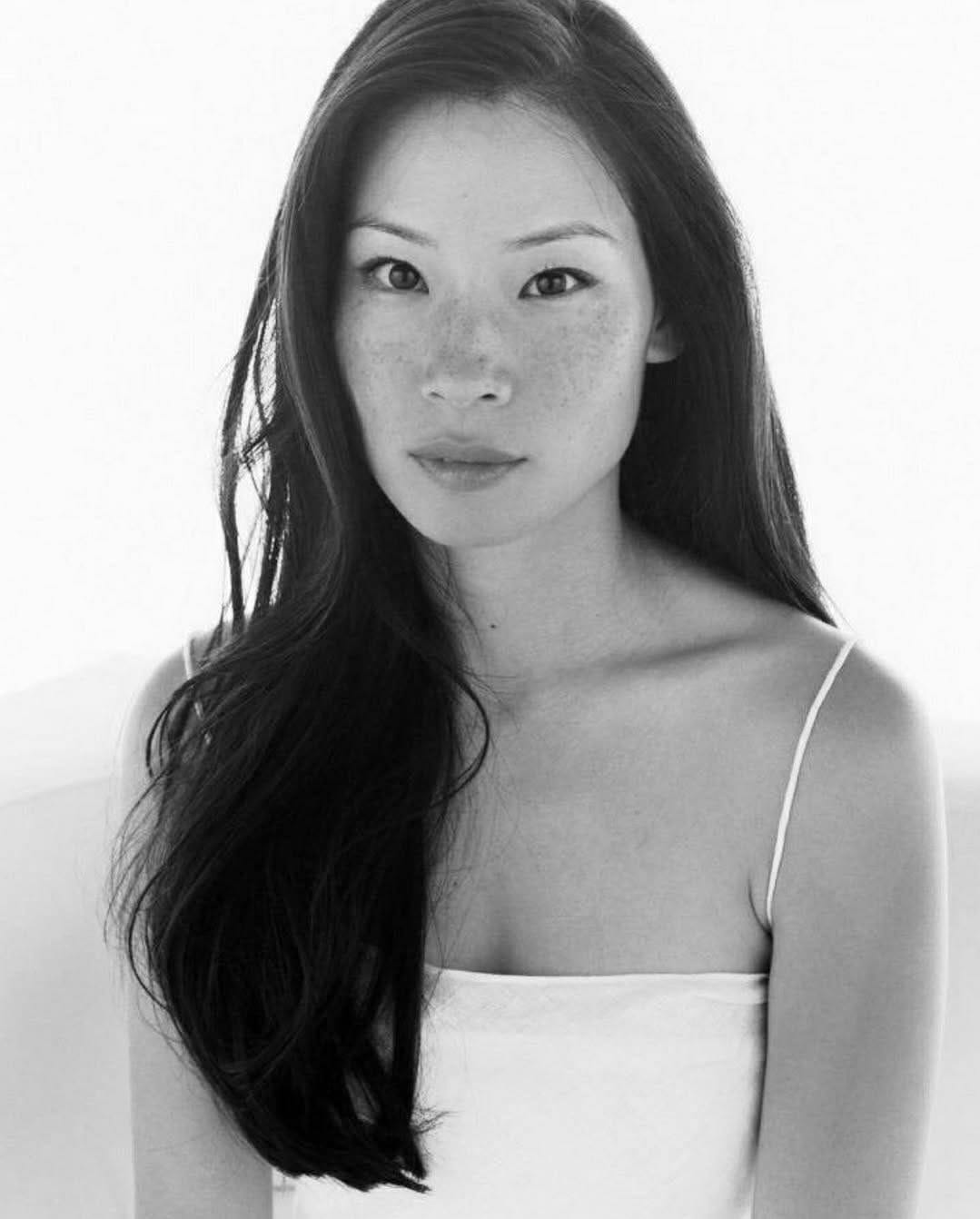
Editorial Photography Helped Shape Her Emerging Image
The phrase “Lucy Liu in 1999” now circulates widely alongside editorial portraits, promotional photographs, premiere images, and awards-season pictures from the period.
Not every surviving photograph originated from the same shoot, and some images commonly labeled as 1999 online lack reliable archival information.
What the well-documented photographs collectively reveal is more important than any one caption.
Liu was being photographed as someone whose face and presence could carry an image independently of a television character.
The visual language frequently emphasized:
- Direct eye contact
- Sleek silhouettes
- Minimal backgrounds
- Controlled poses
- Natural confidence
- A combination of elegance and strength
These qualities reflected the public identity taking shape around her.
She was glamorous but not fragile.
Stylish but not decorative.
Beautiful without appearing passive.
That distinction mattered because Hollywood had often treated Asian women primarily as visual symbols created for someone else’s story.
Liu’s strongest photographs suggest a person controlling the frame rather than merely occupying it.
Payback Gave Her a Striking 1999 Film Role
While Ally McBeal established Liu on television, Payback gave film audiences another memorable version of her screen presence.
The 1999 neo-noir action thriller starred Mel Gibson as Porter, a criminal pursuing revenge after being betrayed and left for dead. Liu played Pearl, a dominatrix connected to Porter’s enemies.
Pearl is not the film’s central character, and the role is limited.
Liu nevertheless makes the character difficult to forget.
She brings Pearl the same combination of confidence, danger, and dark humor that made Ling Woo effective, although the film pushes those qualities into a more exaggerated underworld setting.
Pearl enters scenes without behaving as though she is secondary.
She strikes, commands, intimidates, and treats supposedly powerful men with open contempt.
The performance demonstrates an ability Liu would later use in action cinema: she could create immediate authority without requiring extensive exposition.
The audience did not need a long explanation of Pearl’s history.
Liu’s posture, voice, and expression established the character almost instantly.
Pearl Also Revealed Hollywood’s Limited Imagination
The similarities between Ling Woo and Pearl are impossible to ignore.
Both are:
- Aggressive
- Sexually confident
- Dangerous
- Sharp-tongued
- Visually stylized
- Difficult for male characters to control
This repetition helped construct Liu’s early star image.
It also revealed the industry’s tendency to offer successful performers variations of the same narrow type.
Hollywood recognized that audiences responded to Liu’s intensity.
The immediate response was not necessarily to offer her a broad range of romantic, dramatic, comic, or everyday characters.
It was often to request another intimidating woman.
Liu used those opportunities effectively, but later reflections on her career make clear that commercial recognition did not automatically produce the diversity of roles that should have followed. In 2025, she described many prominent parts as supporting opportunities that did not fully explore her dramatic potential, while also discussing the racial barriers that shaped what Hollywood was willing to offer.
The contradiction was already visible in 1999.
She had become highly noticeable.
The industry had not yet learned how widely she could be used.
Other 1999 Film Appearances
Liu’s filmography expanded rapidly during this period.
In addition to Payback, her 1999 work included appearances in:
- True Crime
- Molly
- The Mating Habits of the Earthbound Human
- Play It to the Bone
The sizes and importance of these roles varied, but together they demonstrate the momentum building around her.
She was no longer waiting years between isolated opportunities.
Television recognition was producing a wider range of film work, even when the individual parts remained supporting roles.
That volume also gave Liu experience across different tones:
- Crime
- Comedy
- Romance
- Drama
- Action
- Satire
The major breakthrough film had not yet arrived.
The professional foundation for it was being built quickly.
Charlie’s Angels Was the Next Logical Step
The first Charlie’s Angels film was released in 2000, but its connection to Liu’s 1999 momentum is direct.
The attention surrounding Ling Woo helped make her a viable choice to play Alex Munday alongside Drew Barrymore and Cameron Diaz.
Liu’s Ally McBeal schedule initially created a practical obstacle. Kelley later explained that she asked to be released temporarily from her television contract to make the film. He agreed partly because he understood the cultural significance of an Asian actress becoming one of the three Angels in such a prominent franchise.
That decision changed Liu’s career.
Charlie’s Angels allowed her to be:
- A central hero
- A romantic character
- An action performer
- A comic presence
- An equal member of the lead trio
- A globally marketed movie star
The role expanded the confidence visible in 1999 into full blockbuster scale.
Alex Munday remained highly capable and physically formidable, but she was warmer and more playful than Ling or Pearl.
The character demonstrated that Liu’s authority did not require villainy or emotional coldness.
From Ling Woo to O-Ren Ishii
Liu’s portrayal of O-Ren Ishii in Kill Bill: Vol. 1 would later become one of her most iconic film performances.
The role used several elements already visible in 1999:
- Controlled stillness
- Verbal precision
- Elegance under threat
- Sudden violence
- Command over male-dominated spaces
- Emotion concealed beneath authority
However, O-Ren received a scale and mythic grandeur unavailable to Ling or Pearl.
She was not simply a sharp supporting personality.
She was a crime boss, warrior, and tragic antagonist with a carefully constructed history.
Liu also participated meaningfully in the character’s visual presentation. She later recalled advocating for O-Ren’s white kimono during the climactic sequence because she wanted to preserve the character’s elegance and femininity alongside her physical power.
The decision reflects a quality already visible in Liu’s 1999 photography.
Strength did not need to be separated from beauty.
Femininity did not reduce danger.
Lucy Liu Was Indeed in Chicago
Discussions of Liu’s career sometimes create confusion around Chicago because her appearance is brief.
She plays Kitty Baxter, a wealthy woman accused of killing her husband and two women after discovering them together.
Kitty arrives in a burst of publicity and temporarily steals attention from Roxie Hart and Velma Kelly.
It is not a leading role comparable to Charlie’s Angels or Kill Bill.
It is closer to a sharply executed cameo.
Yet the casting makes perfect sense within Liu’s developing screen identity.
Kitty enters the story as an immediate media event.
Her confidence and notoriety are established within moments.
Once again, Liu demonstrates that she can make limited screen time feel disproportionately memorable.
Representation Without Simplification
Lucy Liu’s career is often described as groundbreaking, and that description is justified.
It should not become a way of reducing her work to representation alone.
Liu did not succeed merely because Hollywood needed an Asian American actress to symbolize progress.
She succeeded because she possessed unusual screen presence, timing, discipline, intelligence, and versatility.
Representation matters because talented performers had historically been denied opportunities.
It does not replace the talent that made the opportunities meaningful.
At her 2019 Hollywood Walk of Fame ceremony, Liu acknowledged the complicated language surrounding her success. She noted that Asian artists had been creating films for generations even when American institutions failed to invite them fully into the mainstream. She also honored Anna May Wong, whose Walk of Fame star was placed near Liu’s.
Her comments resisted the idea that Asian American screen history began when Hollywood finally noticed Lucy Liu.
She placed herself within a longer tradition.
The Walk of Fame Completed a Historical Circle
On May 1, 2019, Lucy Liu received the 2,662nd star on the Hollywood Walk of Fame.
The Hollywood Chamber of Commerce deliberately placed it near Anna May Wong’s star, connecting two Chinese American actresses separated by different eras of Hollywood history.
The ceremony took place twenty years after Liu’s Emmy-nominated breakthrough year.
The timing creates a striking historical frame.
In 1999, Liu stood on the Emmy red carpet as one of the few Asian American women receiving major recognition in primetime television.
In 2019, she was honored as a performer whose television, film, voice, stage, production, and directing work had become part of Hollywood history.
The distance between those moments contains extraordinary professional range.
Beyond Action and the “Dragon Lady” Label
Liu’s career eventually expanded well beyond the image formed around Ling Woo, Pearl, Alex Munday, and O-Ren Ishii.
She played Dr. Joan Watson for seven seasons in Elementary, transforming a traditionally male character into an intelligent, emotionally complex investigative partner rather than a decorative assistant.
The official Walk of Fame biography highlights the importance of that performance alongside her work in Southland, Broadway, animation, film, and television.
She has also worked as:
- A director
- A producer
- A visual artist
- A voice performer
- A stage actress
- A humanitarian advocate
Her voice roles have included Master Viper in the Kung Fu Panda films and Silvermist in Disney’s Tinker Bell franchise.
These roles reveal a career far broader than the dominant image Hollywood initially constructed.
Lucy Liu the Visual Artist
Acting is only one part of Liu’s creative identity.
She has worked for decades as a visual artist, creating photography, painting, mixed-media pieces, and other works.
In a Television Academy interview, she described creativity as something that does not divide cleanly into separate categories such as acting and visual art. Each practice feeds the others.
This perspective helps explain the precision of her screen presence.
Liu appears highly conscious of shape, composition, movement, clothing, and the visual relationship between a performer and the surrounding frame.
Her 1999 portraits are therefore interesting not only because they show a rising actor.
They show an artist who would continue developing on both sides of the image.
Beauty Was Part of Her Image, but Never the Whole of It
Liu’s elegance and physical beauty were central to the way magazines, studios, and photographers presented her.
That attention could create opportunities.
It could also become another limitation.
Descriptions of Asian actresses have historically focused heavily on exoticism, mystery, delicacy, or danger. Liu’s appearance was sometimes discussed through those inherited assumptions rather than simply as the appearance of an American performer.
What made her 1999 image so effective was the sense that beauty did not exhaust the subject.
The photographs communicated intelligence, self-possession, and humor.
She did not appear as though she were waiting for the viewer’s approval.
That quality became central to her appeal.
Why Her Confidence Felt Different
Liu’s confidence rarely appeared effortless in the sense of being empty or careless.
It seemed purposeful.
She had entered an industry where roles for people who looked like her were limited. The Television Academy’s retrospective quotes her discussing the scarcity of prominent Asian performers during the early stages of her career.
Under those conditions, confidence becomes more than a personality trait.
It becomes professional protection.
An actor who is already being treated as unusual may have little room to appear uncertain.
Liu learned to project preparedness, even while continuing to fight for the right to be considered beyond a narrow set of assumptions.
That strength is visible in 1999.
So is the cost behind it.
Ling Woo and the Art of Refusing Apology
Ling’s most radical quality may have been her refusal to apologize for taking up space.
She was not grateful merely to be included.
She did not soften every opinion to make colleagues comfortable.
She did not reassure men who felt threatened by her intelligence.
She did not perform humility as the price of acceptance.
The character’s behavior could be cruel and should not automatically be celebrated as empowerment.
However, the visual impact of an Asian American woman acting as though she fully belonged in a powerful professional environment carried undeniable force.
Liu gave Ling authority before the culture surrounding the character was prepared to grant it naturally.
A Star Image Built on Contradictions
By the end of 1999, Lucy Liu’s emerging public identity combined several apparently opposing qualities:
- Elegant and dangerous
- Funny and intimidating
- Glamorous and disciplined
- Emotionally controlled and unexpectedly vulnerable
- Commercially accessible and culturally disruptive
- Modern while connected to a longer Asian American screen history
These contradictions prevented her from becoming interchangeable with other rising performers.
Hollywood often prefers a simple brand.
Liu was compelling because simplicity never completely fit.
Why the 1999 Photographs Still Resonate
The enduring fascination with photographs of Lucy Liu from 1999 is partly nostalgic.
The clothing, makeup, film photography, hairstyles, and red-carpet atmosphere belong unmistakably to the late 1990s.
The images also resonate because they show a recognizable star before her most famous roles.
Viewers know what comes next.
They can see Alex Munday’s playfulness, O-Ren Ishii’s authority, Joan Watson’s intelligence, and the confidence of later red-carpet appearances beginning to form.
There is pleasure in observing that future while it is still becoming possible.
The photographs do not show someone transformed suddenly by fame.
They show someone already possessing the qualities fame would eventually reveal to a larger audience.
Was 1999 Lucy Liu’s Breakthrough Year?
The most precise answer is that her breakthrough began in 1998 and became undeniable in 1999.
Ling Woo first appeared during Ally McBeal’s second season, but the Emmy nomination, expanding role, film visibility, and awards-season recognition made 1999 the year the breakthrough became institutionalized.
By then, Liu was no longer simply an actor who might become famous.
She had become someone Hollywood’s largest productions were beginning to pursue.
Frequently Asked Questions
What was Lucy Liu famous for in 1999?
She was best known for playing the formidable attorney Ling Woo on Ally McBeal. The performance earned her a 1999 Primetime Emmy nomination.
Did Lucy Liu begin playing Ling Woo in 1999?
No. Ling first appeared in 1998. However, 1999 was the year Liu received major awards recognition and became firmly established as one of the show’s standout performers.
Did Lucy Liu originally audition for Ling Woo?
No. She auditioned for Nelle Porter. David E. Kelley cast Portia de Rossi as Nelle but was so impressed by Liu that he created Ling Woo for her.
Was Ling Woo created specifically for Lucy Liu?
Yes. Kelley developed the character after Liu’s audition made a strong impression on the producers.
Did Lucy Liu win an Emmy for Ally McBeal?
She was nominated in 1999 for Outstanding Supporting Actress in a Comedy Series but did not win.
What film did Lucy Liu appear in during 1999?
Her most prominent 1999 film appearance was as Pearl in Payback. She also appeared in films including Molly, True Crime, The Mating Habits of the Earthbound Human, and Play It to the Bone.
Who was Pearl in Payback?
Pearl was a dominatrix connected to criminal Val Resnick and the underworld surrounding Porter’s revenge mission.
Was Lucy Liu already a major film star in 1999?
She was becoming highly recognizable, but her full blockbuster breakthrough arrived with Charlie’s Angels in 2000.
What did Lucy Liu wear to the 1999 Emmys?
She wore a red-and-black gown created by costume designer Joseph A. Porro and attended the ceremony with her mother.
Was Lucy Liu in Chicago?
Yes. She made a brief but memorable appearance as murder suspect Kitty Baxter.
Was Lucy Liu one of the main stars of Chicago?
No. Kitty Baxter is a small supporting role or cameo rather than one of the film’s leads.
What role did Lucy Liu play in Charlie’s Angels?
She played Alex Munday alongside Drew Barrymore’s Dylan Sanders and Cameron Diaz’s Natalie Cook.
Did Ally McBeal help Lucy Liu get Charlie’s Angels?
The visibility and acclaim surrounding Ling Woo were instrumental. Liu asked to step away temporarily from her television contract to make the film, and Kelley agreed because he recognized the importance of the opportunity.
What role did Lucy Liu play in Kill Bill?
She played O-Ren Ishii, an assassin and powerful Tokyo crime boss.
Why was Ling Woo culturally important?
She was one of the few highly visible Asian American women in 1990s American primetime television. The role offered unusual authority and visibility, although it was also criticized for drawing on “Dragon Lady” stereotypes.
When did Lucy Liu receive a Hollywood Walk of Fame star?
She received the 2,662nd star on May 1, 2019. It was placed near the star of pioneering Chinese American actress Anna May Wong.
What other major television role did Lucy Liu play?
From 2012, she starred as Dr. Joan Watson opposite Jonny Lee Miller in Elementary, remaining with the series for seven seasons.
Is Lucy Liu also an artist?
Yes. She has maintained a substantial visual-art practice alongside acting and has discussed acting and art as interconnected parts of the same creative life.
Final Thoughts
Lucy Liu in 1999 represents more than a beautiful actor photographed at the beginning of fame.
The images capture a cultural and professional turning point.
She had spent years moving through guest roles, auditions, limited opportunities, and an industry with little imagination regarding Asian American women.
Then Ling Woo arrived.
The character was sharp, difficult, glamorous, funny, sexually confident, and almost impossible to ignore.
She was also complicated.
Ling sometimes reproduced stereotypes even as she shattered expectations about how much authority an Asian American woman could possess on mainstream television.
Liu’s performance made that contradiction watchable.
She gave the character humor without reducing her to comic relief.
She gave her vulnerability without weakening her.
She gave her confidence without asking audiences to approve of everything she said.
The 1999 Emmy nomination confirmed what viewers had already recognized: Lucy Liu was not simply benefiting from a memorable character.
She was creating one.
Payback then carried her intensity into film, showing how quickly she could establish a dangerous presence within limited screen time.
The red-carpet and editorial photography completed the transformation.
Hollywood was beginning to see what the camera had already understood.
Liu did not need to become more visible by making herself louder.
She could command an image through stillness.
She could make elegance feel powerful.
She could make beauty appear inseparable from intelligence and self-possession.
The blockbuster performances followed.
Alex Munday expanded her into comedy, action, and global stardom.
O-Ren Ishii transformed her controlled authority into cinematic myth.
Kitty Baxter demonstrated how effectively she could seize attention in a few moments.
Joan Watson later gave her the sustained, intelligent television role necessary to challenge the narrower image created around her earliest success.
Yet the foundations are visible in 1999.
The precision.
The discipline.
The humor.
The refusal to disappear.
More than two decades later, Lucy Liu’s career continues to reveal both how much she achieved and how much more Hollywood might have offered had it not viewed her through such restrictive categories.
Her success was groundbreaking because the barriers were real.
Her longevity exists because she was always more talented, versatile, and creatively ambitious than the labels placed around her.
The woman photographed in 1999 was still approaching her greatest commercial successes.
She already looked entirely prepared for them.