Pancreatic Cancer Pill Daraxonrasib Shows Striking Promise Against RAS-Mutant Lung Cancer
A pill approved only days ago for one of the deadliest forms of pancreatic cancer is now generating excitement for an entirely different disease.
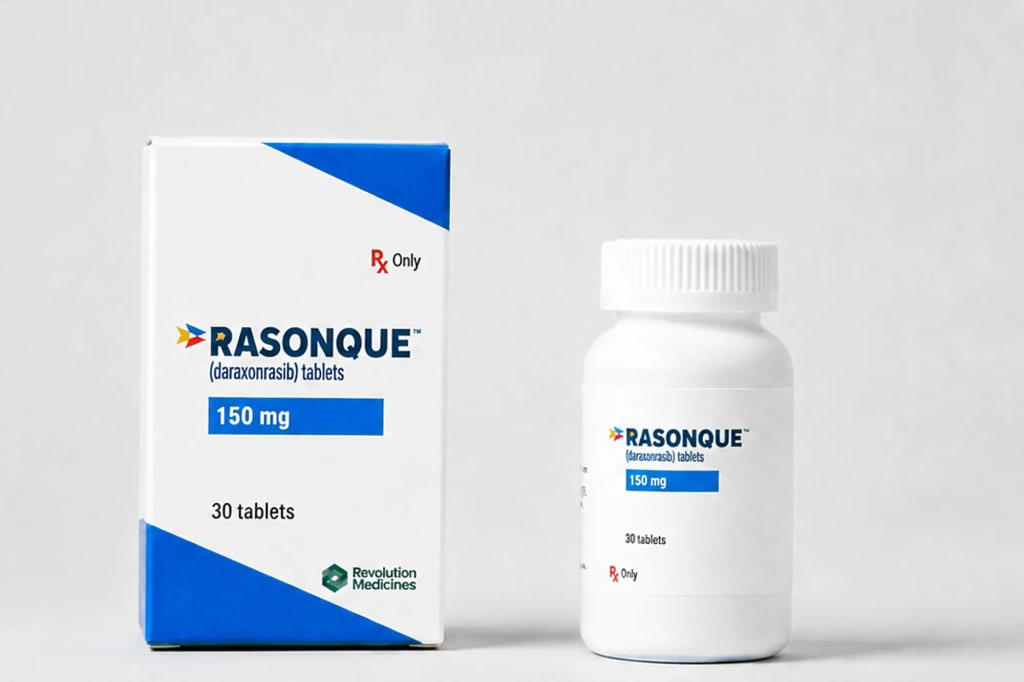
Daraxonrasib, sold under the brand name Rasonque, produced tumor responses in more than 30% of patients with previously treated, advanced RAS-mutant non-small cell lung cancer in a Phase 1/2 clinical trial published in the New England Journal of Medicine on September 2, 2026.
In one particularly relevant group of patients receiving the dose range selected to inform further development, 42% experienced a confirmed tumor response. Their median progression-free survival was 8.3 months, while median overall survival reached 16 months.
The results are especially noteworthy because the patients had difficult-to-treat cancers that had already been exposed to standard platinum chemotherapy and immunotherapy.
And these were not tumors carrying only one narrowly defined RAS mutation.
Daraxonrasib is designed as a RAS(ON) multi-selective inhibitor, meaning it can target several activated forms of RAS rather than being limited exclusively to KRAS G12C—the mutation targeted by existing drugs such as sotorasib and adagrasib.
That broader approach could potentially make RAS-directed treatment available to a substantially larger group of lung cancer patients.
But the excitement requires an important qualification.
Daraxonrasib is not currently FDA-approved for lung cancer.
The FDA approved Rasonque on August 26, 2026, specifically for certain adults with metastatic pancreatic adenocarcinoma. Its use in RAS-mutant non-small cell lung cancer remains investigational, and the promising Phase 1/2 trial did not include a randomized control group proving that the drug is superior to existing treatment.
A global Phase 3 trial is now testing exactly that question.
If those results confirm the early signal, daraxonrasib could become one of the most important advances yet in the long effort to drug a cancer pathway once considered almost impossible to target.
What Is Daraxonrasib?
Daraxonrasib, previously known during development as RMC-6236, is an oral targeted cancer therapy developed by Revolution Medicines.
It belongs to a new generation of drugs designed to interfere directly with RAS proteins.
RAS proteins act like molecular switches inside cells.
When functioning normally, they cycle between active and inactive states and help regulate processes such as:
- cell growth;
- division;
- survival;
- differentiation.
Mutations can lock RAS signaling into an abnormally active state.
The result is a continuous growth signal telling cells to keep proliferating even when they should stop.
The National Cancer Institute estimates that mutations involving the RAS family contribute to more than 30% of human cancers overall. The major RAS genes are KRAS, NRAS and HRAS.
Daraxonrasib is designed to interfere with activated, GTP-bound RAS—often described as RAS(ON).
Unlike mutation-specific medicines that target only one altered RAS protein, daraxonrasib can inhibit multiple RAS isoforms and mutation types.
That is why researchers describe it as multi-selective.
The FDA Approved Daraxonrasib for Pancreatic Cancer in August 2026
The lung cancer research arrived only a week after a major regulatory milestone.
On August 26, 2026, the FDA approved Rasonque for adults with metastatic pancreatic adenocarcinoma who:
- previously received at least one systemic treatment, or
- are not candidates for multiagent systemic therapy.
The FDA described it as a first-in-class targeted treatment for metastatic pancreatic cancer.
Its approval was based on the randomized Phase 3 RASolute 302 trial.
Among the overall study population:
- median overall survival was 13.2 months with daraxonrasib versus 6.7 months with standard chemotherapy;
- median progression-free survival was 7.2 months versus 3.6 months;
- objective response rate was 30% versus 11%.
The FDA-recommended pancreatic cancer dose is 300 mg orally once daily, continued until disease progression or unacceptable toxicity.
That approval matters to the lung cancer story because daraxonrasib is no longer merely an experimental molecule with interesting laboratory data.
It is now an FDA-approved anticancer drug—with demonstrated clinical efficacy in another RAS-driven cancer.
Why RAS Mutations Matter So Much in Lung Cancer
Non-small cell lung cancer, or NSCLC, accounts for the large majority of lung cancer cases.
Within NSCLC, RAS mutations represent one of the most common groups of oncogenic drivers.
The New England Journal of Medicine paper states that RAS mutations occur in approximately 30% of patients with NSCLC.
KRAS is the dominant RAS gene involved in lung cancer.
Common alterations include:
- KRAS G12C;
- KRAS G12V;
- KRAS G12D;
- additional G12 substitutions;
- less common mutations involving other RAS positions or family members.
The exact mutation matters because targeted therapies usually recognize very specific molecular structures.
Historically, this created an enormous treatment problem.
Why RAS Was Called “Undruggable”
Scientists have known for decades that mutated RAS proteins drive cancer.
Knowing the target existed did not mean scientists knew how to hit it.
RAS proved exceptionally difficult to inhibit directly.
The protein binds its natural signaling molecules extremely tightly and historically appeared to lack the kinds of accessible pockets medicinal chemists commonly exploit when designing small-molecule drugs.
The National Cancer Institute has described direct RAS inhibition as an extraordinarily difficult problem that resisted decades of drug development.
For years, RAS became one of oncology's most notorious examples of an apparently obvious cancer target that seemed pharmacologically inaccessible.
The word “undruggable” became attached to it.
That began changing with KRAS G12C.
 Imrul
Imrul
KRAS G12C Changed the Story
Researchers eventually discovered a druggable pocket associated with the KRAS G12C mutation.
This led to medicines including:
- sotorasib (Lumakras);
- adagrasib (Krazati).
In May 2021, the FDA approved sotorasib for previously treated, advanced KRAS G12C-mutated NSCLC.
It was the first approved targeted therapy directed against KRAS G12C in lung cancer.
Adagrasib followed in December 2022 for a similar population.
Those approvals were historic.
But they solved only part of the RAS problem.
KRAS G12C represents only one RAS mutation.
Patients whose cancers carry G12D, G12V and many other alterations do not automatically benefit from a G12C-specific inhibitor.
Daraxonrasib is important because it attempts to expand beyond that single-mutation strategy.
Daraxonrasib Targets Multiple Activated RAS Proteins
The NEJM researchers describe daraxonrasib as an oral RAS(ON) multiselective, tri-complex inhibitor.
The terminology sounds complicated, but the basic concept is straightforward.
RAS behaves like a molecular switch.
The active form binds GTP.
Daraxonrasib is designed to engage this active state through a molecular complex that interferes with RAS function.
Most importantly, it is not designed exclusively around KRAS G12C.
The lung cancer trial included patients with multiple RAS variants.
Among the 136 treated patients, common mutations included G12V and G12D, according to detailed reports of the study.
If a multi-selective RAS strategy works reliably, the eligible patient population could therefore be considerably larger than for mutation-specific G12C therapies.
What Did the New Lung Cancer Trial Test?
The newly published study was a Phase 1/2 multicenter trial called RMC-6236-001.
It enrolled patients with advanced RAS-mutant NSCLC whose disease had already been treated.
Daraxonrasib was given orally once daily at doses ranging from 10 mg to 400 mg in 21-day treatment cycles.
For the main published safety and efficacy analysis, investigators evaluated 136 patients who received doses of 300 mg or less.
The study's primary goal was safety.
Secondary measures included:
- objective response rate;
- duration of response;
- progression-free survival;
- other measures of antitumor activity.
Responses were evaluated using standard RECIST tumor-response criteria.
The data cutoff was July 21, 2025, meaning investigators had substantial follow-up before publishing the results in September 2026.
These Were Heavily Pretreated Patients
This is important context when interpreting the response rate.
These were not newly diagnosed lung cancer patients receiving daraxonrasib as their first treatment.
Approximately 99% had previously received platinum-based chemotherapy, and approximately 99% had received anti-PD-1 or anti-PD-L1 immunotherapy, according to the detailed trial reporting.
Patients had received a median of two previous treatment lines for metastatic disease.
In other words, these were cancers that had already demonstrated the ability to survive major standard therapies.
Treatment options become progressively more limited after that point.
For many patients, docetaxel chemotherapy is among the available subsequent-line options.
That is the setting in which daraxonrasib is now being developed.
Tumors Shrunk in More Than 30% Across the Major Dose Groups
The primary NEJM publication reported a clear dose-related pattern of antitumor activity.
The percentage of patients achieving an objective response was:
- 31% at doses of 120 mg or less;
- 34% at doses between 160 and 220 mg;
- 37% at 300 mg.
An objective response generally means the tumor shrank sufficiently on imaging to satisfy standardized clinical trial criteria for a partial or complete response.
It does not mean every cancer disappeared.
It also does not mean the patient was cured.
But in a population with previously treated metastatic lung cancer, a response in roughly one-third of patients is clinically meaningful enough to justify further study.
One Key Subgroup Had a 42% Response Rate
The most attention-grabbing result came from a more specific group.
Researchers examined 38 patients who:
- had RAS-mutant NSCLC;
- had previously received platinum chemotherapy;
- had previously received PD-1/PD-L1 immunotherapy;
- had not yet received docetaxel;
- received daraxonrasib in the 160–220 mg dose range.
Among these patients, the confirmed objective response rate was 42%.
The disease control rate was 89%.
Median duration of response was 11.5 months.
Disease control includes not only patients whose tumors shrink, but also certain patients whose cancer remains stable.
That distinction matters.
A 42% response rate does not mean 89% had shrinking tumors.
It means nearly nine in ten achieved either response or stable disease according to the trial criteria.
Median Progression-Free Survival Was 8.3 Months
For the same clinically relevant subgroup, median progression-free survival was 8.3 months.
Progression-free survival, or PFS, measures how long patients live without the cancer meeting criteria for progression or without dying.
A median of 8.3 months means half of the patients reached progression or death before that point and half remained progression-free longer.
It does not mean every patient received exactly 8.3 months of benefit.
Some progressed earlier.
Others remained controlled substantially longer.
Median Overall Survival Reached 16 Months
Median overall survival in that 38-patient subgroup was 16 months.
That result is encouraging given the previously treated population.
However, it requires particularly careful interpretation.
This Phase 1/2 study did not randomly assign comparable patients to daraxonrasib or standard chemotherapy.
Therefore it cannot establish that daraxonrasib caused patients to live longer than they would have with docetaxel.
Cross-trial comparisons are unreliable because populations can differ in:
- age;
- overall health;
- tumor biology;
- previous therapy;
- metastatic burden;
- mutation type.
The 16-month result is therefore a strong signal.
It is not yet definitive proof of a survival advantage.
That proof is what the Phase 3 trial is designed to provide.
Why the 42% Number Is Different From the 31%–37% Numbers
Readers may encounter headlines reporting several different response rates.
They are not necessarily contradictory.
The 31%, 34% and 37% figures describe response rates across broad dose groups in the overall NEJM analysis.
The 42% response rate refers specifically to the subgroup of 38 docetaxel-naïve patients treated at 160–220 mg after previous platinum chemotherapy and immunotherapy.
This subgroup most closely resembles the population being targeted in the ongoing Phase 3 program.
That is why researchers and cancer centers have emphasized the 42% number.
What Types of RAS Mutations Responded?
One major attraction of daraxonrasib is that activity was not limited to KRAS G12C.
The trial included cancers carrying multiple RAS mutations, particularly G12 variants.
Detailed reporting identified G12V and G12D among the most common mutations in the trial population.
This potentially addresses one of the largest unmet needs in RAS-targeted lung cancer.
Existing approved G12C inhibitors work only when the tumor carries the corresponding KRAS G12C alteration.
Daraxonrasib's multi-selective approach is intended to reach tumors with a wider range of RAS-driven biology.
Molecular Testing Would Be Essential
If daraxonrasib eventually receives lung cancer approval, molecular testing would be central to determining eligibility.
Modern advanced NSCLC treatment already depends heavily on identifying tumor mutations.
Doctors may test tumor tissue or, in some circumstances, circulating tumor DNA in blood for actionable alterations.
For example, the FDA has approved companion diagnostic approaches for detecting KRAS G12C in patients being considered for existing targeted therapies.
The daraxonrasib Phase 3 program similarly focuses specifically on RAS-mutant disease.
This is precision oncology:
The treatment is selected not simply because the patient has lung cancer, but because the cancer has particular molecular machinery driving it.
Is Daraxonrasib a Chemotherapy Drug?
No.
Daraxonrasib is a targeted therapy.
Traditional cytotoxic chemotherapy generally interferes with rapidly dividing cells through mechanisms that are not uniquely specific to one cancer mutation.
Daraxonrasib instead targets activated RAS signaling.
That difference explains why the Phase 3 study is particularly interesting.
Patients are being randomized between:
oral daraxonrasib
and
intravenous docetaxel chemotherapy.
If daraxonrasib proves superior, some patients with RAS-mutant NSCLC could potentially receive an oral targeted therapy instead of subsequent-line docetaxel.
But that possibility remains investigational.
It is premature to call daraxonrasib an established "chemo-free alternative" for lung cancer.
The Drug Is Not Side-Effect Free
Calling a treatment "targeted" can create the mistaken impression that it is gentle.
Daraxonrasib caused substantial toxicity in the Phase 1/2 trial.
Across the 136-patient population receiving 300 mg or less, 99% experienced an adverse event of some grade, regardless of whether investigators considered it directly related to the drug.
Grade 3 or higher adverse events occurred in 54%.
Common problems included:
- rash;
- diarrhea;
- nausea;
- vomiting;
- mucositis or stomatitis.
Serious events included:
- pneumonia;
- severe diarrhea;
- severe rash;
- anemia.
Four grade 5 adverse events occurred in the overall safety population, although the NEJM abstract reports these as all-cause events rather than stating that all were caused by daraxonrasib.
That distinction is medically important.
What Happened at the More Relevant 160–220 mg Doses?
Safety appeared more manageable in the dose range being carried forward.
Among patients receiving 160–220 mg, reports from Revolution Medicines described Grade 3 treatment-related adverse events in about 25%.
The most common included:
- Grade 3 rash: about 8%;
- Grade 3 diarrhea: about 3%.
No Grade 4 or 5 treatment-related events were reported in that dose group in the company's analysis.
MD Anderson reported that, within the clinically relevant cohort:
- 90% experienced rash of any grade;
- 73% experienced diarrhea;
- 62% experienced nausea;
- 54% experienced vomiting;
- 71% required a dose modification;
- 10% discontinued treatment because of adverse events.
So the therapy may be oral and targeted, but it still requires close oncology monitoring.
Daraxonrasib Also Has Important FDA Warnings
The FDA prescribing information for its approved pancreatic cancer use includes warnings involving:
- dermatologic and soft-tissue toxicity;
- stomatitis and other oral disorders;
- diarrhea;
- gastrointestinal perforation;
- interstitial lung disease or pneumonitis;
- embryo-fetal toxicity.
The lung cancer population deserves particular attention regarding pulmonary toxicity because patients may already have compromised lung function from their disease and previous treatments.
This is another reason patients should not interpret "oral cancer pill" as equivalent to a harmless medication.
Why an Oral Therapy Could Still Matter
Despite the toxicity, an effective oral targeted therapy can offer meaningful practical advantages over intravenous chemotherapy.
A tablet may reduce some of the burdens associated with repeated infusion visits.
For selected patients, oral therapy can mean:
- fewer hours in infusion centers;
- less dependence on IV access;
- easier daily administration;
- potentially different toxicity patterns from chemotherapy.
However, oral cancer therapy still requires:
- laboratory monitoring;
- imaging;
- physician visits;
- management of adverse effects;
- dose adjustment.
Convenience does not eliminate complexity.
One Patient’s Experience Shows Why Researchers Are Excited
Memorial Sloan Kettering highlighted the experience of one woman in her 80s who entered treatment severely short of breath.
According to trial investigator Dr. Kathryn Arbour, the patient's condition improved enough after treatment that she was able to return to playing golf.
Arbour said daraxonrasib can produce rapid, substantial tumor shrinkage and symptom improvement in some patients.
Individual stories can illustrate the potential significance of treatment.
They cannot prove overall effectiveness.
That requires controlled trial data.
Still, such experiences help explain why investigators consider the early results encouraging.
The Trial Was Not Led Only by Memorial Sloan Kettering
Some reports have described the study as being led by Memorial Sloan Kettering because Kathryn Arbour of MSK is the first author of the NEJM publication.
The trial was actually a large multicenter collaboration.
Investigators came from institutions including:
- Memorial Sloan Kettering;
- NYU Langone;
- Dana-Farber Cancer Institute;
- MD Anderson Cancer Center;
- Johns Hopkins;
- Moffitt Cancer Center;
- UCLA;
- Huntsman Cancer Institute;
- multiple community and specialist oncology centers.
The NEJM publication lists Kathryn Arbour as first author and David Hong of MD Anderson as a senior investigator, alongside a large research team and investigators from Revolution Medicines.
The trial was funded by Revolution Medicines.
What Is the Phase 3 RASolve 301 Trial?
The major next step is RASolve 301, ClinicalTrials.gov identifier NCT06881784.
It is a global, randomized, open-label Phase 3 trial comparing:
daraxonrasib
with
docetaxel chemotherapy
in patients with previously treated, locally advanced or metastatic RAS-mutant NSCLC.
Participants are randomly assigned in a 1:1 ratio.
The trial is designed to determine whether daraxonrasib improves outcomes such as:
- progression-free survival;
- overall survival.
As of the July 2026 ClinicalTrials.gov update, the trial was recruiting and had an estimated enrollment of about 590 participants.
Its estimated primary completion is in 2027.
That trial will provide far stronger evidence than the current single-arm Phase 1/2 results.
Why Comparing Daraxonrasib Directly With Docetaxel Matters
The current results look favorable relative to historical outcomes with subsequent-line chemotherapy.
But historical comparisons can mislead.
The only reliable way to determine whether daraxonrasib is actually better is to place similar patients into randomized groups and compare outcomes.
That is exactly what RASolve 301 does.
If patients receiving daraxonrasib demonstrate statistically and clinically meaningful improvements in:
- overall survival;
- progression-free survival;
- response;
- quality of life;
while maintaining an acceptable safety profile, the case for regulatory approval in lung cancer would become much stronger.
If those differences do not appear, enthusiasm based on the early trial would need to be reconsidered.
This is why Phase 3 exists.
Early-Phase Cancer Results Sometimes Fail to Hold Up
Cancer drug development is full of therapies that looked extraordinary in early studies and later produced more modest results.
Early-phase trials can produce inflated estimates for several reasons.
Researchers may unintentionally enroll patients more likely to respond.
Sample sizes are small.
Subgroups can produce unstable percentages.
There may be no control group.
Follow-up may be limited.
A 42% response rate among 38 patients is therefore highly encouraging.
But it is not equivalent to proving a 42% response rate will occur across thousands of real-world patients.
The 16-Month Survival Figure Is Particularly Preliminary
The median overall survival of 16 months has generated understandable attention.
But this number came from the 38-patient subgroup.
There was no simultaneously randomized docetaxel group in the Phase 1/2 study.
That means the correct statement is:
Patients in this subgroup had an observed median overall survival of 16 months.
It is not yet:
Daraxonrasib extends survival to 16 months compared with chemotherapy.
The Phase 3 trial must determine the causal difference.
Could Daraxonrasib Replace Chemotherapy?
Possibly for some RAS-mutant lung cancer patients in the future—but that has not yet been established.
It is also unlikely that one drug would eliminate chemotherapy from every stage of NSCLC treatment.
Cancer treatment depends on:
- mutation profile;
- disease stage;
- previous therapy;
- PD-L1 expression;
- other genomic alterations;
- patient health.
Daraxonrasib is currently being studied primarily after previous platinum chemotherapy and immunotherapy.
So even if it succeeds in Phase 3, the first lung cancer approval could still be for patients who have already received chemotherapy.
Calling it a universal chemotherapy replacement would therefore be misleading.
Could It Eventually Move Into Earlier Treatment?
That is a logical future question.
Many successful targeted cancer therapies begin in later-line treatment because this is where patients have the greatest unmet need and fewer available options.
If efficacy is established there, researchers may investigate earlier use.
Possible future questions could include:
- daraxonrasib before chemotherapy;
- daraxonrasib combined with immunotherapy;
- combinations with other targeted drugs;
- treatment after surgery;
- treatment for earlier-stage RAS-mutant disease.
But those strategies would require their own trials.
Success in previously treated metastatic NSCLC cannot simply be extrapolated to newly diagnosed disease.
Why the Pancreatic Approval Makes the Lung Results More Interesting
The timing is unusual.
Within roughly one week, daraxonrasib achieved two major milestones:
August 26, 2026: FDA approval for metastatic pancreatic adenocarcinoma.
September 2, 2026: publication of the Phase 1/2 RAS-mutant NSCLC results in the New England Journal of Medicine.
This provides compelling evidence that the drug's RAS-targeting mechanism can produce meaningful antitumor activity across more than one RAS-driven cancer type.
Pancreatic and lung cancers are biologically different diseases.
But both frequently depend on RAS signaling.
Daraxonrasib is therefore being tested less as a "pancreatic cancer drug that happens to work elsewhere" and more as a RAS-targeted platform drug potentially relevant across multiple tumors.
Could Daraxonrasib Work in Other Cancers?
Researchers are already exploring this possibility.
RAS alterations occur in substantial proportions of:
- pancreatic cancer;
- lung cancer;
- colorectal cancer;
- melanoma;
- several other solid tumors.
The National Cancer Institute notes that more than 30% of cancers overall are driven by alterations in the RAS family.
However, RAS biology differs between tumor types.
A drug that works impressively in pancreatic cancer cannot automatically be expected to perform equally well in colorectal cancer or melanoma.
Cancer cells use surrounding signaling pathways differently.
Resistance mechanisms vary.
Combinations may be required.
The lung cancer trial nevertheless strengthens the idea that multi-selective RAS inhibition may have applications beyond one organ.
This Is Part of a Much Bigger Shift in RAS Cancer Research
For decades, oncology's relationship with RAS was frustrating.
Researchers knew RAS mattered enormously.
They simply could not reliably attack it.
Then KRAS G12C inhibitors proved that direct RAS targeting was possible.
Now the field is expanding rapidly into:
- G12D inhibitors;
- active-state RAS inhibitors;
- pan-RAS approaches;
- multi-selective inhibitors;
- RAS degraders;
- combination therapies.
A 2026 review of KRAS-targeted NSCLC research notes that active-state and broader RAS inhibitors are emerging as strategies intended to move beyond the limitations of existing G12C-specific drugs.
Daraxonrasib is one of the most advanced examples of that new generation.
Why “Undruggable” Was Never Supposed to Mean Impossible Forever
In medicine, calling something undruggable generally describes a technical problem.
It does not mean the laws of nature permanently forbid treatment.
RAS lacked obvious drug-binding pockets.
Researchers did not know how to trap the protein effectively.
The structures available to medicinal chemists were difficult.
Then chemistry improved.
Structural biology improved.
Screening improved.
Computational approaches improved.
Scientists discovered new molecular strategies.
The RAS story illustrates a broader lesson about cancer research:
Today's impossible target can become tomorrow's approved medicine.
The timeline may simply be measured in decades.
What Would FDA Approval for Lung Cancer Require?
The fact that Rasonque is already approved for pancreatic cancer does not automatically permit Revolution Medicines to market it for lung cancer.
A new indication requires evidence supporting efficacy and safety in that disease.
For lung cancer, the Phase 3 RASolve 301 study will be central.
Regulators would evaluate factors including:
- survival benefit;
- progression-free survival;
- response rate;
- durability;
- toxicity;
- dose optimization;
- quality of life.
Until that process occurs, daraxonrasib's lung cancer use remains investigational.
Can Doctors Prescribe It Off-Label?
In the United States, physicians can sometimes prescribe FDA-approved drugs for uses outside the approved label when medically appropriate.
However, that does not mean daraxonrasib should routinely be used off-label for RAS-mutant NSCLC based solely on early-phase results.
Important issues include:
- limited evidence;
- dosing;
- toxicity;
- insurance coverage;
- availability of clinical trials;
- lack of proven superiority.
For eligible patients, enrollment in a clinical trial may provide the most scientifically informative route to investigational treatment.
Treatment decisions should be made with a qualified oncology team.
What Does This Mean for Someone With RAS-Mutant Lung Cancer Today?
The first practical step is not asking for daraxonrasib.
It is understanding the tumor's molecular profile.
Patients with advanced NSCLC increasingly undergo biomarker testing because different mutations can lead to completely different treatment pathways.
If testing reveals a RAS mutation, the exact alteration matters.
A patient with KRAS G12C may already have approved targeted options after appropriate previous therapy.
Patients with other RAS variants may have fewer directly targeted choices, which is why trials such as RASolve 301 are particularly important.
The patient's oncologist can determine whether:
- approved targeted therapy exists;
- standard treatment remains appropriate;
- clinical trial enrollment is possible.
The Biggest Reason for Optimism
The strongest reason to be excited about daraxonrasib is not one response percentage.
It is the apparent convergence of several observations:
- clinically meaningful responses across RAS mutations;
- response durability;
- progression-free survival signal;
- encouraging overall survival;
- oral administration;
- confirmed activity in another RAS-driven cancer;
- an ongoing randomized Phase 3 trial.
That combination makes daraxonrasib much more than an interesting laboratory experiment.
It is a serious candidate for changing treatment.
The Biggest Reason for Caution
The biggest limitation is equally clear:
The lung cancer evidence is still early-phase.
The impressive 42% response rate, 8.3-month median PFS and 16-month median overall survival come from a small, selected subgroup without a randomized comparator.
Safety is also not trivial.
Rash and gastrointestinal toxicity are frequent.
More than half of the broad Phase 1/2 safety population experienced Grade 3 or worse adverse events from any cause.
Phase 3 results could strengthen the story.
They could also reduce the apparent magnitude of benefit.
Both outcomes are possible.
The Bottom Line
Daraxonrasib may represent an important new chapter in lung cancer treatment, but it is not yet an approved lung cancer therapy.
On August 26, 2026, the FDA approved Rasonque (daraxonrasib) for adults with metastatic pancreatic adenocarcinoma who had previously received systemic therapy or could not receive multiagent systemic treatment.
In the Phase 3 pancreatic trial supporting that approval, the drug improved median overall survival from 6.7 months with standard chemotherapy to 13.2 months and increased objective response from 11% to 30%.
Then, on September 2, the New England Journal of Medicine published results from a separate Phase 1/2 study of daraxonrasib in previously treated RAS-mutant non-small cell lung cancer.
Across major dose groups, objective responses occurred in:
- 31% of patients at lower doses;
- 34% at 160–220 mg;
- 37% at 300 mg.
In a clinically important 38-patient subgroup receiving 160–220 mg after platinum chemotherapy and immunotherapy but before docetaxel, researchers reported:
- 42% confirmed objective response rate;
- 89% disease control rate;
- 11.5-month median duration of response;
- 8.3-month median progression-free survival;
- 16-month median overall survival.
Those numbers are encouraging, particularly for patients whose cancers have already survived standard treatment.
But they do not prove that daraxonrasib outperforms chemotherapy.
That question is now being tested directly in the global Phase 3 RASolve 301 trial, which randomizes patients to daraxonrasib or docetaxel.
What makes the drug especially interesting is its breadth.
Current approved KRAS inhibitors primarily target the G12C mutation.
Daraxonrasib instead targets multiple active RAS variants.
If that strategy succeeds in Phase 3, patients with mutations such as G12D, G12V and other RAS alterations could gain a targeted option where relatively few have existed.
RAS was once considered one of cancer medicine's quintessential "undruggable" targets.
First G12C proved that description was no longer absolute.
Now multi-selective medicines such as daraxonrasib are asking a much larger question:
What if we can target not just one RAS mutation, but an entire family of cancers that depend on RAS?
The answer is not yet known.
But for patients with previously treated RAS-mutant lung cancer, the latest results make that question far more hopeful than it was only a few years ago.
Frequently Asked Questions
What is daraxonrasib?
Daraxonrasib is an oral RAS-targeted cancer drug developed by Revolution Medicines. Its development code was RMC-6236, and it is marketed as Rasonque for its FDA-approved pancreatic cancer indication.
Is daraxonrasib FDA-approved?
Yes. The FDA approved daraxonrasib on August 26, 2026, for certain adults with metastatic pancreatic adenocarcinoma.
Is daraxonrasib approved for lung cancer?
No. Its use in non-small cell lung cancer remains investigational as of September 2026.
What type of lung cancer is daraxonrasib being tested against?
It is being developed for advanced non-small cell lung cancer carrying RAS mutations.
How common are RAS mutations in lung cancer?
The NEJM study states that RAS mutations occur in approximately 30% of NSCLC cases.
What does RAS do?
RAS proteins regulate cellular signaling involved in growth and survival. Mutations can cause the signaling pathway to remain abnormally active and promote uncontrolled cancer-cell growth.
What are KRAS, NRAS and HRAS?
They are the three major members of the RAS gene family. KRAS is particularly important in pancreatic, lung and colorectal cancers.
Why were RAS cancers called undruggable?
RAS proteins historically lacked obvious drug-binding pockets and interact very tightly with their natural signaling molecules, making direct inhibition extremely difficult.
Is RAS really undruggable anymore?
No. Approved drugs such as sotorasib and adagrasib already target KRAS G12C, while daraxonrasib and other newer drugs are attempting to target a broader range of RAS mutations.
What is special about daraxonrasib?
Unlike drugs designed only for KRAS G12C, daraxonrasib is a RAS(ON) multi-selective inhibitor designed to interfere with several activated RAS proteins.
What does RAS(ON) mean?
It refers to the active, GTP-bound signaling state of the RAS protein. Daraxonrasib is designed to inhibit RAS while it is in that active state.
How many lung cancer patients were studied?
The published Phase 1/2 analysis evaluated 136 patients with RAS-mutant NSCLC who received daraxonrasib at doses of 300 mg or less.
Were these newly diagnosed patients?
Generally no. The patients had advanced, previously treated disease. Almost all had previously received platinum chemotherapy and anti-PD-1 or anti-PD-L1 immunotherapy.
What was the overall daraxonrasib response rate in lung cancer?
Objective response varied by dose:
- 31% at 120 mg or less;
- 34% at 160–220 mg;
- 37% at 300 mg.
Why do some reports say the response rate was 42%?
The 42% figure applies to a specific subgroup of 38 docetaxel-naïve patients who had previously received platinum chemotherapy and immunotherapy and were treated at 160–220 mg.
What does a 42% response rate mean?
It means about 42% of patients in that subgroup experienced enough tumor shrinkage to meet the study's criteria for a confirmed objective response.
It does not mean 42% were cured.
What was the disease control rate?
The 38-patient subgroup had a disease control rate of 89%.
Is disease control the same as tumor shrinkage?
No. Disease control includes both objective responses and stable disease.
How long did responses last?
Median duration of response in the key subgroup was 11.5 months.
What was progression-free survival?
Median progression-free survival was 8.3 months in the 38-patient clinically relevant subgroup.
What does progression-free survival mean?
It measures the time from treatment until the cancer progresses or the patient dies.
What was median overall survival?
Median overall survival was 16 months in the 38-patient subgroup.
Does the 16-month survival figure prove daraxonrasib extends life?
Not yet. The Phase 1/2 study did not contain a randomized control group, so it cannot establish how much of the observed survival was caused by the drug compared with another treatment.
Did daraxonrasib cure anyone's lung cancer?
The study does not establish daraxonrasib as a cure for metastatic RAS-mutant NSCLC.
Is daraxonrasib chemotherapy?
No. It is a targeted RAS inhibitor.
Is it taken as a pill?
Yes. Daraxonrasib is an oral medication taken once daily in the studied regimens.
What dose is approved for pancreatic cancer?
The FDA-approved pancreatic cancer dose is 300 mg orally once daily until progression or unacceptable toxicity.
Is the pancreatic cancer dose necessarily the lung cancer dose?
No. Different cancer types can require different optimized dosing. Lung cancer development has focused heavily on lower dose ranges, including 160–220 mg in the Phase 1/2 study.
What side effects did lung cancer patients experience?
Common adverse events included rash, diarrhea, nausea, vomiting and mouth inflammation.
Were serious side effects common?
Across the overall 136-patient safety population, 54% experienced Grade 3 or higher adverse events from any cause.
Did patients need dose reductions or interruptions?
Yes. MD Anderson reported dose modifications in 71% of patients in the clinically relevant cohort.
Did patients stop daraxonrasib because of toxicity?
Approximately 10% discontinued treatment because of adverse events in the clinically relevant cohort described by MD Anderson.
Does Rasonque have serious FDA warnings?
Yes. Its pancreatic cancer prescribing information includes warnings involving severe skin and soft-tissue toxicity, mouth disorders, diarrhea, gastrointestinal perforation, interstitial lung disease or pneumonitis, and embryo-fetal toxicity.
Why is daraxonrasib already approved for pancreatic cancer?
A randomized Phase 3 trial showed significantly better survival, progression-free survival and tumor response compared with standard chemotherapy in previously treated metastatic pancreatic adenocarcinoma.
How effective was daraxonrasib in pancreatic cancer?
In the FDA's overall trial population, median overall survival was 13.2 months with daraxonrasib versus 6.7 months with standard chemotherapy. Objective response was 30% versus 11%.
Does success in pancreatic cancer prove it will work in lung cancer?
No. They are different cancers. The pancreatic approval demonstrates that the drug can clinically target RAS-driven disease, but lung cancer requires separate efficacy trials.
What is RASolve 301?
RASolve 301 is the ongoing global Phase 3 lung cancer trial comparing daraxonrasib directly with docetaxel chemotherapy. Its ClinicalTrials.gov identifier is NCT06881784.
Is the Phase 3 daraxonrasib lung cancer trial recruiting?
Yes. The latest ClinicalTrials.gov record lists RASolve 301 as recruiting.
How many people will join RASolve 301?
The July 2026 ClinicalTrials.gov record estimates enrollment at approximately 590 participants.
When will Phase 3 results be available?
The study lists estimated primary completion in 2027, although final timelines and public results can change.
What is docetaxel?
Docetaxel is an intravenous chemotherapy drug used in several cancers, including previously treated advanced NSCLC.
Could daraxonrasib replace docetaxel?
That is precisely one of the questions RASolve 301 is testing. There is not yet enough randomized evidence to say daraxonrasib is superior.
Could daraxonrasib become a chemo-free lung cancer treatment?
Potentially in a later-line RAS-mutant setting if Phase 3 proves it effective. However, patients in the current development program have generally already received platinum chemotherapy, so describing it as a universal chemotherapy replacement would be inaccurate.
Is daraxonrasib useful for KRAS G12C?
Daraxonrasib has broad RAS activity, but patients with KRAS G12C NSCLC already have approved mutation-specific drugs such as sotorasib and adagrasib. Treatment selection depends on clinical circumstances and regulatory indications.
Which KRAS mutations were common in the daraxonrasib trial?
G12V and G12D were among the most common mutations reported in the trial population.
Why is activity against G12D and G12V important?
Unlike KRAS G12C, these mutations have historically lacked the same range of established targeted lung cancer options. A multi-selective RAS inhibitor could potentially broaden precision treatment.
Do all lung cancer patients need genetic testing?
Biomarker testing is extremely important in advanced NSCLC because actionable mutations can determine treatment options. The exact recommended testing depends on tumor type and clinical circumstances.
Can a blood test detect RAS mutations?
Some circulating tumor DNA tests can detect cancer mutations in blood. FDA-approved liquid biopsy companion diagnostics already exist for certain targeted lung cancer treatments.
Can someone with lung cancer obtain Rasonque now?
Rasonque is FDA-approved for a pancreatic cancer indication, not NSCLC. Patients interested in daraxonrasib for lung cancer should discuss approved options and clinical-trial eligibility with their oncology team.
Could a doctor prescribe daraxonrasib off-label?
U.S. physicians may sometimes prescribe approved drugs off-label, but early Phase 1/2 evidence does not make routine off-label use appropriate for every patient. Insurance, dosing, safety and available trials must also be considered.
Who developed daraxonrasib?
Daraxonrasib was developed by Revolution Medicines.
Who funded the lung cancer trial?
The Phase 1/2 study was funded by Revolution Medicines.
Who published the daraxonrasib lung cancer study?
The results were published in the New England Journal of Medicine online on September 2, 2026.
Who was the lead author?
The first author was Dr. Kathryn C. Arbour of Memorial Sloan Kettering Cancer Center and Weill Cornell Medical College.
What is the DOI for the lung cancer study?
The DOI is 10.1056/NEJMoa2504059.
Is this a major breakthrough?
It is a significant and promising early clinical development, particularly because daraxonrasib targets multiple RAS mutations. Whether it becomes a true treatment breakthrough in lung cancer depends on confirmation in randomized Phase 3 testing.
What is the biggest takeaway from the daraxonrasib lung cancer study?
A drug that has already demonstrated enough benefit to earn FDA approval in RAS-driven pancreatic cancer also produced durable antitumor activity in previously treated RAS-mutant lung cancer.
The strongest subgroup had a 42% confirmed response rate, 8.3 months of median progression-free survival and 16 months of median overall survival.
Those results are promising.
But the decisive test is still ahead:
Can daraxonrasib outperform standard docetaxel chemotherapy when patients are randomly assigned between the two?
RASolve 301 is designed to answer that question.