VIZZ Eye Drops: The FDA-Approved Treatment That Could Replace Reading Glasses for Hours—But There's a Catch
It often begins sometime after your 40th birthday.
You pick up your phone to read a message.
The letters look blurry.
You move the screen farther away.
Suddenly, the words become clearer.
A few months later, reading restaurant menus becomes difficult. Medicine labels require brighter lighting. Small print that once seemed perfectly normal now feels impossibly tiny.
Eventually, you find yourself doing something you never imagined needing to do.
Searching for your reading glasses.
For millions of people, this frustrating experience is simply part of aging.
But a new prescription eye drop is challenging the assumption that improving near vision always requires putting on glasses.
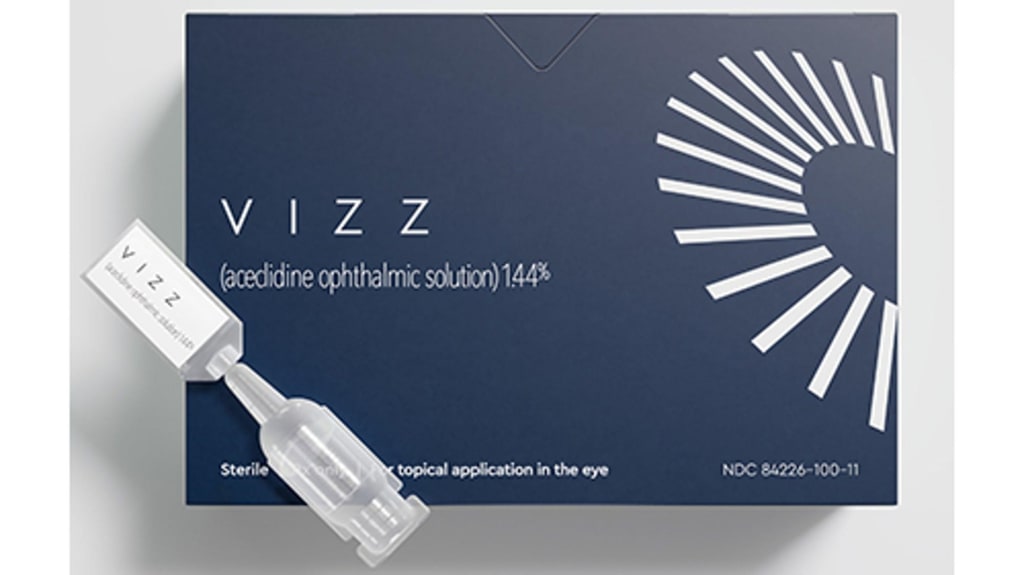
On July 31, 2025, the U.S. Food and Drug Administration approved VIZZ, a treatment developed by LENZ Therapeutics.
The medication contains aceclidine, a drug that temporarily makes the pupil smaller.
That seemingly simple change can improve the eye's ability to focus on nearby objects.
In clinical trials, some participants experienced measurable improvements in near vision within 30 minutes, with benefits still detectable as long as 10 hours after treatment.
For people tired of switching between reading glasses and ordinary distance vision, the possibility is appealing.
Imagine reading a message, checking a receipt, or opening a book without constantly reaching for a pair of glasses.
But the headlines claiming that one eye drop can make people abandon glasses forever leave out several important details.
VIZZ does not cure aging eyes. Its effects are temporary, the treatment requires a prescription, and it carries side effects and warnings that patients need to understand.
And contrary to the simplified claim that it takes just one drop per day, the FDA-approved instructions actually call for two drops in each eye, administered two minutes apart, once daily.
Still, the approval represents an important development in the treatment of presbyopia, the age-related loss of near focusing ability that eventually affects nearly everyone.
The real story is not a miracle cure for aging.
It is how scientists have found a way to work around one of the eye's most familiar limitations.
VIZZ Eye Drops: The Essential Facts
FDA approval
July 31, 2025
Active ingredient
Aceclidine 1.44%
Onset in studies
30 minutes
Measured effect
Up to 10 hours
Approved use: Treatment of presbyopia in adults.
Dosage: One drop in each eye, followed by a second drop in each eye two minutes later, once daily.
Availability: Prescription medication in the United States.
Source: FDA drug-trial summary and prescribing information, revised January 2026. VIZZ- aceclidine solution/ drops+1
First, What Is Presbyopia—and Why Does Near Vision Become Blurry After 40?
Before understanding why VIZZ works, we need to understand what happens inside the aging eye.
When you are young, your eye's natural lens is relatively flexible.
A small muscular structure called the ciliary muscle changes the lens's shape to help focus light from objects at different distances.
When you look at something far away, the focusing system adjusts.
When you bring a book close to your face, it adjusts again.
This automatic process is known as accommodation.
But the lens gradually becomes less flexible with age.
Eventually, it cannot change shape enough to bring nearby objects into sharp focus.
The result is presbyopia.
Why Reading Glasses Become Necessary
Reading glasses compensate for the eye's reduced focusing ability.
They add optical power that helps bring nearby objects into focus.
The lenses do not restore the natural lens's original flexibility.
Instead, they correct the optical problem.
Presbyopia is not the same thing as nearsightedness, farsightedness, or astigmatism, although a person can have these conditions alongside it.
And presbyopia is not necessarily a sign of eye disease.
It is an extremely common age-related change.
The American Academy of Ophthalmology notes that prescription eye drops can offer some people temporary freedom from readers, depending on their visual needs and response to treatment.
How VIZZ Works: The Pinhole Effect

Here is the clever part.
VIZZ does not make the aging lens young again.
It does not reverse the biological changes responsible for presbyopia.
Instead, the medication changes how light enters the eye.
Aceclidine stimulates muscarinic receptors in the iris, causing the pupil to become smaller.
This is called miosis.
By narrowing the opening through which light passes, the treatment increases the eye's depth of focus.
The result is something similar to looking through a tiny hole in a piece of paper.
Why a Smaller Pupil Makes Nearby Objects Look Sharper
Imagine trying to read blurry text through a wide opening.
Light enters from many angles, and the eye's imperfect focus makes the letters difficult to distinguish.
Now imagine looking at the same text through a very small opening.
The narrower opening limits some of the out-of-focus light.
The image may appear sharper, even though the lens itself has not been repaired.
This optical principle is known as the pinhole effect.
It is one reason eye doctors sometimes use a pinhole test during vision examinations.
VIZZ creates a related effect pharmacologically, by shrinking the pupil.
Why Aceclidine Is Different
Aceclidine is described in the FDA-approved label as a predominantly pupil-selective miotic.
That means its primary effect is on the iris, with relatively limited stimulation of the ciliary muscle.
This is a meaningful distinction from some other presbyopia drops that also stimulate the eye's focusing muscles.
The manufacturer presents this mechanism as an advantage for preserving distance vision.
However, no medication can guarantee perfectly unchanged distance vision in every patient, and the FDA label still warns about temporary blurred or dim vision.
What Did the Clinical Trials Actually Prove?
The FDA evaluated VIZZ using evidence from three Phase 3 studies.
Two trials, CLARITY-1 and CLARITY-2, primarily examined effectiveness.
Together, they enrolled 466 adults with presbyopia and involved 42 research sites in the United States.
The studies lasted six weeks.
A third study, CLARITY-3, evaluated longer-term safety over approximately six months.
Researchers tested whether participants could read more lines on a standardized near-vision chart without experiencing a meaningful loss of corrected distance vision.
The primary endpoint required participants to improve by at least three lines on a near-vision chart while avoiding a loss of one line or more in distance visual acuity.
This is more rigorous than simply asking whether people thought their reading vision felt better.
The Results Were Substantial
CLARITY-2: THREE-LINE NEAR-VISION IMPROVEMENT AT THREE HOURS
71%
VIZZ participants
8%
Vehicle-control participants
The endpoint also required no loss of at least one line of corrected distance vision.
FDA CLARITY-2 data, measured three hours after dosing on day one. FDA
CLARITY-1 also reported a statistically significant benefit.
In that trial, 65% of participants receiving VIZZ achieved the primary endpoint, compared with 12% of those receiving the active comparator, brimonidine.
These results established that the medication could meaningfully improve near vision for many trial participants.
But the figures also reveal something important.
Not everyone responded to the same degree.
Some experienced a clinically meaningful improvement.
Others did not reach the trial's primary threshold.
That is why VIZZ should be understood as a treatment option rather than a universal replacement for reading glasses.
Can VIZZ Really Keep Your Reading Vision Clear for 10 Hours?
One of VIZZ's biggest selling points is the duration of its effect.
Earlier presbyopia drops often required additional doses later in the day.
LENZ Therapeutics designed VIZZ as a once-daily treatment that could support near-vision tasks for much of the day.
FDA trial results confirm that measurable improvements were present at 30 minutes and persisted in some participants for up to 10 hours.
But there is a distinction between a treatment having effects lasting up to 10 hours and everyone enjoying equally sharp vision for the entire period.
The percentage of people achieving a three-line improvement decreased as time passed.
How VIZZ's near-vision benefit changed over 10 hours
CLARITY-2, Day 1: percentage achieving at least three lines of near-vision improvement without significant distance-vision loss.
VIZZVehicle control0%25%50%75%100%0.513578910Source: FDA-approved VIZZ prescribing information, CLARITY-2. These are trial response rates at specific times, not measurements of how sharp every participant's vision remained. accessdata.fda.gov
At the ten-hour mark, 40% of the VIZZ group still met this demanding three-line improvement threshold.
Others may have experienced smaller improvements, but the strongest responses became less common later in the day.
So the claim of ten-hour effectiveness is supported by clinical measurements, but the actual benefit varies.
VIZZ vs. Vuity: What's the Difference?

Pilocarpine-based eye drop, first approved for presbyopia in 2021.
VIZZ was not the first prescription eye drop approved to help adults with presbyopia.
That distinction belongs to Vuity, the pilocarpine-based treatment initially approved by the FDA in 2021.
Another treatment, Qlosi, also uses pilocarpine.
VIZZ's specific milestone was becoming the first FDA-approved aceclidine-based eye drop for presbyopia.
Feature | VIZZ | Vuity |
|---|---|---|
Active ingredient | Aceclidine | Pilocarpine |
Initial FDA approval | 2025 | 2021 |
Main optical effect | Pupil constriction | Pupil constriction, plus ciliary muscle stimulation |
Typical onset | About 30 minutes | About 30 minutes |
Reported benefit duration | Up to 10 hours | Commonly around 4–6 hours |
Permanently cures presbyopia? | No | No |
Requires prescription? | Yes | Yes |
Both medicines act on the pupil to improve depth of focus.
But aceclidine's relatively pupil-selective mechanism may offer a different balance of benefits and adverse effects.
It would be premature to declare VIZZ universally superior.
Comparisons across separate clinical trials can be misleading because participants, study designs, and outcome measures differ.
An ophthalmologist or optometrist can help determine which option, if any, is appropriate.
American Academy of Ophthalmology
The Side Effects: What the Viral Headlines Leave Out
The excitement surrounding VIZZ is understandable.
But medications that alter the eye's function deserve careful evaluation.
The FDA-approved prescribing information lists several common adverse reactions.
REPORTED SIDE EFFECTS IN VIZZ CLINICAL STUDIES
Eye irritation after application
20%
Dim or darker vision
16%
Headache
13%
Conjunctival redness
8%
Other ocular redness
7%
Percentages from the current U.S. prescribing label. Most reported adverse reactions were mild, temporary, and resolved without intervention. dailymed.nlm.nih.gov
Why Vision Can Become Dimmer
Making the pupil smaller increases depth of focus.
But it also reduces the amount of light entering the eye.
That creates a trade-off.
Near vision can become sharper in suitable lighting, while the surrounding environment may appear darker.
This is especially relevant at night or in dimly lit settings.
The FDA specifically warns patients to use caution while driving at night or performing hazardous activities in poor illumination.
People should not drive or operate machinery when their vision is unclear.
The Serious Warning About Retinal Problems
The prescribing information also includes an important warning about retinal tears and retinal detachment.
Rare cases have been reported with drugs that constrict the pupil, particularly in susceptible individuals or those with pre-existing retinal disease.
The FDA advises an examination of the retina before starting VIZZ.
Anyone who develops sudden flashes of light, new floaters, or a sudden loss of vision should seek immediate medical attention.
The label also recommends caution in people with a history of iritis, a form of inflammation within the eye.
A drug can be effective and still require medical supervision.
How Is VIZZ Used?
The medication is supplied in preservative-free, single-dose vials.
Its approved regimen is a little more specific than the viral phrase "one drop a day" suggests.
The FDA instructions call for one drop in each eye, followed two minutes later by a second drop in each eye, once daily.
That means the daily treatment involves two instillations per eye.
Patients who wear contact lenses should remove them before applying the medicine and wait at least ten minutes before reinserting them.
The vial should be discarded after use.
These are prescribing-label instructions, not a recommendation to self-treat. VIZZ is a prescription product and should be used according to the treating eye-care professional's directions.
Does VIZZ Actually Fix Presbyopia?
No.
And this is perhaps the most important correction to the sensational claim that VIZZ can eliminate reading glasses forever.
Presbyopia develops because the eye's focusing system becomes less flexible with age.
VIZZ does not reverse that process.
It creates a temporary optical improvement through pupil constriction.
When the medication's effect wears off, the underlying condition remains.
That means someone who benefits from VIZZ may still need reading glasses at other times.
They may also continue to need distance glasses, contact lenses, or treatment for other refractive errors.
What the Treatment Can and Cannot Do
Claim | Reality |
|---|---|
VIZZ is FDA-approved | True |
It improves near vision in many adults with presbyopia | Supported by clinical trials |
Benefits can begin within 30 minutes | Supported |
Some effects persist for up to 10 hours | Supported |
It permanently restores the natural lens | False |
Everyone can stop using glasses | Not established |
It works for every type of blurry vision | False |
It is available without a prescription | No, prescription required in the U.S. |
VIZZ should be viewed as a new method for managing presbyopia—not a cure for age-related vision changes.
Who Might Benefit Most?
People with presbyopia who find reading glasses inconvenient may be interested in discussing the treatment with an eye-care professional.
For example, someone who regularly switches between looking at a computer screen, reading documents, and speaking with colleagues might appreciate temporary improvement in near focus.
A person who enjoys reading menus, messages, or labels without reaching for glasses could also find it useful.
But individual circumstances matter.
People who drive frequently at night may be more concerned about dim vision.
Someone with existing retinal problems needs particular medical assessment.
And people whose blurred vision comes from cataracts, diabetic eye disease, or other causes will not necessarily benefit in the same way.
Is VIZZ Available in Bangladesh?
FDA approval permits marketing under the applicable U.S. regulatory framework.
It does not automatically establish approval or commercial availability in Bangladesh.
Local availability, licensing, importation requirements, and prescription rules must be checked through Bangladesh's relevant regulatory and healthcare channels.
Patients should not assume an overseas FDA approval makes a medicine appropriate to import or use without local medical assessment.
Why VIZZ Matters Beyond Reading Glasses
The development of VIZZ reflects a broader shift in eye care.
Historically, the most familiar ways to manage presbyopia were optical correction and procedures.
Reading glasses are inexpensive, effective, and widely accessible.
Contact lenses can provide alternatives.
Certain surgical approaches may help selected patients but involve their own risks and compromises.
Prescription eye drops introduce another category of treatment.
They offer a reversible, temporary optical effect without surgery.
For some patients, this flexibility may be valuable.
People may choose glasses on certain occasions and prescription drops on others, depending on their visual needs and medical suitability.
The innovation is not that presbyopia has disappeared.
It is that patients now have more options for managing it.
And the emergence of different pharmacological approaches may encourage further research into treatments that work faster, last longer, or produce fewer side effects.
Frequently Asked Questions
What is VIZZ?
VIZZ is a prescription eye drop containing aceclidine ophthalmic solution 1.44%, approved by the U.S. FDA for treating presbyopia in adults.
When was VIZZ approved by the FDA?
The FDA approved VIZZ on July 31, 2025.
Can VIZZ replace reading glasses?
It may temporarily reduce the need for reading glasses in some people, but it does not guarantee complete independence from glasses.
How long does VIZZ last?
Clinical trials demonstrated near-vision benefits beginning within about 30 minutes, with measurable effects in some participants for up to ten hours.
Does VIZZ cure presbyopia?
No. It temporarily improves depth of focus by reducing pupil size. The age-related stiffness of the natural lens remains.
Is VIZZ safer than Vuity?
The two drugs have different pharmacological characteristics, but there is insufficient direct comparative evidence to declare one universally safer. Both require consideration of individual eye health and prescribing warnings.
What are the most common side effects?
The FDA label identifies eye irritation, dim vision, and headache as the most common reported adverse reactions.
Can I use VIZZ without seeing an eye doctor?
No. It is a prescription medication. The FDA recommends retinal examination before treatment because of rare but potentially serious risks associated with pupil-constricting drugs.
The Future of Reading Glasses May Be Changing—But Not Disappearing
For decades, millions of people have accepted a familiar reality.
At some point in adulthood, the phone gets harder to read.
The menu becomes blurry.
The small print seems to shrink.
And reading glasses become part of everyday life.
VIZZ represents an important development because it offers another way to manage that experience.
By temporarily shrinking the pupil, the medication improves depth of focus without permanently changing the eye's natural structures.
The clinical evidence is meaningful.
In controlled trials, many participants achieved measurable improvements in near vision.
Some experienced benefits within half an hour.
And for a portion of patients, improvements continued for much of the day.
But the treatment also illustrates why medical breakthroughs need to be reported carefully.
The drug does not make aging eyes young again.
It does not cure presbyopia.
It does not guarantee ten hours of perfect vision.
And it is not free from adverse effects.
Its greatest value may be much more practical.
For suitable patients, it could provide hours of greater visual independence without requiring surgery or constantly reaching for reading glasses.
That is a genuine advance.
And it does not need to be exaggerated into a miracle cure to be exciting.
VIZZ may not make reading glasses obsolete. But for some people, it could make them optional for part of the day.
That alone is a meaningful change in how we manage one of aging's most familiar visual frustrations.
Sources and Further Reading
- U.S. Food and Drug Administration — Drug Trials Snapshot: VIZZ. Approval date, clinical trial design, participants, and efficacy outcomes.
- DailyMed — VIZZ Full Prescribing Information. January 2026 label with dosing instructions, adverse effects, and warnings.
- LENZ Therapeutics — FDA Approval Announcement, July 31, 2025. Original approval announcement and development background.
- American Academy of Ophthalmology — Could Presbyopia Eye Drops Replace Reading Glasses?. Independent ophthalmology perspective and comparisons with other drops.
- LENZ Therapeutics — Annual SEC Filing. Trial results, commercial launch history, and company-reported product development.
- U.S. Department of Veterans Affairs — Aceclidine Drug Monograph. Independent clinical and formulary review.