Demon Knight: How a 1995 Horror Oddity Became a Cult Classic
A mysterious stranger arrives in a small New Mexico town carrying an object powerful enough to determine the fate of humanity.
A demon follows him.
Before long, a group of strangers is trapped inside a run-down boarding house while creatures gather outside.
There is nowhere to run.
The doors will not hold forever.
And the only thing keeping Hell from winning is a strange key filled with sacred blood.
That setup could have produced a grim supernatural horror movie.
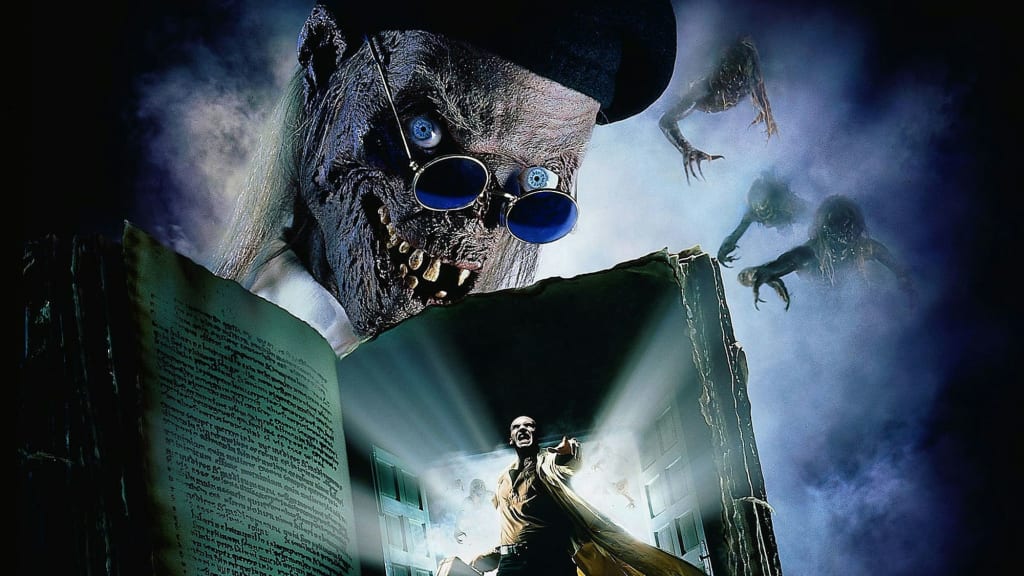
Instead, Tales from the Crypt Presents: Demon Knight gave audiences Billy Zane strutting through the apocalypse, William Sadler playing a weary immortal guardian, practical demons exploding into green slime, Jada Pinkett emerging as an unexpected hero, CCH Pounder swinging into battle, Thomas Haden Church being thoroughly Thomas Haden Church—and the Crypt Keeper framing the whole thing with terrible jokes.
It should be ridiculous.
Frequently, it is.
That is also a large part of why it works.
Released on January 13, 1995, Demon Knight arrived as the first theatrical movie connected to HBO's wildly popular Tales from the Crypt. Universal currently describes the film as a blend of horror, suspense, thriller, dark comedy and comedy, which is an unusually accurate summary of its refusal to stay in one genre.
The movie received an uneven critical response and earned approximately $21.1 million domestically against a reported production budget of around $12 million. That made it more of a modest theatrical performer than the outright financial disaster it is sometimes remembered as.
But theatrical numbers tell only the beginning of the story.
Three decades later, Demon Knight is regularly described as a cult horror favorite. Anniversary screenings continue to draw audiences, horror publications have reassessed it enthusiastically, and Billy Zane says fans still approach him at conventions to talk about how the movie introduced them to the mixture of horror and comedy.
The strange little demon movie that critics greeted with shrugs in 1995 simply refused to die.
And watching it now, it is easy to understand why.
Demon Knight Was Not Originally Written as a Tales From the Crypt Movie
One of the most interesting things about Demon Knight is that its story did not begin with the Crypt Keeper.
Unlike most episodes of HBO's Tales from the Crypt, which drew directly from stories published in the classic EC horror comics, Demon Knight originated as a separate screenplay.
Producer Gilbert Adler later recalled that the filmmakers were searching for a script capable of being adapted into a feature-length Tales from the Crypt project when they encountered the material that became Demon Knight.
More recent commentary material confirms that the screenplay reached the producers as an independent spec script and that the Crypt Keeper framing material was added to integrate it into the existing franchise.
That history explains why the film feels different from a stretched television episode.
The central mythology is bigger.
The stakes are global.
The conflict stretches across centuries.
And although the Crypt Keeper opens and closes the movie, the main story does not depend on viewers already knowing anything about Tales from the Crypt.
You can watch Demon Knight without ever having seen the HBO series.
The Crypt Keeper is the host.
The movie belongs to Brayker, Jeryline and the Collector.
Ernest Dickerson Was the Perfect Director for It
The film was directed by Ernest R. Dickerson, whose career already included extensive work as a cinematographer with Spike Lee and his feature directing debut, Juice.
Dickerson brings a visual confidence that helps elevate what could easily have looked like disposable franchise material.
The boarding house feels grimy and lived-in.
The desert night feels oppressive.
The action is often staged with unusually strong spatial clarity for a monster movie.
And when the demons arrive, Dickerson understands that this story should not look restrained.
It needs blood.
Color.
Smoke.
Flames.
Goo.
Shadows.
The movie has the exaggerated visual energy of a horror comic without becoming visually incoherent.
Thirty years later, Dickerson's contribution has received much more appreciation than it did during the original release.
At the 2025 Overlook Film Festival, Demon Knight received a 30th-anniversary screening while Dickerson was honored with the festival's Master of Horror Award.
Later that year, another anniversary screening featured Dickerson in person as part of a celebration of his work.
That is quite a different cultural position from the movie's reception in January 1995.
The Story Is Basically a Supernatural Siege Movie
The basic structure of Demon Knight is beautifully efficient.
Frank Brayker is being pursued through the New Mexico desert by a man known only as the Collector.
After a violent car chase, Brayker takes refuge in an isolated boarding house.
Inside are a collection of people who have little reason to trust one another.
Then the Collector arrives.
And the building becomes a fortress.
Universal's official synopsis describes Brayker as the guardian of the final ancient key capable of preventing the forces of darkness from obtaining ultimate power. The Collector already possesses the other six and needs Brayker's artifact to complete the set.
The movie then settles into one of horror's most reliable structures:
A group of people trapped in one location while something monstrous tries to get inside.
It evokes the fundamental appeal of films such as Night of the Living Dead.
The characters have limited resources.
Trust begins breaking down.
The threat comes both from outside and from within.
But Demon Knight adds supernatural mythology, dark comedy and the seductive presence of Billy Zane.
Brayker Is a Surprisingly Melancholy Hero
William Sadler plays Brayker with remarkable restraint.
He is introduced as a mysterious drifter, but gradually the residents learn that he has been carrying the sacred key for decades.
His job is not simply to possess it.
He has to prevent the Collector from taking it.
And he knows that sooner or later, someone else will have to inherit the responsibility.
Sadler could have played Brayker as a swaggering action hero.
Instead, he feels exhausted.
He has survived for years because he has a duty.
Not because he expects happiness at the end.
There is an almost Old West quality to him.
He arrives.
He knows trouble is behind him.
He fortifies the building.
He explains just enough.
And eventually he understands that his own part in the story may be nearly over.
That seriousness is important because almost everyone around him is operating at a different emotional frequency.
Brayker anchors the film.
Without him, all the jokes, demons and mythology could float away into camp.
The Key Is Much Stranger Than It First Appears
Brayker's artifact initially looks like an ornate key-shaped relic.
Its mythology gradually expands.
The seven keys were originally connected with demonic power.
But the final key was transformed into a weapon against darkness by filling it with holy blood.
In the film's mythology, that blood ultimately traces back to Jesus Christ.
Brayker uses it to create protective barriers across entrances.
As long as the sacred blood remains intact, demons cannot simply cross the threshold.
This produces one of the film's strongest visual ideas:
A tiny line of blood can stop a monster that bullets cannot.
The rule is simple enough for the audience to understand immediately.
And because the supply is limited, every use matters.
That is good horror storytelling.
Give your characters a defense.
Then make sure it can run out.
Billy Zane’s Collector Is the Movie’s Secret Weapon
There are villains who terrify by barely speaking.
The Collector is not one of them.
Billy Zane appears to have understood immediately that playing this character quietly would be a criminal waste of an opportunity.
His Collector is:
charming,
sarcastic,
childish,
cruel,
seductive,
petulant,
funny,
and absolutely certain humanity is beneath him.
He does not merely want to break into the building.
He wants the people inside to destroy themselves.
That allows Zane to spend much of the movie tempting individual characters with exactly what they most desperately want.
Money.
Pleasure.
Escape.
Power.
Freedom.
The Collector understands human weakness better than humans understand one another.
And Zane makes every manipulation entertaining.
In a later interview, Zane recalled Demon Knight fondly and said fans continued approaching him at conventions to discuss the film and its mixture of comedy with horror.
That continuing affection makes sense.
There are more frightening 1990s horror villains.
Few look like they are having this much fun.
Billy Zane Knows Exactly What Movie He Is In
One reason the performance works is that Zane never seems embarrassed by the material.
He commits completely.
If the Collector needs to whisper, he whispers.
If he needs to threaten, he threatens.
If he needs to explode into an absurd fit of demonic frustration, he does that too.
The performance is broad without becoming detached from the character's danger.
You laugh at him.
Then he reminds you he can tear a human being apart.
Modern retrospectives routinely single Zane out as one of the film's greatest strengths. The A.V. Club's 2025 anniversary reassessment highlighted the movie's distinctive combination of siege-horror energy, social outsiders and Dickerson's direction, while Dread Central's 30th-anniversary review treated the movie as an underrated genre classic.
Cult movies often survive because they contain something audiences cannot get anywhere else.
Billy Zane's Collector is definitely that.
Jada Pinkett’s Jeryline Quietly Becomes the Real Hero
In 1995, Jada Pinkett was still early in her film career.
In Demon Knight, she plays Jeryline, a young woman living under work-release restrictions.
At first, the movie does not announce her as its central hero.
Brayker seems like the obvious protagonist.
He understands the demons.
He possesses the key.
He knows the rules.
Jeryline appears to be one member of the trapped ensemble.
Then the movie slowly shifts.
Brayker's story is reaching its conclusion.
Jeryline's is beginning.
That transition is one of the smartest decisions in the film.
Rather than presenting heroism as something predetermined by status, the story ultimately places humanity's future in the hands of someone society has already labeled a criminal.
A 2025 A.V. Club retrospective argued that the film's treatment of Jeryline and its broader group of social outsiders helped Demon Knight move beyond some of the limitations and stereotypes common in earlier mainstream horror.
And Jeryline is not simply “the final girl.”
She inherits something much larger.
Demon Knight Gives Its Supporting Characters Personality
A siege movie only works if being trapped with the characters is interesting.
Fortunately, Demon Knight fills its boarding house with people who immediately feel distinct.
CCH Pounder plays Irene, the boarding-house proprietor.
Dick Miller is Uncle Willy, the alcoholic whose weaknesses make him especially vulnerable to the Collector's manipulation.
Thomas Haden Church plays Roach.
Brenda Bakke plays Cordelia.
Charles Fleischer appears as Wally.
John Schuck plays Sheriff Tupper.
Gary Farmer plays Deputy Bob.
The official cast listings also include John Kassir returning as the voice of the Crypt Keeper.
Not everyone receives a detailed backstory.
They do not need one.
The movie gives each person enough personality that their decisions matter once the siege begins.
Some become brave.
Some become selfish.
Some are seduced.
Some make terrible choices.
The Collector does not merely attack the building.
He tests the people inside.
CCH Pounder Is Especially Good
CCH Pounder brings exactly the kind of authority the film needs.
Irene begins as someone running a worn-down establishment full of equally worn-down residents.
Then supernatural chaos erupts.
Her reaction is refreshingly practical.
Once she understands what is happening, she becomes part of the defense.
That transformation works because Pounder never treats Irene as disposable horror-movie furniture.
She feels like someone who has already survived enough ordinary trouble to recognize when complaining is pointless and action is necessary.
The entire ensemble benefits from performers treating pulp material with commitment.
Demon Knight is silly.
The characters are not necessarily silly to themselves.
That distinction keeps the movie alive.
Thomas Haden Church Makes Roach Memorable for All the Wrong Reasons
Years before audiences knew Thomas Haden Church from projects such as Sideways or Spider-Man 3, he was Roach.
Roach is exactly the kind of character a siege movie needs.
He is not the heroic leader.
He is not the moral center.
He is the person trying to calculate his own odds of survival.
The Collector understands that immediately.
And watching Roach respond to pressure becomes one of the film's darkest jokes.
Church's supporting performance works because he makes Roach recognizable.
In supernatural circumstances, somebody will always be looking for the exit.
Even if opening it is a catastrophically bad idea.
Dick Miller Was Practically Made for This Movie
Dick Miller had one of the great character-actor careers in American genre cinema.
His presence in Demon Knight feels almost inevitable.
He had spent decades appearing in horror, science-fiction and cult films, often bringing humor and instantly recognizable personality to relatively small roles.
As Uncle Willy, Miller gets material that begins as comedy and becomes increasingly sinister.
The Collector's temptations work by identifying the thing each person wants badly enough to betray everyone else.
For Willy, that weakness is painfully obvious.
The result fits Tales from the Crypt perfectly:
Human desire becomes the path through which horror enters.
The Demons Still Look Great
One of the strongest reasons Demon Knight has aged well is its creature work.
The Collector creates monstrous servants by transforming human bodies into demonic attackers.
These creatures are tactile.
They occupy physical space.
They bleed.
They tear apart.
They throw themselves against walls.
And when destroyed properly, they erupt into spectacular messes.
Billy Zane later praised the movie's practical creature work and specifically recalled Todd Masters' effects, noting how little the production depended on computer-generated imagery.
That practical emphasis gives Demon Knight a quality many contemporary viewers find appealing.
A digital monster can theoretically do anything.
A performer in elaborate makeup has weight.
When it hits a door, something actually hit that door.
When it falls across a room, a body actually moved through space.
The imperfections become part of the charm.
The Green Demon Blood Was an Excellent Choice
Horror movies frequently use red blood.
Demon Knight gives its creatures an unnatural green interior.
It makes their deaths visually distinct from human deaths.
It also gives the film permission to go completely overboard without every violent moment becoming grim.
The monster effects can be disgusting and funny simultaneously.
That tonal balance is essential to the Tales from the Crypt identity.
The television show frequently moved between:
gore,
sex,
irony,
horror,
and punchlines.
Demon Knight carries that sensibility into a longer format more successfully than its initial reviews sometimes acknowledged.
It Is Surprisingly Good at Building Rules
The supernatural mythology could easily have become confusing.
Instead, Demon Knight keeps the immediate rules understandable.
The Collector wants the key.
Brayker must protect it.
Sacred blood can seal entrances.
Demons have specific vulnerabilities.
The humans cannot simply trust appearances.
The key must eventually pass to another guardian.
That clarity gives the film freedom to become outrageous elsewhere.
Audiences will accept elaborate mythology if they understand what the characters need to do during the current scene.
This is one reason the siege section works.
Even when the cosmic backstory becomes complicated, the immediate objective remains beautifully simple:
Keep the demons outside.
The Tales From the Crypt Framing Is Almost an Extra Joke
The Crypt Keeper appears in wraparound material presenting Demon Knight as though he is making a movie.
That creates a playful layer between the audience and the main story.
The film can deliver genuine horror while reminding viewers that it is also part of a knowingly theatrical franchise.
John Kassir returns as the Crypt Keeper's unmistakable voice.
The framing also makes more sense once you know the screenplay existed before its Tales from the Crypt connection.
The core movie is its own story.
The Crypt Keeper material functions like a demonic presentation package wrapped around it.
And because the host was one of HBO's most recognizable horror characters in the early 1990s, that package had significant marketing value.
Demon Knight Was Supposed to Launch a Bigger Film Series
The theatrical ambitions went beyond one movie.
Contemporary reporting described Demon Knight as the first installment in a planned group of Tales from the Crypt theatrical features. A Los Angeles Times review at the time referred to it as the first of a projected three-film package.
The franchise did continue theatrically with Bordello of Blood in 1996.
But it did not develop into the sustained theatrical horror brand producers might have imagined.
In retrospect, that gives Demon Knight an unusual status.
It feels like the beginning of a franchise path that never fully materialized.
Yet the first film ended up having the stronger afterlife.
Was Demon Knight Really a Box-Office Flop?
Not exactly.
This is one of the most commonly repeated simplifications.
Box Office Mojo records a domestic total of approximately:
$21.09 million
The Numbers lists a reported production budget of:
$12 million
and an opening weekend of approximately:
$10 million.
That does not automatically mean the studio made a large profit.
Movie theaters retain part of ticket revenue, and marketing and distribution costs are additional expenses.
But a film earning roughly $21 million domestically against a reported $12 million production budget is better described as a modest or underwhelming theatrical performer than a spectacular box-office bomb.
It opened strongly enough to make about $10 million during its first weekend before falling quickly in subsequent weeks.
What Demon Knight clearly did not become was the blockbuster horror franchise starter its backers may have hoped for.
Its real success came later.
Critics Were Not Particularly Kind
The movie's current Rotten Tomatoes critics score sits at approximately 45%.
Contemporary responses often objected to the exact qualities later fans embraced.
The movie was accused of being too derivative.
Too silly.
Too gory.
Not scary enough.
Not funny enough.
Some critics viewed it as little more than an overextended version of the television brand.
The Los Angeles Times, for example, criticized the story while acknowledging Pinkett's potential and the quality of the gore effects.
Rotten Tomatoes' current consensus still characterizes it as an overly conventional siege movie whose pulp pleasures arrive inconsistently.
Yet this is precisely where cult-film history becomes interesting.
A movie does not have to convince critics in its opening week to remain valuable.
Sometimes it simply has to find the right audience.
Thirty Years Later, the Critical Conversation Looks Different
By the film's 30th anniversary in 2025, retrospective coverage was considerably warmer.
Dread Central published a major reassessment calling it an underrated classic and rating it four out of five.
The A.V. Club revisited the film's racial and genre context, highlighting Dickerson's direction and the significance of Jeryline's place within the story.
Film festivals organized anniversary screenings.
Billy Zane and Ernest Dickerson appeared at audience events.
The Overlook Film Festival included Demon Knight in its 30th-anniversary programming while honoring Dickerson's genre career.
That is how cult reputations are built.
Not through one reevaluation.
Through repetition.
People keep watching.
Keep recommending.
Keep screening.
Keep quoting.
And eventually the movie's cultural reputation no longer resembles the reviews from opening weekend.
Why Did Demon Knight Age Better Than Its Reviews?
Part of the answer is that mainstream 1995 film criticism and modern horror fandom value different things.
What once looked cheap may now look tactile.
What seemed excessively comic-book-like can now feel stylistically confident.
Practical makeup effects have gained enormous nostalgic value in an era dominated by digital imagery.
Billy Zane's exaggerated performance feels less like overacting when viewed through the film's deliberately pulpy tone.
The mixture of genres no longer seems like indecision.
It feels like the movie's identity.
And audiences now have decades of self-serious supernatural horror against which Demon Knight's willingness to be fun looks refreshing.
Demon Knight Understands That Horror Can Be Fun
Some horror wants to leave you devastated.
Some horror wants to disturb you for days.
Demon Knight mostly wants to make you yell at the screen.
That does not make it inferior.
Horror has always contained a carnival tradition.
Monsters.
Gore.
Sex.
Bad jokes.
Sudden shocks.
Audience participation.
Demon Knight belongs proudly to that tradition.
Billy Zane himself has described hearing from fans who appreciated how the movie helped them understand the value of combining comedy with horror.
It is a movie designed to be watched with people.
The Collector appears.
Everyone smiles because they know Zane is about to say something ridiculous.
Then somebody gets torn apart.
That rhythm is the film.
The Soundtrack Could Not Be More 1995
Even the soundtrack feels like a time capsule.
The 1995 soundtrack included artists such as:
- Pantera
- Ministry
- Machine Head
- Megadeth
- Melvins
- Rollins Band
- Biohazard
- Sepultura
- Filter
- Gravediggaz
The album opened with a Demon Knight edit of Pantera's “Cemetery Gates” and mixed heavy metal, industrial music, alternative rock and horrorcore hip-hop.
It is difficult to imagine a more aggressively mid-1990s soundtrack.
And that is part of the pleasure now.
The movie does not transcend its era by becoming timeless.
It survives partly because it is so completely of its era.
Jeryline Gives the Ending More Weight Than Expected
For all of its jokes and gore, Demon Knight ends on an unexpectedly satisfying thematic note.
The role of Demon Knight is not really about being an invincible warrior.
It is a burden passed from one imperfect person to another.
Brayker cannot protect the key forever.
Someone else has to choose to continue.
Jeryline becomes important precisely because she does not begin as the obvious saintly hero.
She is flawed.
Angry.
Marginalized.
And capable of making the right choice when it matters.
That feels very much like Tales from the Crypt mythology turned inside out.
The person society has already judged becomes the one carrying humanity's future.
The Collector Is Defeated by Something He Underestimates
The Collector understands greed extraordinarily well.
He understands lust.
Fear.
Resentment.
Self-preservation.
What he repeatedly fails to understand is sacrifice.
That gives the movie a slightly more meaningful core than its surface suggests.
The demons believe humanity is corruptible because humans constantly demonstrate that they are.
And yet one person's refusal to surrender can still matter.
For a movie featuring exploding demon heads and Crypt Keeper jokes, that is not a bad piece of mythology.
Demon Knight Is Also a Great “One-Night” Horror Movie
There is something inherently satisfying about horror stories compressed into a single night.
Characters do not have weeks to prepare.
Nobody can research the threat for six months.
There is no training montage.
The problem arrives.
Survive until morning.
That gives Demon Knight momentum.
Once Brayker reaches the boarding house and the Collector follows him, the narrative mostly becomes a countdown.
Every death weakens the group.
Every mistake opens another vulnerability.
Every temptation creates a new possible betrayal.
The limited setting makes the supernatural conflict feel immediate.
The apocalypse is theoretically global.
But for most of the movie, the entire future of humanity comes down to what happens inside one shabby building in New Mexico.
That contrast works beautifully.
Why Billy Zane’s Performance Became So Quotable
Cult characters are often built from delivery rather than dialogue alone.
Zane understands rhythm.
He pauses before insults.
He shifts from charming to furious without warning.
He behaves as though exterminating humanity is both sacred work and a profoundly irritating customer-service job.
That makes the Collector memorable in a way a more traditionally demonic performance might not have been.
The character can be cosmically powerful and still seem personally offended that these pathetic humans are wasting his evening.
That absurdity humanizes the villain without making him human.
He remains a demon.
Just a very entertaining one.
Why William Sadler Deserves More Credit
Billy Zane naturally attracts attention.
Sadler has the harder job.
He has to make the audience believe this absurd mythology.
If Brayker treats the key, sacred blood and Demon Knight lineage as nonsense, the film collapses.
Sadler instead plays everything straight.
He seems tired because Brayker should be tired.
He seems cautious because this has been his life for decades.
He is heroic without behaving as though he expects applause.
That contrast is what allows Zane to go as broad as he does.
Great horror-comedy often needs one performer refusing to acknowledge that the movie is funny.
Sadler provides that balance.
Why the Movie Still Feels Like Tales From the Crypt
Despite originating outside the television series, Demon Knight ultimately fits the brand surprisingly well.
It contains the franchise's favorite ingredients:
- grotesque practical effects;
- sexual temptation;
- dark jokes;
- bad people receiving consequences;
- ordinary people pushed into extraordinary situations;
- moral choices with violent results;
- theatrical supernatural villains.
The Crypt Keeper's presence seals the connection.
But the film succeeds because it does not depend entirely on nostalgia for the show.
The main story has enough personality to stand without him.
Is Demon Knight Actually Scary?
Sometimes.
But terror is not necessarily its primary strength.
The monsters are threatening.
Certain deaths are brutal.
The siege creates suspense.
Yet the movie rarely wants audiences to remain frightened for long.
A joke arrives.
Billy Zane smiles.
Green slime explodes.
Someone says something ridiculous.
Then the horror starts again.
If your definition of great horror requires sustained dread, Demon Knight may still feel too playful.
If you enjoy horror as entertainment—monsters, mythology, gore, comedy and personality—it is much easier to understand the film's cult status.
Is Demon Knight Worth Watching Today?
Absolutely, particularly for viewers who enjoy practical-effects horror and supernatural siege movies.
The film is compact.
The mythology is understandable.
The ensemble is memorable.
Billy Zane is operating at maximum charisma.
William Sadler gives the story credibility.
Jada Pinkett grows naturally into the central role.
CCH Pounder and Dick Miller elevate the supporting cast.
And Ernest Dickerson shoots everything with far more personality than a disposable franchise movie required.
Its imperfections are real.
Some characters are broad.
Some jokes have aged better than others.
The story borrows familiar siege-horror structure.
The Tales from the Crypt framing may feel unnecessary to viewers without affection for the show.
None of that removes the fun.
The Bottom Line
Tales from the Crypt Presents: Demon Knight opened in U.S. theaters on January 13, 1995.
Directed by Ernest Dickerson, it stars William Sadler as Frank Brayker, guardian of a supernatural key containing sacred blood, and Billy Zane as the Collector, a demon determined to obtain it and unleash catastrophic evil. Jada Pinkett plays Jeryline, with CCH Pounder, Thomas Haden Church, Dick Miller, Brenda Bakke, Gary Farmer, John Schuck and Charles Fleischer filling out the trapped ensemble.
The story was not originally written as a Tales from the Crypt episode or EC Comics adaptation. It began as an independent screenplay and was later incorporated into the franchise, with Crypt Keeper material added around it.
Financially, its reputation as a complete flop is overstated.
The movie earned about $21.1 million domestically against a reported $12 million production budget. It opened with approximately $10 million before dropping quickly afterward.
Critically, however, the response was much colder.
The current Rotten Tomatoes score remains around 45%, reflecting mixed-to-negative reviews that often found the movie too derivative, silly or tonally uneven.
Then time changed the conversation.
By its 30th anniversary, Demon Knight was receiving retrospective praise, festival screenings and renewed attention as a distinctive piece of 1990s horror.
That transformation is understandable.
The movie has something many technically superior films lack:
personality.
You remember the green demon blood.
You remember the sacred key.
You remember Brayker.
You remember Jeryline.
And you absolutely remember Billy Zane.
Perhaps Demon Knight was never destined to become the blockbuster beginning of a massive theatrical franchise.
Maybe its real destiny was stranger.
To spend years circulating through VHS tapes, cable broadcasts, DVD collections, midnight screenings and horror conventions until the audience caught up with it.
Sometimes a movie fails to become a classic on opening weekend.
Sometimes it simply waits.
Thirty years later, Demon Knight no longer looks like a forgotten extension of an HBO series.
It looks like one of the most entertaining supernatural horror movies the 1990s gave us.
Frequently Asked Questions
When was Demon Knight released?
Tales from the Crypt Presents: Demon Knight opened in the United States on January 13, 1995.
Is Demon Knight connected to the Tales from the Crypt TV series?
Yes. It was released as a theatrical Tales from the Crypt feature and includes the Crypt Keeper in opening and closing material.
Was Demon Knight based on an episode of Tales from the Crypt?
No.
Its screenplay originated independently and was later adapted into the Tales from the Crypt movie format.
Was Demon Knight based on an EC Comics story?
No.
Unlike many television episodes, the central Demon Knight story was not directly adapted from an EC Comics tale.
Who directed Demon Knight?
Ernest R. Dickerson directed the film.
Who wrote Demon Knight?
The credited screenwriters are Ethan Reiff, Cyrus Voris and Mark Bishop.
Who plays Brayker?
William Sadler plays Frank Brayker.
Who is Frank Brayker?
Brayker is the guardian of a supernatural key that must be kept away from the Collector and the forces of darkness.
Who plays the Collector?
Billy Zane plays the Collector.
Is the Collector human?
No.
He is a powerful demon appearing in human form.
Why does the Collector want Brayker’s key?
Obtaining the final key would allow the demonic forces to complete their larger objective and bring catastrophic evil upon humanity.
What is inside the key?
The key contains sacred blood associated in the movie's mythology with Jesus Christ.
How does the blood protect people from demons?
Brayker uses it to create barriers across entrances that the demons cannot cross.
Who plays Jeryline?
Jada Pinkett, now generally credited as Jada Pinkett Smith, plays Jeryline.
Who is Jeryline?
She is a young woman on work release who becomes increasingly central to the fight against the Collector.
Is Jeryline the real hero of Demon Knight?
Brayker begins as the principal guardian, but Jeryline ultimately becomes crucial to the continuation of his mission.
Was Jada Pinkett already famous when Demon Knight was made?
Her career was rising rapidly in the early 1990s, but Demon Knight arrived well before many of her later high-profile film roles.
Who does Thomas Haden Church play?
He plays Roach.
Is CCH Pounder in Demon Knight?
Yes. She plays Irene, who runs the boarding house.
Who does Dick Miller play?
Dick Miller plays Uncle Willy.
Who voices the Crypt Keeper?
John Kassir provides the Crypt Keeper's voice, as he did in the television series.
Where does Demon Knight take place?
Most of the story takes place in an isolated boarding house in New Mexico.
What kind of movie is Demon Knight?
It combines supernatural horror, siege horror, action, fantasy, gore and dark comedy.
How long is Demon Knight?
Universal lists the movie at approximately 1 hour 33 minutes.
What is Demon Knight rated?
It received an R rating for gore, horror violence, sexuality and language.
Was Demon Knight a box-office bomb?
Calling it a major bomb is misleading.
It earned approximately $21.1 million domestically against a reported production budget of about $12 million.
How much did Demon Knight make opening weekend?
About $10 million domestically.
What was the budget?
The Numbers reports a production budget of approximately $12 million.
Did critics like Demon Knight?
Reviews were mixed to negative overall.
Its current Rotten Tomatoes critics score is approximately 45%.
Why did critics dislike it?
Common criticisms included its familiar siege structure, exaggerated tone and mixture of gore and comedy.
Why is Demon Knight considered a cult classic now?
Later audiences embraced many of the qualities critics originally found excessive: Billy Zane's performance, practical monsters, dark humor, gore, the ensemble cast and Ernest Dickerson's direction.
Has the movie been reassessed recently?
Yes.
Its 30th anniversary in 2025 prompted new retrospectives, screenings and positive reassessments.
Did Demon Knight have a 30th-anniversary screening?
Yes.
The Overlook Film Festival held an anniversary screening in 2025 while honoring director Ernest Dickerson.
Does Billy Zane still talk about Demon Knight?
Yes.
He has spoken warmly about the movie and said fans continue discussing it with him at conventions.
Why is Billy Zane so memorable in Demon Knight?
He plays the Collector with an unusual mixture of charm, comedy, theatricality and genuine menace.
Were the demons mostly practical effects?
The movie relied heavily on practical creature and makeup work rather than extensive CGI. Zane has specifically praised Todd Masters' creature effects.
Why is the demon blood green?
The unnatural color visually separates demonic violence from human bloodshed while supporting the movie's exaggerated comic-book aesthetic.
Is Demon Knight very gory?
Yes.
Gore and creature effects are major parts of the film's style.
Is Demon Knight funny?
Yes.
The Collector in particular supplies much of the dark comedy.
Is Demon Knight actually scary?
It contains genuine horror and suspense, but its tone frequently shifts into comedy, action and camp.
What kind of horror movie is it structurally?
It is essentially a siege movie: a group of characters is trapped in one location while supernatural attackers attempt to break in.
Is Demon Knight similar to Night of the Living Dead?
The films are very different in tone and mythology, but both use the classic structure of strangers trapped in a building while hostile creatures gather outside.
Did Demon Knight launch a film franchise?
It was intended to be part of a larger theatrical Tales from the Crypt plan.
The next theatrical release was Bordello of Blood in 1996.
Is Bordello of Blood a direct sequel?
No.
It shares the Tales from the Crypt branding but tells a separate story.
Is Demon Knight better than Bordello of Blood?
That is subjective, although Demon Knight generally holds the stronger cult reputation.
What bands are on the Demon Knight soundtrack?
The soundtrack includes Pantera, Ministry, Machine Head, Megadeth, Melvins, Rollins Band, Biohazard, Sepultura, Filter and Gravediggaz.
Is “Cemetery Gates” in Demon Knight?
A special Demon Knight edit of Pantera's “Cemetery Gates” appears on the soundtrack.
Is “Hey Man Nice Shot” on the soundtrack?
Yes. Filter's “Hey Man Nice Shot” is included.
Why does the soundtrack feel so 1990s?
It combines heavy metal, alternative rock, industrial music and horrorcore hip-hop from artists strongly associated with that period.
Does Demon Knight still hold up?
For viewers who enjoy practical effects, horror-comedy and supernatural siege movies, remarkably well.
Its most dated qualities are often the same things that make it appealing as a piece of 1990s genre filmmaking.
What is the best part of Demon Knight?
There is no objective answer, but the film's lasting reputation rests heavily on Billy Zane's Collector, William Sadler's grounded performance, Jada Pinkett's evolution into the hero, the practical monster effects and Ernest Dickerson's energetic direction.
Why should horror fans watch Demon Knight today?
Because it offers something increasingly rare:
A compact, R-rated supernatural horror movie with memorable practical creatures, a charismatic villain, a genuine sense of humor and no embarrassment whatsoever about being pulpy entertainment.
It knows exactly what it is.
Thirty years later, that confidence may be its greatest strength.