
Axolotl: The Extraordinary Amphibian That Can Regrow Its Body Parts
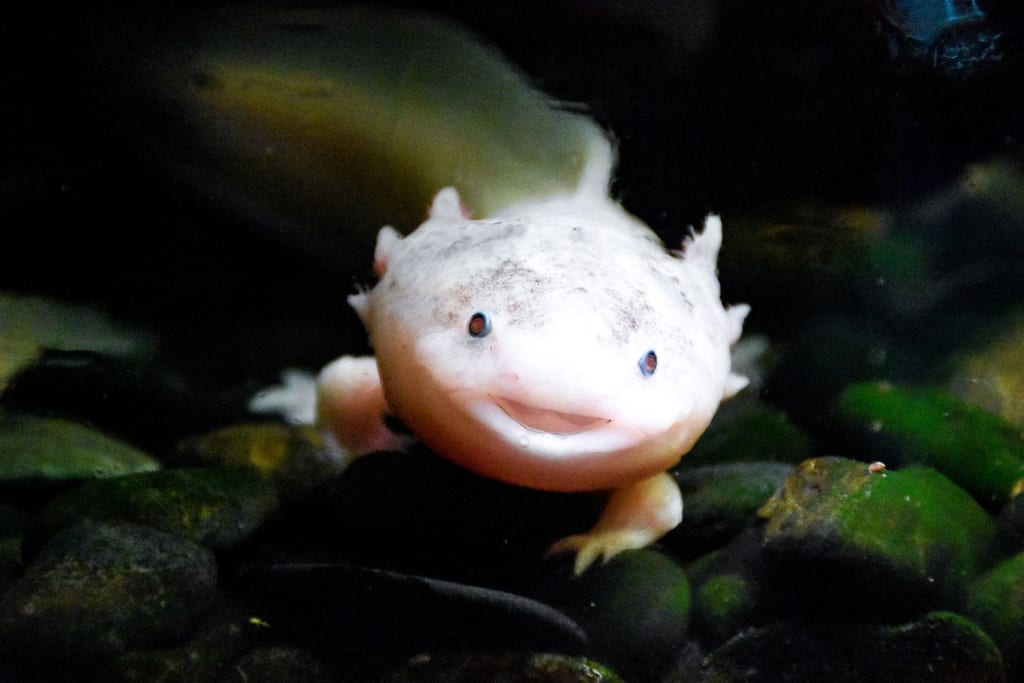
With feathery gills framing its head, tiny limbs, wide-set eyes, and a mouth that appears to form a permanent smile, the axolotl looks almost like an imaginary creature.
Its biological abilities are even more remarkable than its appearance.
An axolotl can regrow a lost limb containing bone, muscle, nerves, blood vessels, connective tissue, and skin. It can repair sections of its spinal cord, regenerate damaged heart tissue, restore parts of its tail, and replace some neuronal populations after injury to certain regions of the brain. Researchers have also studied regeneration in its gills, jaw, skin, liver, and other tissues.
Unlike most amphibians, the axolotl normally does not transform into a terrestrial adult.
It reaches reproductive maturity while retaining aquatic juvenile features, including external gills and a finned tail. This phenomenon is known as paedomorphosis, often discussed more specifically as neoteny in descriptions of the species.
The axolotl’s unusual body has made it one of the most valuable vertebrate models in regeneration research.
Its popularity, however, hides an alarming contradiction.
Axolotls are widely bred in laboratories, aquariums, and private collections, yet the original wild species, Ambystoma mexicanum, is classified as Critically Endangered. Its remaining natural habitat is concentrated in the Xochimilco wetland and canal system in southern Mexico City.
The axolotl may one day help scientists develop better approaches to wound healing, spinal-cord repair, heart recovery, or tissue engineering.
Saving it in the wild is just as important as studying it in the laboratory.
What Is an Axolotl?
The axolotl is an aquatic salamander with the scientific name Ambystoma mexicanum.
It belongs to the mole-salamander family, Ambystomatidae. Most relatives in this group begin life in water and later undergo metamorphosis, losing their external gills and developing features suited to life on land.
The axolotl usually follows a different developmental path.
It becomes a sexually mature adult while keeping many characteristics that would normally be associated with a salamander larva. It remains aquatic, retains its external gills, and keeps a tail fin adapted for movement through water.
This does not mean that an adult axolotl is literally a baby.
It is a reproductively mature animal whose adult body retains juvenile-looking structures.
Axolotl Classification
- Kingdom: Animalia
- Class: Amphibia
- Order: Caudata
- Family: Ambystomatidae
- Genus: Ambystoma
- Species: Ambystoma mexicanum
The species is endemic to Mexico, meaning its original natural distribution is restricted to that country.
The Axolotl Is a Salamander, Not a Fish
Axolotls live permanently in water and have external gills, causing people to mistake them for fish.
They are amphibians.
Like other salamanders, they possess four limbs, a vertebrate skeleton, lungs, and skin that participates in gas exchange. Axolotls can take in oxygen through their external gills, their skin, and their lungs, although the relative importance of each method depends on their condition and environment.
They sometimes swim to the surface and take a gulp of air.
Their external gills are the three branching structures extending from each side of the head. Fine filaments increase the surface area available for exchanging gases with the surrounding water.
When oxygen availability, water conditions, stress, activity, or blood flow changes, the position and appearance of the gills may also change.
Where Do Axolotls Come From?
Axolotls evolved within the lake and wetland systems of the Valley of Mexico.
Historically, they were associated with Lakes Xochimilco and Chalco and probably occurred within other connected waters of the basin. Most of these wetlands were drained, altered, polluted, urbanized, or converted as Mexico City expanded.
Wild Ambystoma mexicanum is now known primarily from the southern remnants of Lake Xochimilco.
Xochimilco no longer resembles one large untouched lake. It consists largely of canals, wetlands, chinampas, agricultural areas, settlements, and heavily modified waterways.
Chinampas are traditional raised agricultural plots separated by canals. They are often described as floating gardens, although the cultivated land is generally constructed and anchored within the shallow wetland system rather than floating freely.
These canals and agricultural landscapes provide important habitat for axolotls and many other native organisms. Conservationists therefore increasingly emphasize that protecting the salamander requires protecting Xochimilco as a functioning ecological and cultural landscape.
Why Axolotls Never Seem to Grow Up
Most amphibians undergo a dramatic transformation.
A frog begins as an aquatic tadpole and develops legs, lungs, and an adult body. Many salamanders similarly begin with external gills before transforming into land-adapted adults.
Axolotls ordinarily remain in their aquatic form.
They become capable of reproduction without completing the conventional metamorphosis seen in related salamanders. Their adult appearance therefore includes:
- Feathery external gills
- A fin extending along the tail
- Aquatic skin
- A broad head
- Small eyes without the prominent eyelids expected in many terrestrial salamanders
- A body adapted to remaining underwater
This developmental strategy is one of the reasons axolotls are frequently described as the “Peter Pan” salamander.
The phrase is charming but biologically imprecise.
Axolotls do mature. They simply mature through a different developmental pathway.
Can an Axolotl Ever Metamorphose?
Axolotls can sometimes undergo metamorphosis under unusual hormonal or experimental conditions.
Researchers have induced metamorphosis using thyroid-related hormonal signals. The resulting animal loses or absorbs several aquatic features and develops a more terrestrial salamander-like form.
This is not the normal healthy life course of a typical axolotl, and it should not be attempted casually by pet owners.
Metamorphosis produces major physiological changes and can reduce regenerative performance. Research has also found substantial changes in the animal’s tissues and associated microbial communities after experimentally induced transformation.
An axolotl remaining aquatic is not failing to develop.
It is following the normal biology of its species.
Why Do Axolotls Look Like They Are Smiling?
The axolotl’s broad mouth curves gently across its face, creating the visual impression of a smile.
That expression should not be interpreted as a reliable indicator of happiness.
The apparent smile results from the shape of the head and mouth rather than a permanent emotional state. An axolotl that looks cheerful can still be stressed, sick, injured, hungry, or living in unsuitable conditions.
The same caution applies to its feathery gills.
Large, colorful gills may appear beautiful, but gill condition alone cannot provide a complete assessment of health.
Wild Axolotls Are Usually Not Pink
The pale pink axolotl with bright red gills is the form most often seen online, in aquariums, toys, illustrations, and video games.
Wild axolotls are generally dark gray, brown, olive, or mottled. Their coloration helps them blend into muddy, vegetated aquatic environments.
Pink or pale animals are often leucistic captive-bred axolotls. Leucism reduces pigmentation but usually leaves some coloration in the eyes and gills. Albino, golden, melanoid, copper, and other color forms have also been produced or maintained through captive breeding.
The dark wild coloration is better camouflage in Xochimilco, while the pink appearance widely associated with the species is largely a product of captivity and popular culture.
What Do Axolotls Eat?
Axolotls are carnivorous aquatic predators.
Their natural diet can include:
- Worms
- Insect larvae
- Small crustaceans
- Molluscs
- Other aquatic invertebrates
- Small fish
- Other sufficiently small animals
Rather than chewing food in the way humans do, axolotls frequently capture prey through suction. They rapidly open their mouths and pull water and prey inward.
Their eyesight is not especially detailed.
They can respond to movement, shadows, water disturbances, chemical signals, and vibrations produced by nearby prey.
Axolotls may remain still for long periods before moving suddenly to capture food.
How Large Can an Axolotl Become?
Adult size varies with genetics, nutrition, age, health, and environmental conditions.
The Natural History Museum reports that axolotls can reach approximately 30 centimeters in length, although many individuals are smaller.
Their body includes:
- A broad, flattened head
- A long trunk
- Four short limbs
- Four toes on the front feet
- Five toes on the rear feet
- A muscular, laterally flattened tail
- A fin extending along much of the body and tail
- Three external gill stalks on each side of the head
Their limbs are useful for walking along the bottom, while the tail provides most of the force for swimming.
What Body Parts Can an Axolotl Regenerate?
The axolotl’s reputation is based on real and extraordinary biology.
However, the claim that it can “regrow its entire body” is misleading.
An axolotl cannot regenerate a completely new individual from a tiny fragment in the manner of some worms or cnidarians. It cannot recover from every injury, and sufficient damage to critical organs can still kill it.
What it can regenerate is remarkable enough without exaggeration.
Complete Limbs
Axolotls can regenerate an amputated limb containing:
- Bone and cartilage
- Skeletal muscle
- Tendons
- Blood vessels
- Nerves
- Connective tissue
- Skin
- Digits
The regenerated limb is not simply a scar-covered stump.
Under suitable conditions, it can reproduce the organization and major functions of the missing structure. Lineage-tracing research has shown remarkably faithful reconstruction, including after repeated amputations.
Regeneration may become slower or less reliable with age, poor health, repeated injury, infection, inappropriate temperature, or other stressors.
The animal’s ability should never be used to justify intentionally injuring it outside ethically regulated scientific research.
Tail and Spinal Cord
When an axolotl loses part of its tail, it can regenerate the collection of tissues contained within it, including skin, muscle, cartilage, blood vessels, and sections of spinal cord.
Cells lining the spinal cord respond to injury, proliferate, and help rebuild neural tissue. Axons can grow across the damaged region, allowing restoration of connections and movement that would be extremely limited after a comparable mammalian spinal injury.
This ability has made axolotls particularly valuable in research on:
- Neural stem and progenitor cells
- Axon regrowth
- Glial responses
- Scar formation
- Developmental signaling
- Recovery of movement after injury
Heart Tissue
Axolotls can repair substantial cardiac injuries.
Experiments involving the removal or damage of heart tissue have demonstrated structural and functional recovery. Existing heart-muscle cells can re-enter the cell cycle and contribute to replacing damaged myocardium. Macrophages and other components of the immune response also participate in creating a regenerative environment.
More recent work has examined the changing metabolism of the axolotl heart during recovery from cryogenic injury. The results support the view that regeneration is an active, coordinated biological program rather than simple wound closure.
The axolotl does not necessarily regenerate an unlimited amount of heart under every condition.
“Regenerates parts of its heart” is more accurate than claiming it can always regrow an entirely missing heart.
Parts of the Brain
Axolotls can replace neural cells after injuries to certain brain regions.
In experiments involving mechanical injury to the adult pallium—a region of the forebrain—researchers found that axolotls regenerated several neuronal populations present before the injury.
This does not mean an axolotl can lose its entire brain and simply grow another.
Brain regeneration studies generally involve controlled damage to specific regions. Restoring cell types is also not automatically equivalent to perfectly recovering every original memory, connection, behavior, or function.
Nevertheless, the ability to generate appropriate neurons after an adult brain injury is exceptional among vertebrates and highly relevant to research on neural repair.
Gills, Skin, Jaw, and Other Tissues
Axolotls can regenerate or repair several additional structures, including:
- External gills
- Skin
- Portions of the jaw
- Parts of the eye
- Sections of liver tissue
- Other connective and muscular tissues
Regenerative capacity varies by tissue, injury type, age, health, experimental conditions, and the amount of structure remaining.
It is therefore better to discuss each organ specifically than to describe the axolotl as universally indestructible.
How Does Axolotl Limb Regeneration Work?
A regenerated limb does not simply expand outward from the wound like an inflated replacement.
Regeneration is a carefully coordinated sequence involving wound healing, cell activation, nerve signals, immune responses, positional information, pattern formation, tissue growth, and differentiation.
1. The Wound Closes
After amputation, epidermal cells rapidly migrate across the exposed surface.
The wound becomes covered without forming the same dense, permanent fibrotic scar that commonly limits regeneration in adult mammals.
This specialized wound epidermis helps create signals required for the next stages of regrowth.
2. A Blastema Forms
Cells near the injury respond by entering a regeneration-capable state.
A mound of proliferating cells called a blastema forms beneath the wound covering.
The blastema is sometimes described as a collection of stem cells, but that description can be misleading. Many cells retain information about the tissue from which they came.
Muscle-related cells generally contribute to muscle, while connective-tissue populations make particular contributions to skeletal patterning and other structures.
The cells become more flexible without necessarily becoming unrestricted cells capable of forming absolutely anything.
3. Nerves Help Sustain Growth
Limb regeneration is strongly dependent on nerves.
Signals associated with innervation help maintain blastema growth and coordinate regeneration. When nerve support is disrupted experimentally, regeneration may stop or become severely impaired.
This nerve dependence is one reason regeneration cannot be understood as a local property of skin or bone alone.
The nervous system actively participates in directing recovery.
4. Cells Remember Where They Are
A regenerating limb must know what is missing.
If an axolotl loses a hand, it should regrow a hand—not an entire extra arm.
If the limb is lost near the shoulder, the replacement must contain the upper arm, forearm, wrist, and digits in the correct sequence.
Cells therefore need positional information.
Research published in 2025 identified a feedback circuit involving the transcription factor Hand2 and Sonic hedgehog signaling that helps preserve posterior identity in axolotl limb cells. This biological memory helps cells understand which side of the limb they belong to and contributes to correct patterning.
A separate 2025 study found that controlled breakdown of retinoic acid is essential for determining position along the limb’s shoulder-to-fingertip axis. When researchers interfered with the enzyme responsible for reducing retinoic-acid signals, regenerating limbs produced incorrect proximal structures.
The important lesson is not simply that one “regeneration gene” exists.
Successful regrowth requires cells to receive the correct signal at the correct concentration, location, and time.
5. The Whole Body Responds
Regeneration is not entirely confined to the stump.
Research has found systemic responses after amputation, including cell-cycle activation and signaling changes in tissues distant from the wound. A 2025 Cell study reported that adrenergic signaling helps coordinate local and distant responses during axolotl limb regeneration.
This suggests that the injured limb communicates with the rest of the body.
Hormones, nerves, immune signals, metabolism, and distant organs may all contribute to preparing the animal for regeneration.
6. Tissues Rebuild in the Correct Pattern
Blastema cells multiply, receive positional instructions, and gradually form the missing structures.
Cartilage and bone take shape.
Muscles form around the skeleton.
Blood vessels enter the new tissue.
Nerves reconnect.
Skin covers the developing limb.
Digits separate and mature.
The result can closely reproduce the original anatomy rather than merely closing the injury.
Why Do Humans Form Scars Instead?
Humans possess substantial healing abilities.
Skin closes after injury. Bone can repair fractures. The liver can restore mass after partial loss. Peripheral nerves can sometimes regrow over limited distances.
However, an adult human cannot regenerate a complete arm or leg.
After major injury, the human body often prioritizes rapid closure, control of bleeding, infection prevention, and structural stabilization. Fibrous scar tissue can seal the injury but may also block the cellular organization needed to reconstruct the original anatomy.
Axolotls manage inflammation and extracellular tissue remodeling differently.
Their cells can reactivate developmental programs, form a blastema, maintain positional information, and rebuild several coordinated tissues without producing the same permanent fibrotic barrier.
This does not mean scarring is simply a biological mistake.
For a large, warm-blooded animal exposed to blood loss and infection, rapid scar formation can be lifesaving.
The challenge for regenerative medicine is not merely to eliminate scars. Scientists would need to promote controlled reconstruction without creating uncontrolled growth, weak tissue, infection, malformed anatomy, or cancer.
Could Axolotls Help Humans Regrow Limbs?
Possibly—but not soon, and not through one simple discovery.
Humans and axolotls share many genes and signaling pathways involved in embryonic development and tissue repair. The difference often lies in when those genes are activated, which cells respond, how the immune system behaves, and whether developmental programs can be safely restarted in adulthood.
Research on axolotls may help scientists understand:
- How mature cells return to a regenerative state
- How blastemas are formed
- How nerves stimulate tissue growth
- How inflammation can support rather than block regeneration
- How cells retain positional memory
- How bone, muscle, nerves, and blood vessels coordinate
- How regenerated tissue avoids severe scarring
- How growth stops after the correct structure is restored
The 2025 discoveries involving Hand2, Sonic hedgehog, and retinoic-acid breakdown are valuable because the underlying molecules or related pathways also exist in humans. That does not mean switching on one gene will cause a human arm to regrow. It means researchers have gained clearer information about the regulatory system that tells regenerating tissue what to build.
More Realistic Medical Applications
The first human benefits may be narrower than complete limb regeneration.
Axolotl research could contribute to improved strategies for:
- Reducing harmful fibrosis
- Healing chronic wounds
- Repairing cartilage
- Restoring damaged heart muscle
- Encouraging peripheral nerve repair
- Improving recovery after spinal-cord injury
- Growing tissues for transplantation
- Engineering more functional replacement structures
- Understanding why regenerative ability declines with age
These possibilities remain research goals, not established treatments.
No approved therapy can currently give an adult human the axolotl’s ability to regrow a complete lost limb.
The Cancer Problem
Regeneration requires cells to multiply rapidly.
Cancer also involves abnormal cell proliferation.
Any attempt to activate large-scale regeneration in humans would therefore need strict biological controls to ensure that cells grow only where required, form the correct tissues, and stop when reconstruction is complete.
Axolotls are valuable partly because they demonstrate that extensive adult cell proliferation can occur in a highly organized manner.
Understanding those control mechanisms may be as important as understanding how growth begins.
Critically Endangered in the Wild
The axolotl’s laboratory success can create the impression that the species is secure.
It is not.
Ambystoma mexicanum is classified as Critically Endangered in its natural environment. Wild populations have undergone severe decline as their range has contracted and the ecological quality of Xochimilco has deteriorated.
Some sources cite estimates of only 50 to 1,000 mature wild individuals, but such numbers should be treated cautiously. A 2025 report on conservation work in Mexico noted that there was no definitive official estimate of the current wild population. Detecting axolotls in a complex, turbid canal system is extremely difficult.
The uncertainty does not reduce the danger.
It reinforces how difficult the remaining animals have become to find and monitor.
Why Are Wild Axolotls Disappearing?
Habitat Loss
Much of the Valley of Mexico’s original lake system has disappeared beneath urban development, drainage projects, roads, housing, and modified waterways.
The remaining Xochimilco habitat is a small fraction of the historical wetland landscape.
Water Pollution
Sewage, agricultural runoff, chemicals, waste, excess nutrients, and other contaminants can degrade canal water.
Pollution may affect axolotls directly or reduce the quality of their prey, breeding sites, vegetation, and shelter.
Amphibians are particularly sensitive to environmental conditions because their skin is permeable and participates in respiration.
Invasive Fish
Introduced tilapia and carp compete for food, disturb vegetation and sediment, and consume axolotl eggs or young animals.
These fish can alter the ecological balance of canals that evolved without such intense pressure from large introduced species.
Urban Pressure
Mexico City surrounds the remaining habitat.
Water extraction, construction, tourism, canal traffic, waste, and conversion of chinampa agriculture can fragment or degrade suitable areas.
Small and Fragmented Populations
When a species becomes rare, each remaining population becomes more vulnerable to:
- Disease
- Pollution events
- Inbreeding
- Extreme weather
- Habitat disturbance
- Reduced breeding success
- Local extinction
A large captive population cannot automatically replace the ecological and genetic value of wild axolotls adapted to Xochimilco.
Captive Axolotls Are Not the Same as the Wild Population
Axolotls have been bred in laboratories for generations.
Many laboratory and pet lineages descend from a relatively limited genetic foundation and may contain genetic contributions from related salamander populations introduced during historical breeding.
Captive animals are therefore not automatically suitable for release into Xochimilco.
A poorly planned release could introduce:
- Disease
- Unsuitable genes
- Reduced local adaptation
- Hybrid ancestry
- Animals unable to survive natural conditions
- Additional ecological disruption
Conservation breeding requires genetic records, disease screening, habitat assessment, and coordination with specialists working directly with the wild population.
Buying a captive axolotl does not directly rescue a wild one.
How Conservationists Are Trying to Save the Axolotl
The axolotl cannot be protected by focusing on the animal alone.
Its water, vegetation, prey, breeding sites, traditional agricultural landscape, and surrounding community must also survive.
Restoring Chinampa Refuges
Researchers and farmers have worked to create or improve protected canal areas associated with functioning chinampas.
Filters or barriers can help restrict invasive fish while allowing cleaner water and native organisms to move through selected refuges.
These projects can support axolotls while also sustaining traditional agriculture and improving habitat for other species.
Improving Water Quality
Reducing sewage, agricultural contamination, waste, and excessive nutrient loading is essential.
Even a genetically healthy population cannot persist in water that does not support feeding, reproduction, egg development, and normal respiration.
Controlling Invasive Species
Removing or excluding carp and tilapia from critical refuges can reduce predation and competition.
Complete removal across Xochimilco would be extremely difficult, so carefully managed protected zones may offer a more practical strategy.
Working With Local Communities
Chinampa farmers and Xochimilco residents are not obstacles to conservation.
They are essential partners.
Projects are more likely to succeed when habitat protection also supports sustainable agriculture, livelihoods, education, cultural identity, and responsible tourism.
Conservation specialists interviewed in Mexico have emphasized that saving the axolotl and preserving the chinampa landscape are inseparable goals.
Maintaining Responsible Captive Populations
Laboratories, universities, zoos, and conservation centers can maintain genetically documented animals, support research, educate the public, and preserve lineages.
Captive conservation is valuable, but it should complement habitat recovery rather than replace it.
A species surviving only inside aquariums has lost its ecological role.
The Axolotl in Mexican Culture
The word “axolotl” comes through Nahuatl and is associated culturally with Xolotl, a deity linked with transformation, death, fire, lightning, dogs, twins, and journeys through the underworld.
Accounts of the mythology describe Xolotl transforming to escape sacrifice, eventually taking an aquatic form associated with the axolotl. The story connects the animal’s unusual appearance and regenerative capacity with themes of transformation and survival.
Today, the axolotl is a widely recognized symbol of Mexico City and Mexican biodiversity.
It appears in:
- Murals
- Crafts
- Children’s books
- Conservation campaigns
- Museum exhibits
- Scientific outreach
- Toys and popular media
- Mexico’s 50-peso banknote
Its cultural visibility has helped attract attention to Xochimilco.
Popularity, however, must translate into habitat protection if the wild animal is to survive.
Common Myths About Axolotls
Myth 1: Axolotls Are Fish
They are aquatic salamanders and therefore amphibians.
Myth 2: Axolotls Never Become Adults
They become sexually mature adults while retaining several juvenile aquatic characteristics.
Myth 3: Axolotls Can Regrow From Any Tiny Piece
They regenerate many structures but cannot recreate an entire animal from an arbitrary fragment.
Myth 4: Axolotls Cannot Die From Injury
They can die from severe trauma, infection, organ damage, poor water conditions, overheating, toxins, starvation, or disease.
Regenerative ability is not immortality.
Myth 5: A Regenerated Limb Appears Instantly
Regeneration is a multistage biological process requiring cell proliferation, pattern formation, nerve support, blood-vessel growth, and tissue maturation.
Myth 6: Axolotls Can Regrow an Entire Brain
They can regenerate cells and tissue after controlled injuries to certain brain regions. This is not equivalent to replacing the entire brain with all memories and connections restored.
Myth 7: Scientists Are Close to Regrowing Human Arms
Axolotl studies provide important biological clues, but whole human-limb regeneration remains a distant and unresolved objective.
Myth 8: Axolotls Are Safe Because They Are Common Pets
Captive-bred axolotls are widespread. The native wild population remains Critically Endangered.
Myth 9: Pink Is Their Natural Wild Color
Wild axolotls are usually dark and mottled. Pink leucistic forms are particularly common in captivity.
Myth 10: Their Smile Means They Are Happy
The “smile” is created by facial anatomy and cannot reliably indicate emotional or physical well-being.
Frequently Asked Questions
What is an axolotl?
An axolotl is a permanently aquatic salamander native to the Valley of Mexico. Its scientific name is Ambystoma mexicanum.
How do you pronounce axolotl?
A common English pronunciation is approximately ACK-suh-LOT-ul. Pronunciation varies, particularly when reflecting the word’s Nahuatl origin.
Are axolotls amphibians?
Yes. They are salamanders belonging to the amphibian order Caudata.
Why do axolotls have external gills?
Because they normally retain aquatic larval characteristics into reproductive adulthood. The feathery gills provide a large surface area for exchanging gases with the water.
Can axolotls breathe air?
Yes. They possess lungs and may rise to the surface to take air. They also exchange gases through their skin and external gills.
Do axolotls live entirely underwater?
The normal axolotl life cycle is fully aquatic. They should not be handled as terrestrial salamanders or removed from water unnecessarily.
What can an axolotl regenerate?
Axolotls can regenerate complete limbs, tail structures, sections of spinal cord, damaged heart tissue, gills, skin, jaw tissue, and cells within certain injured brain regions. The capacity and completeness vary according to the organ and injury.
Can axolotls regenerate their heads?
No. Claims that an axolotl can lose its entire head and grow another are false.
Can an axolotl regrow the same limb more than once?
Research has shown that limbs can regenerate with high fidelity after repeated amputations under controlled conditions, although age, health, and repeated trauma may affect outcomes.
How long does limb regeneration take?
The timing depends on the axolotl’s age and size, the level of amputation, temperature, health, and experimental conditions. Young animals may complete major stages within weeks, while larger adults may take considerably longer.
Does regeneration hurt the axolotl?
Axolotls possess nervous systems and respond to harmful stimuli. Their capacity to regenerate should never be interpreted as evidence that injury is harmless or ethically acceptable.
Scientific experiments require anesthesia, welfare monitoring, ethical approval, and carefully defined research justification.
Why are axolotls important to medicine?
They allow researchers to study how adult vertebrates reactivate developmental programs, avoid excessive scarring, rebuild multiple tissues, regenerate nerves, and control rapid cell growth.
The knowledge may eventually inform treatments for particular human injuries, but it has not yet produced complete human-limb regeneration.
Are axolotls extinct in the wild?
No, but they are Critically Endangered and restricted to a severely reduced and degraded habitat in the Xochimilco area.
Why are axolotls endangered?
The principal pressures include habitat loss, urbanization, poor water quality, pollution, invasive fish, ecological fragmentation, and the very small size of the remaining wild population.
Are captive axolotls endangered?
Captive animals are numerous, but their abundance does not remove the extinction risk facing the genetically and ecologically important wild population.
Can captive axolotls simply be released?
Not safely without specialist planning. Released animals may carry disease, lack appropriate genetic ancestry, or be poorly adapted to wild conditions.
What do axolotls eat?
They consume worms, insect larvae, crustaceans, molluscs, small fish, and other aquatic prey.
Are axolotls blind?
No. They have eyes and can detect movement and changes in light, although they also rely substantially on smell, water movement, and vibration when finding food.
Are axolotls immortal?
No. They age, become ill, suffer injury, and die. Regeneration is not the same as immortality.
Why the Axolotl Matters
The axolotl represents several extraordinary biological ideas at once.
It demonstrates that a vertebrate can reach adulthood without abandoning an aquatic juvenile body plan.
It shows that complex tissues do not always need to heal through permanent scars.
It proves that adult cells can recover developmental abilities without automatically losing all knowledge of what they once were.
It reveals that a spinal cord can sometimes be rebuilt, heart muscle can recover after major injury, and damaged adult brain tissue can produce new neuronal populations.
Its biology challenges assumptions created by studying mammals alone.
Humans often treat our own limited regenerative capacity as though it represents an unavoidable rule for every vertebrate.
The axolotl shows that evolution has produced other possibilities.
Yet its greatest lesson may not come from a laboratory.
A species can become famous across the world while disappearing from the only ecosystem where it evolved naturally.
Millions of people recognize the smiling pink animal.
Far fewer encounter the dark, camouflaged salamander of Xochimilco or understand how close that wild population may be to vanishing.
Scientific knowledge and conservation must therefore move together.
Researchers can continue examining blastemas, immune cells, nerves, positional memory, heart repair, and brain regeneration.
At the same time, farmers, conservationists, residents, authorities, and scientists must protect the canals, water, vegetation, and chinampas that created the species.
The axolotl may help humanity understand how bodies rebuild themselves.
Humanity must decide whether it can rebuild the axolotl’s home.
Final Thoughts
The axolotl is not a magical creature, although its abilities can feel almost magical.
It cannot survive every wound.
It cannot regrow an entire body from one cell.
It cannot give humans instant regeneration through a single gene.
What it can do is scientifically astonishing.
After losing a limb, it organizes cells into a temporary regenerative structure, interprets positional information, reconnects nerves and vessels, rebuilds multiple tissues, and produces a functional replacement.
After certain spinal-cord injuries, it creates an environment that permits neural repair instead of permanent paralysis.
After heart injury, it activates coordinated cellular and metabolic programs capable of restoring damaged muscle.
After controlled injury to parts of the brain, it can replace several neuronal populations.
These abilities make the axolotl one of the most important animals in regenerative biology.
Its appearance makes it one of the most recognizable.
Its conservation status makes it one of the most urgent.
The axolotl’s story is therefore about more than an amphibian that refuses to grow up.
It is about development, repair, memory, evolution, medicine, culture, and extinction.
Scientists are studying how the axolotl remembers the correct shape of a missing limb.
The world must also remember the shape of the ecosystem it is losing—and act before Xochimilco can no longer support the animal that made it famous.


