Shapoor Zadran Passes Away at 38 After Prolonged Battle With Rare HLH Illness
Former Afghanistan fast bowler Shapoor Zadran has passed away at the age of 38 following a prolonged battle with hemophagocytic lymphohistiocytosis, commonly known as HLH.
Zadran died on July 7, 2026, just one day before what would have been his 39th birthday. He had reportedly been receiving treatment in India for the rare and life-threatening immune disorder.
The Afghanistan Cricket Board announced his death with “profound grief and deep sorrow,” remembering him as one of the foundation-laying figures in the country’s cricketing history.
“Shapoor Zadran was one of the foundation-laying figures of Afghanistan cricket, whose dedication, passion, and unwavering commitment played a vital role in the rise and development of the game in our country,” the board said in its tribute.
His death represents an immeasurable loss for Afghanistan cricket.
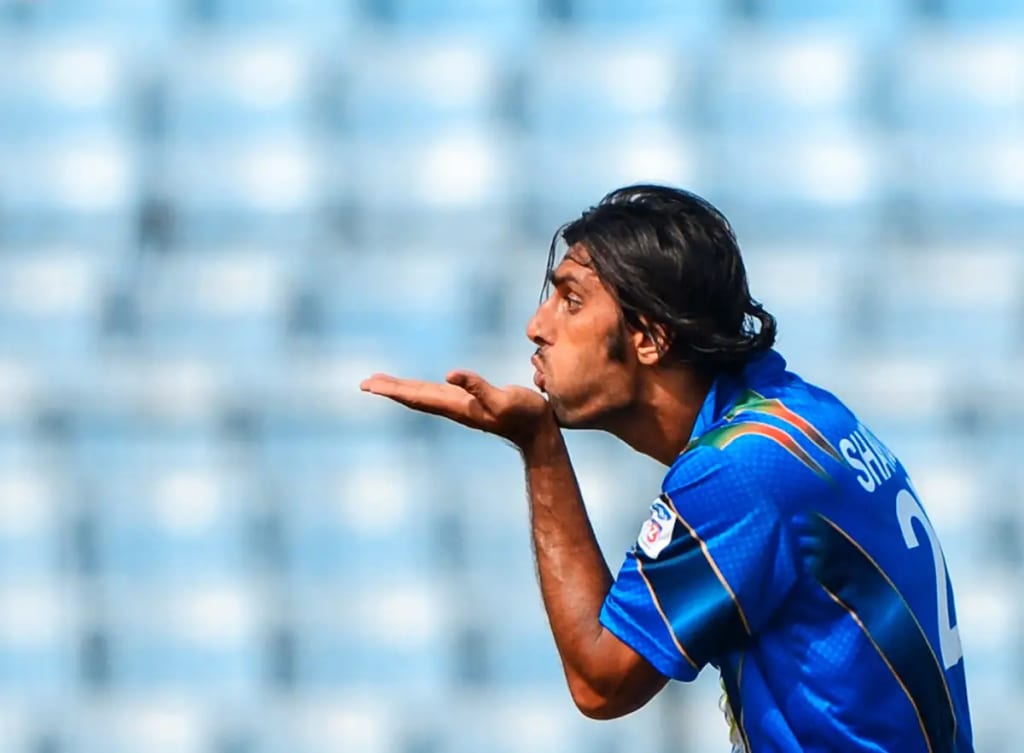
Zadran was more than a fast bowler who represented his country in 80 international matches. With his long hair, powerful run-up, emotional celebrations, and fearless commitment, he became one of the most recognizable faces of the team that carried Afghanistan from cricket’s margins to the World Cup stage.
For many supporters, one image will remain eternal: Shapoor striking the winning runs against Scotland in 2015, throwing his arms into the air and sprinting away as Afghanistan celebrated its first victory at a men’s Cricket World Cup.
He helped a young cricketing nation believe that it belonged.
Afghanistan Cricket Mourns One of Its Pioneers
The news of Zadran’s passing prompted grief across Afghanistan and the wider cricket community.
The Afghanistan Cricket Board extended its condolences to his family, friends, former teammates, supporters, and everyone affected by his death.
Calling him a foundation-laying figure was not an exaggeration.
Zadran represented Afghanistan during a period when the national side was moving through international cricket at extraordinary speed. The team progressed from associate competitions and qualifying tournaments to global events, eventually facing the most established cricketing nations in the world.
Players from that generation did not inherit a fully developed international structure.
They helped build one.
They played while facilities, funding, domestic pathways, and international opportunities were still developing. Every qualification, memorable performance, and victory contributed to the credibility of Afghan cricket.
Zadran’s left-arm pace was a vital part of that journey.
He offered something different from Afghanistan’s developing group of spinners and right-arm seamers. His height, angle, aggression, and willingness to attack gave the bowling unit a distinctive edge.
His performances helped turn Afghanistan from an inspiring story into a genuinely competitive international team.
Shapoor Zadran’s International Career
Zadran represented Afghanistan in 80 international matches, comprising 44 One Day Internationals and 36 Twenty20 Internationals.
He took 43 wickets in ODIs and another 37 in T20Is, finishing with 80 international wickets across the two formats.
His international career stretched from 2009 to 2020.
He made his ODI debut during Afghanistan’s early years at the senior international level and quickly became an important member of the pace attack.
His career included appearances in three ICC Men’s T20 World Cup campaigns and Afghanistan’s historic first appearance at the 50-over Cricket World Cup in 2015.
Zadran’s contribution cannot be evaluated only through wickets and averages.
He bowled during a formative period in which every match carried unusual significance. Afghanistan was establishing its identity, developing confidence against experienced opponents, and introducing its players to a global audience.
Zadran’s energy reflected the ambitions of that team.
He bowled as though every delivery mattered to something larger than the scorecard.
A Left-Arm Fast Bowler With an Unforgettable Presence
Shapoor Zadran was instantly recognizable.
His long, flowing hair moved behind him as he charged toward the crease. His approach was energetic, his action forceful, and his celebrations filled with emotion.
He brought theatre to fast bowling without appearing artificial.
The passion was real.
His physical presence gave Afghanistan an intimidating new-ball option, particularly during the team’s early years in international tournaments.
As a left-arm seamer, he could create an unfamiliar angle for right-handed batters. He was capable of moving the ball, attacking the stumps, and generating uncomfortable bounce from his height.
He did not always possess the consistency of the world’s most established fast bowlers, but he carried something equally valuable for a developing side: belief.
Zadran never appeared overawed by the reputation of an opponent.
Whether bowling against an associate nation or one of cricket’s traditional powers, he approached the contest with the same visible determination.
That fearlessness made him a fan favorite.
The 2015 World Cup Moment That Defined His Legacy
Shapoor Zadran will forever be connected with Afghanistan’s first men’s Cricket World Cup victory.
Afghanistan faced Scotland in Dunedin on February 26, 2015. It was a match between two developing cricket nations, but for Afghanistan it carried historic importance.
Zadran first contributed with the ball, taking four wickets for 38 runs as Scotland were dismissed for 210.
Afghanistan’s chase then became painfully tense.
Samiullah Shinwari’s 96 kept the innings alive, but wickets continued to fall. When the ninth batter was dismissed, Afghanistan still needed runs with only Shapoor Zadran and Hamid Hassan remaining.
The two fast bowlers became the last hope.
They held their nerve and took Afghanistan to the target with three balls remaining. Zadran struck the winning runs, sealing a one-wicket victory and creating one of the most emotional scenes in the country’s sporting history.
His celebration became almost as memorable as the shot.
Zadran ran with his arms spread, overwhelmed by the magnitude of what had happened. Teammates rushed after him as Afghanistan celebrated a victory that extended far beyond one match.
It was the country’s first World Cup win.
For Afghan supporters watching at home and across the diaspora, the moment became a source of pride, joy, and unity.
Why the Scotland Victory Meant So Much
Afghanistan’s victory over Scotland was not a tournament-winning result.
It did not take the team into the knockout stage.
Its importance came from what it represented.
Afghanistan had reached the World Cup after an extraordinary rise through international cricket’s qualifying system. The team arrived with passionate supporters and an inspiring story, but the players wanted to be recognized for more than overcoming difficult circumstances.
They wanted to win.
The Scotland match proved that Afghanistan could handle the pressure of a World Cup contest and complete a difficult chase when almost everything had gone wrong.
Zadran’s winning boundary provided the final image of that achievement.
Fast bowlers are usually remembered for wickets, spells, and intimidating batters. Zadran’s most celebrated moment came with the bat, under enormous pressure, with the match and a piece of national history resting on the final partnership.
It captured the spirit of the team he represented.
Afghanistan refused to surrender.
So did Shapoor.
A Member of Afghanistan’s Foundation Generation
Zadran belonged to a pioneering group that helped establish Afghanistan on the international cricket map.
That generation included players such as:
- Mohammad Nabi
- Asghar Afghan
- Nawroz Mangal
- Hamid Hassan
- Dawlat Zadran
- Samiullah Shinwari
- Mohammad Shahzad
- Noor Ali Zadran
- Gulbadin Naib
Together, these players carried Afghanistan through tournaments, qualifiers, associate competitions, World Cups, and the long process of earning respect.
Their journey preceded the emergence of later global stars such as Rashid Khan, Mujeeb Ur Rahman, Rahmanullah Gurbaz, and Ibrahim Zadran.
The success enjoyed by Afghanistan’s newer generation was built partly on the foundation created by players like Shapoor.
They showed young Afghan cricketers that representing their country at a World Cup was possible.
They made cricket a shared national dream.
More Than Statistics
Statistics provide an important record of Zadran’s career, but they cannot capture everything he meant to supporters.
Numbers do not show the sound of a crowd reacting when he began his run-up.
They do not capture his hair flying behind him as he charged toward the batter.
They cannot measure the pride Afghan fans felt when he wore the national colors at a major tournament.
They do not explain why his winning celebration against Scotland remains instantly recognizable.
Zadran represented a period when every Afghan international match felt like another step into previously unreachable territory.
The players were not only competing.
They were creating memories for a country whose people had endured decades of conflict, displacement, and uncertainty.
Cricket offered moments of shared happiness.
Zadran helped provide some of the greatest.
His Retirement From International Cricket
Zadran played his final international match against Ireland in Greater Noida in March 2020.
After several years away from the national side, he officially announced his retirement from international cricket in January 2025.
In his retirement message, he described cricket as more than a sport. It had been his passion, identity, and purpose.
“Since childhood, I dreamt of representing Afghanistan, and looking back now, I am proud to have played a part in raising our nation’s flag on the international stage,” he wrote.
Those words now carry even greater emotional weight.
Zadran had spent more than two decades connected to the game, including the years before Afghanistan became an established international team.
His formal retirement marked the end of a playing career.
His place in Afghan cricket history had already been secured.
Shapoor Zadran’s Battle With HLH
In the months before his death, reports emerged that Zadran was seriously ill and receiving hospital treatment in India.
He had been diagnosed with hemophagocytic lymphohistiocytosis, or HLH.
His condition was described as critical, and members of his family and the cricket community appealed for support, including blood donations, while he underwent treatment.
The public updates led to an outpouring of prayers and messages from former teammates, supporters, and cricket followers.
On July 7, the battle ended with the devastating confirmation of his death.
Out of respect for Zadran and his family, reports about his condition should remain limited to information that has been publicly confirmed. The exact medical progression of an individual patient is private and cannot be reconstructed from general descriptions of the disease.
What Is Hemophagocytic Lymphohistiocytosis?
Hemophagocytic lymphohistiocytosis is a rare and potentially life-threatening condition involving severe dysregulation of the immune system.
In HLH, immune activity becomes dangerously excessive rather than switching off normally after responding to a threat. This can create widespread inflammation and damage healthy blood cells, tissues, and organs.
The condition can affect organs including the:
- Liver
- Spleen
- Bone marrow
- Lungs
- Brain and nervous system
- Lymph nodes
HLH can occur in children or adults.
Doctors generally distinguish between primary and secondary forms.
Primary HLH
Primary, or familial, HLH is associated with inherited genetic changes affecting the immune system’s ability to regulate itself.
It is most often identified in infants and children, although some genetically influenced cases may appear later.
Secondary HLH
Secondary, or acquired, HLH can be triggered by another condition.
Possible triggers include:
- Viral or bacterial infections
- Cancers, particularly some blood cancers
- Autoimmune or inflammatory conditions
- Immune deficiencies
- Certain treatments that strongly affect immune activity
Secondary HLH is more common among adults.
Public reports have confirmed that Zadran had HLH, but they have not provided sufficient verified medical information to determine publicly which underlying trigger or subtype affected him.
Why HLH Is So Dangerous
The immune system normally activates to fight infection or respond to injury and then reduces its activity when the threat is controlled.
In HLH, that regulatory process breaks down.
Certain immune cells remain highly activated and produce excessive inflammatory signaling. Instead of protecting the body, the response can begin damaging it.
HLH may cause symptoms and abnormalities including:
- Persistent high fever
- Enlargement of the liver or spleen
- Low red blood cell levels
- Low white blood cell levels
- Low platelets
- Extremely elevated ferritin
- Liver dysfunction
- Breathing difficulties
- Rashes
- Jaundice
- Neurological complications
The condition can progress rapidly and may resemble severe infection, sepsis, liver disease, or other inflammatory disorders. That overlap can make diagnosis difficult.
HLH requires urgent specialist care.
Treatment depends on the patient’s age, severity, underlying trigger, organ involvement, and whether the condition is inherited or acquired.
Doctors may use combinations of steroids, immunotherapy, chemotherapy-type medicines, antiviral or antimicrobial treatment, and therapies directed at the underlying trigger. Some patients may require a stem cell transplant.
HLH Is Not Simply a Conventional Autoimmune Disease
HLH is sometimes described in general reporting as an autoimmune or immune disorder.
The most precise description is a syndrome of uncontrolled immune activation and hyperinflammation.
It does not behave exactly like more familiar autoimmune diseases in which the immune system targets one specific organ or tissue.
HLH can involve multiple parts of the immune system and affect several organs simultaneously.
It may be inherited, triggered by infection, associated with cancer, or connected to inflammatory disease.
It is also not itself contagious.
A person cannot catch HLH through ordinary contact with someone who has it.
The Importance of Raising Awareness About Rare Diseases
Zadran’s illness has brought attention to a condition many people had never encountered before.
Rare diseases often create enormous challenges.
Patients may experience delayed diagnosis because their early symptoms resemble more common illnesses. Families may struggle to locate specialists, understand complicated treatment options, or obtain necessary blood products and medications.
The rarity of HLH does not make its impact small for those affected.
Greater awareness can encourage:
- Faster recognition of severe symptoms
- Earlier specialist referral
- More medical research
- Improved access to treatment
- Better support for patients and families
- Increased availability of blood and stem cell donors
Awareness must be handled responsibly.
People experiencing fever, weakness, abnormal blood counts, or other symptoms should not assume they have HLH based on an online article. Those signs have many possible causes and require professional medical assessment.
Zadran’s death should inspire compassion for patients with rare conditions rather than fear or unsupported self-diagnosis.
A Career Built During Afghanistan’s Remarkable Rise
To understand Zadran’s legacy, it is necessary to remember where Afghanistan cricket stood when his career began.
The national team was progressing through international divisions with limited resources and relatively little global recognition.
Within a remarkably short period, Afghanistan qualified for major tournaments, gained ODI status, reached multiple T20 World Cups, appeared at the 2015 Cricket World Cup, and eventually became a Full Member of the International Cricket Council.
Zadran’s career covered much of the ascent.
He was there before Afghanistan became a regular opponent for leading nations.
He was there when every qualification felt historic.
He was there when the team first walked onto the World Cup stage.
He was there when Afghanistan won its first match at that level.
Later generations would take the country to World Cup semifinals and earn victories over some of cricket’s strongest teams.
Zadran helped begin the journey that made those achievements imaginable.
His Partnership With Afghanistan’s Other Fast Bowlers
Afghanistan would later become internationally famous for spin bowling, but its early success also depended heavily on fast bowlers.
Zadran formed part of a determined pace group that included Hamid Hassan and Dawlat Zadran.
Each brought a different quality.
Hamid Hassan offered speed, aggression, and memorable intensity.
Dawlat Zadran provided strength and directness.
Shapoor brought his left-arm angle, height, and emotional energy.
Together, they gave Afghanistan a pace attack capable of challenging opponents before the country’s later generation of elite spinners fully emerged.
In the 2015 World Cup victory over Scotland, the pace bowlers were central. Shapoor’s four wickets helped limit Scotland before his late batting completed the victory.
It was the ideal summary of his commitment: contributing with the ball, refusing to give up with the bat, and celebrating without restraint when history was made.
The Emotion He Brought to Cricket
Some athletes are admired for appearing unaffected by pressure.
Shapoor Zadran was loved because he allowed people to see what the game meant to him.
His joy was visible.
His frustration was visible.
His national pride was visible.
When Afghanistan succeeded, he celebrated as someone who understood exactly how far the team had travelled.
That emotional honesty helped supporters identify with him.
He did not appear distant from the people watching.
He seemed to be carrying their hopes onto the field.
His enthusiasm was especially powerful during Afghanistan’s early World Cup appearances, when players and fans were experiencing those stages for the first time together.
A Symbol of Afghan Resilience
It is easy to describe athletes from Afghanistan only through the language of hardship.
That can unintentionally reduce people to the difficulties surrounding them.
Zadran deserves to be remembered primarily for what he achieved.
He became an international cricketer.
He competed at multiple global tournaments.
He dismissed international batters.
He represented Afghanistan in 80 matches.
He helped secure the country’s first World Cup victory.
He inspired young fast bowlers who saw him challenge established teams.
His career was not meaningful only because circumstances were difficult.
It was meaningful because he was talented, committed, memorable, and brave enough to pursue an extraordinary ambition.
Tributes From the Cricket Community
The Afghanistan Cricket Board’s statement reflected the central place Zadran occupied in the country’s sporting story.
Former teammates, fans, journalists, and cricket organizations remembered his passion, distinctive bowling style, and contribution to Afghanistan’s rise.
For those who shared a dressing room with him, the loss is far more personal than any public tribute can communicate.
They have lost a teammate and friend.
His family has lost a loved one after months of serious illness.
Supporters should therefore remember that behind the famous World Cup images was a private human life now being mourned.
Respectful remembrance means celebrating his achievements without turning the final period of his illness into spectacle.
How Shapoor Zadran Should Be Remembered
He should be remembered charging toward the crease with his long hair flowing behind him.
He should be remembered attacking the stumps with the new ball.
He should be remembered celebrating wickets with complete joy.
He should be remembered standing beside Hamid Hassan with Afghanistan’s first World Cup victory only a few runs away.
He should be remembered striking the winning boundary.
Most importantly, he should be remembered as one of the cricketers who helped transform Afghanistan from an emerging associate side into a respected international team.
Others later reached greater statistical heights.
Few can claim to have helped build the stage on which those achievements occurred.
Shapoor Zadran can.
His Legacy Will Continue
Every Afghan fast bowler who walks into an international stadium now enters a world that Zadran’s generation helped create.
The national shirt carries greater recognition.
The team enters major tournaments with genuine competitive expectations.
Afghanistan’s players are contracted by leagues around the world.
Young cricketers can imagine international careers because they have watched earlier generations prove that such careers are possible.
Zadran’s name will always belong to that beginning.
The winning moment against Scotland will be replayed whenever Afghanistan’s World Cup history is told.
Future supporters who were not yet born in 2015 will see the final boundary, the celebration, and the joy of a team experiencing its first victory.
Through those images, Shapoor will keep running.
Final Tribute
Shapoor Zadran died far too young.
At only 38, and one day short of his 39th birthday, he leaves behind family, friends, teammates, supporters, and a cricketing nation grieving one of its pioneers.
His final months were marked by a battle with HLH, a rare and devastating disorder capable of sending the immune system into uncontrolled, life-threatening overactivity.
That illness ended his life.
It does not define it.
His life should be defined by the dreams he fulfilled, the flag he represented, the wickets he took, and the history he helped create.
When Afghanistan needed a final boundary to achieve its first World Cup victory, Shapoor Zadran was there.
When Afghan cricket needed players prepared to carry it into unfamiliar territory, he was there.
When supporters needed a reason to believe that their team belonged on the world stage, he helped give them one.
The scoreboard will record 80 international appearances and 80 wickets.
Afghanistan’s cricketing memory will record something larger.
It will remember a tall left-arm fast bowler racing in with passion, refusing to retreat, and celebrating as though an entire nation were running beside him.
Rest in peace, Shapoor Zadran.
Your final innings came much too soon, but your place in Afghanistan cricket will never be forgotten.
Frequently Asked Questions About Shapoor Zadran
Has Shapoor Zadran passed away?
Yes. Former Afghanistan fast bowler Shapoor Zadran died on July 7, 2026, following a prolonged illness.
How old was Shapoor Zadran?
He was 38 and died one day before his 39th birthday. He was born on July 8, 1987.
What illness did Shapoor Zadran have?
He had been diagnosed with hemophagocytic lymphohistiocytosis, or HLH, a rare and life-threatening immune disorder.
What is HLH?
HLH is a syndrome in which the immune system becomes dangerously overactive, causing severe inflammation and potentially damaging blood cells, tissues, and vital organs.
Is HLH a type of cancer?
HLH is not itself cancer. However, some cases of secondary HLH can be triggered by cancers, particularly certain blood cancers.
Is HLH an autoimmune disease?
It is more precisely described as an immune-dysregulation and hyperinflammatory syndrome. It may occur alongside autoimmune or inflammatory conditions.
Is HLH contagious?
No. HLH cannot be passed between people through ordinary physical contact.
Can adults develop HLH?
Yes. Although inherited forms often appear in childhood, acquired or secondary HLH can affect adults.
What causes HLH?
HLH may result from inherited genetic changes or be triggered by infections, cancers, autoimmune diseases, immune deficiencies, and other medical conditions.
Can HLH be treated?
Treatment is available, but HLH is a medical emergency. Care may include steroids, immunotherapy, chemotherapy-type drugs, treatment of an underlying trigger, and sometimes stem cell transplantation.
Where was Shapoor Zadran receiving treatment?
Reports said he had been receiving treatment at a hospital in the New Delhi and Greater Noida region of India.
Did Shapoor Zadran’s family seek blood donations?
Reports during his illness said his family and supporters appealed for blood donations while he was receiving hospital treatment.
When did Shapoor Zadran make his international debut?
He began his senior ODI career in 2009 and later made his T20I debut in 2010.
How many international matches did Shapoor Zadran play?
He represented Afghanistan in 80 international matches: 44 ODIs and 36 T20Is.
How many international wickets did he take?
He took 43 ODI wickets and 37 T20I wickets, giving him 80 international wickets in total.
Was Shapoor Zadran a fast bowler?
Yes. He was a tall left-arm fast-medium bowler known for his energetic run-up and attacking approach.
Why was Shapoor Zadran so recognizable?
He was known for his long hair, passionate celebrations, tall frame, left-arm bowling angle, and visible intensity on the field.
Did Shapoor Zadran play Test cricket?
He did not play a Test match for Afghanistan, although he was included in a Test squad during his career.
How many World Cups did he play?
He featured in Afghanistan’s 2015 Cricket World Cup campaign and participated in three ICC Men’s T20 World Cup campaigns.
What was Shapoor Zadran’s most famous moment?
His most famous moment came when he hit the winning runs against Scotland in 2015, securing Afghanistan’s first victory at a men’s Cricket World Cup.
How did Afghanistan beat Scotland in 2015?
Afghanistan chased Scotland’s total of 210 and won by one wicket with three balls remaining. Shapoor Zadran struck the winning runs.
How did Shapoor perform with the ball against Scotland?
He took four wickets for 38 runs, helping Afghanistan dismiss Scotland for 210.
Who batted with Shapoor during the final partnership?
Hamid Hassan was at the crease with him as Afghanistan completed the tense chase.
When did Shapoor Zadran play his final international match?
His final international appearance came against Ireland at Greater Noida in March 2020.
When did he retire?
He officially announced his retirement from international cricket on January 30, 2025.
Why is he considered a pioneer of Afghanistan cricket?
He was a central member of the generation that guided Afghanistan from associate-level cricket into World Cups and regular senior international competition.
What did the Afghanistan Cricket Board say about him?
The board described him as one of the foundation-laying figures of Afghan cricket and praised his dedication, passion, and role in the game’s development.
What is Shapoor Zadran’s legacy?
His legacy rests on his contribution to Afghanistan’s rise, his passionate left-arm fast bowling, and his decisive role in the country’s first Cricket World Cup victory.
How will fans remember him?
Fans will remember his flowing hair, emotional celebrations, aggressive bowling, national pride, and unforgettable winning boundary against Scotland in 2015.