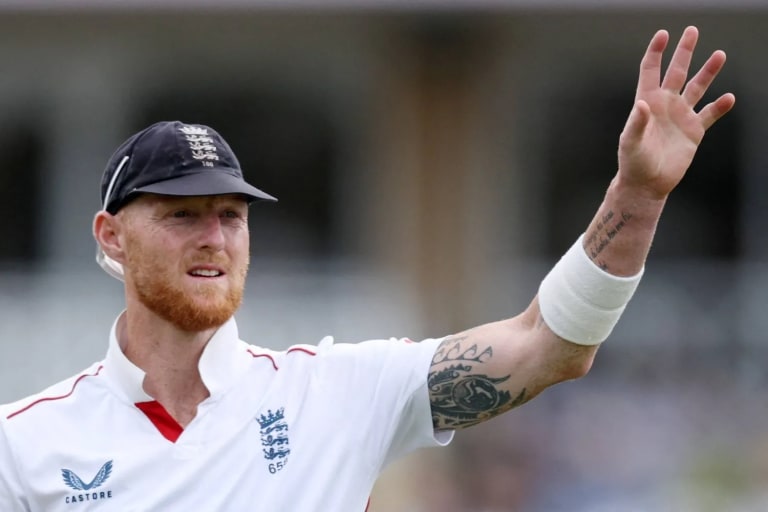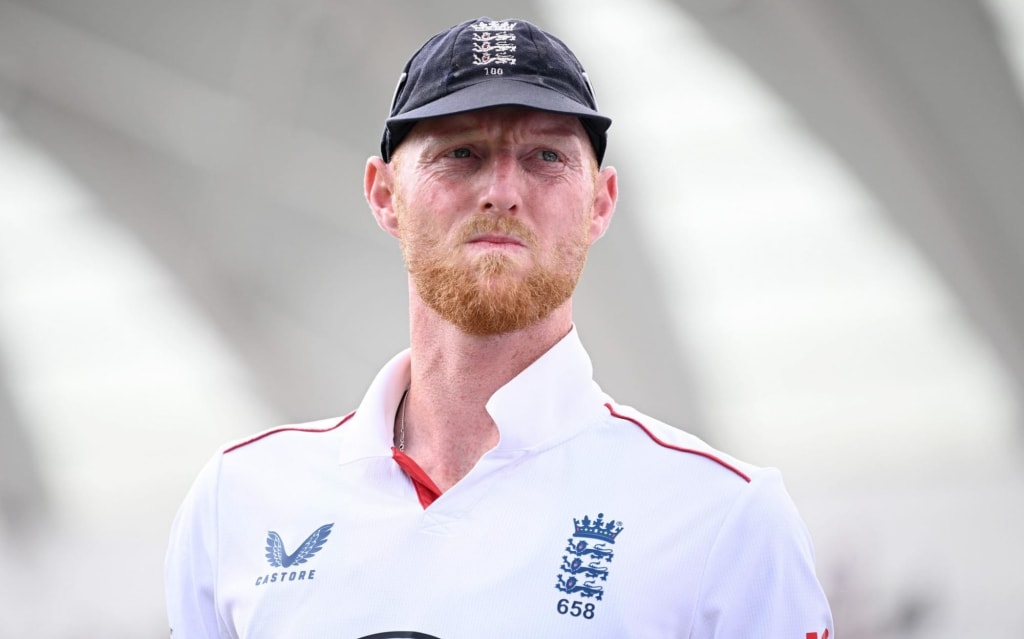
Will Ben Stokes Walk Out to Open the Batting in the Final Innings of His International Career?
Ben Stokes has never been a cricketer who suited quiet exits.
So now that he has announced his retirement from international cricket during the ongoing Trent Bridge Test against New Zealand, one question suddenly feels irresistible:
Will Ben Stokes walk out to open the batting in the final innings of his England career?
It sounds romantic. It sounds reckless. It sounds theatrical. It also sounds exactly like the kind of thing people want from a Ben Stokes farewell.
England have been set a steep fourth-innings chase. The match is alive, the series is on the line, and the pitch is no longer behaving like a batting paradise. This is not a soft goodbye. It is not a ceremonial lap. It is a proper Test match ending, full of danger, pressure, emotion, and possibility.
That is why the idea of Stokes opening the batting is so tempting.
Imagine the scene. Trent Bridge full. England supporters aware they are watching the final day of one of their greatest modern cricketers. New Zealand waiting with the new ball. The target huge. The match heavy with meaning. Then Stokes walks out, not at No. 6, not hidden in the middle order, but first.
Helmet on. Bat under arm. Crowd rising.
It would be pure theatre.
But would it be smart cricket?
That is the real question.
The Emotional Case for Stokes Opening
The emotional case is obvious.
Ben Stokes is not just another England player retiring. He is the man of Headingley 2019. The man of the 2019 World Cup final. The man who dragged England through chaos, pain, glory, collapse, reinvention, and belief. The man who became the face of the Bazball era. The man who made England feel, for a while, that no chase was impossible.
If anyone deserves one final cinematic walk into the storm, it is him.
Opening the batting would give him control of his last act. It would prevent the worst-case emotional scenario: Stokes sitting in pads, waiting, watching wickets fall, maybe never getting the chance to bat again if England collapse or if rain, time, or tactics interfere.
For supporters, the thought of him not batting in his final innings would feel cruel. For Stokes himself, a cricketer built for the big moment, it would feel unfinished.
Opening would guarantee the farewell.
It would let the crowd see him immediately.
It would turn the chase into a statement: if England are going down, their captain is going first.
That is powerful.
It also fits the mythology of Stokes. He has never been defined by safe percentages. He has been defined by moments where he looked at impossible situations and walked directly into them.
A final innings as opener would not be conventional.
But Ben Stokes has rarely been at his best when convention was the point.
The Tactical Case Against It
The tactical case against Stokes opening is just as strong.
England are not chasing a small target. They are chasing 373 in the fourth innings of a Test match. That requires more than sentiment. It requires skill, discipline, judgment, and structure.
Opening the batting in Test cricket is a specialist job. The new ball moves. The bowlers are fresh. The field is attacking. The margin for error is tiny. Even great middle-order players can look uncomfortable against the brand-new ball in difficult conditions.
Stokes has opened before in unusual circumstances, but he is not England’s regular opener. He is a middle-order all-rounder who has built his career on entering after the first phase of the innings, reading the situation, and either rebuilding or attacking.
England have actual openers for a reason.
If the pitch is misbehaving and New Zealand are defending a big target, England may need their established top order to absorb pressure. Sending Stokes in first could be thrilling, but it could also be a waste if he falls early to a ball he would not normally have to face.
There is also the matter of the match itself.
This is still a Test England can try to win or save pride in. Stokes may be retiring, but the team is not playing an exhibition. They owe themselves and the crowd a proper chase. If the best cricketing decision is to keep the batting order normal, sentiment should not override that.
Stokes, more than most, would understand that.
He has always spoken about team-first cricket. His final decision may be shaped less by what looks poetic and more by what gives England the best chance.
The Edgbaston Memory: Why This Question Exists
The reason fans even ask this question is because Stokes has already given them a reason to dream.
In 2024, against West Indies at Edgbaston, Stokes opened the batting in a small chase and produced a ridiculous burst of hitting, reaching the fastest Test fifty by an England player. It was wild, funny, brutal, and completely in tune with the Bazball mood.
That innings matters now because it created a precedent.
It showed that Stokes opening was not impossible. It showed that England were willing to bend convention for speed, theatre, and tactical aggression. It showed that Stokes could walk out at the top and turn a chase into a personal demolition job.
But the situation now is very different.
That Edgbaston chase was small. This Trent Bridge chase is huge. A quick fifty would be exciting, but it would not finish the match. England need hundreds, partnerships, calmness, and sustained batting. They need someone to bat time as well as score quickly.
If Stokes opens and blasts 40 off 25 balls, the crowd will roar. But if England are 50-2 after half an hour, New Zealand will be delighted.
The romance of Edgbaston is real.
The reality of Trent Bridge is harsher.
Also Read: Farewell Ben Stokes: The Man Who Made Impossible Feel Possible
What Would Bazball Do?
The obvious answer is: Bazball would at least think about it.
England under Stokes and Brendon McCullum have spent years challenging the emotional limits of Test cricket. They have chased targets other teams would have treated as fantasy. They have promoted aggression. They have encouraged players to run toward pressure rather than away from it.
In that sense, Stokes opening would be the most Bazball farewell imaginable.
It would say: no fear, no hiding, no slow death. We are chasing 373, and the captain is leading the charge.
That would be thrilling. It would also be risky, and Bazball has always lived in that tension.
But Bazball, at its best, has not simply meant chaos. It has meant clarity. Players are backed to make bold decisions, but those decisions still need purpose. The question is whether Stokes opening would be a tactical move or an emotional gesture.
If England believe New Zealand’s new-ball threat is best countered by disrupting line and length immediately, Stokes opening could be justified. If they believe the chase needs a left-right combination, a specific matchup, or immediate aggression, it becomes a cricket decision.
But if it is only done to create a farewell image, Stokes may resist it.
His legacy is already secure. He does not need a gimmick.
Why Stokes May Prefer to Bat in His Usual Role
There is also a strong emotional argument for Stokes not opening.
His greatest innings have often come from crisis. Headingley 2019 was not an opening assault. It was a rescue, a refusal, a miracle built from the wreckage of a chase. Stokes has always felt most dangerous when the game looks lost and everyone else is starting to calculate defeat.
Batting in the middle order allows one final version of that possibility.
England start the chase. The top order either gives them hope or collapses. Then Stokes comes in with the match shaped, the crowd tense, and the script waiting.
That may actually suit him better.
If he walks in at 120-3, England still dreaming, the ovation would be enormous. If he walks in at 80-4, England desperate, the atmosphere would be even more Stokes-like. The final innings would become less about novelty and more about the familiar image of him trying to bend a match through force of will.
That is his natural theatre.
Opening would guarantee he bats.
Batting in the middle order would preserve the possibility of one last classic Stokes rescue act.
For cricket romantics, both options have beauty.
The Practical Question: Does England Need Him Early?
The answer depends on England’s mindset.
If England believe 373 is chaseable, they may want a proper platform. That means trusting the openers, protecting Stokes for the middle phase, and giving him a chance to attack once the ball is older.
If England believe the only way to chase 373 is to create immediate chaos, Stokes becomes tempting at the top. A fast start could put pressure on New Zealand and change the emotional temperature of the day.
There is also the possibility of a compromise. Stokes does not open, but he promotes himself above his normal position if the situation demands it. For example, if England lose an early wicket and want to keep momentum, he could walk in earlier than expected.
That may be the most realistic scenario.
It gives England flexibility without completely sacrificing structure.
What Fans Want vs What the Team Needs
Fans want the moment.
Teams need the result.
That is the conflict.
Supporters would love to see Stokes open because it would be unforgettable. Cricket is not only about percentages; it is also about memory. People remember images. They remember ovations. They remember legends doing something dramatic when the whole ground knows it is the last time.
But players and coaches live inside the match. They have to think about the ball, the pitch, the target, the opposition, the batting order, and the team’s chance of winning.
Stokes has built his career on big moments, but he has also built it on loyalty to the team. His retirement announcement does not turn the Test into a personal tribute match. It remains an England chase.
That is why the final decision will reveal something about how Stokes wants to leave.
Does he want the farewell image?
Or does he want the best team structure?
Knowing Stokes, he may choose the second even if everyone else wants the first.
The Best Prediction
The best prediction is this: Stokes probably does not open unless England make a deliberate tactical call to attack the chase from ball one.
The romantic possibility is real. The precedent exists. The crowd would love it. The moment would be massive.
But with 373 to chase and the pitch offering danger, the sensible choice is likely to keep the regular openers in place and hold Stokes for the middle order, where he has produced most of his defining work.
That said, nothing about Ben Stokes’ career has been predictable.
If there is one modern cricketer who might turn his final innings into a piece of living theatre, it is him. If he did walk out first, nobody would be completely shocked. People would simply stand up, smile through the emotion, and think: of course he did.
Because with Stokes, the line between tactical madness and sporting poetry has always been thin.
Why This Final Innings Matters So Much
This final innings matters because Ben Stokes has never been just a statistics cricketer.
His numbers are excellent, but numbers alone do not explain him. His career has been about emotional violence: the ability to make crowds believe, opponents panic, teammates follow, and impossible situations feel briefly negotiable.
He was not always elegant. He was not always consistent. He was not always calm. But he was alive in the biggest moments.
That is why this final innings feels bigger than one score.
It is the last chance to see Stokes as an England batter. The last walk down the steps. The last guard. The last grip adjustment. The last stare at the bowler. The last time the crowd waits for him to do something ridiculous.
Whether he opens or not, that moment will carry weight.
If he makes runs, Trent Bridge will shake.
If he fails, the ovation will still be huge.
If he somehow drags England close, it will feel like the final episode of a story that has always specialized in impossible endings.
Final Thoughts
Will Ben Stokes walk out to open the batting in the final innings of his international career?
Probably not, if England choose the most sensible cricketing route.
Possibly, if they choose emotion, aggression, or one last Bazball gamble.
Either way, the question itself shows what Stokes has meant to cricket. Very few players retire and immediately make people imagine something outrageous, cinematic, and somehow believable. Stokes is one of them.
He has spent his career making absurd ideas feel possible.
A World Cup final rescue.
Headingley.
Bazball.
Fastest England Test fifty.
One final fourth-innings chase.
So maybe he opens. Maybe he waits. Maybe he walks in at No. 6 with England wobbling and the whole country holding its breath. Maybe he gets one last miracle. Maybe cricket, as it often does, refuses the perfect script.
But whatever happens, the final innings will be watched differently because Stokes is involved.
Every run will feel heavier.
Every defensive shot will feel strange.
Every swing will carry memory.
And when he walks back for the last time, whether from the top of the order or the middle, England cricket will know it has just watched the end of an era.
FAQs
Has Ben Stokes officially retired from international cricket?
Yes. Ben Stokes has announced that the ongoing Trent Bridge Test against New Zealand will be his final match for England.
Will Ben Stokes open the batting in his final innings?
There is no official confirmation that he will open. It is a possibility fans are discussing, but the most likely option is that England keep their regular batting order unless they choose a bold tactical move.
Has Ben Stokes opened the batting before?
Yes. Stokes has opened in a Test chase before, most famously against West Indies at Edgbaston in 2024, when he smashed the fastest Test fifty by an England player.
Why do fans want Stokes to open?
Fans want Stokes to open because it would guarantee he bats in his final innings and create a dramatic farewell moment in front of the crowd.
Why might England avoid opening with Stokes?
England may avoid it because they are chasing a large target in difficult conditions. Opening is a specialist role, and Stokes is more valuable in the middle order where he can read the match situation.
What target are England chasing?
England have been set a target of 373 by New Zealand in the fourth innings at Trent Bridge.
Would opening with Stokes be a good tactical move?
It depends on England’s approach. If they want immediate aggression, it could make sense. If they want structure and partnerships, keeping Stokes in the middle order is more logical.
What would be the most Stokes-like ending?
The most Stokes-like ending would be him walking in during a crisis and trying to pull off one final impossible chase. That has been the story of his career.
Is this the end of the Bazball era?
Not necessarily, but Stokes’ retirement marks the end of its most important playing and leadership figure. England will now have to redefine that style without him.
What makes Stokes’ final innings so emotional?
Stokes has been central to some of England’s greatest modern cricket moments. His final innings represents the closing chapter of a career built on courage, chaos, belief, and unforgettable drama.