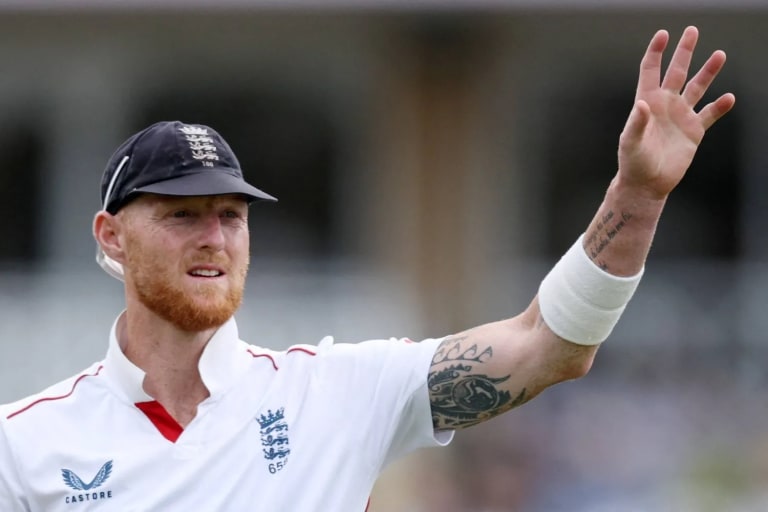
Farewell Ben Stokes: The Man Who Made Impossible Feel Possible
Some cricketers are remembered by numbers.
Ben Stokes will be remembered by moments.
That is not because the numbers were small. They were not. Across formats, across years, across injuries, across pressure, across chaos, Stokes built a career that stands among the most influential England have ever seen. Runs, wickets, catches, captaincy, trophies, records, match-winning performances — the record book will hold enough proof of his greatness.
But the record book will never fully explain him.
It will not explain the noise at Lord’s in 2019 when England needed everything and Stokes somehow found it. It will not explain the disbelief at Headingley when one man dragged a hopeless Ashes Test into cricketing folklore. It will not explain the sight of him limping, grimacing, charging in, throwing himself into spells his body had no right to deliver. It will not explain the way England looked different under his captaincy, as if fear itself had been removed from the dressing room.
Ben Stokes was not merely a great cricketer.
He was an event.
Whenever he walked into a match, something felt possible. Not likely. Not sensible. Not statistically recommended. Possible. And in sport, that is the rarest gift of all.
He made supporters believe after logic had packed its bags. He made opponents nervous when the game should have been safe. He made teammates braver because he seemed willing to carry the heaviest part of the fight himself.
Now, as he says goodbye to international cricket, England are not just losing an all-rounder. They are losing one of the defining competitive spirits of the modern game. A player who turned pressure into theatre, pain into fuel, and crisis into the place where he did his best work.
Farewell, Ben Stokes.
Cricket will still go on.
But it will feel a little less dangerous without you.
The Rare Cricketer Who Changed the Weather of a Match
Every generation has good players. Fewer have great players. Fewer still have players who alter the emotional weather of a match simply by entering it.
Stokes belonged to that last category.
When he came to the crease, people stopped doing ordinary calculations. Required run rate, wickets in hand, overs remaining, match situation — all of it mattered, but none of it felt final. Because if Stokes was there, the game had not fully closed its doors.
That was his power.
He was not always pretty. He was not always controlled. Sometimes he looked like a man trying to wrestle the entire match into submission. But that was part of the appeal. Stokes played cricket as if it was not only a sport but a test of nerve, will, and refusal.
There were more technically perfect batters. There were more naturally elegant stroke-makers. There were faster bowlers. There were cleaner all-rounders on paper. But very few players in cricket history have owned pressure the way Stokes did.
He did not always beat pressure.
But he always walked toward it.
That is why fans loved him. That is why opponents feared him. That is why his retirement feels larger than one career ending. It feels like the departure of a certain kind of sporting possibility.
Lord’s 2019: The Day England Needed a Miracle
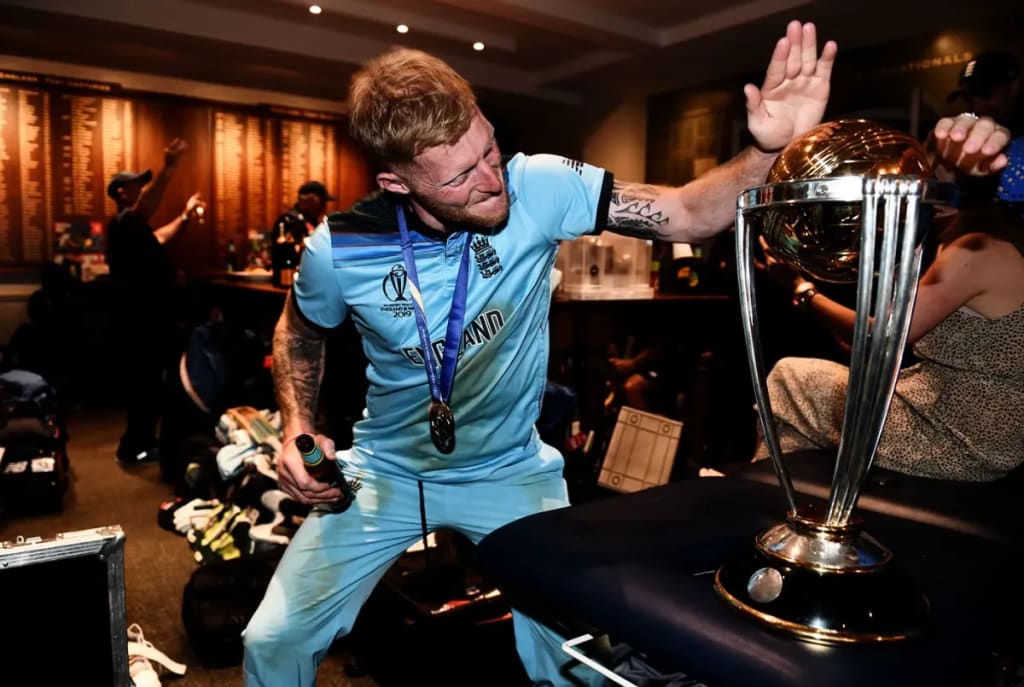
No farewell tribute to Ben Stokes can avoid the 2019 World Cup final.
It was the day English cricket changed forever. It was the day decades of white-ball disappointment, heartbreak, near-misses, tactical confusion, and old wounds came down to one impossible afternoon at Lord’s.
England were chasing New Zealand. The match tightened. The pressure became unbearable. Wickets fell. Hope flickered. The crowd knew history was close, but history was not being kind.
Then Stokes stayed.
He absorbed pressure, fought through exhaustion, found boundaries, ran himself into the ground, and carried England into the final over of a final that seemed scripted by madness. The deflection off his bat. The super over. The countback. The noise. The confusion. The disbelief.
Through it all, Stokes was there.
His unbeaten 84 was not just an innings. It was a national exorcism. England, the birthplace of cricket, finally won the men’s Cricket World Cup, and Stokes was the face of the moment.
He did not win it alone. No one ever wins a World Cup alone. But he was the man in the fire when the fire was hottest.
That innings would have defined most careers.
For Stokes, it became only one chapter.
Headingley 2019: The Innings That Should Not Exist
Then came Headingley.
Just weeks after the World Cup final, Stokes produced an innings that still feels unreal no matter how many times it is replayed.
Australia had the Ashes within reach. England were nine wickets down. The chase looked dead. The match looked finished. Supporters were preparing for heartbreak. Commentators were searching for closing lines.
Stokes refused.
His 135 not out was not merely great. It was absurd. It was reckless and controlled, desperate and calculated, violent and patient. He farmed the strike, trusted Jack Leach, attacked Nathan Lyon, launched sixes into the crowd, survived chaos, and turned a lost Test into one of the greatest wins England have ever known.
That innings became a permanent part of cricket memory.
Not because England won only a match, but because Stokes changed what people thought was possible. He stretched belief beyond its normal boundary.
There are innings that win games.
There are innings that win series.
Then there are innings that become emotional landmarks.
Headingley was that.
Years from now, children who never watched it live will hear about it. Clips will circulate. Old fans will say where they were. Australian supporters will still feel the sting. English supporters will still feel the electricity.
And at the center of it will always be Ben Stokes, arms out, roaring into history.
Also Read: Will Ben Stokes Walk Out to Open the Batting in the Final Innings of His International Career?
Cape Town 258: The Wildness Before the Legend Fully Formed
Before Lord’s and Headingley turned him into a national myth, there was Cape Town.
In 2016, Stokes smashed 258 against South Africa, one of the most violent and thrilling Test innings of the modern era. It was a performance that announced his scale. Not just his talent, but his appetite for destruction.
That innings was Stokes before the full legend settled around him. Younger, wilder, explosive, impossible to ignore. He did not just score runs. He attacked the idea of restraint. Bowlers disappeared. Fielders watched. The scoreboard lost discipline.
Cape Town showed the cricket world that Stokes was not a normal all-rounder.
He had the game to change a Test match in a session. He had the nerve to keep going. He had the physical presence to intimidate. He had the rare ability to make cricket feel like combat without losing its beauty.
It was not his most emotionally significant innings. It was not his most famous. But it was one of the first major signs that England had a player who could break the shape of a match.
The later miracles were built on that same force.
The Bowler Who Gave Everything His Body Had
Stokes the batter will dominate the highlight reels, but Stokes the bowler deserves just as much respect.
Because his bowling was never only about pace or swing. It was about effort.
He bowled the hard overs. The heavy overs. The spells that looked painful even from the stands. He bowled when England needed something to happen, when the pitch was flat, when partnerships were growing, when his knee was complaining, when his body looked like it had already given enough.
And still he ran in.
That was part of his identity. Stokes treated bowling as an act of will. He could produce hostility, reverse swing, awkward bounce, and relentless pressure, but what stood out most was the sense that he was pouring himself into every delivery.
Some bowlers glide.
Stokes charged.
There were spells where it looked like he was trying to drag the match with him by force. Those spells mattered. They lifted crowds. They told teammates that the captain was not asking for anything he would not do himself. They reminded opponents that England still had a man prepared to suffer for a breakthrough.
In an age of workload management and careful planning, Stokes often looked like an old-fashioned warrior trapped in a modern body.
That body paid the price.
But England benefited from every painful yard.
The Fielder Who Made the Impossible Ordinary
Stokes was also one of the great modern fielders.
His catching was athletic, instinctive, and often outrageous. He could turn half-chances into wickets. He could change games from gully, slip, the deep, or anywhere the ball dared to travel. He brought the energy of a man who hated being a passenger.
Fielding is often treated as the third part of an all-rounder’s package, behind batting and bowling. But with Stokes, it was central to the whole thing.
He attacked the ball. He moved with aggression. He made moments happen. A catch, a run-out, a diving stop — these were not side details. They were part of the way he imposed himself on matches.
Great fielders create pressure even when they are not directly involved. Batters know where they are. Captains place them where the game might turn. Bowlers feel bigger because the fielder behind them can make the unlikely happen.
Stokes gave England that.
He was never content to be in the match.
He wanted to affect it.
The Captain Who Changed England’s Mindset
When Stokes became England Test captain in 2022, the team needed more than tactics. It needed oxygen.
England’s Test cricket had become tense, hesitant, and weighed down by fear of failure. Batters were stuck between survival and collapse. Bowlers carried huge workloads. The team looked trapped by its own caution.
Stokes, alongside Brendon McCullum, changed the tone almost immediately.
Bazball was never only about scoring quickly. That was the headline version. The deeper change was emotional. England began playing as if failure was not a crime. Batters were encouraged to express themselves. Bowlers were backed. Selection became bolder. Chases became adventures. Declarations became weapons. Matches became events.
Not every gamble worked. Not every decision was perfect. There were defeats, criticism, overreach, and days when the method looked too loose. But no one could deny that England became watchable, fearless, and alive.
Stokes gave the team permission to be brave.
That may be his greatest captaincy legacy.
He did not merely lead a side. He changed its posture. He made England stand taller. He made players believe they could shape the game rather than wait for the game to judge them.
In a sport often ruled by caution, that mattered.
Bazball and the Stokes Imprint
Bazball will always be linked with Ben Stokes.
Others contributed. McCullum’s philosophy mattered deeply. Joe Root, Jonny Bairstow, Ben Duckett, Zak Crawley, Harry Brook, Ollie Pope, James Anderson, Stuart Broad, Mark Wood, Jack Leach, and others all shaped the era in different ways. But Stokes was the emotional engine.
He was the proof of concept.
When a captain tells players to be fearless, they listen politely. When that captain has lived fearlessness in the most brutal cricketing situations imaginable, they believe him.
Stokes could ask for risk because he had taken risk. He could ask for sacrifice because he had sacrificed. He could tell players not to fear failure because he had failed publicly and come back stronger.
That authenticity made the message powerful.
Bazball sometimes became a slogan, sometimes a debate, sometimes a punchline. But at its best, it was a liberation movement inside Test cricket. It reminded people that the longest form of the game did not have to be slow in spirit. It could be imaginative, aggressive, emotional, and modern without losing its soul.
Stokes was the captain who made that vision visible.
The Human Being Behind the Heroics
Part of what made Stokes compelling was that he was never presented as flawless.
His career had lows. Public lows. Painful lows. The 2016 T20 World Cup final, when Carlos Brathwaite hit him for four consecutive sixes, could have broken a weaker player. The 2017 Bristol incident brought scrutiny and consequences. Injuries tested him. Personal grief tested him. Mental health struggles took him away from the game. The burden of leadership, expectation, body management, and public judgment was heavy.
But Stokes kept returning.
That is one reason his story connected so strongly. He was not a polished machine. He was human. Sometimes angry. Sometimes vulnerable. Sometimes heroic. Sometimes wrong. Sometimes magnificent.
Sport often tries to turn great athletes into statues before they are finished living. Stokes resisted that, partly because his career was too messy and alive to become marble. His greatness did not come from perfection. It came from response.
He failed and came back.
He hurt and came back.
He was doubted and came back.
He carried grief and came back.
That made the great moments feel earned.
Not gifted.
Earned.
The 2022 T20 World Cup: Another Final, Another Stokes Finish
If Lord’s 2019 showed Stokes as the man for impossible drama, the 2022 T20 World Cup final showed another version of him.
This was not the same wild chaos. This was control. Pakistan had made the match awkward. The chase was not huge, but finals create pressure that numbers cannot describe. England needed calm, and Stokes provided it.
His unbeaten half-century guided England home and secured another global trophy.
It was a reminder that Stokes was not just a one-moment legend. He was a repeated big-match performer. Different format, different continent, different pressure, same answer.
When England needed someone to stand between them and panic, Stokes stood there.
That is why his retirement feels so significant. Players like that do not come around often. Big-match temperament cannot be manufactured easily. It cannot be selected from a spreadsheet. It is revealed only when everything is shaking.
Stokes passed that test again and again.
More Than an All-Rounder
Calling Stokes an all-rounder is accurate, but somehow insufficient.
An all-rounder bats and bowls. Stokes did that. But he also captained, fielded, inspired, disrupted, rescued, attacked, provoked, absorbed, and transformed.
He gave England tactical balance, but he also gave them emotional balance. He could change a match with the bat, with the ball, with a catch, with a declaration, with a stare, with a spell, with a speech, or simply by refusing to accept the obvious ending.
That is rare.
Some players are great because they make the difficult look easy. Stokes was great because he made the impossible look worth attempting.
That difference defines him.
He did not always make cricket look smooth. He made it look alive. He carried the dirt, sweat, bruises, mistakes, and fire of competition. Watching him was rarely relaxing. It was often stressful, even chaotic. But it was never dull.
He gave cricket pulse.
England After Stokes
England will find another captain. Another all-rounder will come. Another player will take the No. 6 spot, bowl the overs, stand in the slips, speak in the dressing room, and lead the team into the next era.
But no one will simply replace Ben Stokes.
That is not how players like him work.
The next England team will have to build its own identity. It may keep parts of Bazball. It may soften others. It may become more measured, more balanced, or more unpredictable. Harry Brook, Joe Root, Ben Duckett, Ollie Pope, Jofra Archer, and the next generation will carry the side forward.
But the emotional center will change.
For years, Stokes was the man who made England feel dangerous even when they were vulnerable. Without him, the team must learn a new kind of courage. Not borrowed from his presence. Not sparked by his example in the middle. Their own.
That is the challenge he leaves behind.
Great leaders do not only win matches. They change what others believe they can do. If England’s next era still plays with freedom, still refuses fear, still treats pressure as an invitation, then Stokes will remain present even in retirement.
That may be the truest legacy of all.
Why Supporters Loved Him
Supporters loved Stokes because he gave them memories.
Not just wins. Memories.
The kind you talk about years later. The kind that become personal. The kind where people say, “I remember where I was.” The kind that make sport feel bigger than entertainment.
Lord’s 2019.
Headingley 2019.
Cape Town.
The T20 World Cup final.
The captaincy rebirth.
The desperate bowling spells.
The impossible catches.
The roar.
The clenched jaw.
The belief.
Fans do not fall in love with careers only because of averages. They fall in love with how players make them feel. Stokes made people feel nervous, hopeful, terrified, thrilled, and alive. Sometimes all in the same over.
He gave England fans emotional whiplash and somehow made them grateful for it.
That is why the farewell hurts.
Not because cricket has lost a perfect player, but because it has lost a player who made imperfection dramatic and courage contagious.
A Career Built on Refusal
If there is one word that defines Ben Stokes, it is refusal.
Refusal to accept a lost cause.
Refusal to be defined by failure.
Refusal to let pain fully silence him.
Refusal to let England’s Test team remain timid.
Refusal to let pressure dictate the terms.
Refusal to go quietly into matches that seemed already decided.
His greatest innings were acts of refusal. His best spells were acts of refusal. His captaincy was an act of refusal against a culture of fear.
That is why he became bigger than his role. He represented a way of competing.
Not always wise. Not always safe. Not always successful.
But unforgettable.
Stokes reminded people that sport is not only about probability. It is also about courage. Sometimes the numbers say no, and someone has to be stubborn enough to ask again.
He did that better than anyone of his era.
The Farewell England Did Not Want, But Always Knew Would Come
Retirements always feel strange when they arrive.
Even when the body is tired. Even when the signs are there. Even when the player has already given more than seemed reasonable. The final announcement still lands with force.
Because supporters are greedy with legends. They want one more innings. One more spell. One more chase. One more celebration. One more impossible day.
With Stokes, that feeling is even stronger because his whole career trained people never to leave early.
If he was still there, something could happen.
Now, for the first time, England must imagine the game after him.
That is difficult.
But farewell is also part of sporting greatness. The ending gives shape to the story. The final walk back, the final applause, the final lift of the bat, the final over, the final shirt — these are the moments where supporters realize how much a player has meant.
Stokes deserves every ovation coming his way.
Not as a perfect hero.
As a true one.
Thank You, Stokesy
Thank you for the madness.
Thank you for Lord’s.
Thank you for Headingley.
Thank you for making Test cricket feel dangerous again.
Thank you for every spell bowled through pain.
Thank you for every catch that seemed impossible until it landed in your hands.
Thank you for the courage to come back from public failure.
Thank you for speaking honestly about struggle.
Thank you for giving England a new language of belief.
Thank you for reminding cricket that the game is still at its best when no one knows what is about to happen.
You leave with trophies, records, runs, wickets, scars, and stories.
But most of all, you leave with memories.
And cricket is built on those.
Final Thoughts
Ben Stokes retires from international cricket as one of England’s greatest and most influential players.
But more importantly, he leaves as one of cricket’s great memory-makers.
He was the man England turned to when the match was slipping away. The man who made supporters believe after belief had become unreasonable. The man who could turn panic into possibility, possibility into momentum, and momentum into history.
He was not easy to categorize because he was never only one thing. Batter. Bowler. Fielder. Captain. Fighter. Match-winner. Risk-taker. Leader. Survivor.
He was all of it.
His career was not smooth, but it was magnificent. It had glory and pain, genius and chaos, failure and redemption. That is why it felt real. That is why it mattered. That is why this farewell feels emotional.
England cricket will move on because sport always does.
But every time a chase looks impossible, every time a captain dares to attack when caution would be easier, every time a player refuses to surrender to the match situation, people will think of Ben Stokes.
Because for one unforgettable era, he made impossible feel like part of the plan.
Farewell, Ben Stokes.
You did not just play the game.
You changed the way it felt.
FAQs About Ben Stokes’ Retirement and Legacy
Why is Ben Stokes’ retirement such a big moment?
Ben Stokes’ retirement is a major moment because he has been one of England’s most influential modern cricketers. He played defining roles in World Cup wins, produced one of the greatest Ashes innings ever, and transformed England’s Test mindset as captain.
What is Ben Stokes best remembered for?
He is best remembered for his 84 not out in the 2019 World Cup final, his 135 not out at Headingley in the 2019 Ashes, his 258 in Cape Town, his 2022 T20 World Cup final innings, and his leadership during the Bazball era.
Was Ben Stokes England’s greatest all-rounder?
Many will place him among England’s greatest all-rounders. Comparisons across eras are difficult, but his impact in all formats, his big-match performances, and his leadership make him one of the most important cricketers England has produced.
What was Ben Stokes’ greatest innings?
For many fans, his unbeaten 135 at Headingley in 2019 is his greatest innings. Others may choose his 84 not out in the 2019 World Cup final because of its historic importance.
What did Ben Stokes change as England captain?
As captain, Stokes helped England play with more freedom, aggression, and belief. Alongside Brendon McCullum, he helped create the Bazball era, changing the emotional and tactical identity of England’s Test cricket.
Why did fans connect so strongly with Ben Stokes?
Fans connected with Stokes because he produced unforgettable moments under pressure. He was emotional, fearless, flawed, human, and capable of turning lost causes into legendary wins.
Did Ben Stokes win World Cups with England?
Yes. Stokes played crucial roles in England’s 2019 ODI World Cup victory and their 2022 T20 World Cup win.
What made Stokes different from other players?
Stokes was different because of his ability to influence matches in every department and his extraordinary temperament in crisis. He made unlikely victories feel possible.
What will England miss most after Stokes retires?
England will miss his all-round skills, leadership, aggression, presence, and ability to produce match-defining performances when pressure was at its highest.
What is Ben Stokes’ legacy?
Ben Stokes’ legacy is belief. He taught England to attack pressure, not fear it. His greatest gift was making impossible cricket feel possible.