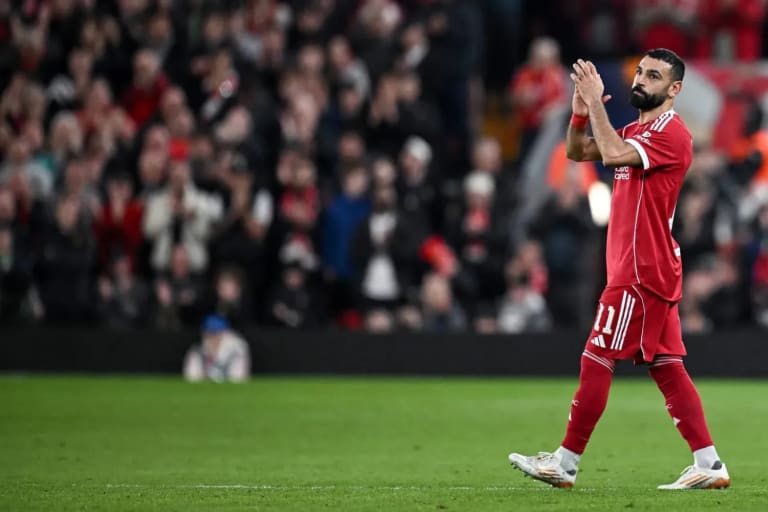
Happy Birthday, Kemar Roach: Celebrating the Relentless West Indies Fast-Bowling Great at 38
Happy Birthday to Kemar Roach, one of the finest and most resilient fast bowlers of the modern West Indies era.
Born on June 30, 1988, in Saint Lucy, Barbados, Roach celebrated his 38th birthday in 2026 with perhaps the most fitting gift of his distinguished career: membership in the exclusive 300-Test-wicket club.
Only two days before his birthday, Roach claimed his 300th Test wicket during the West Indies’ commanding victory over Sri Lanka in Antigua. The milestone placed him alongside some of the greatest bowlers Caribbean cricket has ever produced: Courtney Walsh, Sir Curtly Ambrose, Malcolm Marshall, and Lance Gibbs.
For a fast bowler who began his career generating frightening pace from a relatively compact frame, survived injuries and periods outside the team, refined his craft, and remained effective for more than 15 years, reaching 300 wickets represents far more than a statistical achievement.
It represents endurance.
It represents discipline.
It represents reinvention.
Above all, it represents Kemar Roach’s unwavering commitment to West Indies cricket during an era when the team frequently faced uncertainty, transition, and enormous expectations created by its legendary fast-bowling past.
Roach may not possess the towering height of Joel Garner or Curtly Ambrose. He may not bowl every delivery at the extreme speed that announced him to the world as a young man. But through accuracy, movement, intelligence, aggression, and remarkable determination, he has earned his place among the most accomplished West Indian bowlers in Test history.
On his birthday, it is worth celebrating not only the wickets he has taken, but the journey behind them.
A Fast Bowler From Barbados
Barbados occupies a special place in the history of West Indies cricket.
The island has produced generations of exceptional cricketers, including Sir Garfield Sobers, Malcolm Marshall, Sir Wes Hall, Gordon Greenidge, Desmond Haynes, Joel Garner, and several other players who helped shape the identity of Caribbean cricket.
Growing up within that tradition meant Roach inherited an enormous legacy.
Fast bowling in the West Indies has never been treated as merely another skill. It is part of the region’s sporting mythology. The great pace attacks of the 1970s, 1980s, and early 1990s intimidated opponents and helped the West Indies dominate international cricket.
Every young Caribbean fast bowler who followed was inevitably measured against those giants.
Roach entered international cricket at a time when West Indies cricket was no longer the dominant force of previous generations. He did not have the luxury of joining an established attack filled with legendary names. Instead, he became one of the bowlers responsible for keeping that tradition alive.
From the beginning, he carried that responsibility with aggression and pride.
An Unusual Beginning to Test Cricket
Roach made his Test debut against Bangladesh in July 2009 under highly unusual circumstances.
A dispute between senior West Indies players and the cricket board resulted in an inexperienced squad being selected. Seven players made their Test debuts in the opening match, and Roach suddenly found himself representing the West Indies on the biggest stage.
The circumstances were difficult, but the young Barbadian fast bowler immediately stood out.
His first Test wicket was Bangladesh all-rounder Shakib Al Hasan. Across the two-match series, Roach took 13 wickets, including outstanding innings figures of 6 for 48.
Even though West Indies lost the series, Roach emerged as a major discovery.
He was fast.
He was aggressive.
He possessed a sharp bouncer and a dangerous yorker.
Most importantly, he did not appear intimidated by international cricket.
What began as an opportunity created by crisis quickly became the start of a remarkable career.
When the established players returned, Roach retained his place because he had already proved that he belonged.
The Young Speedster Who Challenged Australia
Later in 2009, Roach toured Australia and demonstrated that his debut success was not accidental.
Australia’s batters were accustomed to facing elite fast bowling, but Roach’s speed, skiddy trajectory, and aggression immediately gained their attention. Although he was not especially tall by fast-bowling standards, his quick arm action allowed the ball to hurry onto batters.
One of the defining moments of his early career came during the Test series when a rapid bouncer struck Australian captain Ricky Ponting on the elbow and forced him to retire hurt.
The delivery approached 150 kilometres per hour and became a statement to world cricket.
Roach was not merely promising.
He was dangerous.
His battles with Ponting represented the fearlessness that defined his early years. He was a young bowler facing one of the finest batters of the generation, yet he refused to retreat or become overly respectful.
That competitive instinct would remain central to his cricket.
A Historic World Cup Hat-Trick
Roach also created history in limited-overs cricket.
During the 2011 Cricket World Cup, he produced a devastating spell against the Netherlands in Delhi. Roach took 6 wickets for just 27 runs and completed a hat-trick by dismissing Pieter Seelaar, Bernard Loots, and Berend Westdijk.
He became the first West Indies bowler to take a hat-trick in a men’s Cricket World Cup and only the sixth bowler overall to achieve the feat at that point.
Roach finished the tournament as the West Indies’ leading wicket-taker with 13 dismissals.
The performance demonstrated the full force of his early bowling style. He attacked the stumps, delivered yorkers at pace, and gave the lower order little chance to survive.
Although his greatest legacy would ultimately be built in Test cricket, the World Cup hat-trick remains one of the most celebrated moments of his international career.
It was fast bowling in its most dramatic form: direct, destructive, and unforgettable.
Ten Wickets Against Australia
Roach reached another major milestone during Australia’s tour of the Caribbean in 2012.
In the second Test in Trinidad, he completed his first 10-wicket match haul. He became the first West Indies bowler since Corey Collymore in 2005 to claim 10 wickets in a Test and the first West Indian since Curtly Ambrose in 1993 to do so against Australia.
He finished the three-match series with 19 wickets, more than any other bowler from either side.
The achievement was important because Australia remained one of the strongest teams in world cricket. Roach was proving that he could lead an attack against high-quality opposition rather than merely overwhelm weaker batting lineups.
His pace was still a major weapon, but his bowling was beginning to show greater control and tactical maturity.
He could attack with short deliveries.
He could target the stumps.
He could move the ball.
He could sustain pressure across long spells.
Roach was developing from a gifted speedster into a complete Test bowler.
The Difficult Middle Years
Fast-bowling careers are rarely straightforward.
The physical demands are severe, and Roach experienced injuries, changes in form, technical challenges, and periods outside the West Indies team.
During the 2015–16 tour of Australia, he endured a difficult series and went wicketless across three Tests. For a bowler who had once unsettled Australian batters with extreme speed, it was a painful period.
His international future appeared uncertain.
Roach was no longer the same raw speedster who had burst onto the scene. Injuries had affected his rhythm and pace. Younger bowlers were emerging, and the West Indies needed results.
At that point, his career could easily have faded.
Instead, Roach returned to domestic cricket and rebuilt himself.
This period became one of the most important parts of his story.
Greatness is not only revealed when everything works naturally. It is revealed when an athlete loses a major weapon and discovers another way to succeed.
Roach adapted.
He shortened his run-up.
He improved his control.
He focused more carefully on seam position, swing, movement off the pitch, and subtle changes of angle.
He transformed from a bowler who frightened batters primarily through speed into one who defeated them through precision.
The Reinvention of Kemar Roach
When Roach returned to the Test team in 2017, he looked like a more intelligent and complete bowler.
The extreme pace of his earliest years was no longer his defining characteristic. Instead, he developed an exceptional understanding of line, length, seam movement, and batting weaknesses.
He became particularly dangerous with the new ball.
Roach learned how to make batters play deliveries they would prefer to leave. He developed the ability to move the ball both ways and became highly effective around the off-stump channel.
His compact action remained deceptive. Because he was shorter than many fast bowlers, the ball often arrived at an uncomfortable trajectory. Rather than producing steep bounce from great height, he could make deliveries skid, seam, and hurry onto the batter.
The older Roach was no less threatening than the younger version.
He was simply threatening in a different way.
This evolution is what makes his career so impressive.
Many fast bowlers lose effectiveness when their pace decreases. Roach used experience to compensate. He studied conditions, batters, and match situations. He understood when to attack, when to hold a line, and when to use movement rather than speed.
He became a craftsman.
The Destruction of England in 2019
One of the finest periods of Roach’s career came during England’s tour of the Caribbean in 2019.
The West Indies won the Test series 2–1, with Roach playing a central role. He took 18 wickets at an average below 14 and repeatedly dismantled England’s batting order.
In the opening Test in Barbados, he produced a devastating spell of 5 for 17 as England collapsed for just 77 runs in their first innings.
It was a masterclass in Test-match seam bowling.
Roach did not need to rely on spectacular pace. He attacked the correct areas, moved the ball, and forced accomplished batters into mistakes. England had no answer.
The series victory became one of the proudest moments of his career.
For West Indies supporters, it also represented a reminder of what Caribbean fast bowling could still achieve. Roach, Jason Holder, and the wider attack combined discipline with aggression and overwhelmed a highly rated England side.
Roach was no longer merely a survivor from an earlier era.
He was the leader of a successful modern pace attack.
Reaching 200 Test Wickets
In July 2020, Roach claimed his 200th Test wicket by dismissing Chris Woakes during the series against England.
The milestone carried considerable historical meaning. He became the first West Indies bowler to reach 200 Test wickets since Curtly Ambrose had done so decades earlier.
That gap illustrated the difficulty of Roach’s journey.
He had represented the West Indies through years in which the team lacked consistency and frequently changed personnel. Unlike bowlers from dominant sides, he did not always benefit from large first-innings totals, relentless pressure from every end, or favourable match situations.
He often had to create opportunities himself.
Reaching 200 wickets confirmed that he was more than a good bowler from a difficult era. He had become one of the most productive bowlers in West Indies history.
Yet Roach was not finished.
He had already spoken about 300 wickets as an ultimate career goal.
At the time, reaching that number seemed possible but far from guaranteed. Fast bowlers must remain healthy, selected, and effective long enough to accumulate such a total.
Roach continued working.
The Mentor of a New Generation
As his career progressed, Roach became more than the senior bowler in the West Indies team.
He became a mentor.
Young fast bowlers such as Jayden Seales, Alzarri Joseph, and Shamar Joseph entered international cricket with pace, natural talent, and enormous potential. Roach could offer them something equally valuable: experience.
He understood the physical strain of Test bowling.
He understood the pressure of carrying West Indian fast-bowling expectations.
He understood how to survive injuries and poor form.
He understood that pace alone is not enough for a long career.
His presence allowed younger bowlers to learn about discipline, preparation, patience, seam position, and the importance of maintaining pressure even when wickets do not arrive immediately.
Roach’s value therefore extended beyond his own figures.
Every spell bowled beside a younger teammate carried lessons.
Every conversation could preserve knowledge accumulated across more than 15 years of international cricket.
In a region with such a proud pace-bowling history, that transfer of experience is essential.
County Cricket and the Development of His Craft
Roach’s time in English county cricket also played an important role in his development.
He represented teams including Worcestershire, Surrey, and Durham, learning how to operate in conditions where swing, seam movement, patience, and accuracy are heavily rewarded.
His years with Surrey were particularly successful. Roach became a respected figure at the club, providing wickets, experience, and leadership.
County cricket offered him opportunities to bowl long spells and refine his skills away from the intense pressures of international competition. It also required him to adjust to different pitches, weather conditions, and batting techniques.
These experiences helped make him a more adaptable bowler.
The benefits were visible whenever he returned to Test cricket. Roach understood how to manipulate the seam, use the crease, and create uncertainty without attempting to bowl every delivery at maximum pace.
He had become a student of fast bowling.
The Road to 300
The final stretch toward 300 Test wickets demanded patience.
Injuries interrupted Roach’s availability, including a knee problem that kept him out of the 2024 tour of England. He also spent periods outside the West Indies side as selectors balanced experience with the development of younger fast bowlers.
However, Roach refused to disappear.
He returned for the 2025 Test tour of New Zealand and continued moving toward the landmark. By the time Sri Lanka arrived in the Caribbean in June 2026, he stood on 294 wickets.
Six more were required.
At the Sir Vivian Richards Stadium in Antigua—one of his most productive venues—Roach completed the task.
His 300th wicket arrived during a dominant West Indies victory, making the occasion even more meaningful. He finished Sri Lanka’s innings with four wickets and joined a list that contains some of the most revered names in cricket history.
Courtney Walsh.
Sir Curtly Ambrose.
Malcolm Marshall.
Lance Gibbs.
Kemar Roach.
The achievement belonged not only to him, but to every coach, teammate, family member, supporter, and Caribbean cricket fan who had followed his journey from raw speed to refined mastery.
Why 300 Test Wickets Matter
Three hundred Test wickets represent excellence sustained across many years.
A bowler must survive changing captains, coaches, selectors, teammates, opponents, conditions, injuries, and personal challenges. He must remain fit enough to bowl thousands of deliveries and skilled enough to dismiss generations of international batters.
For a fast bowler, the accomplishment is particularly demanding.
Every delivery places stress on the ankles, knees, back, shoulders, and muscles. The body repeatedly absorbs the impact of the run-up, delivery stride, and follow-through.
Roach reached 300 wickets despite not possessing the physical height traditionally associated with dominant fast bowling. He succeeded by maximizing his natural gifts and continuously improving his craft.
The landmark also carries special importance for West Indies cricket.
The region has produced an extraordinary number of fast-bowling legends, yet no West Indian had reached 300 Test wickets since Ambrose.
Roach broke that long wait.
He connected the celebrated past with the present.
More Than Raw Pace
The story of Kemar Roach is ultimately a story of evolution.
The young Roach was exciting because of his speed.
The experienced Roach became great because of his intelligence.
Early in his career, batters worried about bouncers approaching 150 kilometres per hour. Later, they worried about deliveries moving just enough outside off stump to take the edge.
The first version attacked the body.
The later version attacked technique and judgment.
Both were effective.
Roach’s career demonstrates that fast bowling is not simply about running in and delivering the ball as quickly as possible. It is an art involving rhythm, angles, movement, control, observation, and courage.
A mature fast bowler must understand the batter’s habits.
Where does he move before release?
Which deliveries does he prefer to leave?
How does he respond to pressure?
Can he be drawn forward?
Can the crease create a different angle?
Should the bowler attack the stumps or threaten the outside edge?
Roach learned to answer those questions better with every season.
A Great of a Difficult Era
Cricketers are often judged by team success, but individual careers must also be understood within their historical circumstances.
Roach played most of his cricket during a difficult period for the West Indies. The team experienced administrative disputes, inconsistent performances, frequent changes, and the continuing pressure of comparison with the dominant sides of the past.
He did not play within the fearsome four-man pace attacks enjoyed by earlier West Indian generations.
He did not regularly defend enormous totals.
He did not participate in an era of continuous West Indian dominance.
Instead, he frequently had to lead an inexperienced attack and search for wickets in challenging situations.
That context makes his record even more valuable.
Roach remained committed when easier paths may have existed in franchise or domestic cricket. He continued returning to the demands of Test cricket because representing the West Indies mattered to him.
His career became a symbol of loyalty during uncertainty.
The Personality Behind the Bowler
On the field, Roach has always competed intensely.
His wicket celebrations reveal emotion, pride, and energy. He has challenged great batters without appearing intimidated by their reputations.
Away from the contest, however, teammates and cricket officials frequently describe him as professional, disciplined, and willing to help younger players.
That contrast is common among great fast bowlers.
The aggression belongs to the contest.
The generosity belongs to the dressing room.
Roach’s longevity required more than talent. It required preparation, physical care, humility, and a willingness to keep learning. Fast bowlers cannot survive into their late thirties through natural ability alone.
Every comeback from injury required rehabilitation.
Every loss of pace required technical adjustment.
Every selection challenge required mental strength.
The 300 wickets are therefore evidence of character as much as skill.
His Place Among West Indies Greats
Comparing players from different eras is never simple.
Courtney Walsh possessed extraordinary endurance.
Curtly Ambrose combined height, accuracy, movement, and intimidation.
Malcolm Marshall is widely regarded as one of the greatest fast bowlers the sport has produced.
Lance Gibbs established his legacy through world-class off-spin.
Roach followed a different path.
He did not need to become a copy of any previous legend. His career deserves recognition on its own terms.
He became the finest West Indies fast bowler of his generation.
He carried the attack through difficult years.
He transformed his bowling when injuries and age demanded it.
He reached 300 wickets without the consistent team dominance enjoyed by many historical greats.
That combination secures his position within the upper level of Caribbean cricket history.
A Birthday Arriving at the Perfect Moment
Roach’s 38th birthday could hardly have arrived at a more appropriate moment.
Just two days earlier, he had reached a goal that once seemed distant. Cricket West Indies presented him with a special shirt carrying the number 300, while supporters and former players celebrated his achievement.
Birthdays naturally invite reflection.
For Roach, the milestone provides an opportunity to look back at an extraordinary journey:
From Saint Lucy to international cricket.
From an emergency Test debut to 89 appearances.
From raw speed to seam-bowling mastery.
From a World Cup hat-trick to 300 Test wickets.
From a young bowler challenging Ricky Ponting to a veteran mentoring the Caribbean’s newest generation.
Few careers contain such a complete transformation.
Final Thoughts
Happy Birthday to Kemar Roach, a true servant and modern great of West Indies cricket.
His career has been built on far more than pace. It has been built on courage, intelligence, adaptability, patience, and relentless professionalism.
Roach arrived as a young speedster capable of unsettling the world’s finest batters. He developed into a disciplined Test bowler who could control the new ball, exploit subtle movement, and defeat opponents through precision.
He survived injuries.
He survived difficult tours.
He survived periods outside the team.
He adapted when his body changed.
He returned when others might have faded away.
And just before celebrating his 38th birthday, he reached 300 Test wickets and joined the greatest bowlers in West Indies history.
That achievement is a fitting reward for one of Caribbean cricket’s most determined competitors.
Kemar Roach has carried the spirit of West Indian fast bowling through a challenging era. He has shown younger players that greatness is not defined only by natural speed or spectacular beginnings.
It is defined by how long you remain committed to the craft.
It is defined by how you respond when circumstances change.
It is defined by the willingness to evolve.
Three hundred Test wickets later, Kemar Roach’s legacy is secure.
Happy Birthday to the pride of Barbados, the leader of a generation, and one of the finest fast bowlers ever to represent the West Indies.
#HappyBirthdayKemarRoach #KemarRoach #WestIndiesCricket #WindiesCricket #300TestWickets #FastBowling #BarbadosCricket #CricketLegends #TestCricket #CaribbeanCricket #WorldCupHatTrick
FAQs About Kemar Roach
When was Kemar Roach born?
Kemar Roach was born on June 30, 1988, in Saint Lucy, Barbados.
How old is Kemar Roach?
Kemar Roach celebrated his 38th birthday on June 30, 2026.
What is Kemar Roach’s full name?
His full name is Kemar Andre Jamal Roach.
How many Test wickets has Kemar Roach taken?
Roach reached 300 Test wickets during the West Indies’ Test victory over Sri Lanka in June 2026.
How many West Indies bowlers have taken 300 Test wickets?
Roach became the fifth West Indian bowler to reach 300 Test wickets, following Courtney Walsh, Sir Curtly Ambrose, Malcolm Marshall, and Lance Gibbs.
When did Kemar Roach make his Test debut?
He made his Test debut against Bangladesh in July 2009.
What are Kemar Roach’s best Test bowling figures?
His best innings figures are 6 wickets for 48 runs, achieved against Bangladesh during his debut Test series in 2009.
Did Kemar Roach take a World Cup hat-trick?
Yes. He took a hat-trick against the Netherlands during the 2011 Cricket World Cup and finished with figures of 6 for 27.
Was Kemar Roach the first West Indian to take a World Cup hat-trick?
Yes. He became the first West Indies bowler to claim a men’s Cricket World Cup hat-trick.
What makes Kemar Roach’s bowling distinctive?
Roach combines a quick arm action, skiddy pace, accurate seam bowling, movement with the new ball, a dangerous yorker, and excellent knowledge of angles and batting weaknesses.
Which English county teams has Kemar Roach represented?
His English county career has included spells with Worcestershire, Surrey, and Durham.
Why is Kemar Roach considered a West Indies great?
He has taken 300 Test wickets, led the attack across a difficult era, reinvented himself after injuries, and become an important mentor to younger Caribbean fast bowlers.