Colorado Pauses Wolf Killings as Only 45 Gray Wolves Remain in Its Fragile Reintroduction Program
In the mountains of Colorado, the return of the gray wolf was supposed to mark one of America's most ambitious wildlife restoration successes.
After decades of absence, wolves were once again moving through alpine forests, raising pups, forming packs, and reclaiming a role they had lost in the state's ecosystem.
But less than three years after the first planned reintroductions, the program is confronting a difficult reality.
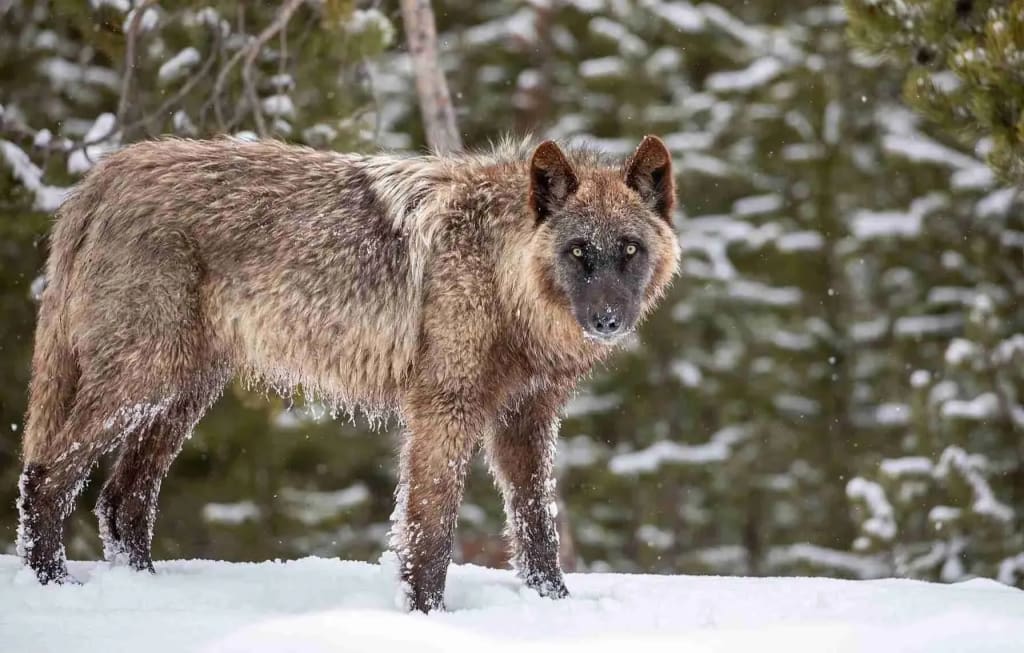
Colorado Parks and Wildlife (CPW) has temporarily suspended its chronic wolf-depredation directive after detecting just 45 gray wolves statewide, including 20 pups born in 2026.
The decision, announced on September 30, follows concerns about adult wolf survival, potential disease, livestock conflicts, and the possibility that the state's wolf population may fail to grow during the current biological year, which ends March 31, 2027.
The suspension is significant, but it is not a blanket ban on killing wolves.
Wildlife officials retain legal authority to consider lethal control in appropriate circumstances. What has changed is the administrative guidance and the degree of caution they intend to apply.
For conservation advocates, the decision is a necessary step toward protecting a fragile recovering population.
For ranchers, it raises serious concerns about protecting cattle, sheep, and livelihoods from repeated predator attacks.
Caught between those competing priorities is an animal whose return has become one of the most closely watched conservation experiments in the American West.
Colorado's Wolf Population: What the Latest Numbers Reveal
COLORADO GRAY WOLF UPDATE — SEPTEMBER 24, 2026

CPW's minimum confirmed population count, not necessarily every wolf present in the state.
The population includes four reproducing packs, another group of four siblings traveling together, and several wolves living outside established packs.
At first glance, 45 animals might sound like progress compared with the initial release of 10 wolves in December 2023.
But the age structure of the population tells a more complicated story.
Colorado's 45 confirmed wolves

September 24, 2026 minimum count, divided by pups born in 2026 and other detected wolves.
2026 pupsAdults and yearlings
Nearly 44% of the detected animals are pups born this year.
Those pups have not yet passed through their first winter, a period when survival can be especially challenging.
The count is therefore not evidence that Colorado already has a secure, self-sustaining wolf population.
It is a snapshot of a recovering population whose future depends heavily on survival and successful reproduction.
Why Colorado Stopped Its Chronic Wolf-Removal Directive
Colorado's wolf management framework previously included a directive providing guidance for the lethal removal of wolves repeatedly involved in livestock attacks.
The directive was intended to help wildlife managers respond to persistent conflicts while following state regulations and federal requirements.
But the agency has now suspended it temporarily.
CPW says future requests for lethal control will receive more conservative, individualized consideration because of concerns about population growth.
What the Suspension Actually Means
The agency has not declared that wolves can never be killed.
Instead, officials will consider circumstances individually while revisiting the administrative framework governing chronic livestock depredation.
The distinction matters.
A temporary suspension of guidance does not repeal existing wildlife-management laws, livestock compensation provisions, or every legal mechanism allowing lethal action.
CPW's own website continues to explain the regulatory factors officials must consider when lethal control is proposed.
The agency intends to have revised guidance in place by April 1, 2027, the beginning of the next biological year.
That deadline gives wildlife managers several months to reassess the population while consulting ranchers, agricultural organizations, conservation advocates, and other stakeholders.
Why Just 45 Wolves Is a Serious Conservation Concern
The central issue is not simply the total number of wolves.
It is whether enough animals can survive, reproduce, and establish packs capable of sustaining themselves over time.
Gray wolves are social predators whose family structures often include breeding adults, yearlings, and younger pups.
Successful reproduction depends on food availability, suitable habitat, breeding opportunities, and the survival of enough adults to raise future generations.
When an emerging population is small, losing even a few breeding animals can have consequences extending beyond the individual deaths.
Adult Wolf Survival Is Below Expectations
CPW reported that adult survival during the biological year from April 1, 2025, through March 31, 2026, was approximately 61%.
The agency compared this with a more typical survival rate of about 75% for an unharvested wolf population.
That gap helps explain the current concern.
Although wolves can reproduce successfully, low adult survival may undermine gains from the birth of new pups.
This is especially important when so much of the population consists of young animals that have not yet reproduced.
Twenty Pups Do Not Guarantee Twenty Future Adults
Colorado's latest count identified 20 pups born during 2026.
This is encouraging because it demonstrates successful reproduction.
However, the agency noted that typical first-year pup survival in western wolf populations ranges from approximately 50% to 60%.
Colorado's detected pups had an unusually high first-year survival rate of 82% during the preceding biological year, but officials cautioned against assuming similarly favorable outcomes for the current cohort.
If survival follows more typical patterns, some of the pups counted in September may not survive through March 2027.
The exact outcome remains unknown.
Colorado's Wolf Reintroduction Began With a Historic Public Vote
To understand why this decision has generated such strong reactions, it is necessary to revisit the origins of the project.
In November 2020, Colorado voters narrowly approved Proposition 114.
The ballot measure directed state wildlife officials to develop and implement a plan for reintroducing gray wolves west of the Continental Divide.
The measure also required compensation for livestock owners affected by wolf depredation.
In December 2023, Colorado released its first 10 wolves as part of the voter-approved restoration effort.
Why Wolves Had Disappeared From Colorado
Gray wolves once ranged widely across Colorado and much of the American West.
During the nineteenth and early twentieth centuries, predator-control campaigns, hunting, and expanding human settlement drastically reduced their numbers.
By the mid-twentieth century, wolves had effectively disappeared as a reproducing resident population in Colorado.
Their return became a major wildlife-conservation objective, although public support and opposition varied substantially between urban and rural communities.
Reintroduction Does Not End With Releasing Animals
Moving wolves into suitable habitat is only the beginning.
A successful restoration effort requires animals to survive, reproduce, establish territories, and develop a population that can persist without continual intervention.
It must also address conflict with people who already live and work in wolf habitat.
This is where Colorado's program has encountered some of its most difficult challenges.
Ranchers Say the Policy Change Leaves Livestock More Vulnerable
For livestock producers in Colorado's mountain communities, wolf restoration is not merely an abstract conservation policy.
It can mean finding injured cattle, dead sheep, or missing animals on land where families have raised livestock for generations.
Wolves are capable predators, and some individuals or packs repeatedly target domestic animals.
Although not every wolf attacks livestock, the economic and emotional consequences of verified attacks can be substantial for individual producers.
Agricultural Organizations Condemn the Suspension
On September 30, several major Colorado agricultural organizations jointly criticized CPW's decision.
The Colorado Farm Bureau, Colorado Cattlemen's Association, Colorado Livestock Association, Colorado Wool Growers Association, and Rocky Mountain Farmers Union argued that suspending the directive undermines the management framework developed through years of stakeholder negotiations.
They expressed concern that ranchers would face additional uncertainty when responding to repeatedly depredating wolves.
Their opposition reflects a central tension in wildlife restoration.
The state seeks to establish a viable wolf population, but ranchers want credible safeguards against ongoing livestock losses.
Both issues directly affect whether the program can maintain public support.
Five Wolves Were Killed Under Colorado's Management Program in 2026
The September decision followed a series of lethal management actions.
CPW reported that it had removed five wolves since April 1, 2026, in response to chronic livestock depredation.
The agency was also investigating an additional wolf mortality at the time of the announcement.
These deaths were particularly significant because the population remained small.
The Copper Creek Wolf Case
One documented case involved an uncollared yearling formerly associated with the Copper Creek pack.
CPW reported that the wolf had been linked to 10 confirmed livestock-depredation incidents involving 22 sheep over approximately 11 months.
Wildlife managers lethally removed the wolf on June 12, 2026, after substantial nonlethal efforts had been used.
Those efforts included range riders, livestock guardian dogs, human presence, and deterrent devices.
The case illustrates why some producers argue that lethal control must remain available when repeated attacks continue despite preventive measures.
Why Five Deaths Can Matter in a Small Population
Losing five wolves has different implications when a state has only several dozen animals than when it supports hundreds or thousands.
An individual wolf may be a breeding adult, a young animal preparing to disperse, or a member of a pack raising pups.
Removing an animal can therefore influence pack composition and future reproduction.
But the ecological effects depend on which wolves are removed, their family relationships, and the circumstances surrounding each incident.
That is why wildlife managers must weigh population-level recovery against the need to respond to individual cases of livestock conflict.
Conservation Groups Welcome the Decision—but Say It Came Too Late
Conservation organizations have generally supported the temporary suspension.
They argue that Colorado should prioritize the survival of its existing wolves while the reintroduced population remains vulnerable.
The Endangered Species Coalition welcomed the more cautious approach in an October 13 statement, while arguing that earlier management decisions and other threats had already placed unnecessary pressure on wolf recovery.
Their Central Argument
Conservation advocates emphasize that Colorado's restoration program is intended to establish a viable, self-sustaining population.
If lethal removals occur too frequently while the population remains small, progress toward that objective could slow.
They also support expanding measures that reduce conflict before livestock attacks occur.
However, there is disagreement about how reliably nonlethal methods can prevent repeated predation under different ranching conditions.
Effective policy must account for both the biological needs of recovering wolves and the practical realities faced by livestock producers.
The Nonlethal Tools Colorado Is Emphasizing
Colorado Parks and Wildlife says it will continue working with livestock producers to reduce conflict through nonlethal techniques.
These approaches are intended to make livestock less vulnerable without automatically removing wolves from the ecosystem.
Range Riders
Range riders monitor grazing areas, look for predator activity, and maintain a human presence near livestock.
Their work can involve changing grazing patterns, identifying vulnerable animals, and helping coordinate a response when wolves are nearby.
CPW has committed to extending the range-riding season in selected areas where conflict levels and producer participation justify additional support.
Livestock Guardian Animals
Some producers use specially trained dogs or other guardian animals to help protect livestock.
These animals may discourage predators by maintaining a protective presence around flocks or herds.
Their effectiveness varies with terrain, livestock behavior, predator activity, and management practices.
Deterrent Devices
Certain operations use lighting, sound-producing devices, temporary barriers, or other techniques intended to discourage wolves from approaching livestock.
These methods can be useful in particular circumstances.
However, wildlife may become accustomed to some deterrents over time, meaning techniques often need to be adjusted.
Active Livestock Management
Removing dead livestock promptly, identifying vulnerable animals, adjusting grazing practices, and concentrating protection in areas of higher risk can also reduce opportunities for predation.
No single method guarantees complete protection.
The most effective approach generally depends on local conditions and the combination of available tools.
Can Nonlethal Methods Really Protect Ranchers?
This question is at the center of the current debate.
Nonlethal methods can reduce the risk of attacks, but results vary significantly.
A ranch with relatively accessible grazing land may be able to monitor animals more closely than an operation using vast mountainous pasture.
Some livestock remain in remote areas where a continuous human presence is difficult.
Weather, terrain, labor costs, and the behavior of individual wolves can influence the success of deterrent programs.
That means expanding nonlethal management requires more than providing equipment.
It may also require technical assistance, additional personnel, monitoring, and financial support.
CPW says it will continue offering site assessments, nonlethal tools, and relevant permits while evaluating future conflict cases conservatively.
Will Colorado Ranchers Receive Compensation for Wolf Attacks?
Yes, Colorado maintains a wolf-livestock compensation framework.
Eligible livestock producers may receive compensation for qualifying losses caused by wolves, subject to program rules, evidence requirements, and claims procedures.
The program is intended to reduce the financial burden of wildlife restoration on individual producers.
However, compensation does not necessarily address every concern raised by ranchers.
Why Compensation Alone May Not Resolve the Conflict
Financial reimbursement can help replace the value of a confirmed lost animal.
But producers may also face indirect costs.
These can include additional labor, disrupted grazing practices, time spent documenting attacks, and concerns about animals that cannot be located or whose deaths cannot be confirmed.
The effects of predator activity can therefore extend beyond the market value of an individual cow or sheep.
CPW has pledged to continue applying its compensation regulations and processing eligible claims while the directive is suspended.Another Threat: Possible Parasitic Disease in Colorado Wolves
Livestock conflict is not the only concern facing Colorado's recovering wolf population.
CPW biologists and veterinarians are investigating hair loss observed in several wolves belonging to two packs in northwestern Colorado.
The symptoms could be associated with an infectious skin parasite.
However, the agency had not confirmed a final diagnosis in its September 30 announcement.
It would therefore be premature to describe the condition as a confirmed outbreak of mange or another specific disease.
Why Disease Could Complicate Recovery
Skin diseases and parasitic infections can have serious consequences for wolves, particularly in harsh environments.
Depending on the condition, affected animals may experience irritation, impaired insulation, or other health problems.
A small recovering population may be particularly vulnerable if several individuals are affected at once.
The investigation adds uncertainty to Colorado's conservation outlook.
It also reinforces the agency's argument that management should account for multiple biological pressures rather than focusing only on livestock attacks.
What Happens Next? Colorado's Wolf Policy Timeline
- September 24, 2026 — Minimum population countCPW detects 45 wolves, including 20 pups born during the year.
- September 30, 2026 — Directive suspendedThe agency announces a temporary pause in its chronic depredation directive and a more conservative case-by-case review process.
- October 2026–March 2027 — Monitoring and consultationWildlife managers continue tracking wolves, investigating health concerns, supporting nonlethal deterrents, and consulting stakeholders.
- March 31, 2027 — Biological year endsThe agency evaluates survival and reproduction across the 2026–27 biological year.
- April 1, 2027 — Target for updated guidanceCPW expects revised chronic-depredation guidance to take effect alongside the start of the new biological year.
Timeline based on CPW's September 30 announcement. Future milestones are planned, not completed.
Could Colorado Bring in More Wolves?
CPW has indicated that it continues exploring options for future wolf translocations.
The restoration plan recommends introducing approximately 30–50 wolves over three to five years as part of the effort to establish a viable population.
However, additional translocations involve biological, logistical, regulatory, and political considerations.
No future release should be treated as certain until formal arrangements are announced.
The survival of wolves already in Colorado remains a central part of the restoration strategy.
Why Gray Wolves Matter to Colorado's Ecosystem
Gray wolves are apex predators that can influence the behavior and distribution of prey animals such as elk and deer.
Their presence can also affect scavengers that feed on the remains of wolf kills.
These ecological relationships are complex.
Wolves do not automatically restore an entire ecosystem simply by returning to it.
Changes in vegetation, wildlife populations, and other ecological processes depend on many factors, including habitat conditions, hunting pressure, climate, and the abundance of prey.
Can Wolves Help Restore Ecological Balance?
Research from places such as Yellowstone National Park has explored how wolves influence prey behavior and broader ecological relationships.
Some studies have documented changes in elk behavior, population dynamics, and vegetation recovery following wolf reintroduction.
However, the scale and causes of these effects remain subjects of scientific debate.
Colorado's ecosystems differ from Yellowstone's, and wildlife managers cannot assume that identical changes will occur.
The central conservation goal is to restore a native species and establish a population capable of persisting within the state's modern landscape.
Is Colorado's Wolf Reintroduction Program Failing?
It is too early to reach that conclusion.
The presence of four reproducing packs and 20 detected pups demonstrates that wolves are breeding successfully in Colorado.
Genetic analysis reported by CPW also indicates relatively high diversity among the wolves sampled, suggesting that inbreeding is not currently the program's principal obstacle.
These are encouraging signs.
But low adult survival, conflict-related deaths, possible health concerns, and uncertainty about future population growth present significant challenges.
The recovery effort is therefore neither an unquestionable success nor a demonstrated failure.
Its trajectory will depend on what happens over the next several years.
Why the 2027 Population Count Will Matter
The next annual report should offer a clearer picture of how many pups survived, whether additional breeding pairs became established, and how adult survival changed.
It will also help managers assess whether the more conservative lethal-control approach affected population stability.
Those findings will be important for determining the direction of future management decisions.
The Larger Conflict: Wildlife Recovery and Rural Livelihoods
Colorado's wolf controversy illustrates a challenge faced by conservation programs around the world.
Restoring large predators can advance ecological goals, but it can also change the risks faced by people living and working in those animals' habitats.
The costs and benefits are not distributed equally.
A resident in a major city may experience wolf restoration mainly as a conservation achievement.
A rancher in a mountain valley may experience it through direct impacts on livestock management.
Both perspectives are part of the policy debate.
Finding a workable balance requires transparent population monitoring, fair compensation, effective conflict prevention, and clear standards for responding to repeated attacks.
It also requires acknowledging that wildlife recovery and agricultural livelihoods are not inherently incompatible, even when achieving both objectives is difficult.
Frequently Asked Questions About Colorado's Wolf Killing Pause
How many gray wolves are currently in Colorado?
Colorado Parks and Wildlife detected at least 45 gray wolves as of September 24, 2026, including 20 pups born during the year. This is a confirmed minimum count, not necessarily the exact total population.
Has Colorado banned the killing of wolves?
No. The state temporarily suspended its chronic depredation directive and announced a more conservative approach to lethal-removal requests. Authorities may still consider lethal action under applicable laws and regulations.
Why did Colorado pause wolf removals?
CPW cited concerns about low adult survival, uncertain population growth, the status of future translocations, and other biological factors. The agency wants to avoid jeopardizing its wolf recovery objectives.
When will Colorado reconsider its wolf management policy?
CPW plans to revise its chronic depredation guidance by April 1, 2027, when the next wolf biological year begins.
Colorado's 45 Wolves Have Become a Test of Modern Wildlife Conservation
For a state that began restoring gray wolves only in December 2023, the latest developments represent an important turning point.
Colorado now has wolves reproducing in the wild.
Four packs have produced pups.
The animals have begun reestablishing themselves in landscapes from which they were eliminated generations ago.
Yet the population remains fragile.
Only 45 wolves had been confirmed in the September 24 count, and nearly half were pups that had not yet completed their first year.
Adult survival has fallen below the level wildlife managers would prefer.
The possibility of disease introduces additional uncertainty.
And ongoing livestock conflicts have created serious tensions between conservation organizations and rural agricultural communities.
Colorado's decision to suspend its chronic depredation directive reflects these competing pressures.
For wildlife advocates, the pause offers an opportunity to protect a vulnerable population before further losses undermine recovery.
For ranchers, it raises difficult questions about how effectively the state can respond to repeated livestock attacks.
Neither concern can simply be ignored.
The challenge now is to develop a management system that gives wolves a realistic chance to survive while providing meaningful support to the people affected by their return.
Colorado's wolf restoration effort will ultimately be judged not by how many wolves it releases, but by whether those wolves can establish a self-sustaining population alongside the communities that share their habitat.
The next several months will be particularly important.
Pups must survive their first winter. Adults must remain healthy. Packs must maintain reproductive success. And wildlife managers must continue responding to livestock conflicts without undermining recovery.
Forty-five wolves may not sound like many.
But for Colorado, they represent the fragile beginning of a much larger conservation effort.
The question now is whether the state can protect that beginning long enough for the wolves—and the communities living alongside them—to find a sustainable future.
Sources and Further Reading
- Colorado Parks and Wildlife — Chronic Depredation and Lethal Removal Reports. Official policy status, requirements, and agency guidance.
- Colorado Parks and Wildlife — September 30, 2026 Statement, Republished by SECO News. Primary agency statement containing the population count, survival figures, and temporary suspension.
- Colorado Public Radio / The Colorado Sun — Wolf Killings Paused. Detailed reporting on wolf numbers, survival rates, disease concerns, and management actions.
- Colorado Farm Bureau — Agricultural Organizations Respond to Suspension. Agricultural organizations' formal response.
- Endangered Species Coalition — Conservation Response, October 2026. Conservation advocates' position.
- Colorado Parks and Wildlife — Wolf Depredation and Compensation. Official guidance on livestock conflicts and available assistance.