Island Endemism: Why Isolated Landmasses Produce Evolution’s Weirdest Animals
A flightless parrot that smells strongly enough for predators to track it. A marine iguana that dives into the ocean for algae. Giant tortoises, miniature elephants, oversized insects, and birds whose beaks seem designed by different engineers.
Many of evolution’s strangest animals come from islands.
This pattern is not a coincidence. Geographic isolation limits migration, reshapes food webs, removes familiar predators and competitors, and forces small populations to adapt under unusual conditions. Over thousands or millions of years, these pressures produce island endemism: species that occur naturally in one restricted place and nowhere else on Earth.
Islands are therefore more than remote pieces of land. They are evolutionary laboratories where natural selection, genetic drift, ecological opportunity, and chance can create forms of life that would struggle to evolve—or survive—on a continent.
What Is Island Endemism?
Island endemism refers to the presence of species that are naturally restricted to a particular island or archipelago.
An endemic species is different from a merely native species. A native animal may occur naturally across several countries or continents, while an endemic animal has a much narrower natural range.
For example:
- The marine iguana is endemic to the Galápagos Islands.
- Lemurs are naturally restricted to Madagascar.
- The kākāpō is endemic to New Zealand.
- Many Hawaiian honeycreepers evolved only within the Hawaiian archipelago.
- Numerous anole lizards are restricted to individual Caribbean islands.
Island regions contain disproportionately high levels of vertebrate endemism compared with mainland regions. A global assessment found that island regions had substantially greater endemic vertebrate richness, even though islands occupy only a small fraction of Earth’s land area.
High endemism develops because populations on islands are separated from relatives elsewhere. When gene flow becomes limited, island populations can begin following independent evolutionary paths.
Why Islands Act Like Evolutionary Laboratories
Islands simplify some ecological relationships while intensifying others.
A newly arrived species may encounter empty habitats, unfamiliar foods, few competitors, and no predators capable of hunting it. At the same time, it may face limited space, unpredictable weather, small population size, and scarce resources.
This combination creates unusually strong evolutionary pressures.
Island evolution is particularly informative because individual islands can function like separate natural experiments. Similar ancestors may colonize different islands, experience different conditions, and evolve in contrasting directions. Alternatively, unrelated populations may encounter similar habitats and independently evolve remarkably similar features.
Several processes explain why the results can look so unusual.
Geographic Isolation Restricts Gene Flow
Gene flow occurs when individuals move between populations and reproduce, carrying genes from one population into another.
On a continent, populations may remain connected through forests, grasslands, river systems, or mountain corridors. Even populations separated by considerable distances may occasionally exchange individuals.
Ocean barriers make that exchange far less likely.
Once a few animals reach a remote island, their descendants may remain reproductively isolated from the original mainland population. Mutations, adaptations, and random genetic changes can then accumulate independently.
Eventually, the island population may become so genetically and physically different that it forms a new species.
Isolation does not guarantee speciation, but it removes one of the main forces that normally keeps populations genetically similar. Islands that are more remote, environmentally varied, and old enough to support long evolutionary histories often develop especially distinctive communities.
Founder Effects Give Evolution an Unusual Starting Point
Many island populations begin with only a few colonists.
A bird may be blown off course during a storm. Reptiles may cross the sea on floating vegetation. Insects may travel inside driftwood. Bats can fly over open water, while small animals may occasionally survive extraordinary rafting events.
These pioneers carry only a portion of the genetic diversity found in their original population. This is known as the founder effect.
Suppose a mainland lizard population contains genes for a wide range of body sizes, colors, and behaviors. If only five individuals reach an island, the new population will begin with whatever genetic variants those five happen to carry.
The island population is therefore not a perfect miniature of the mainland population. It starts as a genetically incomplete sample.
Random changes can become especially influential in such small populations. A trait may spread not because it is advantageous, but because its carriers happened to reproduce successfully. This process, called genetic drift, can push island populations away from their ancestors even before strong natural selection begins.
Ecological Opportunity Opens Empty Niches
Continental ecosystems are usually crowded with long-established competitors, predators, and prey.
A small mainland bird may compete with dozens of other species for insects, seeds, nesting sites, and territory. A lizard may be restricted to one part of a tree because other lizards dominate the remaining habitats.
A newly colonized island may contain fewer species.
This condition is sometimes called ecological release. With fewer competitors and predators, an island species may expand its diet, habitat, activity period, or behavior.
A seed-eating bird might begin feeding on insects, flowers, fruit, or cactus pulp. Different populations may then specialize in different foods. Over time, natural selection favors beaks, jaws, digestive systems, and behaviors suited to each resource.
Ecological opportunity is one of the main forces behind adaptive radiation, in which a single ancestral lineage diversifies into multiple species occupying different ecological roles. Islands have provided some of the clearest examples of this process.
Island Communities Are Often Ecologically “Disharmonic”
Island ecosystems rarely contain a balanced sample of mainland life.
Some organisms are much better at crossing oceans than others. Birds, bats, flying insects, and wind-dispersed organisms arrive more easily than large terrestrial mammals, amphibians, or animals that cannot tolerate saltwater.
As a result, island communities may lack entire ecological groups.
An island might have:
- Birds but few land mammals
- Lizards but no snakes
- Insects but few specialized insect predators
- Herbivores but no large carnivores
- Plants that evolved without mammalian browsers
- Ground-nesting birds with no experience of rats, cats, or mustelids
These missing groups leave ecological roles available.
On some islands, birds evolved to perform functions normally associated with mammals. Large flightless birds became browsers. Small terrestrial birds searched through leaf litter like rodents. Giant tortoises shaped vegetation and dispersed seeds.
Evolution does not intentionally assign animals to vacant jobs. However, when a resource remains underused, individuals capable of exploiting it may gain a reproductive advantage.
Adaptive Radiation Produces Many Species From One Ancestor
Adaptive radiation is among the most spectacular outcomes of island isolation.
It begins when an ancestral species enters an environment containing several available ecological niches. Different populations become associated with different foods, elevations, climates, islands, or microhabitats.
Natural selection then favors different traits in each population.
Over time, one ancestral lineage may produce a collection of species with dramatically different appearances and lifestyles.
Darwin’s Finches
Darwin’s finches are perhaps the most famous example.
Their ancestors reached the Galápagos and diversified into species adapted to different foods. Some evolved deep, powerful beaks for crushing hard seeds. Others developed narrow beaks for catching insects or feeding on cactus resources.
Genomic research has connected part of this beak diversity to regions associated with craniofacial development. A region surrounding the ALX1 gene is strongly associated with differences in beak shape, while other developmental pathways influence beak dimensions. Researchers have also found evidence of hybridization and gene flow among finch species, showing that adaptive radiation is not always a perfectly branching process.
The finches demonstrate that island evolution is not simply about becoming “weird.” Their beaks are practical solutions to different ecological problems.
Hawaiian Honeycreepers
Hawaiian honeycreepers represent another dramatic bird radiation.
From ancestral finch-like birds, the lineage diversified into species with beaks adapted for nectar feeding, seed crushing, insect hunting, and other feeding strategies. Some evolved long, curved bills suited to particular flowers, while others developed heavier bills for tougher foods.
Studies comparing honeycreepers and Darwin’s finches show that rapid craniofacial evolution can occur through coordinated changes across the beak and skull. Their unusual forms emerged because selection repeatedly pushed related animals toward distinct ecological roles.
Madagascar’s Lemurs
Madagascar offers an island experiment on a much larger scale.
More than 100 living lemur species occupy ecological roles ranging from tiny nocturnal insect and fruit eaters to large-bodied leaf eaters. Madagascar lacks many of the primate groups found on mainland Africa, allowing lemurs to diversify across niches that would otherwise involve greater competition.
Recent evolutionary research indicates that lemur diversity was produced through multiple periods of speciation rather than one simple explosive event. Their history shows that adaptive radiations can unfold in bursts, slow phases, and renewed episodes shaped by environmental and geological change.
Convergent Evolution Makes Similar Islands Produce Similar Animals
Island evolution can be unpredictable, but it is not entirely random.
When different populations face similar ecological challenges, natural selection may favor similar solutions. This is called convergent evolution.
Caribbean anole lizards provide an extraordinary example.
On the large islands of the Greater Antilles, anoles independently evolved body types adapted to particular parts of vegetation. Some species became suited to narrow twigs, others to tree trunks, grassy habitats, tree crowns, or the ground.
Similar habitat specialists evolved independently on Cuba, Hispaniola, Jamaica, and Puerto Rico. Genetic evidence shows that many comparable body types did not descend from one specialized ancestor. Instead, separate island lineages repeatedly evolved similar forms because they encountered similar structural environments.
Twig-dwelling anoles, for example, tend to benefit from traits that help them move carefully across narrow surfaces. Trunk-ground species face different locomotor demands and may evolve different limb proportions.
This repeated pattern demonstrates a central principle of evolution: history matters, but environmental pressures can make certain outcomes more likely.
The Island Rule Creates Giants and Dwarfs
One of the best-known patterns in island evolution is the island rule.
In broad terms:
- Small-bodied species often evolve larger island forms.
- Large-bodied species often evolve smaller island forms.
This pattern is called insular gigantism and insular dwarfism.
A large global analysis found widespread evidence for the island rule among mammals, birds, and reptiles, although the strength of the pattern varies among animal groups and environments. Amphibians often show different tendencies, and climate, island area, isolation, diet, and resource availability all influence the outcome.
The island rule is therefore a general evolutionary tendency, not an unbreakable law.
Why Small Animals Become Giants
Small animals may grow larger on islands when they experience reduced predation and competition.
On the mainland, remaining small can help an animal hide, reproduce quickly, survive on limited food, or escape predators. If many of those pressures disappear, larger individuals may gain new advantages.
A larger body can provide:
- Better heat retention
- Greater energy storage
- Access to a broader range of foods
- Increased competitive strength
- Reduced vulnerability to the predators that remain
- Longer fasting endurance during resource shortages
Island gigantism has appeared in rodents, reptiles, insects, birds, and tortoises.
However, no single explanation applies to every species. In some cases, larger body size reflects ecological release. In others, it may be associated with climate, reduced mortality, altered diets, or the occupation of a niche normally filled by a larger mainland animal.
Why Large Animals Become Dwarfs
Large animals require enormous amounts of food and space.
On small islands, those resources may be limited. Individuals that mature earlier or survive on less energy may reproduce more successfully than larger individuals.
Over many generations, natural selection can produce a smaller-bodied population.
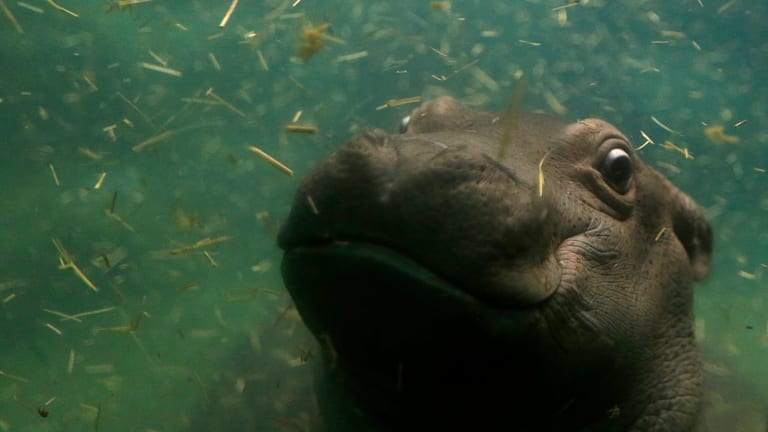
Dwarf elephants once lived on several Mediterranean and Southeast Asian islands. Other island lineages have included dwarf deer, hippopotamuses, bovids, and other mammals.
Reduced body size can help an island herbivore survive seasonal shortages, limited vegetation, and restricted territory. The absence of large predators may also remove the defensive advantage of being enormous.
Body-size evolution can sometimes occur surprisingly quickly. Research on historically introduced island mammals has shown that measurable dwarfing can develop over relatively short evolutionary periods when strong ecological pressures are present.
Why Island Birds Lose the Ability to Fly
Flight is useful, but it is also energetically expensive.
Birds need large flight muscles, specialized bones, powerful cardiovascular systems, and a continuous energy supply to maintain strong flight. On a predator-free island with food available on or near the ground, those costs may no longer provide sufficient benefits.
Individuals that invest less energy in flight and more in growth, reproduction, or survival may gain an advantage.
Over generations, wings can become smaller, flight muscles can weaken, and body mass can increase. Eventually, a lineage may become fully flightless.
Before humans arrived, a remarkable proportion of New Zealand’s land and freshwater birds were flightless. New Zealand’s long isolation and historical scarcity of native terrestrial mammals allowed birds to occupy ground-based ecological roles that mammals dominate elsewhere.
Famous island flightless birds include:
- The kākāpō
- Kiwi
- Moa
- Takahē
- Numerous island rails
- The dodo
- Flightless cormorants
- Several extinct island ducks and geese
Flightlessness can evolve repeatedly because the same trade-off appears on many islands: when flying becomes less useful, maintaining the machinery of flight may become an unnecessary expense.
Predator Release Can Produce Fearless Animals
Many island animals evolved in environments with few or no terrestrial predators.
Without generations of hunting pressure, they may not recognize a newly arrived predator as dangerous. This behavioral pattern is often called predator naïveté.
Such animals may:
- Allow humans to approach closely
- Nest on the ground
- Investigate unfamiliar animals
- Freeze rather than flee
- Produce strong odors
- Move slowly
- Defend themselves poorly against mammalian predators
- Lay eggs in exposed locations
These behaviors are not signs of evolutionary failure. Before new predators arrived, fleeing unnecessarily would have wasted energy. A bird that remained calm around harmless stimuli could spend more time feeding, breeding, or caring for offspring.
The problem begins when humans introduce cats, rats, dogs, pigs, snakes, stoats, or other predators.
The kākāpō illustrates this mismatch. It evolved without mammalian predators and relies partly on remaining still as a defensive behavior. That strategy can work against visually hunting birds of prey but is ineffective against introduced mammals that hunt using scent.
Islands Encourage Extreme Specialization
Island species often evolve close relationships with limited food sources, habitats, or other species.
A bird may depend on nectar from a narrow group of flowers. An insect may reproduce on one plant. A lizard may specialize in a particular layer of vegetation. A snail may survive only within one humid mountain forest.
Specialization can be highly successful in a stable environment.
It reduces competition and allows organisms to become exceptionally efficient at using a particular resource. Specialized beaks, tongues, claws, jaws, digestive systems, and behaviors can evolve when the same ecological relationship remains in place for long periods.
However, specialization carries risk.
When a crucial plant disappears, a climate zone shifts, or an invasive species alters the food web, a specialist may have few alternatives. The very adaptation that made it successful can become a trap.
Island Evolution Often Reduces Defenses
Mainland organisms live among large communities of enemies.
Plants may produce toxins or thorns. Insects may fly readily. Birds may build inaccessible nests. Reptiles may remain highly alert. Mammals may reproduce quickly to compensate for heavy predation.
On an island where those enemies are absent, costly defenses may weaken.
This process is sometimes described as evolutionary loss. Traits disappear or become reduced when maintaining them no longer improves survival and reproduction.
Examples may include:
- Reduced flight ability
- Lower fear responses
- Weaker physical defenses
- Slower reproduction
- More exposed nesting
- Reduced dispersal behavior
Evolution does not preserve a trait because it might become useful in the distant future. Natural selection favors traits that improve reproductive success under present conditions.
An island species cannot prepare for rats that humans may introduce thousands of years later.
Island Size Changes the Evolutionary Outcome
Not all islands produce the same level of endemism.
Island area strongly affects population size, habitat diversity, extinction risk, and opportunities for geographic separation.
Large islands can support:
- More species
- Larger populations
- Greater environmental variation
- Mountains, rivers, dry zones, and rainforests
- More barriers between populations
- Greater opportunities for speciation
Research on Caribbean anoles found that within-island speciation becomes especially important on larger islands, where populations have enough space and ecological diversity to diverge internally. Smaller islands may receive species through colonization but provide fewer opportunities for long-term diversification.
A large island such as Madagascar can contain numerous climatic regions and physical barriers. Populations may become isolated not only by the surrounding ocean but also by mountain ranges, river systems, or fragmented habitats within the island.
This creates microendemism, in which a species is restricted to a tiny part of an already isolated landmass.
Island Age and Geology Shape Biodiversity
An island must exist long enough for colonization, adaptation, and speciation to occur.
Very young volcanic islands may contain few species because little time has passed for arrival and diversification. Middle-aged islands may accumulate species and support adaptive radiations. Older islands may erode, lose habitat, and experience increasing extinction.
Archipelagos add another layer of complexity.
New islands may appear while older islands sink or erode. Species can move between islands, become isolated again, and diversify in stages. One lineage may repeatedly colonize younger islands as geological conditions change.
Mountains, lava flows, sea-level changes, cyclones, and erosion can divide or reconnect populations. Island evolution is therefore influenced not only by biological interactions but also by the changing physical history of the land itself.
Oceanic and Continental Islands Follow Different Histories
Oceanic islands form without having been connected to a continent. Volcanic islands such as those in Hawaii or the Galápagos begin biologically empty and must be colonized from elsewhere.
This strongly filters which organisms can arrive.
Continental islands were once connected to larger landmasses or are fragments of continental crust. They may retain ancient lineages while also receiving later colonists.
Madagascar and New Zealand have complex geological and biological histories that differ from young volcanic archipelagos. Their biodiversity reflects ancient separation, extinction, over-water colonization, and long periods of evolution in isolation.
For Madagascar’s terrestrial mammals, evidence indicates that several ancestral lineages arrived after the island was already isolated and then diversified locally. Ocean currents may have affected when such colonization events were possible.
The word “island” therefore describes a geographic condition, not one universal evolutionary history.
Why Island Animals Look “Weird” to Humans
Island animals appear strange largely because humans compare them with familiar mainland forms.
A flightless parrot seems unusual because most parrots fly. A giant rodent seems strange because most familiar rodents are small. A marine iguana appears bizarre because most lizards forage on land.
From an evolutionary perspective, these animals are not mistakes or curiosities. Their features reflect local conditions.
An animal becomes unusual when:
- Its ancestors enter an unfamiliar ecosystem.
- Normal competitors or predators are missing.
- New resources become available.
- Isolation prevents genetic mixing with mainland relatives.
- Natural selection favors locally useful traits.
- Genetic drift and chance alter a small population.
- The process continues long enough to produce substantial divergence.
“Weirdness” is therefore a human description of evolutionary distance.
The more an island environment differs from the ancestral mainland environment, and the longer a population remains isolated, the more unfamiliar its descendants may become.
The Evolutionary Power of Losing Traits
Evolution is often described as the development of new abilities, but island evolution frequently works through loss.
Animals may lose flight, speed, fear, armor, dispersal ability, or broad dietary flexibility.
Loss can be adaptive because every biological trait carries a cost.
Large wings require energy. Heavy armor requires material. Constant vigilance consumes time. Producing toxins requires metabolic investment. Long-distance dispersal may carry an animal away from the only suitable habitat available.
When a trait’s cost exceeds its benefit, individuals with reduced versions may leave more offspring.
This is why island animals often appear simplified in one respect and highly specialized in another. A bird may lose flight while developing powerful legs. A reptile may become slow-moving but highly efficient at surviving on sparse vegetation.
Evolution does not move toward greater complexity. It favors workable combinations.
Not Every Island Species Becomes Unusual
Island endemism is common, but dramatic evolutionary change is not inevitable.
Some island populations remain similar to their mainland relatives for long periods. Others go extinct before they can diversify. Frequent arrivals from the mainland may maintain enough gene flow to prevent major divergence.
The outcome depends on several interacting variables:
- Distance from the mainland
- Island area
- Island age
- Climate
- Topographic complexity
- Frequency of storms
- Population size
- Availability of food
- Presence of predators
- Strength of competition
- Rate of immigration
- Geological stability
- Time since colonization
The island rule itself is context-dependent. A small species does not automatically become giant, and a large species does not always become dwarf. Broad evolutionary patterns emerge statistically, but individual lineages follow their own histories.
Why Endemic Island Animals Are So Vulnerable
The same isolation that creates endemic species also places them at exceptional risk.
A species restricted to one island may have:
- A very small population
- Limited genetic diversity
- No alternative habitat
- Slow reproduction
- Little experience with predators
- Dependence on one food source
- Vulnerability to a single cyclone, fire, or disease outbreak
If a mainland species disappears from one region, populations elsewhere may survive. If an animal exists on only one island and that population collapses, the entire species becomes extinct.
Island bird communities can accumulate species with traits that increase extinction vulnerability, particularly when human activity rapidly introduces threats that were absent during their evolution.
Introduced Species
Invasive predators are among the most destructive threats.
Rats eat eggs and chicks. Cats kill birds, reptiles, and mammals. Pigs destroy nests and vegetation. Browsing mammals alter plant communities. Invasive insects compete with native species or disrupt pollination.
Remote islands are not automatically protected from invasions. Research has shown that highly isolated islands can be especially vulnerable because their native communities have low resistance to unfamiliar competitors and predators.
Habitat Loss
Many endemic animals occupy narrow environmental zones.
Clearing one forest, draining one wetland, or developing one coastal area may remove a large portion of their global habitat.
Habitat fragmentation also divides already small populations, increasing inbreeding and reducing the ability to recover after storms, fires, or disease.
Genomic research on Madagascar’s lemurs has identified demographic declines and patterns of inbreeding consistent with localized human pressures across several regions.
Climate Change and Natural Disasters
Small islands are highly exposed to rising seas, drought, shifting rainfall, stronger heat extremes, and severe storms.
Mountain species may have nowhere higher to move. Coastal species may lose nesting areas. A cyclone can affect an endemic species’ entire range in a matter of hours.
Natural disasters have always shaped island evolution, but rapid climate change can increase pressure faster than small populations can adapt.
Why Island Conservation Matters Beyond Saving Strange Animals
Endemic island animals often perform ecological roles that no other species can replace.
They may be:
- Pollinators
- Seed dispersers
- Insect regulators
- Scavengers
- Browsers
- Soil engineers
- Prey for other endemic species
- Creators of nesting or feeding habitats
Giant tortoises, for example, can reshape vegetation through grazing and movement. Fruit-eating birds and lemurs distribute seeds. Insect-eating reptiles regulate invertebrate populations.
When an endemic species disappears, an island may lose both an evolutionary lineage and an essential ecosystem function.
The extinction of a highly distinctive island animal can erase millions of years of independent evolution. It may also trigger secondary effects on plants, insects, predators, and ecological processes.
What Islands Teach Us About Evolution
Islands reveal that evolution is both creative and constrained.
It is creative because a single ancestor can produce many specialized descendants. It is constrained because similar environmental problems repeatedly favor similar solutions.
Island research demonstrates that:
- Isolation can accelerate divergence.
- Empty niches encourage adaptive radiation.
- Natural selection can remove traits as readily as it creates them.
- Body size responds to ecological context.
- Similar environments can produce convergent forms.
- Chance events can shape the fate of entire lineages.
- Adaptations are useful only within the environments that produced them.
- Highly successful specialization can increase vulnerability to sudden change.
Most importantly, island animals show that evolution does not work toward a predetermined goal.
It modifies existing organisms under local conditions. The results may be giant, miniature, flightless, nocturnal, fearless, venomous, slow-moving, or anatomically extreme—but each form emerged through the same basic processes that shape life everywhere.
Islands simply make those processes easier to see.
Frequently Asked Questions
What is island endemism?
Island endemism is the condition in which a species occurs naturally on one island or archipelago and nowhere else. It develops when geographic isolation restricts gene flow and allows populations to evolve independently.
Why do islands have so many endemic animals?
Islands have high endemism because surrounding oceans isolate populations. Limited immigration, unique environments, small founding populations, vacant ecological niches, and long periods of independent evolution can generate new species.
Why do island animals evolve differently?
Island animals face ecological conditions that often differ from those on continents. They may encounter fewer predators, fewer competitors, restricted resources, unusual foods, and limited space. Natural selection favors traits suited to those local conditions.
What is the island rule?
The island rule is the broad tendency for small-bodied animals to evolve larger forms on islands and large-bodied animals to evolve smaller forms. It is common among several vertebrate groups but is not universal.
Why do small island animals become giant?
Small animals may become larger when predators and competitors are absent, allowing them to occupy broader niches. Larger bodies may also improve energy storage, heat retention, fasting endurance, or competitive ability.
Why do large island animals become dwarf?
Large animals may become smaller because islands offer limited food and territory. Smaller individuals require less energy and may mature faster, providing an advantage when resources are scarce.
Why do island birds become flightless?
Flight can become unnecessary when birds have abundant ground-level food and few terrestrial predators. Because flight is energetically costly, natural selection may favor birds that invest less in wings and flight muscles.
What is adaptive radiation?
Adaptive radiation occurs when one ancestral lineage rapidly or extensively diversifies into multiple species adapted to different ecological niches. Darwin’s finches, Hawaiian honeycreepers, Caribbean anoles, and Madagascar’s lemurs are notable island examples.
Are Darwin’s finches endemic?
Darwin’s finches are native to the Galápagos Islands and nearby Cocos Island. Individual species have restricted distributions within this region, and the group represents one of the best-known examples of island adaptive radiation.
Why are island animals often fearless?
Many island animals evolved without dangerous terrestrial predators. Avoidance behaviors were therefore less beneficial. When humans introduce new predators, these animals may fail to recognize the threat.
Why are island species vulnerable to invasive animals?
Island species often lack defenses against introduced predators and competitors. Their populations are also usually small and geographically restricted, so rats, cats, snakes, pigs, or invasive insects can affect an entire species.
Is Madagascar an example of island endemism?
Yes. Madagascar contains exceptionally high endemism, including lemurs and many other animals found nowhere else. Its biodiversity reflects long isolation, multiple colonization events, environmental diversity, and extensive evolution within the island.
Is New Zealand’s wildlife shaped by island evolution?
Yes. New Zealand’s long isolation and historical lack of most terrestrial mammals allowed birds, insects, and reptiles to occupy unusual ecological roles. This contributed to the evolution of flightless birds, giant insects, and other endemic forms.
Do all isolated islands produce new species?
No. Speciation depends on island age, size, habitat diversity, population stability, immigration, environmental conditions, and time. Some populations remain similar to mainland relatives, while others disappear before substantial divergence occurs.
Can island evolution happen quickly?
Yes. Measurable changes in body size, limb structure, behavior, and feeding traits can occur over decades or centuries when selection is strong. The formation of completely distinct species usually requires longer, although the speed varies considerably.
Why are islands called natural laboratories of evolution?
Islands contain clearly separated populations exposed to identifiable ecological conditions. Scientists can compare related species across islands and observe how isolation, natural selection, genetic drift, and ecological opportunity shape evolution.
What is the difference between native and endemic species?
A native species occurs naturally in a region but may also live elsewhere. An endemic species is naturally restricted to a particular geographic area, such as one island, archipelago, mountain range, or country.
Are island animals evolutionarily inferior?
No. Island animals are adapted to the environments in which they evolved. Their vulnerability usually appears only after rapid human-driven changes introduce predators, diseases, habitat destruction, or climate pressures they have never encountered.
Why is protecting island endemism important?
Endemic island species represent irreplaceable evolutionary history and often perform essential ecological functions. Once a species restricted to one island becomes extinct, it cannot be restored from populations elsewhere.