Did FIFA Break Silence on Argentina vs Egypt? What Really Happened in the World Cup VAR Storm
As of the latest reliable reporting, FIFA had not issued a clear public explanation for the most controversial incidents in Argentina’s dramatic 3-2 win over Egypt in the 2026 FIFA World Cup round of 16. Reuters reported that the Egyptian Football Association had criticised the officiating and submitted an official complaint, while FIFA had yet to respond to Reuters’ request for comment.
That distinction matters.
The match itself was one of the most explosive games of the tournament. Egypt led the defending champions 2-0 and appeared close to a historic upset before Argentina scored three late goals, with Cristian Romero, Lionel Messi, and Enzo Fernández completing a remarkable comeback.
But the result was quickly overshadowed by anger over VAR, a disallowed Egypt goal, denied penalty appeals, and accusations that the biggest team—and the biggest star—received the benefit of the game’s most important decisions.
The Match That Turned Into a Global Debate
Argentina’s 3-2 win over Egypt should have been remembered as a classic comeback.
Instead, it became one of the most controversial matches of the 2026 World Cup.
Egypt started brilliantly, took an early lead, and later doubled their advantage. But before that second confirmed goal, Mostafa Zico had already seen another strike ruled out after VAR reviewed an earlier foul in the build-up. That decision became the centre of the dispute because Egypt and many observers felt VAR had gone too far back in the attacking move to cancel the goal.
Argentina then mounted a late rescue mission. Romero scored in the 79th minute, Messi equalised four minutes later, and Enzo Fernández headed in the stoppage-time winner.
For Argentina, it was survival.
For Egypt, it felt like heartbreak mixed with injustice.
What Were the Controversial Incidents?
The controversy focused mainly on three moments.
1. Mostafa Zico’s Disallowed Goal
With Egypt leading 1-0, Zico scored what looked like another goal for Egypt. The celebration was cut short when VAR intervened and identified a foul by an Egyptian player in the build-up. Reuters reported that this was the main flashpoint in Egypt’s complaint, with the EFA arguing that key decisions directly affected the match outcome.
Al Jazeera also noted that while the decision angered Egypt, the VAR protocol does allow reviews for attacking-team offences in the build-up to a goal, including fouls, handball, and offside.
That is why the argument is not simply whether VAR was allowed to intervene.
The bigger question is consistency: if VAR was willing to review that incident, why did it not intervene later when Egypt appealed for penalties?
2. Egypt’s Late Penalty Appeals
Egypt were furious that late penalty appeals were waved away before Argentina’s winning goal. Sky Sports reported that Alexis Mac Allister appeared to pull Hamdy Fathy inside the area, while another incident involved Julián Álvarez challenging Mohamed Salah before Argentina broke forward.
Hossam Hassan claimed one penalty was not properly checked by VAR and said Egypt had not been treated with respect or fairness.
3. Argentina’s Winner Immediately After the Appeal
The anger intensified because Egypt’s penalty appeal came shortly before Argentina went upfield and scored the winning goal through Enzo Fernández. Reuters reported that Egypt’s frustration deepened because their penalty appeals were dismissed before Argentina scored in stoppage time.
That sequence created the feeling that one decision—or one non-decision—changed everything.
What Did Egypt Say?
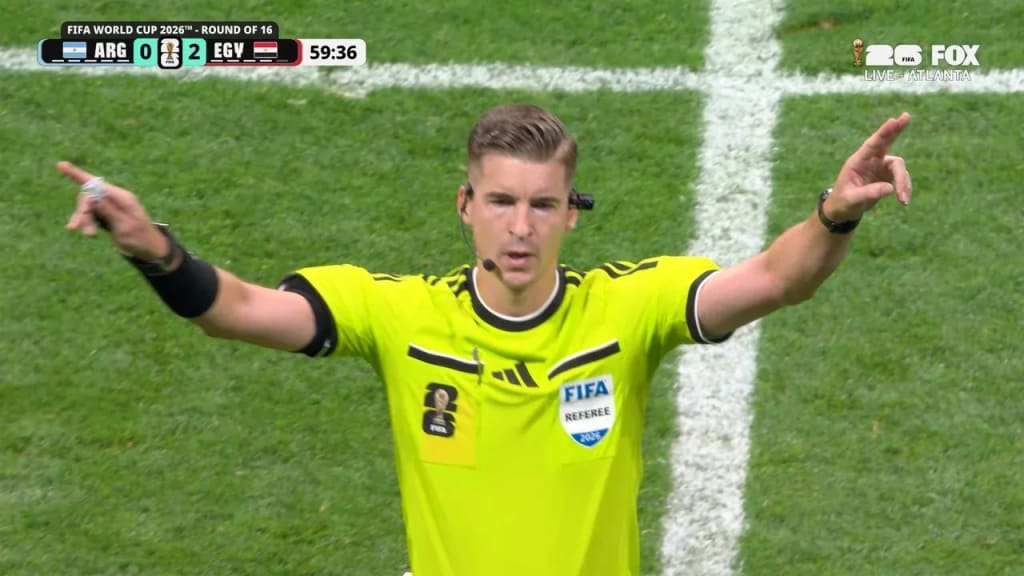
The Egyptian Football Association released a statement criticising the use of VAR and saying that several key incidents raised serious concerns about fairness, integrity, and transparency. Reuters reported that the EFA submitted an official complaint against French referee François Letexier and his assistants.
Egypt coach Hossam Hassan went even further.
He said Egypt had been “cheated” and suggested that external pressure may have influenced the match. He also claimed that perhaps officials wanted Argentina, the defending champions, and Lionel Messi to remain in the tournament.
Those are extremely serious accusations.
At the same time, it is important to separate emotion from proof. Egypt’s anger is real, and the decisions were controversial, but there is no verified evidence proving corruption or a fixed match.
Has FIFA Actually Broken Its Silence?
This is the key point.
Reliable reports confirm that Egypt complained and that the controversy is being widely discussed. But the available reporting does not confirm a full FIFA public explanation of the Argentina vs Egypt incidents.
Reuters specifically reported that FIFA had not responded to its request for comment after Egypt’s complaint.
Sky Sports also said it had approached FIFA for comment while covering Hassan’s criticism of the officiating.
So, if a social-media post says “FIFA have broken their silence,” readers should be careful. Unless the post links to an official FIFA statement or a verified report quoting FIFA directly, the claim may be exaggerated or premature.
A safer headline would be:
“Egypt File FIFA Complaint After Argentina VAR Controversy”
or
“FIFA Under Pressure After Argentina vs Egypt World Cup VAR Row”
Why the VAR Debate Is So Serious
VAR was introduced to correct clear and obvious errors, not to re-referee every moment of a football match.
That is why the Argentina vs Egypt controversy has become so sensitive.
If VAR intervenes to disallow one goal because of an earlier foul, fans expect similar scrutiny when a possible foul occurs inside the opposite penalty area.
Former players and pundits also questioned the consistency. Reuters cited Rob Green, Alan Shearer, Ian Wright, and Jamie Carragher among those who criticised or questioned the decision-making process.
The argument is not just “Egypt lost, so Egypt are angry.”
The argument is that VAR appeared strict in one direction and passive in another.
That perception is dangerous for FIFA because tournament credibility depends not only on correct decisions, but on decisions looking consistent and understandable to players, coaches, and fans.
Was Egypt Robbed?
That depends on how strongly one wants to interpret the evidence.
There are three fair positions.
The first position is that Egypt were genuinely unlucky and suffered from inconsistent officiating. This is the safest reading based on the available evidence.
The second position is that the VAR team applied the rules technically but unevenly, creating a sense of injustice even if the decisions can be defended individually.
The third position is that FIFA or the officials deliberately favoured Argentina. That is the most serious claim, and right now it remains an allegation—not a proven fact.
Al Jazeera quoted football analyst Ali El Garni saying “robbed” might be too strong, while also noting that Argentina benefited from the key 50-50 incidents.
That is probably the most balanced conclusion.
Egypt have every reason to feel furious. But claiming a conspiracy requires proof that has not been publicly established.
Why Messi’s Presence Makes the Story Bigger
Any Argentina match involving Lionel Messi carries massive attention.
This game carried even more because Argentina were defending champions and Messi’s World Cup career was on the line. Hassan directly suggested that officials may have wanted Messi to remain in the competition.
Whether fair or not, that is why the controversy exploded globally.
If the same decisions had happened in a lower-profile match, the debate may have faded quickly. Because it involved Argentina, Messi, Egypt, VAR, a late comeback, and a knockout-stage elimination, the story became much bigger than one refereeing performance.
The Bigger Problem for FIFA
FIFA’s challenge now is not only whether the referee made correct calls.
The bigger issue is transparency.
Fans want to know:
- Why was Zico’s goal disallowed?
- How far back did VAR review the move?
- Why were Egypt’s penalty appeals not reviewed with the same intensity?
- Did the VAR team consider the Salah and Hamdy Fathy incidents?
- What did the referee hear from the VAR room?
- Will FIFA review François Letexier’s performance?
- Will the EFA complaint produce any formal response?
Without clear answers, suspicion grows.
That does not mean the match was fixed. It means silence can make normal football anger turn into distrust.
Final Verdict
The Argentina vs Egypt controversy is absolutely real.
Egypt lost 3-2 after leading 2-0, saw a Zico goal ruled out by VAR, had late penalty appeals denied, and then conceded the decisive goal in stoppage time.
Egypt coach Hossam Hassan accused the officiating of being unfair, and the Egyptian Football Association filed a complaint with FIFA.
But the claim that FIFA has broken its silence is not clearly verified by the strongest available reporting. Reuters stated that FIFA had not yet responded to its request for comment, and Sky Sports also reported that it had approached FIFA for comment.
So the honest version is this:
FIFA are under pressure after the Argentina vs Egypt VAR storm, but there is not yet clear evidence of a full official public explanation from FIFA.
Until that comes, the controversy will continue.
For Argentina, the match was an unforgettable escape.
For Egypt, it was a painful exit wrapped in anger.
For FIFA, it has become another test of whether football’s biggest tournament can explain its biggest decisions when the whole world is watching.
Frequently Asked Questions
Did FIFA break silence on Argentina vs Egypt?
As of the latest reliable reporting, FIFA had not issued a clear public explanation. Reuters reported that FIFA had not responded to its request for comment after Egypt’s complaint.
What was the final score?
Argentina beat Egypt 3-2 in the 2026 World Cup round of 16.
Why are Egypt angry?
Egypt are angry over a disallowed Mostafa Zico goal, late denied penalty appeals, and what they see as inconsistent VAR use.
Did Egypt file a complaint?
Yes. Reuters reported that the Egyptian Football Association submitted an official complaint against referee François Letexier and his assistants.
What did Hossam Hassan say?
Egypt coach Hossam Hassan said Egypt had been cheated and suggested officials may have wanted Argentina and Messi to stay in the tournament.
Was the match fixed?
There is no verified evidence proving the match was fixed. The controversy is about refereeing consistency, VAR use, and Egypt’s complaint.
Why was Zico’s goal disallowed?
VAR identified a foul by an Egyptian player in the build-up to the goal.
Can VAR check fouls in the build-up to a goal?
Yes. Al Jazeera noted that IFAB’s VAR protocol allows reviews for attacking-team offences in the build-up to a goal.
Why is the penalty appeal controversial?
Egypt believe similar or more serious contact inside Argentina’s box was not reviewed with the same level of scrutiny.
Who scored Argentina’s winner?
Enzo Fernández scored Argentina’s stoppage-time winner.
Who scored for Argentina before the winner?
Cristian Romero scored in the 79th minute, and Lionel Messi equalised four minutes later.
Who will Argentina play next?
Argentina advanced to face Switzerland in the quarterfinals.