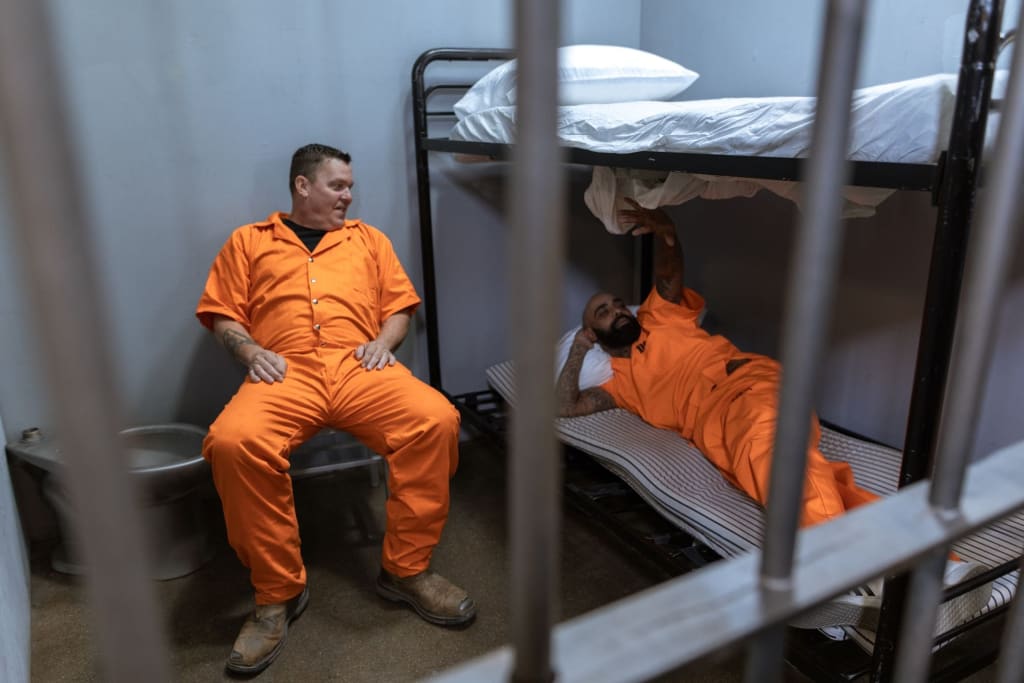
Inside Maximum Security: Life Behind Prison Walls
A grounded look at maximum-security custody, restrictive housing, and life beyond movie stereotypes.
Maximum-security prisons are often portrayed as endless steel doors, permanent silence, and prisoners who spend every waking minute alone. Reality is more varied, and in some ways more revealing. A person's day may involve strict movement schedules, supervised meals, work assignments, medical appointments, education, searches, and periods of intense isolation, depending on the facility and classification. Understanding life inside maximum security requires separating ordinary high-security custody from restrictive housing, sometimes called solitary confinement, and asking how safety rules affect the people who live and work there.
What maximum security actually describes
Maximum security usually refers to an institution or custody classification built around heightened physical security, controlled movement, and staffing practices. It does not automatically mean every incarcerated person is held alone for nearly the entire day. Different countries and prison systems use classifications differently. Some prisoners live in shared housing units with structured opportunities for recreation or programming; others are in special units where interaction is severely limited. Descriptions that claim one universal routine are almost certain to oversimplify.
Restrictive housing is a more specific practice in which a person is separated from the general population for much of the day. According to a 2024 U.S. Government Accountability Office report, federal restrictive housing can involve one or two people in cells for nearly twenty-four hours daily. GAO has repeatedly called for better oversight of how such housing is used. The distinction matters because a high-security building and prolonged social isolation are related questions, but they are not interchangeable.
The rhythm of a highly controlled day
Schedules define prison life. Wake-up, counts, meals, medication distribution, shower access, yard time, visits, and returning to a cell may all happen within narrow windows. A person cannot simply decide to walk elsewhere. Movement can require staff permission, an escort, or a temporary lockdown. Even small delays can alter access to a program or family call. This makes time feel different from the outside world: intensely regulated, repetitive, and often dependent on institutional circumstances.
Daily experience also varies with staff availability, behavior classifications, health needs, and security incidents. A prison may offer classroom instruction or employment in one unit while another unit has limited access because of staffing or restrictions. Some prisoners find structure stabilizing; others describe it as exhausting or dehumanizing. The same schedule can serve institutional order and simultaneously reduce personal autonomy. Both realities have to be acknowledged when evaluating a facility.
Staff, security, and the constant assessment of risk
Officers do far more than stand guard. They conduct counts, supervise movement, respond to emergencies, document events, coordinate with healthcare teams, and manage conflicts. Their work can include long periods of routine observation punctuated by sudden high-stakes situations. The institution must protect staff, incarcerated people, and visitors from violence, self-harm, escapes, and contraband. These responsibilities help explain why procedures may be rigid even when an observer sees little immediate danger.
Yet security is not measured simply by how many locks a facility installs. Good management also depends on accurate records, trained staff, fair grievance processes, effective communication, and consistent standards. Overreliance on punishment can create frustration that makes safety harder to maintain. Poor staffing or neglect of mental-health needs can turn an ordinary disagreement into a serious incident. The operational challenge is to distinguish restrictions that genuinely manage risk from those that persist because of habit or weak oversight.
Isolation and its human consequences
Human beings depend on social contact, predictable relationships, and meaningful activity. Prolonged isolation can undermine those needs and has raised serious concerns among mental-health professionals and human-rights advocates. People housed in highly restrictive settings may spend extended periods without ordinary conversation, group activity, or contact with family. The precise effects depend on duration, conditions, and individual vulnerabilities, but it is a mistake to treat extreme separation as emotionally neutral.
Isolation also complicates rehabilitation. If someone has limited access to classes, treatment, work, and constructive relationships, opportunities to practice new skills shrink. Prison systems sometimes argue restrictive placements are necessary after violence or serious threats. Those claims require careful review, especially where placement is prolonged or criteria are opaque. A practice can have a plausible short-term security purpose and still carry major long-term costs.
Food, exercise, healthcare, and dignity
Descriptions of prison life often focus on locked doors and overlook ordinary bodily needs. Access to sufficient nutrition, safe drinking water, fresh air, showers, sanitation, medical treatment, and disability accommodations shapes daily well-being. A prisoner with a chronic condition may depend entirely on the institution for regular medication and specialist assessment. The facility's ability to deliver basic care becomes a direct test of its competence and humanity.
Physical activity can be equally important. Exercise opportunities vary among institutions, and restrictions or lockdowns can change what is available. Even modest movement helps maintain health during long confinement. Personal belongings, reading material, and opportunities to contact loved ones may appear minor compared with major security questions, but they give structure and identity to a life under unusually tight control. Denying those opportunities without a clear justification can have effects far beyond inconvenience.
Family contact is part of prison life
For prisoners, a letter, phone call, or visit may be a major event in an otherwise repetitive week. Families face their own burdens: travel, unpredictable schedules, limited communication, and anxiety when contact is interrupted. Children can struggle to understand why a parent or relative cannot simply return home. These effects extend beyond the individual sentence and into communities that did not choose the prison's security arrangements.
At the same time, communication rules can serve legitimate safety functions. Institutions must monitor certain risks and manage access fairly. The important question is whether restrictions are clear, proportionate, and reviewed. Family contact is often discussed only as a privilege, but stable supportive relationships may also help prepare someone for eventual release. A system that values public safety should consider what happens after confinement ends.
Oversight, accountability, and meaningful change
Prisons are closed institutions, and that makes independent scrutiny especially important. Statistics about restrictive housing, grievance outcomes, deaths, healthcare access, and program availability allow outsiders to distinguish promises from performance. GAO's 2024 reviews of the federal Bureau of Prisons identified areas where management and oversight of restrictive housing needed improvement. A careful account of maximum-security life should therefore examine measurable practices, not rely solely on official descriptions or dramatic memoirs.
Journalists and policymakers must also avoid presenting isolated examples as universal. One facility may be exceptionally harsh while another follows different procedures. Conditions can change under new leadership or litigation. The strongest reporting specifies the prison system, the time period, and the rule being described. This attention to detail serves both staff and incarcerated people by identifying problems that can actually be addressed rather than repeating vague stereotypes.
Why the everyday details matter
The popular fascination with maximum security is usually driven by fear, danger, and the idea of people being cut off from society. But a prison is also a workplace, a healthcare provider, a school for some residents, and an institution accountable to the public. Its quality cannot be judged only by whether walls are difficult to escape. Safety, legality, dignity, and the chance for rehabilitation are intertwined.
The most accurate picture is neither a romanticized rehabilitation center nor an endless cinematic punishment chamber. It is an environment where ordinary activities happen under extraordinary restrictions. Understanding that daily reality helps readers ask better questions: who is isolated, for how long, why, and with what oversight? Those questions are more useful than any prison thriller's depiction of life behind the walls.
Is maximum-security prison the same as solitary confinement?
No. Maximum security is a custody or institutional category, while restrictive housing describes a particular placement with much greater separation from the general population. Practices vary by system.
Do prisoners in maximum security have access to work or education?
Some do, but access depends on the facility, security classification, staffing, health needs, and disciplinary restrictions. One prison's routine should not be generalized to all facilities.
Why are restrictive housing practices controversial?
They raise concerns about mental health, fairness, duration, access to services, and oversight. Government watchdogs have also questioned whether agencies adequately track and evaluate their use.