The World's First Corporate Psychopath? How a Ruthless Company Manager Turned a 1629 Shipwreck Into a Massacre
Imagine being stranded on an isolated island with nearly 200 other survivors.
Your ship has struck a reef. Fresh drinking water is scarce. Food supplies are uncertain. The nearest established European settlement is thousands of kilometers away.
Your commander has departed in search of rescue.
Survival now depends on cooperation.
But one man sees an opportunity.
He begins replacing members of the survivors' governing council with people loyal to him.
He demands personal allegiance.
He separates potential opponents from the main group.
He controls supplies, influences information, and surrounds himself with men willing to carry out his orders.
Before long, people begin disappearing.
Then the killing starts.
Men, women, and children are murdered—not by an invading army or an unknown enemy, but by fellow survivors acting under the direction of their own company manager.
This is not a fictional corporate dystopia.
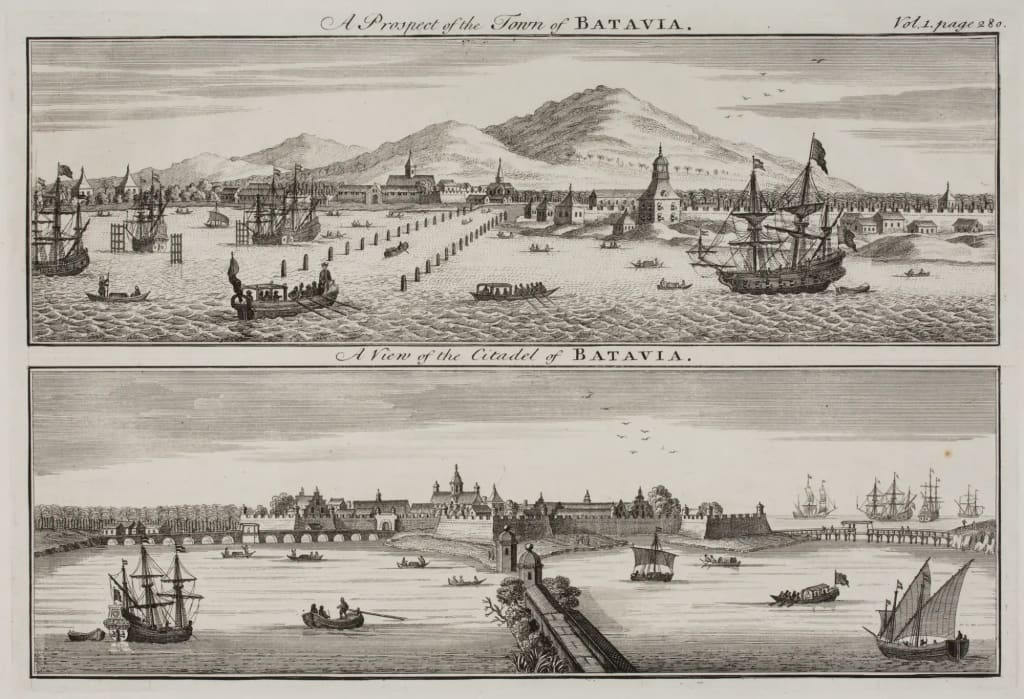
It happened in 1629, following the wreck of the Dutch East India Company ship Batavia off the coast of what is now Western Australia.
The man at the center of the atrocity was Jeronimus Cornelisz, an undermerchant employed by one of the most powerful commercial organizations of his age.
Nearly four centuries later, a researcher has revisited the tragedy through the lens of modern organizational psychology.
In a peer-reviewed study published on September 9, 2026, Dr. Clive Roland Boddy of Anglia Ruskin University assessed Cornelisz against a corporate psychopathy framework.
His conclusion was striking.
Cornelisz exhibited all ten core behavioral characteristics included in the framework, leading Boddy to identify him as a possible earliest documented example of a corporate psychopath within a multinational shareholder-owned company.
But the study raises a question far bigger than the personality of one seventeenth-century murderer.
What happens when an ambitious, manipulative leader gains authority inside an organization that can no longer hold him accountable?
And why do some of the tactics Cornelisz allegedly used—loyalty tests, manipulation, intimidation, exclusion, and blame-shifting—still sound disturbingly familiar in modern workplaces?
The Batavia Disaster: Key Facts
Location: Houtman Abrolhos Islands, Western Australia | Employer: Dutch East India Company (VOC) | Researcher: Clive R. Boddy | Journal: Asian Journal of Business Ethics
Historical sources estimate about 120–125 murders; the 2026 study and university release use a rounded figure of approximately 100. DCCEEW+3
The Dutch East India Company: A Corporate Empire Before Modern Corporations
To understand why the Batavia tragedy matters to business researchers, we first need to understand the company employing Cornelisz.
The Dutch East India Company, known by its Dutch initials VOC, was established in 1602.
It became one of the most powerful commercial enterprises of the seventeenth century.
The VOC operated across vast international trade networks, transporting goods between Europe and Asia.
It was an early example of a multinational joint-stock corporation, with investors, managers, overseas commercial operations, and elaborate administrative structures.
But it was not simply a trading company in the modern sense.
It also exercised powers associated with states, including military activity, territorial control, and colonial administration.
Its pursuit of commercial profits was deeply intertwined with imperial expansion, coercion, and violence.
A Powerful Organization With Enormous Wealth
The VOC controlled valuable trade routes and transported cargo that could include spices, precious metals, textiles, and other highly sought-after commodities.
Its officers managed ships carrying substantial financial value.
The Batavia was one such vessel.
Newly constructed, heavily equipped, and carrying valuable cargo, it departed the Dutch Republic in 1628 on its maiden voyage toward the Dutch East Indies.
Its intended destination was Batavia—present-day Jakarta, Indonesia.
Among those aboard were sailors, soldiers, passengers, company officials, and merchants.
Jeronimus Cornelisz served as the ship's undermerchant, a subordinate commercial officer.
He was not the captain.
Nor was he the company's ultimate representative.
But when disaster struck, the hierarchy that normally constrained his authority began to collapse.
June 4, 1629: The Shipwreck That Changed Everything
A modern reconstruction of the Batavia, photographed in Lelystad, Netherlands. Photo: Malis / Wikimedia Commons, public domain. This is a replica, not a surviving photograph of the seventeenth-century vessel.
During the night of June 4, 1629, the Batavia struck Morning Reef in the Houtman Abrolhos, a chain of islands and reefs off Western Australia.
The impact proved disastrous.
The ship became stranded, and efforts to save the vessel failed.
Approximately 40 people died during the initial wreck and attempts to reach safety.
Others managed to escape to nearby islands.
The survivors faced a serious problem.
They had limited drinking water and uncertain supplies.
Their surroundings offered little immediate reassurance that rescue would come.
The Senior Officers Leave for Help
Commander Francisco Pelsaert and skipper Ariaen Jacobsz eventually departed with others in a small boat to seek water and assistance.
When efforts to find fresh water along the coast failed, they continued toward the Dutch East Indies.
Their journey was an extraordinary maritime achievement.
But their departure left the remaining survivors without the usual senior leadership.
Cornelisz, as the most senior commercial official among those left behind, acquired considerable authority.
This moment became the turning point.
A group that needed coordination, fairness, and responsible decision-making instead came under the influence of a man with very different ambitions.
How Jeronimus Cornelisz Seized Control
The historical record indicates that Cornelisz had already been associated with plans for mutiny before the shipwreck.
According to the Australian government's National Heritage documentation, the original plot involved seizing the Batavia and its valuable cargo, then pursuing piracy.
The shipwreck disrupted that plan.
But it did not end Cornelisz's ambitions.
Instead, he began constructing a new power base among the stranded survivors.
Step 1: Replace Independent Voices With Loyalists
Cornelisz reorganized the council responsible for overseeing the survivors.
He surrounded himself with supporters who were personally loyal to him.
This helped weaken independent decision-making.
Rather than functioning as a body representing the shared interests of everyone stranded on the islands, the council increasingly became an instrument of Cornelisz's authority.
Boddy identifies this behavior as one of the clearest parallels with destructive corporate leadership.
A leader who replaces experienced, independent colleagues with unquestioning supporters can gradually weaken the checks and balances within an organization.
Step 2: Turn Loyalty Into Personal Obedience
The study describes Cornelisz demanding oaths of allegiance.
This shifted loyalty away from the collective group and toward the individual leader.
Such a move is particularly dangerous when the leader also controls resources and punishment.
People may begin following orders not because they agree with them, but because refusing becomes personally threatening.
Step 3: Remove Potential Rivals
Cornelisz arranged for groups he considered potentially troublesome to be sent away from the main settlement.
Some were ordered to search for water on other islands.
According to the historical account, he expected them to die.
Instead, one of these groups survived.
That mistake would eventually undermine his plans.
Step 4: Control Resources and Information
Cornelisz's faction gained control over important supplies and property.
Combined with personal loyalty and threats of violence, this gave the group considerable influence over the remaining survivors.
Resource scarcity created fear and dependence.
Rather than using his authority to stabilize the community, Cornelisz exploited its vulnerability.
And what followed was far worse than manipulation.
The Batavia Massacre: When Corporate Power Became Deadly
As Cornelisz consolidated authority, his followers began killing other survivors.
The victims included men, women, and children.
Some were attacked because they were considered threats.
Others were murdered as Cornelisz's faction worked toward reducing the survivor population.
Women also experienced sexual violence and coercion.
The killings were accompanied by looting and the appropriation of valuables.
The Australian government's heritage account explains that the conspirators intended to reduce the population to approximately 40 people, making it easier to seize a rescue vessel if one arrived and continue their plans for piracy.
The Excuse: There Wasn't Enough Food and Water
Cornelisz's justification for the killings included the supposed need to conserve scarce supplies.
On an isolated island, this could sound superficially pragmatic.
Fewer people would mean fewer mouths to feed.
But the argument concealed the group's larger ambitions.
The killings were not an established humanitarian necessity.
They were acts of murder carried out under an increasingly authoritarian faction.
And events elsewhere in the island group would soon expose the weakness of the scarcity argument.
How Many People Were Murdered?
Historical sources differ slightly in their totals.
The Western Australian Museum and National Museum of Australia generally describe approximately 125 people murdered during the aftermath of the wreck.
Boddy's 2026 analysis and the university's summary use the approximate figure of 100.
These figures are not necessarily contradictory: the latter is a rounded description of the scale of the violence.
For the most specific historical estimate, approximately 120–125 victims is preferable.
Western Australian Museum+2
Wiebbe Hayes: The Leader Who Chose Cooperation Instead
While Cornelisz's faction ruled through intimidation, another group of survivors was creating a very different community.
A soldier named Wiebbe Hayes led people who had been dispatched to West Wallabi Island.
Cornelisz apparently expected them to perish without adequate water.
But they did not.
They discovered freshwater sources and found ways to obtain food from their surroundings.
Birds, fish, wallabies, and other available resources helped sustain them.
Instead of descending into the same violence, Hayes's group organized itself for survival.
Two Leaders Facing the Same Disaster
The contrast is central to Boddy's research.
Both groups emerged from the same shipwreck.
Both were isolated.
Both faced uncertainty.
But their leaders produced radically different outcomes.
Jeronimus Cornelisz | Wiebbe Hayes |
|---|---|
Consolidated personal authority | Organized collective survival |
Removed or isolated potential rivals | Cooperated with fellow survivors |
Encouraged dependence and fear | Searched for practical resources |
Oversaw killings and abuse | Organized defenses against attacks |
Sought control of a future rescue ship | Helped alert returning rescuers |
The contrast suggests that resource scarcity alone cannot explain the tragedy.
Leadership decisions mattered.
However, the two groups were not identical in numbers, resources, or circumstances, and there was no random assignment of leaders.
That means the case is better understood as a historical comparison than a controlled scientific experiment.
The Resistance That Saved Lives
Eventually, people escaping Cornelisz's faction informed Hayes and his followers of the murders.
Hayes organized resistance.
His group constructed defensive positions and repelled attacks by Cornelisz's men.
They also managed to capture Cornelisz.
When Pelsaert returned with the rescue vessel Sardam in September 1629, Hayes's group alerted him to the situation.
That intervention helped prevent the mutineers from taking control of the returning ship.
What the 2026 Study Actually Found
The new paper, titled Asia Bound: Shareholder Capitalism, Corporate Psychopathy and Psychopathic Leadership, was published in the peer-reviewed Asian Journal of Business Ethics on September 9, 2026.
Boddy applied a recognized corporate psychopathy framework to historical accounts describing Cornelisz's actions.
The analysis concluded that Cornelisz matched all ten core characteristics considered in the study.
Those behaviors included manipulation, deception, establishing a climate of fear, excluding challengers, cultivating loyalty, avoiding responsibility, and ruthlessly pursuing personal gain.
The following descriptions summarize key themes emphasized in the study and university announcement rather than reproducing a clinical diagnostic checklist.
Behavioral patterns identified in the research
Manipulative charm and persuasion
Using social influence to gain trust and cooperation before exerting more coercive control.
Loyalty-based appointments
Surrounding himself with people who supported his authority rather than preserving independent oversight.
Elimination of opponents
Removing, isolating, or targeting those perceived as threats to power.
Control through fear
Making survival and security dependent on the leader's faction.
Blame-shifting and lack of accountability
Using justifications and deflecting responsibility for harmful actions.
Boddy argues that these behaviors resemble destructive patterns documented among some modern organizational leaders.
Springer Nature Link+1
Was Cornelisz Really a Psychopath?
This is the most important scientific qualification in the story.
The study did not clinically diagnose Jeronimus Cornelisz.
It assessed historical descriptions of his behavior using a modern organizational framework.
Cornelisz died in 1629.
No psychologist or psychiatrist can interview him, administer a contemporary assessment, or independently reconstruct every aspect of his personality.
The surviving records also reflect the perspectives and circumstances of the people who produced them.
They include testimony shaped by a criminal investigation in which torture was used.
That does not invalidate the documented atrocities.
It does limit how confidently researchers can interpret the psychological mechanisms behind them.
Psychopathy Is More Complex Than Being a Cruel Boss
Psychopathy is commonly associated with traits such as callousness, manipulativeness, shallow emotional responses, and reduced remorse.
But the construct is scientifically complicated.
It is not itself a standalone diagnosis in the Diagnostic and Statistical Manual of Mental Disorders.
Different researchers use different models and measures.
A 2026 analysis by psychologist Ava Green at City St George's, University of London, emphasizes that psychopathic traits do not always appear together in a single consistent pattern.
City St George's, University of London
Someone can behave abusively without meeting a psychopathy threshold.
Similarly, the presence of some psychopathic traits does not establish that a person is violent or criminal.
This matters because popular culture often uses psychopath as a general insult for anyone perceived as selfish, aggressive, or emotionally detached.
Boddy's research should be interpreted as a historically grounded behavioral assessment—not a definitive clinical verdict on Cornelisz's personality.
Why the Researcher Called It a Natural Experiment in Leadership
Boddy described the disaster as effectively a natural experiment.
His point was that two leaders faced extraordinary circumstances after the same catastrophe.
Cornelisz's faction descended into violence.
Hayes's group organized resources and resisted the mutineers.
The contrast makes leadership behavior unusually visible.
A person who seemed capable of functioning inside an established corporate hierarchy became catastrophically destructive when oversight disappeared.
But the term natural experiment deserves care.
The groups were not randomly assigned to leaders.
Their resources and circumstances differed.
And many factors besides personality influenced the outcomes.
The historical comparison is powerful for generating insights into leadership, but it cannot isolate personality as the sole cause with the certainty of a controlled experiment.
What the Batavia Massacre Reveals About Toxic Bosses Today
The modern relevance of Cornelisz's behavior lies not in comparing ordinary workplace disputes with murder.
The difference in severity is enormous.
Rather, it lies in the mechanisms through which authority can become abusive.
A destructive leader may initially appear confident, competent, and persuasive.
Once promoted, however, that individual may begin weakening independent oversight and rewarding unquestioning loyalty.
Criticism becomes a threat.
Employees learn to remain silent.
Decisions increasingly serve the leader's interests rather than the organization's objectives.
These dynamics can develop without physical violence.
1. Loyalty Becomes More Important Than Competence
Organizations become vulnerable when managers promote people primarily because they will not challenge them.
Over time, independent expertise may disappear from leadership discussions.
Employees who raise legitimate concerns can be characterized as disloyal or difficult.
The problem is not loyalty itself, which can be valuable.
It is replacing professional judgment with personal obedience.
2. Fear Replaces Accountability
A workplace governed by intimidation may appear orderly from the outside.
Employees comply with instructions.
Meetings produce little disagreement.
Targets are reported as achieved.
Yet the absence of criticism may indicate fear rather than genuine agreement.
Staff may conceal mistakes or avoid reporting misconduct because they believe speaking up will create personal consequences.
This undermines organizational learning and risk management.
3. Division Prevents Collective Resistance
A manipulative leader may encourage rivalries among employees or departments.
Different groups receive conflicting information.
Some employees are rewarded for personal loyalty.
Others are isolated.
The resulting divisions can prevent workers from identifying shared problems and addressing them collectively.
4. Short-Term Gain Overrides Long-Term Survival
Destructive leadership can also prioritize immediate rewards over sustainable organizational performance.
A manager may pursue impressive short-term numbers while neglecting employee wellbeing, financial risk, or ethical obligations.
In extreme cases, the consequences can extend to fraud, legal exposure, or institutional failure.
Boddy's research connects psychopathic leadership traits with bullying, employee stress, reduced job satisfaction, higher turnover, and damaging organizational outcomes.
Springer Nature Link
However, these relationships vary across studies and settings. They should not be interpreted as proof that every toxic boss is a psychopath or that psychopathic traits inevitably cause organizational collapse.
Could a Corporate Psychopath Rise Through Today's Leadership Structures?
Modern organizations typically have safeguards that seventeenth-century shipwreck survivors lacked.
These can include financial audits, boards of directors, human-resources procedures, legal protections, whistleblower reporting systems, and independent regulators.
But safeguards are only effective when they operate in practice.
A senior executive may acquire enough influence to discourage scrutiny.
An organization may develop a culture that values aggressive results while disregarding how they are achieved.
Or a board may overlook warning signs because a leader appears financially successful.
These are not problems unique to one century or industry.
The Difference Between Confidence and Manipulation
Confidence is not inherently dangerous.
Neither are ambition, charisma, assertiveness, or an ability to make difficult decisions.
Organizations need leaders who can act decisively.
The warning signs emerge when those qualities are combined with persistent deception, exploitation, disregard for others, and deliberate avoidance of accountability.
An effective leader can make difficult decisions while remaining answerable for them.
A destructive leader may treat accountability itself as an obstacle.
What Organizations Can Learn From the Study
Boddy argues that selecting leaders should involve more than reviewing performance records, qualifications, and commercial achievements.
Character and ethical conduct matter.
That conclusion is particularly relevant when an organization places someone in a position with broad authority over employees, resources, and strategic decisions.
A more responsible approach to leadership selection could include:
- Evaluating past conduct, including credible patterns of bullying, retaliation, dishonesty, or mistreatment.
- Obtaining meaningful feedback from people who have worked under a candidate, rather than relying exclusively on recommendations from senior colleagues.
- Maintaining independent oversight so that no individual can unilaterally control important decisions.
- Protecting internal reporting channels and ensuring allegations of misconduct receive fair, impartial investigation.
- Rewarding ethical outcomes, not just financial performance or short-term productivity.
These practices are not methods of diagnosing psychopathy.
They are broader governance measures designed to reduce the opportunity for abuse.
A workplace does not need to identify a manager as a psychopath before addressing harmful conduct.
How Jeronimus Cornelisz Was Finally Stopped
When Commander Francisco Pelsaert returned with the Sardam, he learned what had happened among the islands.
Cornelisz had already been captured following the resistance organized by Hayes's group.
Pelsaert investigated the murders and the attempted mutiny.
The historical record describes interrogations, confessions, and punishments that included torture and mutilation.
Cornelisz was sentenced to death.
On October 2, 1629, he and several accomplices were executed by hanging.
Others faced punishment, including two men who were abandoned on the Australian mainland. Their eventual fate remains unknown.
Western Australian Museum
Of the people who began the Batavia voyage, only about 116 ultimately reached the Dutch East Indies aboard the returning rescue vessel, according to the Australian historical accounts.
The wreck itself was rediscovered in 1963.
Subsequent archaeological investigations recovered ship timbers, artifacts, and human remains, helping establish the disaster as one of the most extensively studied maritime tragedies in Australian history.
Western Australian Museum+1
The violence has therefore left both a documentary and archaeological record.
It is not simply a legend created centuries later.
Frequently Asked Questions
Who was the world's first corporate psychopath?
A 2026 study by Dr. Clive Roland Boddy identifies Jeronimus Cornelisz, a Dutch East India Company undermerchant involved in the 1629 Batavia massacre, as a possible earliest documented example of a corporate psychopath in a multinational shareholder-owned company. This is a retrospective research classification, not a clinical diagnosis.
How many people did Jeronimus Cornelisz kill?
Cornelisz led a faction responsible for the murder of approximately 120–125 Batavia survivors, according to major Australian historical sources. The killings were carried out by his followers and accomplices; the total should not be interpreted as the number of people he personally killed.
What happened to Jeronimus Cornelisz?
He was captured after resistance by survivors led by Wiebbe Hayes. Following an investigation and trial, Cornelisz was executed by hanging on October 2, 1629.
What are the signs of a psychopathic corporate leader?
Research discusses patterns including manipulation, chronic dishonesty, callousness, lack of remorse, exploitation, and abusive behavior. However, these behaviors alone do not provide a reliable clinical diagnosis. Organizations should evaluate specific misconduct through appropriate professional and governance procedures.
What does the Batavia disaster teach about leadership?
The disaster illustrates how leadership, accountability, group dynamics, and access to resources can influence outcomes during a crisis. The contrasting experiences of Cornelisz's and Hayes's groups provide a powerful historical comparison, although they do not establish that personality alone explains every difference.
The Most Frightening Part of the Batavia Story Is How Familiar the Tactics Sound
The Batavia massacre remains extraordinary because of its brutality.
More than a hundred people survived a shipwreck only to be murdered by others who had survived alongside them.
A company manager transformed an emergency into an opportunity for personal power.
He weakened independent authority.
Rewarded loyalists.
Isolated opposition.
Controlled resources.
And justified devastating violence through claims of necessity.
The scale of his crimes places the episode far beyond ordinary workplace misconduct.
Yet the behaviors that preceded the murders are recognizable.
The replacement of independent voices.
The manipulation of colleagues.
The refusal to accept responsibility.
The use of fear to secure obedience.
Nearly 400 years later, researchers are still studying how such patterns can damage organizations.
Boddy's work offers a provocative interpretation of Cornelisz as an early example of corporate psychopathy.
But its most useful lesson does not depend on definitively diagnosing a man who died in 1629.
It concerns the relationship between power and accountability.
The Batavia survivors needed leadership to survive.
Under Cornelisz, authority became a tool for exploitation.
Under Hayes, leadership helped people cooperate, locate resources, organize protection, and ultimately survive.
Their contrasting experiences suggest an enduring principle.
The danger is not simply that ruthless individuals may obtain power. It is that institutions can become catastrophically vulnerable when power is concentrated in people who face no meaningful challenge or restraint.
The Batavia disaster began as a maritime catastrophe.
Its worst horrors came afterward, when human decisions transformed hardship into deliberate cruelty.
That is why a case from 1629 continues to matter to researchers studying modern management.
Ships have changed.
Corporations have changed.
Technology, laws, and systems of accountability have changed.
But the fundamental responsibility of leadership remains remarkably similar:
Power should serve the people who depend on it—not become a weapon against them.
Scientific and Historical Sources
- Boddy (2026) — Asia Bound: Shareholder Capitalism, Corporate Psychopathy and Psychopathic Leadership. Original peer-reviewed, open-access paper in Asian Journal of Business Ethics, published September 9, 2026.
- Anglia Ruskin University — Study Identifies World's First Corporate Psychopath. University announcement dated October 21, 2026, summarizing the findings and leadership comparison.
- Australian Government — Batavia Shipwreck Site and Survivor Camps. Official national heritage history of the wreck, mutiny, massacre, and resistance.
- Western Australian Museum — Batavia's History. Detailed historical reconstruction based on documentary and archaeological evidence.
- National Museum of Australia — Wreck of the Batavia. Historical background, casualty estimates, and aftermath.
- City St George's, University of London — The Scientific Challenges of Defining Psychopathy. Discussion of diagnostic complexity, assessment methods, and the limits of psychological labels.