The 2001 Leslie Preer Murder Case: How DNA Solved a 23-Year Mystery
For more than two decades, the answer was sitting inside the evidence.
Police had DNA from the man who killed Leslie Preer.
They had found his biological material inside her Chevy Chase, Maryland, home. They had DNA associated with the struggle in which she fought for her life.
What investigators did not have was a name.
For 23 years, conventional DNA databases produced no match.
Then technology changed.
In 2022, detectives returned to evidence preserved from the 2001 crime scene and turned to forensic genetic genealogy—the same rapidly developing investigative approach that has transformed numerous American cold cases.
The genetic trail eventually pointed toward an unexpected surname.
Gligor.
Detectives went back through the old police files.
Buried in those records was something extraordinary: a tip from years earlier mentioning Eugene Gligor, a man who had once dated Leslie Preer's daughter.
Investigators still needed to prove that the DNA belonged to him.
So in June 2024 they followed Gligor through Washington Dulles International Airport.
He drank from a bottle of water.
He threw it away.
Detectives retrieved it.
DNA from the discarded bottle matched the genetic material recovered from Leslie's murder scene.
Twenty-three years after Leslie Preer was killed, police finally had the man whose DNA had been there from the beginning.
Gligor was arrested on June 18, 2024.
In May 2025, he pleaded guilty to second-degree murder.
Three months later, a Maryland judge sentenced him to 30 years in prison, suspending all but 22 years, followed by five years of supervised probation.
The scientific mystery was finally solved.
One question remained unanswered:
Why did Eugene Gligor kill Leslie Preer?
First, Her Name Was Leslie Preer
The case is sometimes searched online as the “Leslie Prior murder” or with similar spellings.
Her name was Leslie Preer, also identified in official records as Leslie Jennings Preer.
She lived with her husband, Carl “Sandy” Preer, in the Chevy Chase area of Montgomery County, just outside Washington, D.C.
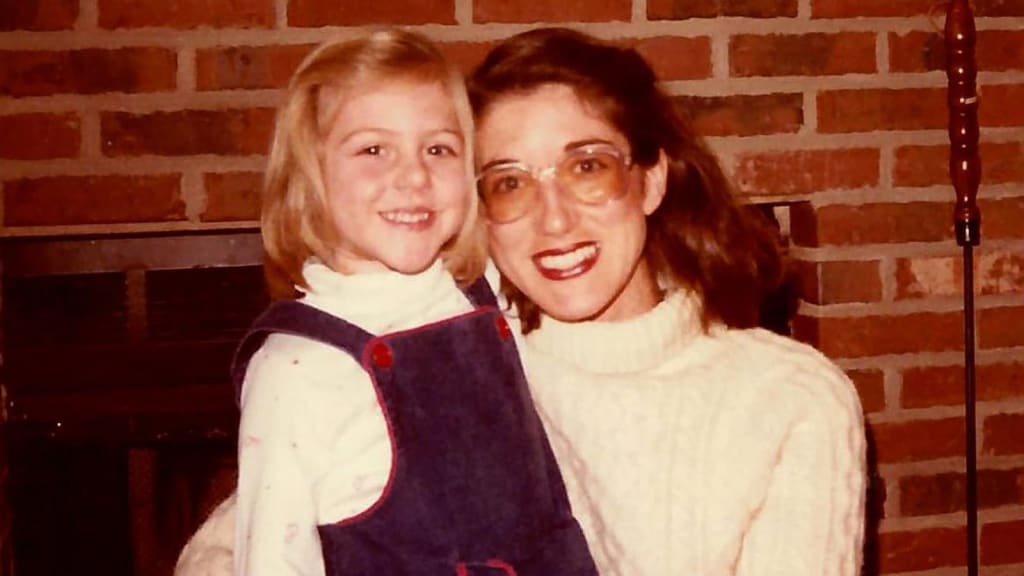
She was a wife and mother whose daughter, Lauren, had grown up in the same social circle as the young man who would eventually be convicted of Leslie's murder.
At the time of her death, official later accounts generally describe Leslie as 49 years old, although some contemporary reporting listed her as 50. The Montgomery County State's Attorney's Office used 49 when announcing Gligor's eventual sentence.
That small discrepancy is far less important than what happened on the morning of May 2, 2001.
Leslie was supposed to go to work.
She never arrived.
May 2, 2001 Began With Leslie Missing Work
Leslie worked part-time for an advertising-related business in Washington.
Not showing up was unusual enough that colleagues became concerned.
Her employer contacted her family.
Leslie's husband and a co-worker went to the Preer residence on Drummond Avenue in Chevy Chase to see whether something was wrong.
Something was terribly wrong.
A 911 call was made at approximately 11:47 a.m.
The co-worker reported blood inside the house.
Montgomery County police responded.
They found Leslie dead inside the residence.
Later accounts of the case describe her body as having been found in the shower or bathroom area upstairs after a violent assault.
The quiet suburban home had become a homicide scene.
Investigators Knew Almost Immediately That This Was Not a Simple Burglary
The crime appeared violent and personal.
There were signs of a struggle inside the house.
The autopsy established that Leslie had suffered severe blunt-force trauma and strangulation.
But the struggle also produced what would eventually become the killer's greatest mistake.
Leslie fought back.
Investigators recovered DNA belonging to an unknown male, including material found beneath her fingernails.
Additional biological evidence associated with the unidentified man was found at the scene.
That was extraordinarily valuable evidence.
In theory, DNA could identify the murderer with scientific precision.
In practice, DNA can only produce a name easily when investigators have something against which to compare it.
In 2001, they did not.
DNA Can Tell Police Who Someone Is Only If There Is a Match
The crime-scene DNA was developed into a profile.
Investigators compared it against potential suspects and people connected to Leslie.
Those comparisons excluded a number of individuals.
The unknown profile was also entered into the law-enforcement DNA system.
Nothing matched.
That created a frustrating situation.
Police effectively possessed a genetic fingerprint of the killer.
But the fingerprint belonged to someone who was not appearing in the database.
The DNA could say:
The killer was this man.
It could not yet say:
This man's name is Eugene Gligor.
For years, that distinction kept the case unsolved.
Leslie's Husband Came Under Suspicion
As happens in many homicide investigations, detectives focused heavily on the people closest to the victim.
Leslie's husband, Sandy Preer, came under scrutiny.
Later reporting from ABC and NBC described how suspicion surrounding him persisted during the early investigation even though the unidentified crime-scene DNA did not match him.
For Leslie's daughter Lauren, that meant losing her mother while also watching suspicion surround her father.
Sandy was eventually excluded by the forensic evidence.
But being scientifically cleared does not magically erase years of suspicion.
He died in 2017, seven years before police arrested the man who actually killed his wife.
He never saw the case solved.
There Was Another Name in the Family's Past
Years before Leslie's death, Lauren Preer had dated Eugene Gligor.
They were teenagers when their relationship began.
According to Lauren's later account to The Washington Post, the two attended Bethesda-Chevy Chase High School and dated for approximately five years.
Their families knew each other.
Gligor spent time in the Preer home.
He joined family activities and trips.
Leslie knew him.
Lauren remembered her mother speaking warmly about him.
The relationship ended before the murder.
By May 2001, Lauren and Gligor had reportedly been separated for roughly two years.
That is precisely what makes the eventual identification so disturbing.
The murderer was not revealed as an unknown predator who happened upon Leslie's home.
He was someone who had once been welcomed into the family's life.
Eugene Gligor's Name Had Even Reached Police Years Earlier
After Gligor's 2024 arrest, another troubling fact emerged.
His name was not entirely new to the old investigation.
Police later confirmed that the original case file contained a tip concerning Gligor.
According to Montgomery County police, a neighbor had contacted investigators, and the file contained the tip, information from the tipster and records involving Gligor.
Yet he was apparently not interviewed or asked to provide a DNA sample during the original investigation.
That detail became painfully significant after the case was solved.
Had investigators obtained a DNA sample from Gligor and compared it with the unknown male profile, the murder might conceivably have been solved decades earlier.
But that comparison never happened.
Instead, Gligor moved on with his life.
The unknown DNA profile remained unidentified.
And the case grew cold.
The Leslie Preer Murder Became a Cold Case
The years accumulated.
One became five.
Five became ten.
Then twenty.
Montgomery County police never officially forgot Leslie's case.
In May 2022—21 years after the homicide—the department publicly renewed its request for information.
The police release still described Leslie's murder as an active cold-case investigation and offered a reward of up to $10,000 for information leading to an arrest.
But something else happened in 2022 that proved vastly more important.
Two cold-case detectives began looking at Leslie's murder with fresh eyes.
Detectives Tara Augustin and Alyson Dupouy Reopened the Evidence
Detectives Tara Augustin and Alyson Dupouy of the Montgomery County Police Department's Cold Case Section became central to the renewed investigation.
ABC's 20/20 later documented their work.
They had something the original detectives did not possess in 2001:
two additional decades of forensic development.
The crime-scene DNA had not changed.
The science surrounding it had.
In September 2022, biological evidence from the Leslie Preer crime scene was submitted for forensic genetic genealogical DNA analysis.
This was the turning point.
What Is Forensic Genetic Genealogy?
Traditional criminal DNA matching and forensic genetic genealogy work differently.
A conventional CODIS-style search asks whether a crime-scene DNA profile directly matches another profile already held in a law-enforcement database.
If the offender has never provided qualifying DNA, there may be no match.
Forensic genetic genealogy can attack the problem from another direction.
Instead of needing the killer himself to appear in the relevant database, investigators can sometimes identify genetic relatives.
Those relatives may be distant.
A genealogist can then use DNA relationships alongside public records, birth and death information, family trees, geography and age to work toward the unknown person's identity.
The technique does not simply produce a computer message saying:
“Your suspect is Eugene Gligor.”
It produces family relationships.
Investigators then have to build the tree.
And in Leslie Preer's case, that tree led somewhere investigators had not expected.
The DNA Trail Reached All the Way to Romania
The genealogical work identified distant relatives connected to a family line in Romania.
Investigators worked backward and forward through family relationships.
Eventually a surname emerged as especially significant:
Gligor.
That surname meant something.
Because Eugene Gligor's name was already hidden inside the original case material.
This is the moment the 23-year-old investigation transformed.
Genealogy had not independently proven Gligor was the murderer.
But it had pointed toward his family.
The cold-case detectives could now return to the old records knowing what they were searching for.
An Old Tip Suddenly Became Explosive
On June 4, 2024, while reviewing the original investigative material, detectives located the old tip mentioning Eugene Gligor.
Now two completely independent paths had converged.
One came from 2001-era police work.
The other came from 2020s genetic science.
Both were pointing toward the same man.
The investigators finally had a viable suspect.
But prosecutors would need more than a surname and an old tip.
They needed Eugene Gligor's actual DNA.
And Gligor was not volunteering it.
The Water Bottle at Dulles International Airport
This part of the case sounds almost fictional.
Investigators placed Gligor under surveillance.
On June 9, 2024, they followed him at Washington Dulles International Airport.
They watched.
At some point, Gligor drank from a plastic water bottle.
Then he discarded it.
After he moved away, investigators recovered the bottle from the trash.
Saliva left on a drinking container can contain enough biological material to create a DNA profile.
The bottle was submitted for analysis.
Investigators compared the resulting DNA with the unknown male DNA recovered from Leslie Preer's crime scene 23 years earlier.
It matched.
The unknown man from 2001 finally had a name.
Police Arrested Eugene Gligor on June 18, 2024
Once the laboratory confirmed the match, Montgomery County police obtained an arrest warrant.
On June 18, 2024, the U.S. Marshals Task Force arrested Gligor in Washington, D.C.
He was 44 years old.
Police initially charged him with first-degree murder.
For Leslie's family, the identity produced not only relief but shock.
Lauren Preer had known Gligor intimately.
He had been her teenage boyfriend.
He had eaten with her family.
He had spent time with Leslie.
And after Leslie was murdered, Lauren continued living for more than two decades without knowing that someone from her own past was connected to the crime.
Lauren told The Washington Post that the news produced disbelief.
The man police identified was someone she remembered as a familiar and trusted part of her teenage years.
The Case Was No Longer About Whether His DNA Was There
Once investigators obtained the bottle, the forensic question changed dramatically.
For 23 years, police had asked:
Whose DNA is this?
Now they knew.
The next questions were legal.
Could prosecutors prove murder?
Could the genetic-genealogy work and subsequent DNA collection survive evidentiary challenges?
What could Gligor explain about why his biological material appeared at the scene of Leslie's violent death?
And perhaps most importantly for the family:
Would he finally explain why Leslie was killed?
Gligor Pleaded Guilty in May 2025
The case did not ultimately go through a full murder trial.
On May 7, 2025, Eugene Gligor pleaded guilty in Montgomery County Circuit Court to second-degree murder.
He had originally faced a first-degree murder charge.
Under the plea, second-degree murder carried a maximum penalty of 30 years under the law applicable when Leslie was killed.
The guilty plea settled the central legal question.
Eugene Gligor had killed Leslie Preer.
Twenty-four years after her death, her family finally had a conviction.
But a guilty plea does not necessarily provide an explanation.
The Motive Remains a Mystery
This is perhaps the most haunting part of the case.
Investigators solved who killed Leslie.
They did not definitively establish why.
At sentencing, prosecutors emphasized that Gligor still had not given Leslie's family the answer they wanted.
Why her?
Why that morning?
Why such violence?
Gligor's defense lawyers said he had little or no memory of what happened inside Leslie's home and described heavy alcohol and possible drug use around the period of the crime.
Prosecutors rejected the idea that this amounted to a meaningful explanation.
As late as sentencing, the motive remained unresolved.
That leaves the Leslie Preer case in an unusual category.
The forensic mystery is finished.
The human mystery is not.
Gligor Was Sentenced to 22 Years in Prison
On August 28, 2025, Circuit Court Judge David Lease sentenced Gligor.
The formal sentence was:
30 years in prison, with all but 22 years suspended.
After release, Gligor is to serve five years of supervised probation.
The Montgomery County State's Attorney's Office described forensic genetic genealogy as the technology that had finally allowed police to identify the previously unknown male whose DNA was left at the murder scene.
For a crime committed in 2001 and solved in 2024, the sentence represented the end of an extraordinary investigative timeline.
| Date | Major Development |
|---|---|
| May 2, 2001 | Leslie Preer is found murdered in her Chevy Chase home |
| 2001 | Unknown male DNA is recovered but produces no database match |
| 2022 | Cold-case detectives submit evidence for forensic genetic genealogy |
| June 2024 | Genealogy points toward the Gligor family; investigators recover Eugene Gligor's discarded water bottle |
| June 18, 2024 | Gligor is arrested and charged with first-degree murder |
| May 7, 2025 | Gligor pleads guilty to second-degree murder |
| August 28, 2025 | He is sentenced to 30 years with all but 22 suspended, plus five years' probation |
The Case Demonstrates Why Preserving Evidence Matters
One of the most important lessons from the Leslie Preer murder has nothing to do with dramatic detective work.
It is about storage.
The investigators who collected biological evidence in 2001 had no way to know exactly what DNA science would be capable of in 2022.
They preserved it anyway.
That decision allowed a later generation of detectives to ask new questions of old evidence.
The blood did not become more informative because the crime scene changed.
The technology changed.
This pattern has transformed cold-case investigations across the United States.
Evidence once considered exhausted can sometimes be reexamined using methods that did not exist—or were not practical—when the crime occurred.
A case can therefore be scientifically unsolvable at one moment without being permanently unsolvable.
Forensic Genetic Genealogy Has Changed What “No DNA Match” Means
Before the rise of investigative genetic genealogy, an unknown DNA profile that failed to hit in a criminal database could leave detectives with few options.
The offender might never have been convicted of an offense requiring DNA collection.
He might not have been arrested.
His profile simply might not exist in the system being searched.
Genealogical methods changed the question.
Investigators no longer necessarily need the suspect himself in the database.
They may only need enough relatives to reconstruct his family.
This can turn a distant cousin's DNA into one small piece of a much larger genealogical puzzle.
That is remarkably powerful.
It also raises serious privacy and policy questions about how genetic data should be used by law enforcement.
But in cold cases such as Leslie Preer's, the investigative value is unmistakable.
A DNA profile that remained nameless for more than two decades eventually led investigators through distant family relationships and back to someone who had been known to the victim's family all along.
The Case Also Shows Why Genetic Genealogy Alone Is Not a Conviction
Another important point is often lost in simplified true-crime retellings.
The family-tree investigation did not by itself establish Gligor's guilt.
It produced an investigative lead.
Police then had to obtain a biological sample belonging directly to Gligor.
That was the purpose of the discarded water bottle.
When its DNA matched the crime-scene evidence, investigators had the direct comparison they needed.
This distinction matters.
Genealogy narrows.
Traditional forensic comparison confirms.
The family tree told police where to look.
The bottle connected the man himself to the evidence.
A Tiny Piece of Trash Ended a 23-Year Search
The water bottle has become one of the most memorable details of the Leslie Preer case because it demonstrates how ordinary the decisive evidence can look.
A discarded bottle.
Something thrown into an airport trash bin without a second thought.
For Gligor, it was garbage.
For detectives, it was the missing reference sample.
It contained the genetic information needed to connect a living person in 2024 with biological evidence collected during a murder investigation in 2001.
A crime separated from its solution by 23 years was bridged by a few cells left behind while drinking water.
Leslie's Daughter Had Known the Killer
The technological achievement should not overshadow the emotional reality.
For Lauren Preer, the murderer was not an abstract DNA profile.
He was a former boyfriend.
Someone who had once known her family.
Someone she had trusted.
Someone her mother had known personally.
Lauren told reporters that after their relationship ended, she and Gligor sometimes crossed paths through overlapping social circles.
She had no idea what detectives would eventually discover.
That transformed the arrest into something more complicated than relief.
The solution created another betrayal.
For more than two decades she had wanted to know who killed her mother.
When the answer finally arrived, it connected the murder directly to her own past.
Sandy Preer Never Lived to See His Name Fully Vindicated by an Arrest
The case also carried a cruel consequence for Leslie's husband.
Suspicion in an unsolved murder can become its own punishment.
Sandy had lost his wife.
Then he lived in a world where investigators and others questioned whether he might have been responsible.
DNA excluded him.
But the true killer remained unidentified.
Without an arrest, suspicion can linger even after scientific evidence points elsewhere.
Sandy died in 2017.
When police arrested Gligor seven years later, the answer arrived too late for Leslie's husband to witness it.
The Original Investigation Had Been Closer Than Anyone Realized
This may be the most frustrating part of the entire case.
Gligor was not a completely unknown person hiding outside Leslie's social world.
He was connected to the family.
Lauren says she provided investigators with names of family associates.
A separate tip concerning Gligor also existed in the old file.
Yet according to police, he was not swabbed for DNA during the original investigation.
The science capable of identifying him existed in one sense—the crime-scene profile could already have been compared with a direct sample.
What investigators lacked was the decision or investigative path that would bring his DNA into the case.
Genetic genealogy eventually accomplished indirectly what one comparison could potentially have accomplished years earlier.
That makes the case both a triumph of modern forensic science and a reminder that technology cannot compensate for every missed investigative opportunity.
Why Was Leslie Preer Murdered?
As of the conviction and sentencing, there is no publicly established motive that fully explains Gligor's actions.
That should be stated clearly.
It is tempting in true crime to fill an unanswered motive with speculation.
Perhaps the murder concerned his old relationship with Lauren.
Perhaps there was some argument.
Perhaps Leslie knew something.
Perhaps intoxication played a role.
But without reliable evidence, those are stories—not facts.
Gligor's lawyers referred to heavy intoxication and claimed he lacked a meaningful memory of the incident.
Prosecutors said that still did not provide Leslie's family with the answer they deserved.
The responsible conclusion is therefore straightforward:
The identity of Leslie Preer's killer is established. His motive remains unclear.
Why the Case Attracted National Attention Again
The case's unusual solution eventually drew major national true-crime coverage.
ABC's 20/20 examined the investigation in “First Comes Love, Then Comes Murder” in September 2025, focusing especially on the genetic genealogy work performed by detectives Tara Augustin and Alyson Dupouy.
NBC's Dateline later covered the murder in “A Perfect Spring Morning,” exploring the long investigation, the suspicion surrounding Sandy Preer and the eventual identification of Lauren's former boyfriend.
The story has all the elements associated with a dramatic cold-case investigation.
A seemingly safe suburban home.
A brutal unsolved homicide.
An unidentified DNA profile.
A family living with suspicion.
An old overlooked tip.
New forensic science.
Distant relatives in another country.
An airport surveillance operation.
A discarded water bottle.
And finally, a killer who had once been welcomed into the victim's family circle.
But those details should not obscure the person at the center of the case.
Before It Became a Cold Case, It Was Leslie's Life
True crime has a tendency to turn a victim into the opening event of someone else's story.
The murder happens.
Then the killer becomes the mystery.
The detectives become protagonists.
The DNA becomes fascinating.
But before any of those things, there was Leslie Preer.
She had a daughter.
A husband.
Friends.
Colleagues who immediately noticed when she did not arrive for work.
A family that spent more than two decades waiting for an explanation.
The scientific breakthrough matters because it finally gave that family accountability.
It did not give them Leslie back.
And it did not answer every question.
The 2001 Leslie Preer Case Is Ultimately About Time
Twenty-three years is an extraordinary amount of time in a homicide investigation.
Police officers retire.
Witnesses age.
Memories weaken.
Family members die.
Technologies appear that would have seemed almost impossible at the beginning of the case.
The Leslie Preer investigation crossed that entire distance.
In 2001, detectives had an unknown male DNA profile.
In 2022, they could use that same biological evidence to search through genetic relationships unavailable to the original investigators.
In 2024, they could follow those relationships to a suspect and obtain his discarded DNA.
In 2025, that man stood in court and pleaded guilty.
Nothing about the DNA beneath Leslie's fingernails changed.
What changed was humanity's ability to read what it had been telling investigators all along.
A Cold Case Was Solved—but Not Completely Explained
Eugene Gligor's guilty plea means the Leslie Preer murder is no longer an unsolved homicide.
The legal record is clear.
He killed her.
He was sentenced.
He is serving the punishment imposed by the court.
But the case does not end with the satisfying completeness of a detective novel.
There is no established public explanation tying every piece together.
No definitive motive.
No answer explaining why a former boyfriend of Leslie's daughter entered the home and killed a woman who had known him.
And Sandy Preer did not survive long enough to see the arrest that cleared away the final shadow hanging over his family.
That is the difference between real crime and mystery fiction.
Science can identify a killer.
A court can impose a sentence.
Neither can force the past to explain itself completely.
For 23 years, detectives had the killer's DNA but not his name.
Eventually, genetic genealogy supplied the missing connection.
An old tip supplied context.
And a discarded airport water bottle supplied confirmation.
The murder of Leslie Preer became one of those cases that demonstrates both the limitations of forensic science and its extraordinary evolution.
A killer can disappear for decades.
Evidence can wait.
And sometimes, long after everyone fears the trail has gone cold, the evidence finally meets the technology capable of understanding it.
Frequently Asked Questions
Who was murdered in the 2001 Leslie Preer case?
Leslie Jennings Preer was a wife and mother living in Chevy Chase, Maryland. She was found murdered inside her home on May 2, 2001 after failing to arrive at work.
Is the name Leslie Prior or Leslie Preer?
The victim's surname was Preer. Official Montgomery County police and court-related records identify her as Leslie Preer or Leslie Jennings Preer.
When was Leslie Preer murdered?
She was killed on May 2, 2001, at her home in the 4800 block of Drummond Avenue in Chevy Chase, Maryland. Police were called to the residence at approximately 11:47 a.m.
How was Leslie Preer's body discovered?
Leslie failed to show up for work, prompting concern from her employer. Her husband and a co-worker went to the house, where evidence of violence was discovered and police were called. Officers then found Leslie dead inside the residence.
How was Leslie Preer killed?
Authorities determined that Leslie had suffered a violent assault involving blunt-force trauma and strangulation. Biological evidence showed that she had struggled with her attacker.
Was DNA found at the Leslie Preer crime scene?
Yes. Investigators recovered DNA belonging to an unidentified male, including genetic evidence associated with the struggle and material found beneath Leslie's fingernails. The profile did not initially match anyone in the available law-enforcement databases.
Who killed Leslie Preer?
Eugene Teodor Gligor, the former boyfriend of Leslie's daughter Lauren, ultimately pleaded guilty to Leslie's murder.
How did Eugene Gligor know Leslie Preer?
Gligor had dated Leslie's daughter, Lauren Preer, during their teenage years. Their families knew each other, and he had spent time with the Preer family.
Was Eugene Gligor suspected in 2001?
His name appeared in the broader investigative history. Police later confirmed that an old case file contained a tip concerning Gligor, but he was not interviewed or asked to provide a DNA sample during the original investigation.
Was Leslie Preer's husband a suspect?
Investigators initially focused heavily on Carl “Sandy” Preer, as is common when investigating the killing of a married person inside the home. DNA evidence ultimately excluded him, but the unresolved case left a cloud of suspicion over him for years. He died in 2017 before Gligor was identified.
When was the Leslie Preer cold case reopened?
Cold-case investigators began renewed work on the case in 2022, and biological evidence was submitted in September of that year for forensic genetic genealogical analysis.
What is forensic genetic genealogy?
Forensic genetic genealogy combines DNA comparison with genealogical research. Instead of requiring an exact suspect match in a criminal database, investigators may identify distant biological relatives and build family trees until they narrow the possibilities to potential suspects.
How did genetic genealogy identify Eugene Gligor?
The genetic research led investigators toward relatives associated with the Gligor family. Detectives then reexamined the old case file and found an earlier tip naming Eugene Gligor, making him a potential suspect.
How did police get Eugene Gligor's DNA?
Detectives surveilled Gligor at Washington Dulles International Airport in June 2024. After he drank from a water bottle and discarded it, investigators recovered the bottle and tested biological material left on it.
Did the water bottle DNA match Leslie Preer's crime scene?
Yes. Police said the DNA obtained from Gligor's discarded water bottle positively matched DNA evidence recovered from Leslie Preer's murder scene.
When was Eugene Gligor arrested?
He was arrested by a U.S. Marshals Task Force in Washington, D.C., on June 18, 2024. He was initially charged with first-degree murder.
Did Eugene Gligor confess to killing Leslie Preer?
Gligor eventually entered a formal guilty plea to second-degree murder on May 7, 2025. His defense later said he had little recollection of the crime, while prosecutors said he had failed to provide the family with a meaningful explanation for his actions.
Why did Eugene Gligor murder Leslie Preer?
A definitive motive has not been publicly established. Prosecutors said at sentencing that the family still lacked an answer to why Gligor killed her.
What sentence did Eugene Gligor receive?
On August 28, 2025, Gligor was sentenced to 30 years in prison, with all but 22 years suspended, followed by five years of supervised probation.
Why was the charge reduced from first-degree to second-degree murder?
Gligor was initially charged with first-degree murder after his 2024 arrest. He later accepted a plea agreement for second-degree murder, avoiding a full trial. Reporting indicated that potential litigation over evidence and other trial issues formed part of the legal context surrounding the plea.
How long was the Leslie Preer murder unsolved?
The case remained without an arrest for approximately 23 years, from May 2001 until Gligor's arrest in June 2024.
Did Dateline cover the Leslie Preer murder?
Yes. NBC's Dateline covered the case in “A Perfect Spring Morning,” focusing on Leslie's murder, the long investigation and the eventual identification of Eugene Gligor.
Did 20/20 cover the Leslie Preer case?
Yes. ABC's 20/20 examined the investigation in “First Comes Love, Then Comes Murder,” including interviews about the forensic genetic genealogy breakthrough and the cold-case detectives who worked the case.
What makes the Leslie Preer case significant?
The case demonstrates how preserved DNA evidence can acquire new investigative value decades later. Traditional databases failed to identify the unknown male profile, but forensic genetic genealogy narrowed the search to Gligor's family, and a direct DNA comparison from a discarded water bottle ultimately linked him to the crime scene.