Charlize Theron's Cipher: The Woman Who Broke Fast & Furious' Most Sacred Rule Without Touching a Steering Wheel
In the world of Fast & Furious, almost everything can be solved with a powerful engine, an impossible stunt, and a little help from family.
Cars leap between buildings.
Armored vehicles crash through city streets.
Military convoys become elaborate playgrounds for spectacular automotive destruction.
And Dominic Toretto, played by Vin Diesel, repeatedly demonstrates that there is virtually nothing he will not do to protect the people he loves.
Then, in 2017, a woman entered the franchise who understood something that the previous villains had consistently underestimated.
You don't have to defeat Dominic Toretto to destroy his world. You only have to discover what he cannot afford to lose.
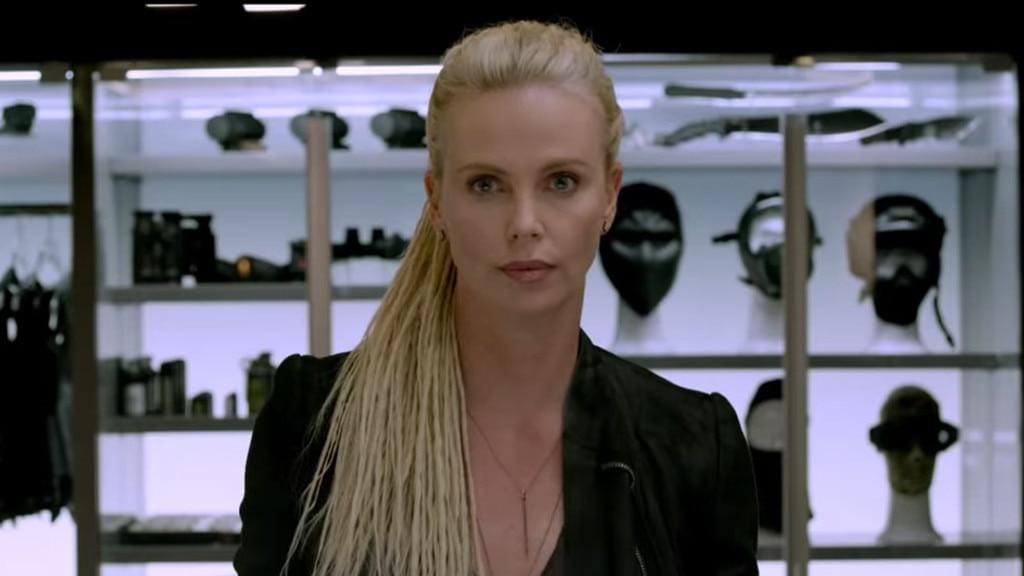
Her name was Cipher.
And she was played by Charlize Theron.
In The Fate of the Furious, directed by F. Gary Gray, Theron introduced a villain unlike the street racers, drug lords, mercenaries, and assassins who had previously challenged Dom and his crew.
Cipher was a cyberterrorist.
She controlled information.
She exploited surveillance systems.
She manipulated technology.
And rather than confronting Dom in a conventional battle, she transformed his greatest strength—his devotion to family—into his most dangerous vulnerability.
The result was one of the franchise's most shocking narrative developments.
Dominic Toretto betrayed his own team.
For the first time, viewers watched the man who had spent years preaching loyalty apparently abandon the people closest to him.
But Cipher's importance went beyond that twist.
Her introduction signaled a fundamental change in the Fast & Furious universe.
The series had once been about street racing, theft, and rival crews.
Now, a villain could threaten global security from an aircraft filled with computers while turning ordinary cars into remotely controlled weapons.
And just two years after Theron became an icon of vehicular action as Imperator Furiosa in Mad Max: Fury Road, she delivered a fascinating reversal.
Furiosa used a vehicle to escape oppression.
Cipher used technology to impose it.
One fought to liberate others.
The other sought to control them.
And that contrast reveals just how compelling Theron's two blockbuster characters really are.
Spoiler warning: This feature discusses major plot developments in The Fate of the Furious, F9, and Fast X.
Who Is Cipher in Fast & Furious?

Cipher enters the franchise as an internationally connected criminal mastermind whose ambition extends far beyond money or revenge.
She wants the ability to influence global events.
And she believes that advanced technology provides the means to do it.
Her operations depend on intelligence gathering, criminal networks, surveillance capabilities, and highly skilled hackers.
Rather than personally taking part in every dangerous operation, she directs others from environments she can control.
That makes her a markedly different kind of antagonist.
Many earlier Fast & Furious villains possessed physical strength, armed forces, or access to dangerous weapons.
Cipher possesses information.
She knows people's weaknesses.
She can monitor their movements.
And she is willing to exploit their relationships without hesitation.
Her power lies in deciding what other people will do before they have a chance to resist.
2015: Charlize Theron Became Furiosa, an Icon of Freedom

Before Cipher, there was Furiosa.
In George Miller's Mad Max: Fury Road (2015), Theron portrayed Imperator Furiosa, a hardened warrior living under the brutal authority of Immortan Joe.
Furiosa begins the story operating within Joe's military system.
But she turns against him, driving a heavily armored War Rig into the desert while helping several women escape his control.
Her journey becomes a desperate battle for freedom.
She risks her life to protect people denied autonomy over their own bodies and futures.
The film's spectacular vehicle sequences are driven by a fundamentally human objective: escape from exploitation.
Theron brought remarkable intensity to the character, combining physical toughness with emotional restraint and vulnerability.
In interviews, she described Furiosa as a character whose flaws and contradictions were important to her appeal.
Two Characters Defined by Control—but on Opposite Sides
Furiosa and Cipher exist in very different fictional worlds.
But their motivations create a striking thematic contrast.
Furiosa understands what it means to be controlled.
Cipher understands how to control others.
Furiosa's story is about reclaiming freedom.
Cipher's story is about removing it.
Their relationship with vehicles reflects that difference.
For Furiosa, the War Rig is an instrument of escape.
For Cipher, vehicles are objects to be hacked, redirected, and used as weapons.
It is a remarkable example of an actor playing two characters with opposite relationships to power within only two years.
2017: Cipher Turned Dominic Toretto Against His Family

The eighth main installment of the franchise begins with Dom and Letty enjoying their honeymoon in Havana, Cuba.
For a brief moment, Dominic Toretto appears to have achieved the peaceful life he has spent years trying to protect.
Then Cipher approaches him.
Their first encounter is deceptively quiet.
She does not arrive with an army.
She does not challenge him to a race.
She simply shows him something on her phone.
The contents immediately change his behavior.
Dom becomes visibly distressed.
And soon afterward, the unthinkable happens.
During an operation in Berlin, he deliberately turns against his teammates, attacks Luke Hobbs, and steals an electromagnetic pulse device for Cipher.
The crew is stunned.
The man who united them has apparently become their enemy.
Why Dom's Betrayal Was Such a Powerful Twist
By the eighth film, family had become the franchise's central identity.
Its characters repeatedly risked their lives to rescue one another.
Former enemies had become allies.
Personal loyalty often outweighed legal authority, financial incentives, and even physical survival.
Dom was the embodiment of those values.
If he could abandon his family, then the franchise's emotional foundation seemed suddenly uncertain.
Cipher's introduction worked because she was not simply threatening the heroes with greater firepower.
She was threatening the principle that held them together.
For a series built around loyalty, that was a more profound challenge than another dangerous car chase.
Cipher's Greatest Weapon Wasn't Hacking. It Was Blackmail.
The film eventually reveals why Dom has been cooperating.
Cipher has kidnapped Elena Neves, Dom's former romantic partner, and their infant son.
Dom had not previously known about the child.
Cipher uses their captivity to force him into committing crimes against his own team.
This changes the meaning of his apparent betrayal.
Dom has not abandoned his commitment to family.
He is being coerced through that commitment.
The very thing that normally makes him heroic becomes the weakness Cipher exploits.
A Villain Who Turns Love Into a Hostage Situation
Cipher understands that Dom is prepared to sacrifice almost anything for the people he loves.
Rather than trying to change his values, she uses them against him.
This is what makes the character particularly disturbing.
She does not need to convince Dom that her cause is right.
She does not need to corrupt him through greed or ambition.
She makes him believe that cooperation is necessary to protect his child.
When her enforcer Connor Rhodes murders Elena, Cipher demonstrates that her threats are not empty.
The scene is one of the darkest moments in the entire franchise.
It also distinguishes her from antagonists whose motivations are rooted primarily in competition or revenge.
Cipher is prepared to destroy an innocent person's life to maintain psychological control over someone else.
Her cruelty is calculated rather than impulsive—and that makes it especially unsettling.
The Zombie Cars Scene: When Cipher Turned New York Into a Weapon

If there is one sequence that perfectly represents Cipher's threat, it is the extraordinary New York City car-hacking scene.
Dom is attempting to intercept a motorcade carrying a device associated with nuclear-weapons authorization.
To clear his path, Cipher orders her hackers to take control of vehicles throughout the city.
Cars suddenly accelerate without their drivers controlling them.
Vehicles pour into intersections.
Others crash through barriers.
An enormous wave of automobiles overwhelms the streets.
In one particularly outrageous moment, cars tumble from a parking structure in a spectacular metallic avalanche.
The filmmakers refer to these compromised automobiles as zombie cars.
And the sequence reverses one of the franchise's oldest assumptions.
Previously, cars were the heroes' greatest tools.
Under Cipher's control, they become an enormous, distributed weapon system.
Why the Sequence Was More Than Another Action Spectacle
The Fast & Furious franchise had already featured extraordinary vehicular stunts.
But the zombie-car sequence introduced a different kind of danger.
The vehicles were no longer necessarily controlled by skilled drivers.
They were controlled by software.
Cipher exploited a fictionalized version of vulnerabilities in connected automotive technology, using so-called zero-day exploits to seize control of vehicles remotely.
The premise exaggerated what could realistically be accomplished across hundreds of unrelated vehicles simultaneously.
But it drew on genuine cybersecurity concerns.
Modern vehicles increasingly rely on complex software, electronic control units, wireless connectivity, and interconnected systems.
Researchers have demonstrated that certain vehicle architectures can be vulnerable to remote attacks.
Real-world automotive cybersecurity focuses on preventing those weaknesses from allowing unauthorized access to safety-critical functions.
Cipher transforms that legitimate concern into Hollywood spectacle.
She does not require a fleet of loyal drivers.
She needs a technological weakness she can exploit.
The Irony of a Car Franchise Controlled by a Hacker
The visual symbolism is striking.
For seven previous films, the franchise had celebrated drivers who mastered powerful machines.
Cipher challenged the assumption that the driver would always remain in control.
She demonstrated that machines could be turned against their operators.
That made her a particularly appropriate antagonist for a franchise moving from underground street racing toward international espionage and technologically driven threats.
Charlize Theron's Performance: Quiet Cruelty in a World of Loud Villains

Cipher could easily have become a one-dimensional villain.
Her plans are extravagant.
Her technology borders on science fiction.
And her ambitions are enormous.
But Theron's performance gives the character a particular kind of restraint.
She rarely needs to shout to establish authority.
She speaks with unsettling calm.
Her facial expressions remain controlled.
And she often appears emotionally detached from the suffering caused by her decisions.
This creates a sharp contrast with the film's elaborate action sequences.
Outside, vehicles collide and explosions tear through the landscape.
Inside, Cipher watches events unfold from the relative safety of her command environment.
She Makes Cruelty Look Administrative
One of the most disturbing qualities of Cipher is the ordinary manner in which she discusses extraordinary violence.
To her, people are resources.
Relationships are vulnerabilities.
Vehicles are assets.
And global instability is something that can be engineered.
Theron's performance reinforces that worldview.
Cipher does not behave like someone who has lost control.
She behaves like someone who believes everything can be controlled.
That makes the moments when her plans begin to unravel especially satisfying.
The film's villain is not defeated simply because someone drives faster.
She is challenged when the emotional relationships she tried to exploit become the foundation for resistance.
Cipher vs. Furiosa: The Brilliant Reversal

A cyberterrorist who uses information, manipulation, and advanced technology to dominate others.
The contrast becomes even clearer when the two characters are compared directly.
Furiosa | Cipher | |
|---|---|---|
Film | Mad Max: Fury Road | The Fate of the Furious |
Primary motivation | Liberation | Control and strategic power |
Relationship with technology | Uses a vehicle to escape oppression | Weaponizes vehicles through software |
Leadership style | Earns trust through shared risk | Uses fear and coercion |
Personal sacrifice | Risks her life for others | Sacrifices others for her objectives |
Central theme | Freedom | Domination |
The two performances illustrate Theron's versatility within action cinema.
She does not simply alternate between heroic and villainous roles.
She explores opposing forms of power.
Furiosa's strength comes from her willingness to protect vulnerable people.
Cipher's strength comes from her ability to identify vulnerabilities and exploit them.
Both are exceptionally determined.
Both are intelligent.
Both operate within violent worlds.
But they use their capabilities for fundamentally different ends.
Why Cipher Was Different From Previous Fast & Furious Villains
The franchise had already introduced memorable antagonists, including drug traffickers, mercenaries, and highly trained criminals.
But Cipher's arrival marked a change in scale and strategy.
Earlier villains often needed physical access to whatever they wanted.
They controlled territory, vehicles, weapons, or armed personnel.
Cipher could operate across borders through digital infrastructure.
Her objectives extended to advanced surveillance and weapons systems.
And her operations depended on manipulating technology as much as confronting opponents.
She also possessed a disturbing understanding of the franchise's central characters.
The film connects her operations to earlier antagonists, suggesting that her influence had reached further into the series' history than viewers initially realized.
Cipher Attacked the Family From Within
This is the most important difference.
A powerful enemy attacking Dom's family ordinarily unites the team.
Cipher's strategy initially divides it.
She makes Dom appear disloyal.
She forces the others to question his actions.
And she creates situations where protecting one loved one can endanger another.
The resulting conflict is not merely physical.
It is emotional and psychological.
That is why her introduction remains among the franchise's most effective villain concepts.
Cipher Returned in F9—and Her Story Became More Complicated
Cipher survived the events of The Fate of the Furious, escaping before Dom's team could bring her to justice.
She returned in F9, once again becoming involved in a dangerous technological conspiracy.
This time, the story centered partly on Jakob Toretto, Dom's estranged brother, and a device known as Project Aries.
Cipher was no longer the only major figure directing events.
She navigated shifting alliances, captivity, betrayal, and opportunities to regain influence.
The film continued portraying her as a calculating strategist who could remain dangerous even when deprived of her usual freedom.
Her role also reinforced how closely the franchise's later installments had become associated with technological threats.
The enemy was no longer necessarily someone waiting at the finish line of a street race.
It could be someone attempting to control global weapons systems.
Fast X Changed Cipher's Position Again
In Fast X, Cipher returns under very different circumstances.
A new enemy, Dante Reyes, played by Jason Momoa, threatens her own operations.
Dante uses coercion against Cipher's associates, turning the people around her against her.
The reversal is significant.
The woman who once manipulated Dom through threats against his family becomes a target of similar tactics.
She arrives at Dom and Letty's home seeking help and warning them about Dante's plans.
This does not erase her previous crimes.
Nor does it suddenly transform her into a conventional heroine.
Instead, it introduces a more complicated relationship between her and the characters she previously terrorized.
Cipher becomes a dangerous person whose interests temporarily overlap with those of her former enemies.
Why Her Return Matters
The development creates an intriguing symmetry.
In The Fate of the Furious, Cipher was the architect of Dom's suffering.
In Fast X, she discovers what happens when another ruthless manipulator threatens the people and power structures she depends upon.
It is a reminder that a villain's survival does not guarantee continued dominance.
Even someone as calculating as Cipher can become vulnerable when confronted with an adversary willing to employ the same methods.
Her long-term place in the franchise remains a question for future storytelling rather than something that can be conclusively settled from her earlier appearances.
The Larger Meaning of Cipher: Technology Cannot Replace Human Loyalty
On the surface, Cipher represents the ultimate escalation of the franchise's villains.
She has advanced technology.
She possesses extraordinary intelligence.
She can manipulate international networks.
And she can transform everyday machinery into weapons.
But her greatest strength also reveals her greatest limitation.
She understands relationships primarily as opportunities for exploitation.
She assumes affection creates weakness.
And she repeatedly attempts to control people by threatening what they love.
Dom and his team operate according to a very different principle.
They regard loyalty as a source of strength.
That distinction becomes the foundation of their eventual resistance.
Cipher can seize control of technology.
She can manipulate information.
She can force people into dangerous decisions.
But she struggles to understand the willingness of people to risk everything for one another without expecting personal advantage.
In this sense, her character represents a fascinating opposition to the franchise's emotional philosophy.
Cipher believes people are easiest to control when they love someone. Dom believes love is what makes people impossible to defeat.
That conflict gives her role more meaning than the size of her explosions or the sophistication of her computers.
Frequently Asked Questions
Who plays Cipher in Fast & Furious?
Charlize Theron portrays Cipher, the cyberterrorist introduced in The Fate of the Furious (2017).
Why did Dominic Toretto betray his family in Fast 8?
Dom was forced to cooperate with Cipher because she held Elena Neves and their infant son hostage. His betrayal was an act of coercion rather than a genuine abandonment of his family.
What is Cipher's real name?
The franchise identifies the character as Cipher. Her full legal identity and detailed personal background have not been comprehensively established in the released films.
How did Cipher control the cars in New York?
The film portrays her hackers exploiting vulnerabilities in connected vehicle systems to take remote control of numerous cars. The sequence is heavily fictionalized but draws on real automotive cybersecurity concepts.
Did Charlize Theron play Furiosa before Cipher?
Yes. Theron portrayed Furiosa in Mad Max: Fury Road in 2015, two years before her debut as Cipher in 2017.
Which Fast & Furious movies feature Cipher?
Cipher appears in The Fate of the Furious (2017), F9 (2021), and Fast X (2023).
Is Cipher a hero or villain in Fast X?
She is an established villain whose interests temporarily align with Dom's family against Dante Reyes. The film complicates her role without erasing her earlier actions.
The Woman Who Didn't Need to Drive to Take Control
When Charlize Theron first appeared as Cipher in 2017, the Fast & Furious franchise had already pushed automotive action far beyond conventional reality.
The characters had survived impossible crashes, enormous explosions, and increasingly extravagant missions.
It seemed that every new villain would need a bigger vehicle, more weapons, and an even more spectacular confrontation.
Cipher offered something different.
She did not need to be the best driver.
She did not need to defeat Dom in a street race.
She did not even need to stand on the battlefield.
Her power came from understanding systems—technological systems, surveillance networks, and human relationships.
She recognized that Dominic Toretto's strongest attachment was also the thing through which he could be coerced.
And she exploited that knowledge with chilling precision.
The result was one of the franchise's most effective personal threats.
Two years earlier, Theron had played Furiosa, a woman prepared to risk everything to rescue people from captivity.
As Cipher, she became someone who created captivity to achieve her own ambitions.
Both characters showed that power does not always depend on physical size or conventional strength.
But the moral contrast between them could hardly be greater.
Furiosa fought for freedom.
Cipher fought for control.
And through these two performances, Theron demonstrated how the same qualities—determination, intelligence, courage, and authority—can produce radically different characters depending on the values directing them.
In a franchise that became famous for celebrating cars, engines, and impossible driving stunts, Cipher made a lasting impression by proving that the most frightening threat might not come from another driver.
It might come from someone watching from behind a screen.
Someone who knows where you are.
Someone who knows whom you love.
And someone who understands exactly what it would take to turn your greatest strength against you.
Charlize Theron's Cipher didn't need to win a race against Dominic Toretto. She found a way to make him drive for her.
And that is what made her so dangerous.
Sources and Further Reading
- TheWrap — What Exactly Is Cipher's Zero-Day Car Hack?. Explanation of the film's New York car-hacking sequence and its cybersecurity premise.
- TIME — Unpacking The Fate of the Furious Ending. Analysis of Dom's coercion, Elena's fate, and the rescue of his son.
- IndieWire — Inside the Spectacular New York Zombie Car Chase. Behind-the-scenes coverage of the memorable vehicle sequence.
- Time Out — Charlize Theron on Mad Max: Fury Road. Theron's discussion of Furiosa and her approach to the character.
- Fandango — Charlize Theron on Mad Max and Fast & Furious. Her 2017 comments about the two franchises.
- Fast X — Plot and Character Information