In the Grey Review: Guy Ritchie Still Entertains, But the Spark Is Fading
Guy Ritchie can still make a film move. That much is clear from In the Grey, his 2026 action thriller built around expensive actors, glossy locations, sharp suits, weapons, banter, betrayal, and the familiar rhythm of men and women operating in dangerous spaces with more confidence than common sense.
The film is entertaining. It is fast enough, slick enough, charismatic enough, and stylish enough to pass as a good time while it is playing. It has movie stars doing movie-star things. It has enough action to keep the pulse awake. It has enough of Ritchie’s signature swagger to remind you who made it.
But once the credits roll, the feeling is hard to ignore: this is not a Guy Ritchie highlight.
In the Grey feels like Ritchie on autopilot. Not bad autopilot, exactly. More like luxury autopilot. The machine still works. The engine still has power. The steering is still smooth. But the driver no longer seems fully thrilled by the road.
There was a time when a Guy Ritchie film felt like an event of personality. Even when messy, his films had bite. They had rhythm, mischief, danger, and a sense that the director was trying to bend genre cinema into his own private language. Lock, Stock and Two Smoking Barrels, Snatch, RocknRolla, The Man from U.N.C.L.E., The Gentlemen, and even the darker, more brutal Wrath of Man had a recognizable pulse.
In the Grey has style, but less personality. It has confidence, but less surprise. It has stars, but not enough soul. It feels like another expensive product pretending to be cinema: polished, packaged, marketable, and perfectly watchable, yet strangely disposable.
That may sound harsh for a film that is often fun. But that is exactly the problem. In the Grey is fun and forgettable at the same time.
The Basic Appeal of In the Grey
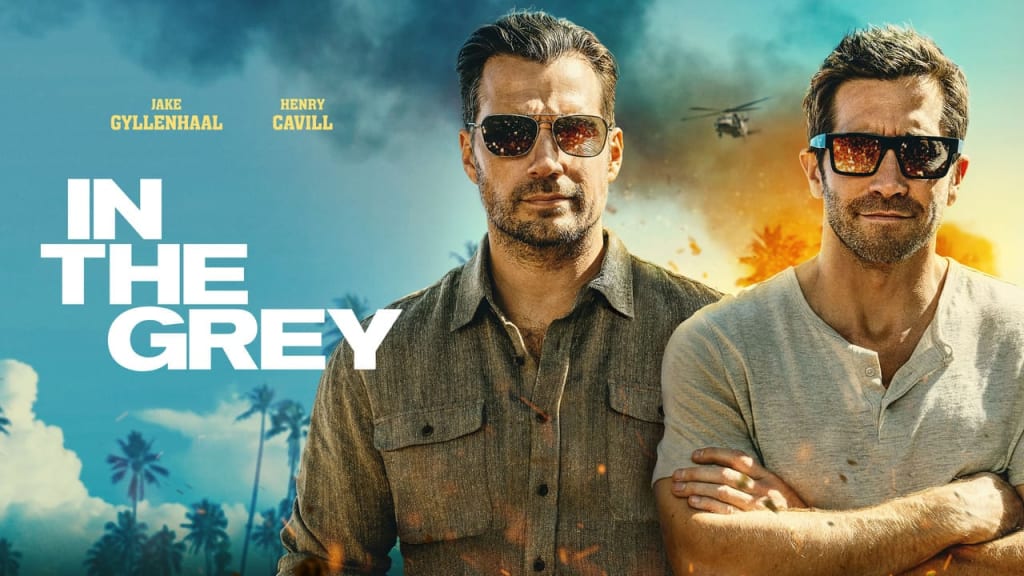
On paper, In the Grey sounds like the kind of film Guy Ritchie should be able to direct in his sleep. A covert team of elite operatives is pulled into a dangerous mission involving stolen money, ruthless power, deception, and escalating violence. The cast includes Henry Cavill, Jake Gyllenhaal, Eiza González, Rosamund Pike, Fisher Stevens, and Kristofer Hivju. The ingredients are there for a sharp, stylish, adult action thriller.
And to be fair, the film does deliver some of what audiences expect.
It moves quickly. It looks expensive. It gives its stars room to pose, smirk, threaten, scheme, and fire weapons. It has polished action scenes, sleek interiors, international danger, and the kind of cool-professional energy that makes even ridiculous plans feel temporarily convincing.
Ritchie understands the appeal of watching capable people do dangerous things with style. He knows how to arrange characters around power, greed, loyalty, and betrayal. He knows how to make a scene feel busy without making it unreadable. He knows when to cut, when to punch a line, when to let a character walk into a room like they own the place.
That basic craftsmanship keeps In the Grey afloat.
This is not a boring film. That matters. In an age where many action thrillers feel either too generic or too overstuffed with franchise obligations, In the Grey has enough old-school movie-star energy to be watchable from beginning to end. It is not painful. It is not incompetent. It is not dead on arrival.
But it is also not memorable in the way a Guy Ritchie film should be.
It entertains in the moment, then evaporates.
Guy Ritchie on Autopilot
The most accurate way to describe In the Grey is this: Guy Ritchie can still entertain on autopilot, but the signs of wear and tear are starting to show.
The film has all the familiar Ritchie tools. There is quick banter. There are men with nicknames. There are complicated criminals and powerful people making shady arrangements. There is violence presented with style rather than shock. There are clever edits, confident transitions, and characters who talk like they know they are inside a Guy Ritchie movie.
The issue is not that these elements are present. The issue is that they feel expected rather than inspired.
Ritchie’s style once felt like a disruption. Now it can feel like a brand package. The rhythm is recognizable, but the danger has softened. The attitude is there, but the freshness is missing. The film knows how to sound like Guy Ritchie, but it does not always feel like it has something new to say through that voice.
Autopilot Ritchie is still better than many action directors working at full effort. That is the strange compliment hidden inside the criticism. He has enough natural command of pacing, tone, and visual polish that even his lesser films have energy. He knows how to keep scenes moving. He knows how to make actors look good. He knows how to sell cool.
But In the Grey also feels like a director repeating gestures he has already perfected elsewhere.
The film is not embarrassing. It is not lazy in the most obvious sense. But it feels too comfortable. It rarely takes a sharp turn. It rarely surprises. It rarely feels like Ritchie is challenging himself or the audience.
For a director whose best work often thrives on unpredictability, that is a problem.
A Cast More Expensive Than the Plot
One of the sharpest criticisms of In the Grey is that it feels like the cast is more expensive than the plot. That line may sound cruel, but it captures the film’s biggest imbalance.
Henry Cavill, Jake Gyllenhaal, and Eiza González are not minor screen presences. They bring charisma, physical confidence, and star power. Rosamund Pike adds sharp authority. Fisher Stevens and Kristofer Hivju add texture. This is a cast that should make the screen crackle.
Sometimes, they do.
Cavill has the polished physicality the role needs. He looks completely comfortable inside Ritchie’s world of weapons, suits, masculine tension, and dry delivery. Gyllenhaal brings unpredictable energy, though the film does not always give him enough complexity to fully weaponize it. González has screen presence and style, and she fits the high-gloss danger of the story. Pike, unsurprisingly, brings intelligence and control to her scenes.
But the writing does not always rise to the level of the cast.
Too many characters feel like attractive functions rather than fully alive people. They exist to move the plot, deliver attitude, provide tension, or decorate the frame. The actors do what they can, but the film often depends on their charisma to cover thin characterization.
That works for a while. Movie stars are movie stars for a reason. Watching charismatic actors operate inside a stylish thriller can be pleasurable even when the material is not deep.
But charisma is not the same as character.
The longer In the Grey goes on, the more you feel the difference. The actors are selling a film that the screenplay has not fully earned. The result is smooth but hollow, entertaining but underwritten.
Fun, But Forgettable
The simplest review of In the Grey may be: fun, forgettable Guy Ritchie.
That is not the worst thing a film can be. Many viewers will enjoy it. Some may even enjoy it a lot. It is the kind of movie that works well on a Friday night when you want stylish action, familiar faces, and low emotional commitment. It is easy to watch. It does not demand too much. It gives enough back.
But it does not linger.
A truly strong Guy Ritchie film usually leaves behind scenes, lines, characters, or rhythms that stick in the mind. You remember the personalities. You remember the absurdity. You remember the way the story folds back on itself. You remember the mix of danger and comedy.
In the Grey does not have enough of that.
There are moments that work. There are exchanges that land. There are action beats that satisfy. But the film does not build into something distinctive. It feels more like a competent remix of things Ritchie has done better before.
That is why it becomes forgettable. Not because it lacks craft, but because it lacks identity.
A forgettable bad film disappears because it is dull. A forgettable polished film disappears because it is too smooth to grab onto. In the Grey belongs closer to the second category. It has no shortage of surface pleasures, but it rarely cuts deep enough to leave a mark.
Another Expensive Product Pretending to Be Cinema
Modern mainstream filmmaking often has a problem: everything can look professional while feeling strangely empty. The lighting is clean. The actors are famous. The production design is tasteful. The music pushes at the right moments. The action is edited for momentum. The marketing has a hook.
And yet, the film itself feels less like a personal work and more like a product assembled to occupy a slot.
That is the uncomfortable feeling In the Grey sometimes creates.
It has the appearance of cinema, but too often it feels like content dressed in expensive clothes. It is built to be consumed smoothly, not discovered. It has little roughness, little danger, little weirdness, little emotional mess. Even its chaos feels designed.
This is especially disappointing from Guy Ritchie because his best films often had personality precisely because they were not too clean. They had attitude. They had sharp edges. They had characters who felt like they came from a world the director found amusing, threatening, and alive.
In the Grey feels more corporate. Not completely, but enough to notice. It feels like a film where every element is recognizable, marketable, and safe. Even the danger feels controlled. Even the cool feels manufactured.
The result is not terrible. It is simply less alive than it should be.
A film can be expensive and still feel handmade. In the Grey rarely does. It feels like a premium action package built around star power and brand recognition. That may be enough for casual entertainment, but it is not enough for greatness.
The Action Works, But It Does Not Astonish
Action thrillers do not always need deep stories if the set pieces are strong enough. A great action scene can tell you everything about character, geography, stakes, and style without heavy dialogue. Unfortunately, In the Grey delivers action that is competent rather than exceptional.
The action is cleanly staged. It has energy. It benefits from the cast’s physical presence. It delivers impact when required. Ritchie knows how to keep movement readable and stylish.
But the scenes rarely feel unforgettable.
There is a difference between action that functions and action that defines a film. The best action sequences have personality. They reveal something about the people involved. They escalate in surprising ways. They create images that remain in the viewer’s mind.
In the Grey has action that keeps the film alive, but not action that elevates it into something special.
Part of the issue is that the film feels too familiar. Elite operatives, impossible mission, stolen fortune, ruthless enemy, stylish gunplay, tactical movement, betrayal, survival. These elements can work, but they need either emotional weight or inventive execution. In the Grey has enough execution to entertain, but not enough invention to stand out.
The violence feels polished. The danger feels arranged. The impact lands, but the surprise is limited.
For many viewers, that will be enough. For those expecting a Ritchie action thriller to bring a sharper personality, it may feel slightly underwhelming.
The Dialogue Has Rhythm, But Not Enough Bite
Dialogue has always been one of Guy Ritchie’s calling cards. His characters talk with swagger, rhythm, insult, coded meaning, and comic threat. At his best, Ritchie can make conversation feel like combat.
In the Grey has some of that rhythm, but not enough bite.
The characters speak in the expected register: cool, sharp, knowing, occasionally funny. The lines often sound like they belong in a Ritchie film. But too many of them feel like imitation rather than inspiration.
A great Ritchie line should feel dangerous and funny at the same time. It should reveal character while also moving the scene. It should have flavor. In In the Grey, the dialogue is rarely bad, but it is often too polished to feel alive. It has attitude without enough surprise.
The actors help. Gyllenhaal can make a line feel unstable. Cavill can deliver dry confidence. González can carry sharpness. Pike can make authority sound effortless. But the writing often gives them style instead of substance.
The result is dialogue that keeps the film moving but does not create many moments you want to quote afterward.
For a Guy Ritchie film, that is a real loss.
Henry Cavill and Jake Gyllenhaal Deserve a Stronger Film
Henry Cavill and Jake Gyllenhaal are two actors who can bring very different types of masculine energy to the screen. Cavill often works best when his physical control and old-fashioned movie-star presence are used with a little irony or restraint. Gyllenhaal is at his best when there is something unstable, obsessive, funny, or dangerous under the surface.
Together, they should be electric.
In In the Grey, they are watchable, charismatic, and enjoyable. But the film does not fully exploit the contrast between them. It gives them the shape of a dynamic without always giving them the depth of one.
Cavill looks the part and carries himself with the necessary confidence. He fits Ritchie’s world well. Gyllenhaal brings more unpredictability, but the film never feels as if it fully lets him go wild. There are flashes of chemistry and personality, but not enough to make the partnership iconic.
This is one of the film’s biggest missed opportunities.
A great Ritchie film can turn actor pairings into fireworks. It can make personalities collide in ways that feel dangerous and hilarious. Here, the stars are good, but the film around them is too controlled. It gives them room to perform, but not enough room to surprise.
You enjoy watching them. You just wish the movie gave them more.
Eiza González Brings Style and Presence
Eiza González fits naturally into the sleek world of In the Grey. She has the screen presence required for this kind of glossy action thriller, and she brings enough confidence to avoid being swallowed by the larger male personalities around her.
Her role gives the film some of its sharper energy. She understands the tone: cool, stylish, dangerous, slightly heightened. She looks comfortable inside Ritchie’s rhythm and helps give the film its polished surface appeal.
But again, the problem is not the performer. It is the writing.
González has the presence to carry more complexity than the film gives her. She can sell intelligence, glamour, tension, and command. But too often, the film seems satisfied with the idea of her character rather than the full development of her character.
She is part of why the film remains entertaining. She is also part of why the film feels frustrating. The cast suggests a sharper, more memorable movie hiding somewhere inside the one we got.
Rosamund Pike Adds Class, But Not Enough Damage
Rosamund Pike is the kind of actor who can make a small amount of screen time feel more expensive. She brings intelligence, control, and a slightly dangerous precision to almost any role. In In the Grey, she adds class and authority.
But the film does not use her as brutally or brilliantly as it could.
Pike can play elegance with poison underneath. She can make politeness feel threatening. She can turn a calm sentence into a weapon. A Guy Ritchie film should be an ideal place for that kind of energy.
There are moments where she lifts the material simply by being present. But the character does not become as memorable as she might have in a more daring version of the film.
This is another recurring issue: In the Grey keeps placing strong actors inside roles that feel slightly too thin. The performers add flavor, but the film does not give them enough meat.
The Plot Moves, But It Does Not Grip
The plot of In the Grey has all the expected pieces of a high-stakes action thriller: a stolen fortune, dangerous power players, elite operatives, shifting loyalties, strategic violence, and an escalating mission. It moves with enough speed that viewers are unlikely to feel bored.
But movement is not the same as grip.
A gripping plot makes you lean forward because you care about what happens next. In the Grey often makes you watch because it is professionally assembled and because the cast is attractive. That is different.
The story is functional. It provides a framework for action, banter, and stylish danger. But it rarely feels urgent on an emotional level. The stakes are big in terms of money and violence, yet they do not always feel personal enough.
This creates a strange effect. The film tells us the mission matters, but the emotional temperature remains lower than it should. There are twists and complications, but they do not hit as hard as they might because the characters are not deeply enough developed.
The plot is never confusing enough to derail the film, but it is also never clever enough to define it. It is a delivery system for style.
That can be entertaining. It is also limiting.
Style Without Surprise
Guy Ritchie’s visual style has always been part of his appeal. He likes movement, rhythm, cool compositions, sharp cutting, and a sense of characters navigating dangerous systems with swagger. In the Grey has that surface.
The film looks good. It has money on the screen. It has the shine of a modern international thriller. The costumes, locations, vehicles, weapons, and interiors all contribute to the sense of expensive danger.
But style needs surprise to stay alive.
Too much of In the Grey feels like expected cool. The film has stylish people in stylish places doing stylishly dangerous things. That should be enjoyable, and sometimes it is. But the style rarely reveals a new angle or creates a genuinely fresh image.
This is where the film shows wear and tear. Ritchie’s style has become so recognizable that he now has to work harder to make it feel alive. Simply delivering the familiar surface is no longer enough.
The film looks like a Guy Ritchie movie. It sounds like a Guy Ritchie movie. But it does not always have the unpredictable internal spark of a Guy Ritchie movie.
The Problem With Late-Career Brand Filmmaking
Many directors eventually become brands. Their names begin to signify a package of expectations. Audiences know what they are buying before they enter the theater. That can be powerful, but it can also become a trap.
Guy Ritchie is now a brand. A Guy Ritchie film promises criminals, operators, schemes, style, banter, violence, masculine energy, and a certain kind of cleverness. In the Grey delivers the brand.
But does it expand the brand? Not really.
That is the problem.
When a filmmaker becomes too comfortable inside his own signature, the work can begin to feel like self-imitation. The audience receives the expected product, but not the shock of personality that made the signature exciting in the first place.
In the Grey is not a failure of basic filmmaking. It is a failure of renewal. It suggests a director who still knows how to entertain but may be running low on new ways to surprise himself.
That is why the question naturally arises: Mr. Ritchie, what have you done to yourself?
This is not meant as an insult to his talent. It is almost the opposite. The disappointment exists because the talent is obvious. The craft is still there. The rhythm is still there. The confidence is still there. But the fire feels reduced.
Where the Film Does Work
Despite all these criticisms, In the Grey is not without pleasures.
It works as a casual action thriller. It works as a star vehicle. It works as a reminder that Ritchie can still direct with momentum. It works when the actors are allowed to bounce off each other. It works when the film leans into its slickness without pretending to be deeper than it is.
The pacing is solid. The runtime does not feel punishing. The action is competent. The cast keeps things watchable. The film has enough style to avoid feeling generic, even when the story is familiar.
There is also value in a film that knows how to entertain adults without requiring superheroes, cinematic universes, or endless mythology. In the Grey is a self-contained action thriller with movie stars. That alone gives it some appeal.
It may not be great cinema, but it is not worthless. It is the kind of film that can easily satisfy viewers looking for a stylish, low-commitment night out.
The issue is that Guy Ritchie has trained audiences to expect more than stylish competence.
Where the Film Falls Short
In the Grey falls short in originality, emotional weight, and memorability.
The plot is too familiar. The characters are too thin. The dialogue lacks the sharpness of Ritchie’s best work. The action entertains but does not astonish. The style is polished but not fresh. The whole film feels like it could have been stranger, meaner, funnier, or more dangerous.
It is a film full of professional choices, but not enough inspired ones.
That is why it feels like an expensive product pretending to be cinema. It has the form of a major action thriller, but not enough of the messy human electricity that makes films last. It is built well, but it does not breathe deeply.
The best Ritchie films feel like they are enjoying their own danger. In the Grey feels like it is managing its danger.
That difference matters.
Comparing It to Guy Ritchie’s Better Work
Compared with Snatch or Lock, Stock and Two Smoking Barrels, In the Grey lacks wildness. Those earlier films had rough energy, comic violence, and a sense of discovery. They felt like they came from a filmmaker excited to show you a world.
Compared with The Man from U.N.C.L.E., it lacks elegance and playful chemistry. That film had style too, but it had a lighter touch and a more distinctive sense of fun.
Compared with The Gentlemen, it lacks verbal bite and narrative pleasure. The Gentlemen was not perfect, but it had characters, schemes, and dialogue that felt more alive.
Compared with Wrath of Man, it lacks force. Wrath of Man showed Ritchie working in a colder, darker mode, and whether one loved or disliked it, the film had a strong tonal identity. In the Grey feels less committed.
That is why calling it “far from a Ritchie highlight” feels fair. It is not among his worst efforts, but it is nowhere near the films that define him.
It belongs in the middle-to-lower shelf: watchable, polished, mildly enjoyable, and easy to forget.
The Entertainment vs. Art Problem
There is nothing wrong with entertainment. A film does not have to be profound to be worthwhile. Action thrillers can be fun, stylish, and simple. Sometimes that is exactly what audiences want.
The problem with In the Grey is not that it is entertainment. The problem is that it sometimes feels satisfied with being only a product.
Great entertainment still has personality. It still has rhythm, danger, wit, and images that feel specific. It can be light without being empty. It can be commercial without feeling manufactured.
In the Grey entertains, but it rarely feels necessary. It feels like a film made because the package made sense: director, cast, genre, budget, release slot. That is not the same as a film that feels born from a strong creative impulse.
This distinction may not matter to every viewer. Some will watch the movie, enjoy the stars, enjoy the action, and move on happily. That is valid.
But for those who still look to Guy Ritchie for a certain kind of cinematic personality, In the Grey may feel like a warning sign.
The machine is running. But is anyone still pushing it somewhere new?
Is In the Grey Worth Watching?
Yes, with adjusted expectations.
If you want a slick, star-driven action thriller that moves quickly and gives you Henry Cavill, Jake Gyllenhaal, Eiza González, and Rosamund Pike in a stylish Guy Ritchie package, In the Grey is worth watching. It is entertaining enough. It has momentum. It has surface pleasure. It will likely satisfy viewers looking for a fun genre film.
But if you are expecting one of Ritchie’s best, you may be disappointed.
This is not the return of peak Guy Ritchie. This is not a bold reinvention. This is not a film that expands his style or deepens his voice. It is Ritchie doing what he knows how to do, competently and confidently, but without the spark that made his strongest work stand out.
It is a good streaming-night movie. It is a decent theatrical distraction. It is a pleasant enough action thriller.
But it is not essential.
In the Grey is entertaining, stylish, and carried by a strong cast, but it is also thin, familiar, and far from a Guy Ritchie highlight. It proves that Ritchie can still make a watchable film even when he appears to be operating on autopilot. The problem is that autopilot is starting to show.
The movie has fun moments. It has charisma. It has polish. It has enough action and attitude to keep audiences engaged. But it lacks the sharpness, surprise, and personality that once made Ritchie’s films feel dangerous and alive.
This is Guy Ritchie as a brand rather than Guy Ritchie as a force.
For casual viewers, that may be enough. For fans of his best work, it may feel like another sign that the director is repeating himself inside increasingly expensive packages.
In the Grey is fun.
It is forgettable.
It is entertaining.
It is not embarrassing.
But it is also another expensive product pretending to be cinema.
Mr. Ritchie, what have you done to yourself?
Rating
2.5 out of 5 stars
A slick but disposable action thriller. Watchable in the moment, gone from memory soon after.
FAQs About In the Grey
Is In the Grey worth watching?
Yes, if you enjoy stylish action thrillers and Guy Ritchie’s familiar tone. It is entertaining enough for a casual watch, but it is not one of his strongest films.
Is In the Grey one of Guy Ritchie’s best movies?
No. In the Grey is far from a Guy Ritchie highlight. It has his style and pacing, but it lacks the originality, sharp dialogue, and memorable characters of his best work.
What is the biggest problem with In the Grey?
The biggest problem is that it feels too familiar and underwritten. The cast is strong, but the plot and characters do not give them enough depth or surprise.
Is In the Grey entertaining?
Yes. The film is entertaining, fast-paced, and stylish. It works as light action-thriller entertainment, even though it is forgettable afterward.
How are Henry Cavill and Jake Gyllenhaal in In the Grey?
Both actors are watchable and charismatic, but the film does not fully use their potential. Their pairing should feel more electric than it does.
Does In the Grey feel like a Guy Ritchie movie?
Yes, very much. It has the banter, style, criminal energy, and slick action associated with Ritchie. The issue is that it often feels like a familiar version of his style rather than a fresh one.
Is In the Grey good for action fans?
Action fans may enjoy it, especially those who like polished, star-driven thrillers. However, viewers looking for groundbreaking action scenes may find it merely competent.
Why does In the Grey feel forgettable?
It feels forgettable because the story is familiar, the characters are not developed enough, and the style does not bring many new surprises. It entertains in the moment but leaves little behind.
What rating does In the Grey deserve?
A fair rating is 2.5 out of 5 stars. It is watchable and fun, but too thin and familiar to be truly impressive.
Who should watch In the Grey?
Fans of Guy Ritchie, Henry Cavill, Jake Gyllenhaal, Eiza González, and slick action thrillers may enjoy it. Viewers expecting peak Ritchie should lower their expectations.