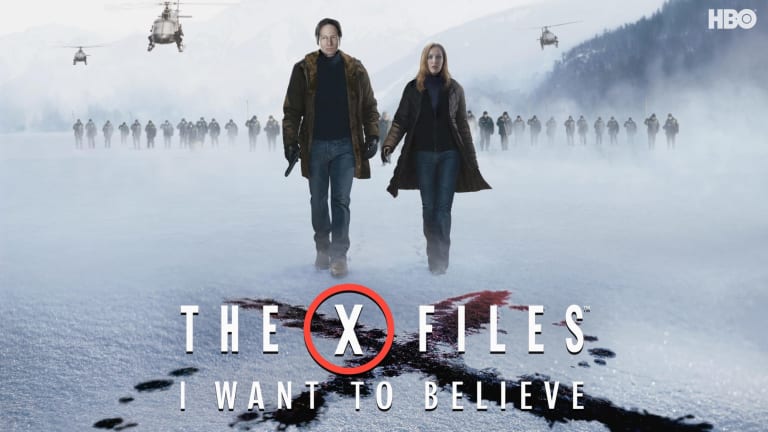
The X-Files: I Want to Believe — Vrach Frankenshteyn Restores Chris Carter’s Darker Original Vision
The truth was not buried in an FBI archive. It was left in the editing room.
Eighteen years after The X-Files: I Want to Believe divided critics and disappointed many fans, creator Chris Carter is releasing a new R-rated director’s cut designed to restore the disturbing horror film he originally intended to make.
The revised version is titled The X-Files: I Want to Believe — Vrach Frankenshteyn. It will begin streaming on August 14, 2026, on Hulu, with Entertainment Weekly also reporting a Disney+ release. Hulu’s official August schedule separately lists both the original 2008 movie and the new 2026 director’s cut for that date.
This is not a newly filmed sequel, a remake or a continuation of the show’s alien-conspiracy mythology. It is Carter’s reworking of the second X-Files feature film, using its human experimentation story to foreground the body horror, surgical terror and modern Frankenstein themes that were softened for the original PG-13 theatrical release.
Carter has described the new cut as an opportunity to finally bring to the screen material that existed in his conception of the film but did not survive the studio process. He said Fox executives considered his original version too frightening and wanted a PG-13 movie. The new edition is being promoted as a previously unseen R-rated director’s cut that faithfully restores his intended vision.
For viewers who always felt that I Want to Believe contained the pieces of a much more unsettling movie, Vrach Frankenshteyn may reveal what was missing.
What Is The X-Files: I Want to Believe — Vrach Frankenshteyn?
Vrach Frankenshteyn is Chris Carter’s new director’s cut of the 2008 movie The X-Files: I Want to Believe.
The original film reunited David Duchovny’s Fox Mulder and Gillian Anderson’s Dana Scully six years after the initial television series ended. Mulder and Scully were no longer active FBI agents, but they became involved in the search for a missing federal agent after a disgraced former priest claimed to receive psychic visions connected to the disappearance.
The investigation gradually uncovered a criminal operation involving kidnapped women, illegal medical procedures and an attempt to construct a new body from human remains.
That premise was already closely connected to Mary Shelley’s Frankenstein. However, the 2008 theatrical cut often treated the gruesome central idea indirectly, leaving much of its surgical horror outside the frame or reducing it to brief suggestions.
The 2026 version is intended to bring that buried material back into the movie.
Carter told Entertainment Weekly that he and co-writer Frank Spotnitz had set out to create what he called a real-life Frankenstein film. He compared completing the new cut to applying the electrodes again to a creation that had never fully left the operating room.
The metaphor is especially fitting.
The director’s cut is itself a reconstructed body: an older movie reopened, rearranged and revived with material that had been removed from its original form.
When Will the New X-Files Director’s Cut Be Released?
The X-Files: I Want to Believe — Vrach Frankenshteyn premieres on August 14, 2026.
Hulu’s official programming schedule lists the following two releases on that date:
- The X-Files: I Want to Believe from 2008
- The X-Files: I Want to Believe Vrach Frankenshteyn from 2026, identified as the director’s cut
Entertainment Weekly reports that the new version will be available through Hulu and Disney+. International Disney+ availability may vary according to regional licensing and release schedules.
The film had previously appeared on a Disney+ schedule with a June 11 release date but did not arrive as planned. Contemporary reporting attributed the delay to final adjustments. Its revised August date is now supported by Hulu’s official schedule and the release of a new trailer and key art.
Is Vrach Frankenshteyn Officially Confirmed?
Yes.
The title, August 14 release date, R rating and director’s-cut status have all been publicly announced.
Entertainment Weekly debuted the trailer and described the film as Carter’s scarier, R-rated version. Hulu’s official schedule independently lists the director’s cut by name.
The announcement therefore goes beyond a rumor, unfinished restoration or convention comment.
The new version is a completed streaming release.
What remains unknown before its premiere is the exact runtime, complete list of restored scenes and the full extent to which its editing, music, effects or narrative structure differ from the 2008 movie.
 Imrul
Imrul
What Does “Vrach Frankenshteyn” Mean?
“Vrach Frankenshteyn” is a transliteration of Russian words meaning Doctor Frankenstein or Physician Frankenstein.
“Vrach” means doctor or physician, while “Frankenshteyn” is the Russian transliteration of Frankenstein.
Some entertainment coverage has described the phrase as Russian for “Victor Frankenstein,” but that is not a literal translation. The word “Vrach” is a professional title, not the name Victor. In the context of the film, “Doctor Frankenstein” is the more accurate meaning.
The Russian phrasing relates directly to the movie’s villains and its medical-horror premise.
The antagonists are connected with a grotesque attempt to transfer a human head onto a reconstructed body. The title reframes the film not simply as another paranormal investigation but as a contemporary Frankenstein story involving medicine, obsession, human experimentation and the violation of the body.
The unusual subtitle also distinguishes the 2026 version from the theatrical cut in streaming libraries.
Hulu’s official schedule presents the title without a dash, while Entertainment Weekly uses The X-Files: I Want to Believe — Vrach Frankenshteyn. The punctuation may differ across platforms, but both refer to the same director’s cut.
Why Did Chris Carter Create a New Cut?
Carter has said that the theatrical release did not fully represent the movie he intended to make.
During a conversation with David Duchovny, Carter explained that Fox executives believed his original conception was too frightening and required him to shape the material into a PG-13 release. He later received the opportunity to revisit the film and create the scarier version he had wanted from the beginning.
According to Carter, this was not a director’s cut created merely to add a few optional scenes or generate another commercial release.
He described it as an effort to restore something that existed in the screenplay and original creative vision but never properly reached the screen.
That distinction is important.
Many extended editions simply make a film longer. A director’s cut may instead change rhythm, emphasis, tone and interpretation.
A restored surgical sequence can alter how threatening a villain feels. An additional moment of violence can clarify what is happening to a victim. Reordered scenes can make an investigation more coherent. Longer reactions from Mulder or Scully can change the emotional meaning of an event.
The significance of Vrach Frankenshteyn will therefore depend less on how many minutes it adds and more on what those additions accomplish.
Why Was the Original Movie Rated PG-13?
The 2008 theatrical film received a PG-13 rating for violent and disturbing content and thematic material. It ran approximately 104 minutes.
The movie already contained disturbing concepts:
- Women were abducted and held for medical exploitation.
- Human organs and body parts were harvested.
- Severed remains were discovered.
- A victim’s head was being prepared for transplantation.
- The villains operated in an isolated medical environment.
- Scully confronted a separate life-and-death medical decision involving a sick child.
- The investigation depended on visions experienced by a convicted child abuser.
Yet much of the central body horror remained implied, fragmented or revealed late.
The new R-rated classification signals that Carter has restored material exceeding the boundaries of the earlier release. Entertainment Weekly describes the trailer as horror-focused and confirms that the revised version is considerably scarier.
An R rating does not reveal exactly what has been added. It may reflect stronger violence, surgical imagery, disturbing medical detail or a combination of these elements.
 Imrul
Imrul
What New Scenes Will the Director’s Cut Include?
A complete scene-by-scene list has not been released.
Public descriptions confirm that the new cut restores darker horror elements, body-horror material and disturbing content removed or softened during the creation of the PG-13 version. Carter has framed the revision as the fuller realization of the movie’s Frankenstein concept.
The trailer suggests greater attention to:
- Surgical procedures
- Captive victims
- Human remains
- The physical construction of the new body
- The villains’ operating environment
- The visceral consequences of their experiment
- The horror experienced by Mulder and Scully as the truth emerges
However, viewers should be cautious about assuming that every image in the promotional trailer represents newly restored footage. Trailers can make familiar scenes feel different through faster editing, darker music and altered context.
Until the cut premieres, it is not possible to state precisely how much footage is new or whether the narrative has been substantially restructured.
Is This the Same as an Older Extended Edition?
The 2026 release is being promoted as a brand-new, previously unseen Chris Carter director’s cut.
It should therefore not be confused with earlier home-media versions that contained limited additional material.
Disney’s promotional language emphasizes that Vrach Frankenshteyn newly restores Carter’s intended version rather than merely repackaging the theatrical film.
The distinction matters because fans may already own a Blu-ray, DVD or digital “extended” or “unrated” edition.
The new title, R rating, revised marketing and Carter’s public comments indicate that this is a separate creative reconstruction.
A definitive comparison will require placing the 2008 theatrical cut, any earlier extended release and the 2026 director’s cut side by side after August 14.
 Imrul
Imrul
What Is I Want to Believe About?
Unlike the first X-Files movie, Fight the Future, the second film does not depend heavily on alien colonization, government conspiracies or the television show’s mythology arc.
It functions more like an extended standalone episode.
Mulder is living in isolation after leaving the FBI. Scully works as a doctor at a Catholic hospital and is struggling with the treatment of a seriously ill boy. Their lives are disrupted when the FBI seeks Mulder’s help with the disappearance of an agent.
The bureau’s only apparent lead comes from Father Joseph Crissman, a defrocked Catholic priest played by Billy Connolly. Father Joe claims that psychic visions are guiding him toward evidence connected to the missing women.
Mulder is willing to consider the visions. Scully is deeply uncomfortable with both the supernatural claim and Father Joe’s criminal history.
Their disagreement reactivates the believer-skeptic dynamic at the center of The X-Files, but the movie complicates those positions.
Scully is not simply rejecting the paranormal. She is struggling with faith, forgiveness, moral responsibility and whether a person who committed terrible acts can ever become a channel for something meaningful.
Mulder is not simply chasing a monster. He is confronting his inability to abandon the search for impossible truths, even when that obsession threatens his life with Scully.
Why Was the 2008 Film So Divisive?
The original movie arrived with enormous expectations.
Many viewers wanted another mythology-driven blockbuster comparable to 1998’s The X-Files: Fight the Future. Instead, Carter and Spotnitz delivered a smaller, colder and more introspective crime thriller.
That choice surprised audiences.
The first film expanded the series’ alien conspiracy onto a global cinematic scale. I Want to Believe followed a psychic priest, missing women and a grim medical conspiracy in a snowy rural landscape.
The 2008 film grossed approximately $69.4 million worldwide against a reported production budget of $30 million. The 1998 movie had earned approximately $189 million worldwide.
The second movie also received a largely negative critical response. Rotten Tomatoes currently lists a 32% critics’ score, with many reviews praising Duchovny and Anderson’s chemistry while criticizing the film’s plotting and pacing.
Several factors contributed to its difficult reception:
- It arrived without the scale many fans associated with an X-Files movie.
- Its marketing concealed much of the plot to preserve secrecy.
- The horror was restrained even though the story depended on grotesque ideas.
- Mulder and Scully spent significant portions of the film pursuing different conflicts.
- The mystery’s final explanation felt less extraordinary than its buildup.
- Its release came one week after The Dark Knight, one of 2008’s dominant cultural and commercial events.
- Audiences expecting aliens instead received a bleak standalone procedural.
The director’s cut cannot change all of those decisions.
It may, however, make the movie’s chosen identity more forceful and coherent.
 Imrul
Imrul
Could the R-Rated Cut Improve the Film?
Potentially.
The theatrical film occupies an awkward tonal space. Its plot is conceptually horrifying, but the most disturbing elements are often muted. The viewer understands that something monstrous is happening, yet the movie hesitates to show the full nature of that monstrosity.
Restoring body horror could make several aspects work better.
The villains may become more frightening
The antagonists’ objective is extreme, but their presence in the theatrical film can feel underdeveloped.
More footage showing the medical process, captive victims or physical consequences could make the conspiracy feel immediate rather than abstract.
The Frankenstein theme may become clearer
The new subtitle announces the movie’s central metaphor.
If the revised version develops the idea of reconstructing life from stolen human parts more fully, the story may feel less like a conventional serial-kidnapping case and more like the modern Gothic horror Carter intended.
The investigation may gain momentum
Stronger horror sequences could give Mulder’s search greater urgency and make the final discovery feel like the culmination of escalating danger.
The contrast with Scully’s medical story may become sharper
Scully is using medicine to preserve a child’s life, while the villains use medicine to violate bodies and defeat death through exploitation.
A darker cut could strengthen that moral contrast: healing versus mutilation, consent versus possession and compassionate science versus monstrous experimentation.
The standalone approach may feel more deliberate
The absence of aliens disappointed some viewers in 2008.
A fully realized Frankenstein horror film may make it clearer that Carter was not attempting a smaller version of Fight the Future. He was making a different kind of X-Files story.
What the New Cut Cannot Automatically Fix
A director’s cut does not guarantee a better film.
The revised edition will still inherit the original production’s performances, locations, central mystery and major character decisions.
Viewers who disliked the following elements may not be persuaded by stronger violence:
- The use of Father Joe as a psychic source
- The handling of his history of sexual abuse
- The slower pace
- The limited role of Walter Skinner
- The separation of Mulder and Scully’s storylines
- The absence of alien mythology
- The bleak tone
- The medical subplot involving Christian
- The final resolution of the villains’ plan
Additional horror may improve atmosphere without solving structural concerns.
The strongest director’s cuts do more than restore graphic material. They reorganize the viewer’s understanding of the characters and story.
Whether Vrach Frankenshteyn achieves that will become clear only after release.
Why the Frankenstein Theme Matters
Mary Shelley’s Frankenstein is not simply a story about a stitched-together monster.
It concerns the desire to defeat death, the misuse of knowledge, the abandonment of moral responsibility and the consequences of treating life as material to be controlled.
Those themes fit naturally within I Want to Believe.
The villains are not creating life from corpses through lightning in a castle. They are using surgery, organ harvesting and transplantation in an attempt to move a person into a new body.
Their work is presented as medical procedure, but it violates every ethical principle that gives medicine legitimacy.
Victims are reduced to spare parts.
Bodies become containers.
Scientific skill is separated from compassion.
The person directing the experiment behaves like a modern Doctor Frankenstein—not because he creates an eight-foot creature with neck bolts, but because he decides that his desired outcome is more important than the humanity of the people he destroys.
Carter’s new title makes that connection impossible to miss.
Why Use a Russian Subtitle?
The Russian-language subtitle reflects the identity and background of the people involved in the medical conspiracy.
It also makes the director’s cut feel like an artifact from within the story rather than a generic label such as “Extended Edition.”
“Vrach Frankenshteyn” sounds unfamiliar and slightly clinical to an English-speaking audience. That strangeness supports the film’s atmosphere of secrecy and hidden medical activity.
The title also accomplishes several marketing goals:
- It separates the new cut from the original release.
- It signals the Frankenstein theme.
- It emphasizes the movie’s international criminal element.
- It presents the director’s cut as its own work.
- It suggests that the movie has been reconstructed and brought back to life.
The subtitle may initially confuse casual viewers, but that confusion is consistent with a franchise built around coded evidence, obscure terminology and truths hidden beneath official explanations.
How Important Are Mulder and Scully to the Recut?
The body horror may attract attention, but the film’s emotional center remains Mulder and Scully.
By 2008, their relationship had moved far beyond the early television formula in which one believed and the other challenged his conclusions.
They were living with the consequences of years spent pursuing the paranormal.
Mulder’s search for truth had isolated him.
Scully had tried to build a life in medicine, yet she continued to confront questions that science alone could not settle.
The missing-person investigation threatens the uncertain peace they have created.
Mulder becomes absorbed again, while Scully fears that the darkness surrounding his work will consume them both.
Their conflict is not simply about whether Father Joe possesses psychic abilities.
It is about whether Mulder can ever stop searching and whether Scully can love him without being pulled permanently into the same darkness.
Duchovny and Anderson’s chemistry was one of the elements most consistently praised even by reviewers who disliked the movie.
A new edit could give their emotional arc additional space, alter the rhythm of their disagreements or place their relationship more clearly against the horror of the central case.
Why Father Joe Remains the Film’s Most Difficult Element
Father Joe is both the investigation’s apparent psychic link and a convicted sexual offender.
The character forces Mulder, Scully and the audience to confront uncomfortable questions.
Can truthful information come from a morally abhorrent person?
Does remorse change anything?
Can an individual seek redemption without receiving forgiveness?
Does using his visions exploit him, excuse him or simply serve the immediate need to save a victim?
Scully’s reaction is especially intense because of her Catholic faith and medical ethics. She is being asked to trust the possibility of divine or paranormal intervention through someone whose crimes violated children.
The theatrical version leaves much of this conflict unresolved.
A darker cut might make the film more disturbing without necessarily making the character easier to accept. The material was designed to provoke discomfort, and that discomfort is inseparable from the story Carter chose to tell.
Is Vrach Frankenshteyn a New X-Files Movie?
It is a newly released version of an existing movie, not a third original feature.
The footage was created for or around the 2008 production, and the story still follows the same case.
However, Disney and Hulu are identifying it as a 2026 director’s cut, and the new title distinguishes it as a separate entry in their schedules.
It may feel substantially different if Carter has changed the structure, restored major sequences and intensified the horror.
The safest description is:
A newly completed R-rated director’s cut of the second X-Files movie.
Is Chris Carter Returning to The X-Files?
Carter returned specifically to complete this director’s cut.
The franchise’s separate upcoming reboot is being developed by filmmaker Ryan Coogler. Entertainment Weekly reports that production has been completed on a pilot starring Danielle Deadwyler and Himesh Patel.
Carter is not currently announced as the reboot’s showrunner.
His work on Vrach Frankenshteyn instead gives audiences a chance to revisit his version of Mulder, Scully and the franchise’s horror before a new creative team introduces another interpretation.
How Does the Director’s Cut Fit the Current X-Files Revival?
The release arrives during a period of renewed activity around the franchise.
The full television series remains widely available through streaming. Ryan Coogler is developing a new version of The X-Files, and Gillian Anderson has publicly praised the pilot script while encouraging fans to approach the project with an open mind.
Releasing Carter’s director’s cut now serves several purposes.
It introduces streaming viewers to Mulder and Scully’s second movie.
It creates new discussion around a film that had largely been treated as a disappointing footnote.
It gives longtime fans previously unseen material.
It also places Carter’s original creative voice back into the cultural conversation before the franchise potentially begins a new era.
Should Fans Rewatch the 2008 Version First?
Watching the theatrical version before the director’s cut will make the changes easier to identify.
Viewers can compare:
- The pacing of the investigation
- The amount of medical horror
- How the victims are portrayed
- The clarity of the villains’ plan
- Mulder and Scully’s emotional scenes
- The treatment of Father Joe
- The final confrontation
- The balance between crime thriller and horror film
Hulu is adding both versions on August 14, making direct comparison possible on the same platform in the United States.
New viewers do not necessarily need to watch the original first.
I Want to Believe was designed as a largely standalone story. Basic familiarity with Mulder, Scully and their former FBI partnership is helpful, but extensive knowledge of the show’s mythology is not required.
The Most Accurate Summary of the Announcement
A precise version of the news is:
Chris Carter has completed a new R-rated director’s cut of the 2008 film The X-Files: I Want to Believe. Retitled The X-Files: I Want to Believe — Vrach Frankenshteyn, the revised version restores the darker Frankenstein-inspired horror Carter says was reduced when Fox required a PG-13 theatrical release. It premieres August 14, 2026, on Hulu and is also reported for Disney+.
It is reasonable to say that the cut restores Carter’s original vision because that is how both Carter and the release’s promotion describe it.
It would be premature to claim that it completely transforms the film, fixes every criticism or contains specific scenes not publicly identified before release.
The Verdict
The X-Files: I Want to Believe — Vrach Frankenshteyn is real, officially scheduled and considerably more significant than an ordinary extended edition.
Chris Carter is revisiting one of the most disputed chapters in X-Files history and reshaping it around the horror concept he believes the theatrical release failed to deliver.
The 2008 movie asked viewers to accept a standalone, emotionally heavy story when many expected aliens, conspiracies and blockbuster spectacle.
The 2026 cut cannot change those expectations retroactively.
It can make the movie more confident about what it actually is.
At its heart, I Want to Believe was always a modern Frankenstein story: a tale about stolen bodies, medical obsession, the attempt to overcome death and the moral destruction that occurs when human beings become raw material.
The new title finally admits that openly.
Whether the restored horror turns an overlooked movie into an essential X-Files chapter remains to be seen.
But after 18 years, audiences will finally have the chance to judge the version Chris Carter wanted them to see.
Frequently Asked Questions
Is The X-Files: I Want to Believe getting a director’s cut?
Yes. Chris Carter has completed a new R-rated director’s cut titled The X-Files: I Want to Believe — Vrach Frankenshteyn.
When does Vrach Frankenshteyn come out?
It premieres on August 14, 2026.
Where can I watch the new X-Files director’s cut?
Hulu officially lists it for August 14. Entertainment Weekly also reports that it will stream on Disney+, although international availability may differ by region.
Is the release date officially confirmed?
Yes. Hulu includes the director’s cut in its official August 2026 schedule.
Is Vrach Frankenshteyn a new movie?
It is a newly released director’s cut of the 2008 movie rather than a completely new sequel.
What does Vrach Frankenshteyn mean?
The phrase means “Doctor Frankenstein” or “Physician Frankenstein” in Russian transliteration.
Does it mean Victor Frankenstein?
Not literally. “Vrach” means doctor or physician. It is not the Russian form of the name Victor.
Why was the title changed?
The subtitle highlights the movie’s Frankenstein-inspired story and distinguishes the director’s cut from the PG-13 theatrical version.
Is the new cut rated R?
Yes. It is being released as an R-rated director’s cut.
Why is the director’s cut rated R?
The new version restores darker horror and body-horror material that Carter says was reduced because Fox wanted a PG-13 release.
Was the original film too scary for Fox?
Carter said studio executives told him his original version was too scary and required a PG-13 movie.
What scenes have been restored?
A complete list has not been released. Public descriptions identify restored body horror, surgical imagery and darker Frankenstein-related material.
How much longer is the new cut?
An official runtime had not been publicly confirmed as of August 7, 2026.
Is it the same as the old extended or unrated edition?
No. The 2026 release is being promoted as a new, never-before-seen Chris Carter director’s cut.
Does the movie contain aliens?
The central story does not involve the franchise’s alien mythology. It is a standalone supernatural crime and body-horror investigation.
Are Mulder and Scully in the director’s cut?
Yes. David Duchovny and Gillian Anderson remain the film’s leads as Fox Mulder and Dana Scully.
Is Walter Skinner in it?
Yes. Mitch Pileggi appears as Walter Skinner, although his role in the theatrical film was limited.
Is the director’s cut a sequel to the television revival?
No. It revises a story originally released in 2008, years before the television revival seasons.
What is the movie’s main mystery?
Mulder and Scully investigate missing women and a vanished FBI agent with help from a former priest who claims to receive psychic visions.
Why is it compared with Frankenstein?
The villains abduct people and harvest human body parts as part of an attempt to construct a replacement body and overcome death through surgery.
Who wrote the original movie?
Chris Carter and longtime X-Files collaborator Frank Spotnitz wrote the screenplay.
Who directed it?
Chris Carter directed both the original production and the new director’s cut.
When was the theatrical film released?
The original movie opened in the United States on July 25, 2008.
How long was the original movie?
The theatrical version ran approximately one hour and 44 minutes.
How much money did the original make?
It earned approximately $69.4 million worldwide against a reported $30 million budget.
Was I Want to Believe a box-office failure?
It earned more than its production budget but performed far below the 1998 X-Files film and did not produce the theatrical revival many fans had hoped for.
Why did audiences dislike the original?
Common criticisms included its slow pacing, restrained horror, standalone story, confusing plot and lack of alien mythology. Duchovny and Anderson’s performances and chemistry were more positively received.
Will the new cut fix the original movie?
That remains unknown. Restored horror may strengthen its atmosphere and central mystery, but it will not necessarily resolve every criticism of the story.
Is this Chris Carter’s final X-Files project?
No such announcement has been made. The director’s cut is his latest confirmed contribution to the franchise.
Is Ryan Coogler making an X-Files reboot?
Yes. Entertainment Weekly reports that Coogler has completed production on a pilot starring Danielle Deadwyler and Himesh Patel.
Are David Duchovny and Gillian Anderson in the reboot?
Their participation has not been officially confirmed.
Did Gillian Anderson approve of the reboot?
Anderson has spoken positively about the pilot script and encouraged fans to give the new project a chance.
Should I watch Fight the Future before Vrach Frankenshteyn?
It is not required. Fight the Future follows the alien mythology, while I Want to Believe is largely a standalone investigation.
Do I need to watch all nine original seasons first?
No. Familiarity with Mulder and Scully helps, but the movie was created so viewers could follow its central case without knowing every part of the mythology.
Will both versions be available?
Hulu’s August schedule lists both the original 2008 movie and the 2026 director’s cut for August 14.
Is there an official trailer?
Yes. Entertainment Weekly premiered the trailer for the new R-rated version on August 4, 2026.
What is the biggest reason to watch the new cut?
It offers the first opportunity to see Carter’s darker Frankenstein-inspired interpretation of the story rather than the softened PG-13 version released in theaters.
What is the most accurate conclusion?
Vrach Frankenshteyn is an officially confirmed R-rated reconstruction of The X-Files: I Want to Believe that restores horror material removed from Carter’s original conception. Whether it fundamentally improves the movie will be decided when it premieres on August 14, 2026.