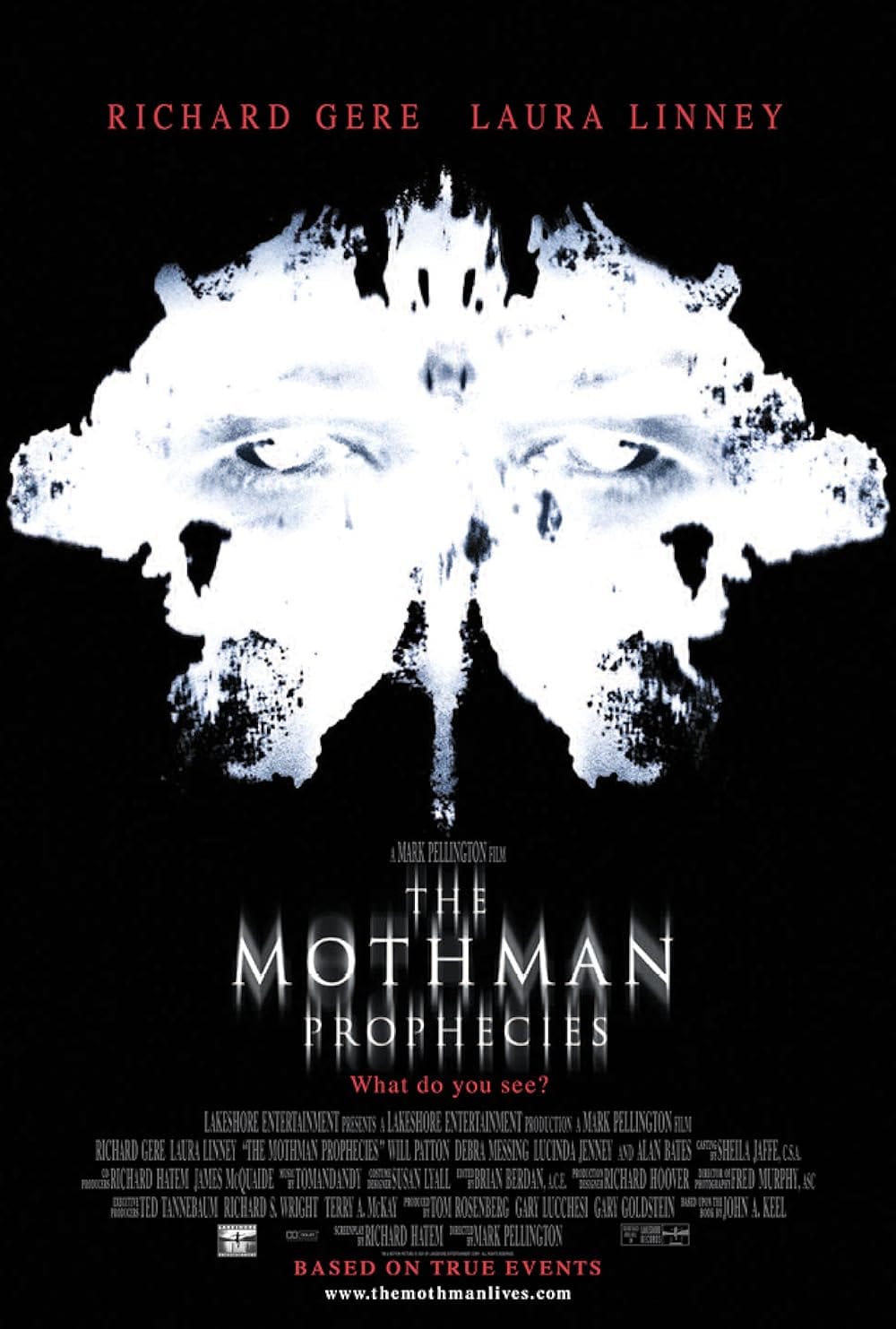
The Mothman Prophecies (2002): A Quiet, Unsettling Descent into American Folklore
On this date in 2002, The Mothman Prophecies crept into American theaters, offering audiences something far more restrained and psychologically unsettling than the typical early-2000s horror film. Rather than relying on jump scares or elaborate creature effects, the film leaned into atmosphere, grief, and dread—creating a slow-burning meditation on loss, inevitability, and the terrifying possibility that some events cannot be prevented.
Directed by Mark Pellington and based on John A. Keel’s 1975 book The Mothman Prophecies, the film draws inspiration from a series of real-life reports that emerged in Point Pleasant, West Virginia, between 1966 and 1967. These reports described sightings of a strange winged entity—later dubbed “the Mothman”—alongside bizarre phone calls, prophetic warnings, and unexplained phenomena that culminated in the tragic collapse of the Silver Bridge in December 1967, killing 46 people.
A Story Rooted in Grief
At the heart of the film is John Klein, portrayed by Richard Gere in one of the most understated performances of his career. Klein is a successful journalist whose life is shattered after a mysterious car accident leaves his wife gravely injured. Before her death, she speaks of a large, moth-like figure approaching their vehicle—an experience initially dismissed as trauma or hallucination.
Two years later, Klein finds himself inexplicably drawn to Point Pleasant after his car breaks down nearby. What begins as an inconvenience quickly becomes something far stranger. The town is gripped by reports of eerie sightings, cryptic phone calls, and a sense that something ominous is approaching. Klein’s investigation gradually reveals unsettling connections between his wife’s final words and the phenomena haunting the town.
Unlike many horror protagonists, Klein is not driven by curiosity alone. He is propelled by unresolved grief, guilt, and the quiet hope that understanding the phenomenon might somehow restore meaning to his loss. Gere plays this internal struggle with restraint, allowing silence, hesitation, and fatigue to speak louder than dialogue.
Laura Linney and Human Connection
Laura Linney delivers a grounded, empathetic performance as Connie Mills, the local sheriff who becomes both Klein’s ally and emotional anchor. Linney’s presence gives the film its necessary warmth, preventing it from becoming emotionally distant. Her chemistry with Gere—previously established in Primal Fear—adds authenticity to their shared moments of vulnerability.
Connie is not merely a side character; she represents skepticism tempered by compassion. Through her, the film explores the human need for explanation, even when logic begins to fail. Their conversations—often quiet, reflective, and tinged with unease—serve as the emotional core of the narrative.
Horror Without a Monster
One of the most striking aspects of The Mothman Prophecies is how rarely the creature itself is shown. When it does appear, it is fleeting, distorted, and never fully explained. The Mothman is not presented as a conventional antagonist but as a symbol—possibly a messenger, possibly a warning, or perhaps something beyond human understanding.
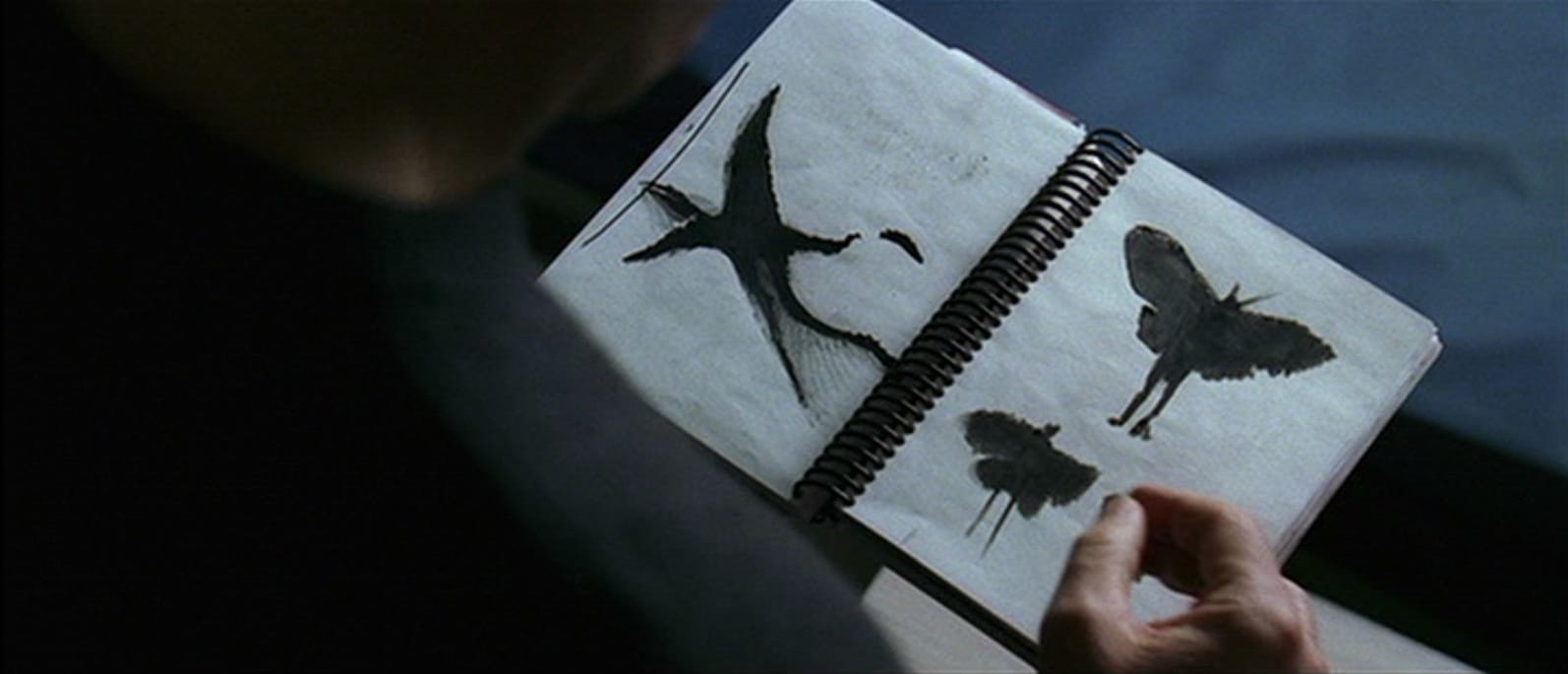
The film’s horror comes not from what is seen, but from what is implied: distorted voices on telephones, red glowing eyes glimpsed in darkness, time slipping out of sequence, and messages that seem to arrive too late to matter. This ambiguity mirrors the real-world accounts that inspired the story, many of which were filled with contradictions, half-truths, and unanswered questions.
Themes of Fate and Powerlessness
More than a horror film, The Mothman Prophecies is a meditation on fate. It asks an unsettling question: What if warnings exist, but humans are incapable of understanding them in time? What if tragedy is not preventable, only observable in hindsight?
The film repeatedly confronts the idea that knowledge does not equal control. Characters receive fragments of information—names, dates, phrases—but these pieces only make sense after disaster has already occurred. This sense of helplessness gives the film its lingering emotional weight.
Also Read: The Mothman Mystery: Legend, Sightings, and Theories
Cult Status and Legacy
Upon its release, The Mothman Prophecies received mixed reviews and performed modestly at the box office. Audiences expecting a conventional creature feature may have been disappointed by its slow pace and introspective tone. However, over time, the film has gained a devoted cult following, particularly among fans of psychological horror and paranormal folklore.
Today, it is often praised for its atmosphere, sound design, and willingness to embrace ambiguity. Its influence can be felt in later films and series that favor dread over spectacle and suggestion over explanation.
A Film That Lingers
More than two decades later, The Mothman Prophecies remains a quietly unsettling experience. It does not offer easy answers or cathartic resolutions. Instead, it leaves viewers with questions—about grief, coincidence, fate, and the thin line between warning and prophecy.
It is a film that understands true horror is not always about monsters in the dark, but about the moments when the universe feels just slightly out of alignment—and there is nothing we can do to set it right.
If you’ve seen it recently, does it still hold up? Or does its power lie in the memory of how it made you feel?
Sometimes, the most unsettling stories are the ones that refuse to explain themselves.
Let us know what you think.