15 Years Since Pakistan Cricket's Darkest Day: The Lord's Spot-Fixing Scandal That Sent Three Stars to Prison
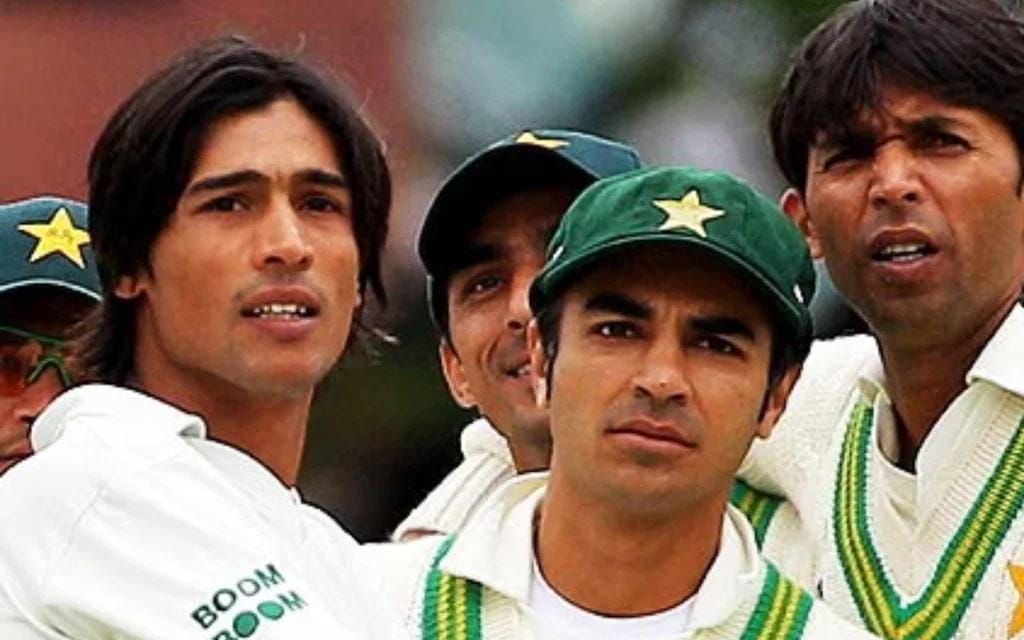
On a summer afternoon at Lord's Cricket Ground in 2010, three of Pakistan's most prominent cricketers were living the kind of dream millions of young players could only imagine.
One was the national captain.
Another was among the most skillful swing bowlers in international cricket.
And the third was a teenage fast-bowling sensation who appeared destined for greatness.
They wore Pakistan's green star, represented their country at the home of cricket, and possessed careers that seemed full of extraordinary possibilities.
Then came three deliberate no-balls.
What initially looked like routine overstepping would become evidence in one of international cricket's most notorious corruption scandals.
And on November 3, 2011, the consequences reached a London courtroom.
Former Pakistan captain Salman Butt was sentenced to 30 months in prison.
Fast bowler Mohammad Asif received 12 months.
And teenage sensation Mohammad Amir was sentenced to six months in a young offenders' institution.
Their agent, Mazhar Majeed, received 32 months for his role in arranging the corrupt scheme.
It was an extraordinary moment in cricket history.
Three international players had not merely been suspended or fined by sporting authorities.
They were facing imprisonment for conspiring to corrupt events during a Test match.
The sentences were a devastating blow to Pakistan cricket, shocking supporters and damaging public confidence in the integrity of the game.
Today, November 3, 2026, marks exactly 15 years since those sentences were handed down.
The anniversary provides an opportunity to revisit what happened, why the scandal mattered, and how three talented players followed very different paths after their disgrace.
It is also a reminder that corruption in sport does not always require manipulating the final result of a match.
Sometimes, a single deliberately delivered no-ball is enough to betray the game.
Sentencing date: November 3, 2011 | Judge: Mr Justice Jeremy Cooke | Offences: Conspiracy to cheat and conspiracy involving corrupt payments
Prison terms are the sentences imposed, not the time each defendant ultimately spent in custody. rte.ie+1
The 2010 Lord's Test: Where Everything Began

The scandal originated during the fourth Test between England and Pakistan at Lord's, played from August 26 to 29, 2010.
Pakistan was touring England under the captaincy of Salman Butt.
The team possessed an exceptionally gifted pace attack, including Mohammad Asif and Mohammad Amir.
Asif was widely admired for his seam movement, control and ability to trouble even the world's finest batters.
Amir, just 18 at the time, had already attracted attention with his pace, swing and remarkable maturity.
Together, they gave Pakistan a bowling combination capable of challenging elite opposition.
But during that Test, a hidden arrangement had already been made.
Certain deliveries would be deliberate no-balls.
The bowlers would overstep the popping crease at predetermined moments.
The arrangement would allow people with advance knowledge to exploit betting markets.
Three Deliveries That Became Evidence
To an ordinary spectator, a no-ball might appear insignificant.
Fast bowlers occasionally overstep through an honest mistake.
The umpire signals the infringement, the batting team receives an additional run, and play continues.
But the three deliveries at the center of this case were different.
They had been arranged in advance.
Their timing was the essential detail.
Mohammad Amir delivered two of the deliberate no-balls, while Mohammad Asif delivered the third.
The match itself was real.
The competition was real.
But those specific moments had been corrupted.
That distinction became central to the investigation.
How the News of the World Exposed the Plot
The scandal emerged from an undercover investigation by the British newspaper News of the World.
Reporters approached London-based cricket agent Mazhar Majeed while posing as people interested in corrupt betting arrangements.
During secretly recorded conversations, Majeed described his ability to arrange specific events within international matches.
He accepted £150,000 from an undercover reporter and indicated when predetermined no-balls would occur during the Lord's Test.
Those no-balls were subsequently delivered at the indicated moments.
The newspaper's revelations triggered a major investigation involving law enforcement and cricket's governing authorities.
Why the Evidence Was So Damaging
The case did not depend solely on an allegation that a bowler had stepped over the line.
That would have been insufficient on its own.
Instead, investigators had evidence of a corrupt arrangement made before the deliveries took place.
The predetermined events and the evidence connecting them to payments established the foundation of the criminal case.
What had appeared to be isolated mistakes on a cricket field became part of a wider conspiracy.
And the implications extended beyond the players involved.
Supporters began questioning whether other apparently ordinary moments in cricket could also have been manipulated.
That damage to trust was among the scandal's most serious consequences.
Spot-Fixing vs. Match-Fixing: What Is the Difference?
Although the terms are sometimes used interchangeably, spot-fixing and match-fixing are not identical.
Spot-fixing | Match-fixing | |
|---|---|---|
What is manipulated? | A specific event within a match | The result or broader course of a match |
Example | Deliberately bowling a no-ball at a predetermined moment | Deliberately arranging for a team to lose |
Must the final result change? | No | Usually the result is central |
Is it a serious integrity violation? | Yes | Yes |
In the Lord's case, the proven conspiracy concerned predetermined no-balls.
There was no need to prove that the players had arranged the overall match result for the conduct to constitute serious corruption.
This is precisely why spot-fixing can be so difficult to detect.
A single delivery, missed fielding chance or tactical decision can appear perfectly ordinary to spectators.
But if that event was intentionally manipulated for a corrupt purpose, the integrity of the contest has been compromised.
Salman Butt: The Captain Who Lost Everything

Salman Butt was more than an ordinary player.
He was Pakistan's captain during the 2010 Lord's Test.
That position made his involvement particularly damaging.
A national captain is expected to lead by example, protect the interests of the team, and uphold the integrity of the game.
Instead, the court found that Butt played a central role in the corrupt arrangement.
Mr Justice Jeremy Cooke described him as an orchestrator of the scheme.
The distinction mattered because Butt occupied a position of influence over his teammates, including the much younger Mohammad Amir.
He received 30 months in prison, the longest sentence imposed on any of the three players.
In February 2011, the International Cricket Council had already banned him for 10 years, with five years suspended subject to conditions.
From National Captain to Convicted Cricketer
Butt's downfall was especially striking because it happened while his international career was still active.
He had played 33 Tests, 78 One Day Internationals and 24 T20 Internationals for Pakistan.
His career had included important performances against leading international opponents.
But the scandal came to overshadow those achievements.
Butt initially contested the allegations. In June 2013, he publicly admitted his wrongdoing and apologized to Pakistani supporters and cricket fans worldwide.
Although he later returned to domestic cricket after his ban, he did not resume his international career.
His story became a cautionary example of how quickly sporting authority and professional success can be destroyed by corruption.
Mohammad Asif: A World-Class Talent Whose Career Was Cut Short

Of the three cricketers, Mohammad Asif's sporting reputation was particularly formidable.
He was widely admired for his ability to move the ball in both directions with exceptional control.
Unlike fast bowlers who depended primarily on raw pace, Asif could trouble batters through subtle variations in seam position, swing and length.
His performances had earned respect from some of the game's leading batters.
But he became implicated in the same corrupt arrangement.
The court sentenced him to 12 months in prison.
The ICC imposed a seven-year ban, with two years suspended.
Asif challenged the sporting sanctions, but his appeal was unsuccessful.
He was released from prison in May 2012 after serving approximately half his sentence.
The Career That Might Have Been
Cricket history is filled with extraordinary talents whose careers ended earlier than expected.
In Asif's case, the interruption resulted from an integrity violation rather than injury alone or a decline in ability.
He had the technical skills to remain a significant international bowler.
But the scandal ended his Pakistan career.
For many supporters, his absence represented one of the great losses of bowling talent in that era.
That sporting loss does not diminish the seriousness of his wrongdoing.
Rather, it reinforces the scale of what was sacrificed.
The same ability that could have brought him years of professional achievement became overshadowed by his role in the conspiracy.
Mohammad Amir: The Teenage Prodigy Who Eventually Returned

Mohammad Amir's involvement was particularly painful for many Pakistan supporters because of his age and potential.
He was only 18 when the fixing occurred.
Already an exciting fast-bowling prospect, he had demonstrated an ability to dismiss accomplished international batters.
His pace, movement and composure suggested that Pakistan had discovered another exceptional left-arm fast bowler.
Then his career was abruptly interrupted.
Amir pleaded guilty and was sentenced to six months in a young offenders' institution.
He was also banned from cricket for five years.
In interviews after his release, he acknowledged his wrongdoing and described feeling under pressure at the time of the incident.
A Second Chance in International Cricket
Unlike Butt and Asif, Amir eventually returned to the Pakistan national team.
After serving his suspension and completing a rehabilitation process, he resumed international cricket in January 2016.
His return was controversial.
Some believed a young player who had admitted guilt and served his punishment deserved a second chance.
Others felt that cricket's integrity demanded a more permanent separation from players convicted of corruption.
Both reactions reflected the seriousness of the scandal.
But Amir's return produced one of the most remarkable sporting chapters in the aftermath of the case.
The 2017 Champions Trophy Final
On June 18, 2017, Pakistan faced India in the ICC Champions Trophy final at The Oval in London.
Amir delivered an exceptional opening spell.
He dismissed Rohit Sharma, Virat Kohli and Shikhar Dhawan, helping Pakistan seize control of the match.
Pakistan went on to defeat India by 180 runs and win the tournament.
For Amir, it was a defining moment in his international comeback.
The bowler whose career had once appeared finished following the Lord's scandal had contributed decisively to one of Pakistan's most celebrated victories.
His return did not erase the past.
But it demonstrated that his cricketing career had taken a markedly different path from those of his former teammates.
Mazhar Majeed: The Agent Behind the Arrangement
While much of the public attention focused on the three players, Mazhar Majeed was an essential figure in the conspiracy.
The London-based agent was the intermediary who arranged the predetermined no-balls and discussed corrupt payments with the undercover reporter.
He received the heaviest sentence of the four defendants: 32 months in prison.
The court regarded his role in organizing the corrupt arrangement as particularly serious.
His involvement exposed a broader danger within professional sport.
Corruption does not always begin with a player independently deciding to manipulate a match.
It can involve agents, intermediaries, betting interests and people who exploit personal or professional relationships to influence athletes.
That is why modern anti-corruption programs place considerable emphasis on reporting suspicious approaches and restricting unauthorized sharing of inside information.
The ICC Bans Came Before the Prison Sentences
An important part of the story is that sporting punishment and criminal punishment occurred separately.
On February 5, 2011, the ICC imposed bans on all three players.
Those sanctions were based on breaches of cricket's anti-corruption rules.
The subsequent London criminal case examined offences under the relevant criminal law.
The two processes were distinct, even though they concerned the same underlying conduct.
Player | ICC sanction | Prison sentence |
|---|---|---|
Salman Butt | 10 years, five suspended | 30 months |
Mohammad Asif | Seven years, two suspended | 12 months |
Mohammad Amir | Five years | Six months |
The combination of lengthy sporting bans and prison terms sent a strong message.
Corrupting a sporting event could have consequences far beyond suspension from the game.
The court also ordered the defendants to contribute toward prosecution costs.
The incident highlighted the increasingly serious legal risks faced by people involved in organized sporting corruption.
Timeline: From Lord's to the London Courtroom
- August 26–29, 2010 — The Lord's TestPakistan plays England in the fourth Test. Deliberate no-balls later become central evidence in the spot-fixing investigation.
- August 28, 2010 — Allegations emergeNews of the World publishes details of its undercover investigation into corrupt betting arrangements.
- February 5, 2011 — ICC bans announcedButt, Asif and Amir receive lengthy suspensions from cricket.
- September 2011 — Amir pleads guiltyAmir admits his involvement ahead of the completion of the criminal trial.
- November 1, 2011 — Butt and Asif convictedThe jury finds both players guilty at London's Southwark Crown Court.
- November 3, 2011 — Prison sentencesAll three cricketers and agent Mazhar Majeed receive custodial sentences.
- 2015–2016 — A return becomes possibleThe playing bans end, and Amir returns to international cricket in January 2016.
- November 3, 2026 — Fifteen years laterThe anniversary renews discussion of the consequences of the case and its impact on cricket's integrity.
Timeline based on the Pakistan Cricket Board's 2011 annual report and historical reporting. pcb.com.pk+1
How the Scandal Changed the Conversation Around Cricket Integrity
The Lord's scandal was not the first corruption controversy in cricket.
But it became one of the most prominent cases involving international players and criminal convictions.
Its significance extended beyond Pakistan.
It demonstrated that corruption could occur in a specific, seemingly insignificant moment within a match.
That reality created a difficult challenge for the sport.
How can authorities protect the integrity of a competition when the object of a corrupt arrangement may be one delivery rather than the final score?
Why Spot-Fixing Is So Dangerous
A no-ball can happen naturally.
So can a dropped catch, a wide delivery or an unusual batting decision.
These are normal parts of cricket.
The challenge for investigators is distinguishing an innocent mistake from a deliberately manipulated event.
When corrupt actors attempt to profit from particular moments, the suspicious activity may not be obvious from the match result.
That makes intelligence gathering, education, cooperation with law enforcement and confidential reporting particularly important.
The Responsibility of Senior Players
The case also highlighted the importance of leadership and power relationships within teams.
An experienced captain or senior player may hold substantial influence over younger teammates.
Young players may depend on senior figures for guidance, acceptance and professional opportunities.
This creates a responsibility for leaders to protect teammates from corrupt approaches rather than expose them to wrongdoing.
Amir's youth was an important consideration in the public discussion surrounding the case.
But the court and sporting authorities still treated his involvement as a serious breach.
Three Careers, Three Different Aftermaths
The scandal is sometimes described as having ended all three international careers.
That is not entirely accurate.
It permanently ended the international careers of Butt and Asif, but Amir returned to represent Pakistan.
The distinction matters when examining the long-term consequences.
Butt became associated with the betrayal of responsibility by a national captain.
Asif's case became a reminder of elite sporting ability lost through misconduct.
Amir's story became a more complicated discussion involving punishment, rehabilitation and second chances.
Their experiences also raised an enduring moral question.
How should sport respond when an athlete has served a legal sentence and completed a sporting suspension?
Some supporters believe that fulfilling a punishment should allow a person to compete again.
Others believe deliberate corruption causes a breach of trust that can never be entirely repaired.
The Lord's case demonstrates why that debate remains so difficult.
A Dark Chapter—But Not the Whole Story of Pakistan Cricket
The 2010 scandal caused profound damage to Pakistan cricket's reputation.
It embarrassed the sport internationally and deeply disappointed supporters who had celebrated the players' achievements.
But the actions of three players should not be confused with the conduct of an entire cricketing nation.
Pakistan has produced generations of exceptional cricketers, from legendary fast bowlers to gifted batters and world-class all-rounders.
Its cricketing history includes extraordinary achievements and unforgettable victories.
The spot-fixing case belongs in that history as a serious warning about misconduct, rather than as a judgment on every player who has represented the country.
The distinction is essential.
Accountability requires identifying the people responsible for wrongdoing, not assigning collective blame to an entire team or national fanbase.
Frequently Asked Questions
What happened on November 3, 2011, in Pakistan cricket?
Salman Butt, Mohammad Asif and Mohammad Amir were sentenced to prison at London's Southwark Crown Court for their roles in the 2010 Lord's Test spot-fixing conspiracy.
How long was Salman Butt sentenced to prison?
The former Pakistan captain received a 30-month prison sentence.
What was Mohammad Asif's punishment?
Asif received a 12-month prison sentence and a seven-year ICC ban, with two years of the ban suspended.
Why was Mohammad Amir jailed?
Amir admitted participating in an arrangement to bowl deliberate no-balls during the August 2010 Lord's Test. He was sentenced to six months in a young offenders' institution and banned from cricket for five years.
Who was Mazhar Majeed?
Mazhar Majeed was a cricket agent involved in arranging the predetermined no-balls. He received a 32-month prison sentence.
Did Mohammad Amir return to international cricket?
Yes. Amir returned in January 2016 and subsequently played an important role in Pakistan's victory over India in the 2017 Champions Trophy final.
Was the entire Lord's Test match fixed?
The established conspiracy concerned specific predetermined no-balls. The case did not require proof that the overall match result had been fixed.
Fifteen Years Later, the Lesson of Lord's Still Matters
November 3, 2011, remains one of the most consequential dates in Pakistan cricket history.
On that day, three internationally recognized players faced the legal consequences of corrupting a sport that had given them extraordinary opportunities.
Salman Butt had the responsibility of leading his country.
Mohammad Asif possessed exceptional bowling talent.
Mohammad Amir was a teenager whose future appeared full of promise.
Their involvement in the Lord's scandal damaged their careers and disappointed millions of supporters.
And the consequences lasted far beyond their prison sentences.
The incident demonstrated that even the smallest part of a sporting contest can become the target of corruption.
It showed that the responsibility to preserve integrity extends to captains, players, agents and everyone connected with professional sport.
It also forced cricket to confront difficult questions about punishment, rehabilitation and second chances.
Fifteen years later, the careers of Butt, Asif and Amir offer different perspectives on those consequences.
But one lesson remains constant.
Cricket's value depends not only on the skill of its players, but on the belief that the contest is genuine.
Every legitimate delivery, every hard-earned wicket and every unexpected victory depends on that trust.
The 2010 Lord's scandal damaged it.
The sentences of November 3, 2011, demonstrated how seriously that betrayal could be treated.
And the anniversary remains a reminder that talent can make a player famous, but integrity is what allows the game itself to endure.
Sources and Further Reading
- Pakistan Cricket Board — Annual Report 2011. Official account of the November 1 convictions and November 3 sentences.
- The Guardian — Pakistan Spot-Fixing Players and Agent Sentenced (November 3, 2011). Contemporary courtroom reporting and the judge's findings.
- Reuters — Pakistan Trio Jailed for Spot-Fixing (November 4, 2011). Original wire-service coverage of the sentences and the scandal.
- BBC Sport — Mohammad Amir's Spot-Fixing Ban Ends Early. The ICC sanctions and Amir's rehabilitation.
- ICC — Pakistan's Mohammad Asif Released From Prison. Details of his sentence, release and the related investigation.
- Dawn — Looking Back at the 2010 Spot-Fixing Scandal. Historical timeline and aftermath.
- BBC Sport — Salman Butt Admits Spot-Fixing (2013). His public admission and apology.