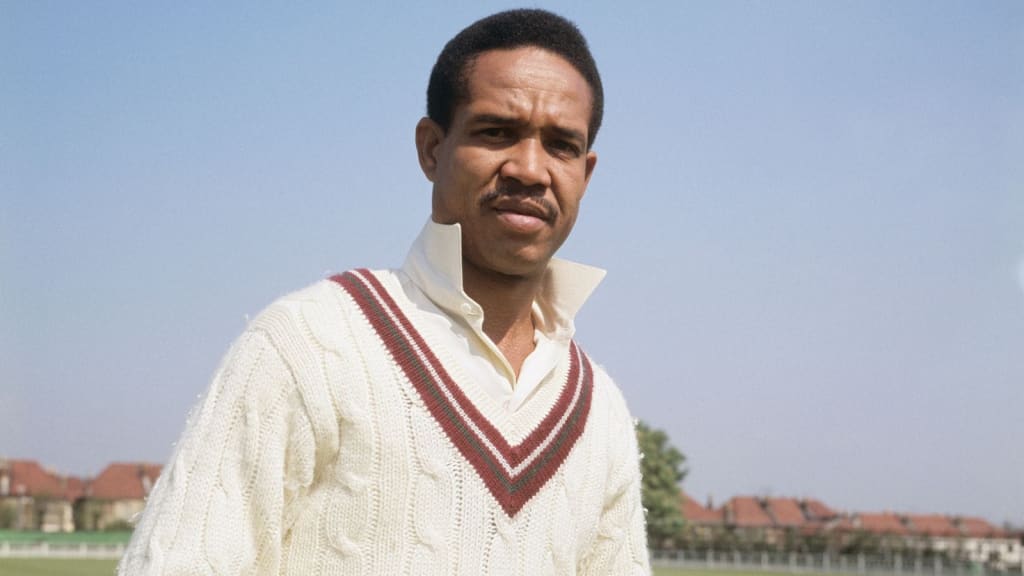
Sir Garfield Sobers Dies at 89: Farewell to Cricket’s Greatest All-Rounder
Cricket has lost one of the rare figures for whom the word legend never felt sufficient.
Sir Garfield St Aubrun “Garry” Sobers, the Barbados-born West Indies icon widely regarded as the most complete cricketer the game has known, died on July 17, 2026, at the age of 89. His passing came only 11 days before what would have been his 90th birthday. No official cause of death had been announced at the time of publication.
Sobers was more than a great all-rounder. He was a world-class batter, several bowlers contained within one body, a magnificent fielder, an adventurous captain and a performer whose presence could change the emotional temperature of a cricket ground.
He scored 8,032 Test runs at an average of 57.78, made 26 centuries, took 235 wickets and held 109 catches in 93 Tests for the West Indies. His first Test hundred was an unbeaten 365, then the highest individual score in Test history. Ten years later, he became the first batter to strike six sixes from a six-ball over in first-class cricket.
Those numbers would represent several distinguished careers if divided among specialists.
Sobers produced them as one man.
He could bat with the authority of a great top-order player. He could bowl left-arm fast-medium, orthodox finger spin and wrist spin. He could operate with the new ball, attack through the middle of an innings, contain a partnership or search for wickets through flight and variation. In the field, he possessed anticipation, athleticism and hands that completed the package.
The International Cricket Council described him as one of the greatest icons in the sport’s history and said his capacity to influence a match in every discipline distinguished him from his contemporaries. Cricket West Indies, national boards, former players and supporters across the world joined the mourning.
In Barbados, the loss was treated not simply as the death of a former sportsman but as a national bereavement. The government declared July 17 a Day of National Mourning, ordered flags to be flown at half-staff until his interment and announced that Sobers would receive a state funeral. Prime Minister Mia Mottley said another Day of National Mourning would be observed on the day of the funeral.
That response reflected the scale of what Sobers represented.
He was a cricketer, but he also became a symbol of Caribbean possibility: a boy from a modest home in Barbados who rose to command the attention of the cricketing world without surrendering the expressive freedom that made him extraordinary.
Records can describe portions of his career.
They cannot fully explain the wonder of watching him.
Sir Garfield Sobers at a Glance
| Category | Achievement |
|---|---|
| Full name | Garfield St Aubrun Sobers |
| Born | July 28, 1936 |
| Died | July 17, 2026 |
| Age | 89 |
| Birthplace | St Michael, Barbados |
| International team | West Indies |
| Test career | 1954–1974 |
| Test matches | 93 |
| Test runs | 8,032 |
| Test batting average | 57.78 |
| Test centuries | 26 |
| Highest Test score | 365 not out |
| Test wickets | 235 |
| Test catches | 109 |
| First-class matches | 383 |
| First-class runs | 28,314 |
| First-class wickets | 1,043 |
| West Indies captaincy | 39 Tests |
| Major distinction | First batter to hit six sixes in a first-class over |
| National honour | National Hero of Barbados |
| Global honour | ICC Hall of Fame; namesake of the Sir Garfield Sobers Trophy |
Sobers’ official Test figures are recorded by the ICC, while his wider first-class career comprised 28,314 runs and 1,043 wickets across 383 matches.
A Death Felt Across the Cricketing World
The announcement of Sobers’ death produced an immediate outpouring of sorrow.
The ICC mourned a man it described as both the finest all-rounder cricket had known and one of the greatest players in the game’s history. Cricket authorities in the Caribbean, England and India paid tribute, while former cricketers remembered not only the scale of his ability but also the generosity and warmth that accompanied it.
Nottinghamshire County Cricket Club, where Sobers became one of the defining overseas players in English domestic cricket, remembered a captain who revitalised the county. For Nottinghamshire, he accumulated 7,041 first-class runs, including 18 centuries, and took 281 wickets at 25.62. He also contributed 2,553 runs and 103 wickets in List A competition.
The mourning was especially profound in Barbados.
Prime Minister Mottley announced that Sobers would receive a state funeral and described his passing as a solemn moment for Barbados, the Caribbean and cricket. Her farewell captured the language through which generations had understood his life: “For an innings that was so well played.”
It is difficult to imagine a more fitting national tribute.
Sobers had played his innings with elegance, audacity and uncommon range. At various moments, he was a prodigy, record-holder, captain, county hero, international ambassador and living connection to cricket’s history.
His death closes the life of the man.
It does not close the argument about his greatness, because for many who saw him, there was never much of an argument.
From a Modest Barbados Childhood to Global Greatness
Garfield St Aubrun Sobers was born on July 28, 1936, in St Michael, Barbados.
His beginnings contained little indication of the global fame that awaited him. He grew up in a large family in modest circumstances. When he was five, his father, a merchant seaman, was killed after the vessel on which he served was sunk during the Second World War. His mother was left to raise the family and keep the household together under difficult conditions.
Sobers’ earliest cricket was not played in elite academies or carefully maintained training centres.
He learned in roads, open spaces and on beaches. Reuters’ obituary recalled his description of playing a compact form of street cricket with improvised equipment: a shortened wicket, a rough bat made from available wood and a ball fashioned from tar or cloth wrapped around a stone.
Those conditions encouraged invention.
A child playing in a narrow road cannot rely on perfectly rehearsed textbook movements. He must react to uneven bounce, restricted space and unpredictable objects. He learns to improvise, control the bat, read movement and create scoring opportunities where none appear to exist.
That education remained visible in Sobers’ mature game.
His cricket was technically strong, but it never appeared imprisoned by technique. He possessed the freedom of someone who had learned the game through exploration before anyone could tell him what could not be done.
He was also an unusually gifted athlete. Football and basketball were among the sports in which he excelled, but cricket became his deepest passion. As a boy, he listened to radio broadcasts of West Indies touring abroad and imagined the possibility of one day entering that distant world himself.
Sobers was born with an additional finger on each hand. The unusual detail became part of the mythology surrounding him, although he rejected suggestions that it gave him a mystical destiny. He later said the fingers had not inhibited him.
The temptation with an athlete as naturally gifted as Sobers is to treat his achievements as inevitable.
They were not.
Natural ability opened doors, but a career lasting two decades at Test level required work, adaptation and resilience. Sobers himself resisted the convenient description of effortless genius. He acknowledged his gifts but insisted that sustained effort was also fundamental to what he achieved.
That distinction matters.
His cricket looked natural because the work had become invisible.
An Extraordinary Talent Revealed Early
Sobers’ development accelerated rapidly once organised cricket encountered his talent.
At around 12, he began bowling in the nets at the Wanderers Club in Barbados. His accuracy became a source of both pride and small financial reward: he could earn money for striking the centre stump during practice. By 16, he was representing Barbados in first-class cricket, and within roughly a year he had entered the West Indies Test side.
He made his Test debut against England at Sabina Park, Jamaica, in March 1954 at the age of 17.
He was initially selected primarily as a left-arm spin bowler rather than as the batting giant he would become. Across his first Test, he scored 40 runs in two innings and took four wickets. It was an encouraging beginning, although it offered only the faintest preview of the player who would later dominate every department of the game.
His early batting career did not begin with instant centuries.
He demonstrated ability, occupied different positions in the order and contributed useful innings, but his first hundred took time to arrive. When it finally did, he did not stop at 100, 150, 200 or even 300.
He continued until the sport possessed a new world record.
The 365 Not Out That Announced a Genius
On March 1, 1958, against Pakistan at Sabina Park, the 21-year-old Sobers completed one of the defining innings in cricket history.
Before that match, he had never scored a Test century.
By the end of it, he had made 365 not out, surpassing Len Hutton’s record of 364 and establishing the highest individual score Test cricket had seen.
The sequence sounds almost fictional: maiden hundred, maiden double hundred, maiden triple hundred and world record, all within one uninterrupted innings.
It was not merely an individual milestone. Sobers’ innings formed the centre of a monumental West Indies total and represented the emergence of a batter capable of combining endurance with attacking authority.
The record endured for 36 years.
It was eventually surpassed in 1994 when fellow Barbadian Brian Lara scored 375 against England in Antigua. Sobers was present when the record changed hands, linking two of the greatest left-handed batters the Caribbean has produced.
That moment revealed something important about Sobers’ relationship with his achievements.
Records mattered, but he did not behave as though they belonged to him forever. Cricket records are temporary possessions passed from one generation to another. Sobers understood that the game was larger than any one player, even a player of his magnitude.
His 365 remains extraordinary despite no longer occupying first place.
The numerical record has been exceeded, but the context has not lost its power. A 21-year-old whose highest previous Test score had not reached three figures transformed his first hundred into a mark that lasted more than a third of a century.
The innings also confirmed that Sobers could not be understood merely as a useful bowling all-rounder.
He was a genuine batting great.
A Batter Worthy of Selection Without Any Other Skill
One reason Sobers remains central to the greatest-all-rounder debate is that his batting alone would have secured a place among cricket’s immortals.
He finished his Test career with 8,032 runs at 57.78, including 26 hundreds and 30 fifties. Among players to have exceeded 8,000 Test runs, his average remains unmatched.
Those statistics become even more impressive when placed beside the demands of his other responsibilities.
Sobers did not spend entire matches conserving himself solely for batting. He often bowled long spells, changed bowling style according to conditions, fielded in demanding positions and later carried the strategic burden of captaincy.
Yet his batting average stands beside those of the finest specialists.
He was a left-hander of uncommon balance and range. He could defend when the match required patience, but his instinct was not passive survival. He sought to alter the game.
His stroke play combined elegance with power. He was especially formidable from the back foot, capable of responding to pace with cuts, pulls and drives that appeared to turn pressure back upon the bowler. His relatively light bat and fluid follow-through became part of his visual signature. Wisden remembered an instinctive back-foot player whose bat could finish high behind him after violent but controlled acceleration through the ball.
Sobers belonged to an era without modern helmets and much of today’s protective equipment. He faced fast bowling with physical courage and confidence in his eyesight, balance and reflexes. Wisden noted that he played without a thigh pad and was rarely seriously struck during a long career.
His greatness was not simply the ability to make runs.
It was the speed with which he could change a match’s direction.
A team could believe it had control. Sobers could take that control away in an hour. Defensive fields did not guarantee containment because his range allowed him to exploit whatever space remained. Attacking fields presented scoring opportunities. Short bowling could be punished; overpitched bowling could disappear through or over the infield.
He did not merely respond to circumstances.
At his best, he imposed new circumstances on everyone else.
Three Bowlers in One Body
If Sobers had only batted, he would still have been remembered as one of the finest players of his era.
His bowling is what makes his complete career almost impossible to reproduce.
The phrase “could bowl pace and spin” is accurate but inadequate. It risks making his bowling sound like occasional variety delivered by a batting star. Sobers took 235 Test wickets and more than 1,000 first-class wickets. His bowling was a major competitive weapon, not a novelty.
He could deliver left-arm fast-medium, moving the ball through the air and off the surface. He could bowl orthodox left-arm finger spin. He could also produce left-arm wrist spin, sometimes described through the chinaman tradition of the period.
Those are not minor variations of one method.
They involve different grips, wrist positions, approaches, release points, tactical purposes and physical demands. Specialists may spend entire careers attempting to master one. Sobers moved between them according to pitch, ball, opposition and match situation.
With a newer ball or helpful atmosphere, he could operate as a seamer.
On surfaces offering turn, he could switch to spin.
If a batter settled against one method, Sobers could ask a completely different question without the captain making a substitution. He was, in effect, a flexible bowling attack contained in a single selection.
This versatility gave his captains enormous freedom before he assumed the role himself. A team containing Sobers could adjust its balance because he covered several functions: top-order or middle-order batter, seam option, spin option and elite fielder.
His Test bowling average of 34.03 does not place him among the most economical specialist bowlers in history, but judging him through that single number misses the purpose of his bowling. He supplied wickets, overs, variety and tactical adaptability while simultaneously performing as one of the world’s best batters. He recorded six five-wicket hauls in Test cricket.
In first-class cricket, his bowling record was vast: 1,043 wickets at 27.74, with 36 five-wicket innings and a best return of 9 for 49.
The physical expression of each method was also different.
Wisden described him crouching into wrist spin, arching into finger spin and becoming a lithe, athletic figure when bowling faster. That transformation was part of the spectacle. Spectators did not merely wait to discover whether Sobers would bat or bowl well. They waited to see which version of Sobers the match would require.
A Fielder Who Completed the Ideal Cricketer
Sobers’ fielding is sometimes placed third in accounts of his greatness because batting and bowling generate clearer statistics.
That does not mean it was a secondary skill.
He held 109 catches in 93 Tests and was highly regarded both close to the wicket and in wider positions. His athletic background gave him speed, balance and coordination, while his understanding of batting helped him anticipate shots.
A complete all-rounder should not become a defensive liability when neither batting nor bowling.
Sobers remained influential every moment he was on the field.
He could save runs, create dismissals and maintain pressure. The value of that constant involvement is difficult to represent in a single career figure, especially in an era before detailed fielding data.
It is also central to the case for calling him the most complete cricketer.
He did not have a phase of the game in which his team needed to hide him.
The 1960–61 Series That Changed Cricket’s Emotional Landscape
The West Indies tour of Australia in 1960–61 remains one of cricket’s most celebrated series, and Sobers stood at the heart of it.
The opening Test at Brisbane became the first tied Test in history. West Indies made 453 in their first innings, with Sobers contributing a magnificent 132 after the team had encountered early trouble. Australia replied with 505, and the match developed into a final-day drama resolved with the scores level and the last Australian wicket falling.
The series was remembered not only for its result but also for the attacking spirit of the teams led by Frank Worrell and Richie Benaud.
Australia won the five-match contest 2–1, but the West Indies left with enormous admiration. The series helped reshape how Caribbean cricket was perceived internationally: not as an entertaining visitor alone, but as a force capable of confronting Australia through skill, courage and imagination.
Sobers finished the series with 430 runs and 15 wickets, an all-round contribution that demonstrated his ability to sustain influence across a demanding tour.
His 132 in Brisbane displayed the essential quality of his batting.
West Indies had lost early wickets, yet his response was not to retreat into fear. He attacked without abandoning responsibility, helping the team establish a total large enough to create one of the most extraordinary finishes the sport has witnessed.
That combination—responsibility without caution becoming paralysis—would define much of his career.
 Imrul
Imrul
“King Cricket” in England in 1966
If one series had to be selected to explain the totality of Sobers, the West Indies tour of England in 1966 would be an overwhelming candidate.
Across five Tests, he scored 722 runs at an average of 103.14, took 20 wickets at 27.25 and held 10 catches. West Indies won the series 3–1.
These were not the numbers of a player contributing in several departments.
They were the figures of a batter dominating a series, a bowler carrying a serious workload and a fielder repeatedly affecting the contest.
Sobers made three centuries during the series. At Headingley, he scored 174 and took eight wickets in the match. At Lord’s, he made an unbeaten 163. At Manchester, he scored 161.
The nickname “King Cricket” became attached to him during this period.
It was grand language, but his performance justified it. England was celebrating football’s World Cup triumph in the summer of 1966; on its cricket grounds, Sobers was conducting a separate campaign of Caribbean sporting authority.
The series illustrates why comparing Sobers only with other all-rounders can be misleading.
He was not a player whose batting compensated for average bowling or whose bowling excused inconsistent batting.
At his peak, he could be the best batter in a series, an important wicket-taker and one of its finest fielders simultaneously.
That level of multidimensional dominance remains rare even among the game’s greatest names.
Captain of the West Indies
Sobers succeeded Sir Frank Worrell as West Indies captain and led the side in 39 consecutive Tests, serving through much of the period from the mid-1960s to 1972.
His captaincy reflected the instincts of his cricket.
He was adventurous, confident and willing to pursue results. Those qualities produced memorable victories but occasionally exposed him to criticism when bold decisions failed.
His early leadership brought historic success. West Indies defeated Australia 2–1 in the Caribbean in 1965, claiming their first Test-series victory over Australia. He later led the dominant 1966 campaign in England and a 2–0 series victory in India in 1966–67.
Sobers did not approach captaincy as an exercise in minimising personal blame.
He wanted the game to move.
That philosophy made him compelling, but it also produced the most controversial declaration of his leadership career.
The Declaration That Cost West Indies a Test
During the 1967–68 home series against England, Sobers declared in Trinidad and set England 215 to win.
The target was deliberately attainable. Sobers wanted to create a contest and believed his bowlers could dismiss England. Instead, the visitors reached 215 for three and won the match, eventually taking the series.
The reaction was severe.
Critics accused Sobers of recklessness. A safer declaration—or no declaration at all—might have protected the draw. From a purely defensive perspective, the decision appeared unnecessary.
Yet the episode also revealed something essential about him.
Sobers believed cricket should contain risk. He wanted to offer his team the possibility of victory, even when doing so also offered the opponent a chance.
That philosophy does not make the decision strategically correct.
It does make it unmistakably his.
Modern captaincy is often analysed through probabilities, match-ups and the cost of failure. Sobers operated through instinct and a romantic belief that cricket was meant to be won, not merely prevented from being lost.
The Trinidad declaration damaged his reputation as a captain, but it also became a symbol of his refusal to reduce the game to caution.
The Nottinghamshire Years
Sobers’ influence extended far beyond international cricket.
When overseas-player regulations changed in English county cricket, Nottinghamshire secured one of the most transformative signings imaginable. Sobers arrived at Trent Bridge as an established West Indies captain and was immediately placed in charge of a county that had finished 15th in the Championship.
The effect was immediate.
In his first season, he scored 1,590 runs and took 84 wickets. Nottinghamshire rose from 15th to fourth.
His value was statistical, tactical and cultural.
He gave the team runs and wickets, but he also gave it belief. Spectators came to see him. Teammates learned from him. Opponents knew the match could be reshaped by one performance.
Across his Nottinghamshire first-class career, he scored 7,041 runs—more than for any other domestic side—with 18 centuries. He took 281 wickets at 25.62 and topped the county’s batting averages in all but two of his seasons.
The English county schedule of that era was physically demanding. Players competed repeatedly across the summer with limited recovery time, extensive travel and few of the sports-science resources available today.
Sobers was also maintaining international responsibilities.
His ability to remain a premier batter, major bowling option and captain across those demands was another expression of his endurance.
Nottinghamshire did not regard him as a celebrated guest passing through.
He became part of the county’s identity.
Six Sixes at Swansea
On August 31, 1968, at St Helen’s in Swansea, Sobers created an image that remains inseparable from his name.
Playing for Nottinghamshire against Glamorgan, he faced an over from Malcolm Nash. Sobers struck all six legal deliveries for six, becoming the first batter in first-class cricket to achieve the feat.
The sequence contained drama even within its perfection.
The first four balls were launched beyond the field. On the fifth delivery, Roger Davis caught the ball near the boundary but carried it over the rope, turning the attempted dismissal into another six. Sobers then sent the sixth delivery over the East Terrace to complete the maximum 36-run over.
Today, six sixes in an over belongs to the vocabulary of limited-overs cricket.
In 1968, the achievement appeared almost impossible.
Bats were lighter, boundaries were often larger, protective equipment was limited and aggressive aerial hitting did not occupy the central role it now plays in short-form strategy.
Sobers did it in a first-class match and did it before the modern culture of power-hitting had been built.
The feat was audacious, but his reaction was revealing. He did not present it as an isolated search for personal glory. He explained that Nottinghamshire needed rapid runs and stressed that records should not take precedence over the team.
That perspective separated controlled aggression from empty spectacle.
Sobers attacked because the match required acceleration. The record emerged from the purpose rather than replacing it.
Malcolm Nash became permanently associated with the over, but the story was never one of a poor bowler simply donating six easy opportunities. Sobers still had to judge length, create elevation, maintain balance and repeat the act under increasing pressure.
After four sixes, everyone knew what might happen.
After five, history stood one ball away.
Sobers completed it.
The over remains one of cricket’s purest expressions of possibility: six deliveries, six swings and no wasted opportunity.
The 254 Praised by Don Bradman
Another of Sobers’ greatest innings did not take place in an official Test.
In January 1972, while captaining a World XI against Australia at the Melbourne Cricket Ground, he scored 254. The innings included 33 fours and two sixes and came against a high-quality Australian attack.
Sir Donald Bradman regarded the performance as perhaps the greatest exhibition of batting he had seen in Australia.
Praise from Bradman carries particular weight. He was not known for casually elevating contemporary performances above the achievements of earlier generations.
The 254 demonstrated Sobers’ destructive control.
He did not rely upon one area or one type of bowling. He drove, cut, pulled and attacked pace with an authority that reduced elite opponents to observers.
Because the World XI matches were not granted official Test status, the innings does not appear within his 8,032 Test runs.
Its absence from the formal record is a reminder that statistics, however valuable, cannot contain the entirety of a career.
Some of Sobers’ greatest cricket lives outside the standard Test column.
First-Class Numbers That Defy Easy Comparison
Sobers’ complete first-class record reads like the combination of multiple elite careers.
Across 383 matches, he scored:
- 28,314 runs
- 86 centuries
- 121 half-centuries
- An average of 54.87
- A highest score of 365 not out
With the ball, he took:
- 1,043 wickets
- 36 five-wicket hauls
- One ten-wicket match
- A best innings return of 9 for 49
- A bowling average of 27.74
He also held 407 first-class catches.
Those figures require context.
Many specialist batters would consider 28,000 first-class runs and an average above 50 a complete claim to greatness.
Many specialist bowlers would view 1,000 wickets at under 28 as a distinguished career.
Sobers achieved both.
This is why the phrase “greatest all-rounder” is not merely a sentimental label inherited from older generations.
The claim is supported by overwhelming breadth.
A Career Spanning Different Cricketing Worlds
Sobers’ career moved through several forms of the sport.
He represented Barbados and the West Indies, became a central figure for Nottinghamshire, played Sheffield Shield cricket for South Australia and captained Rest of the World teams assembled after South Africa’s apartheid-era isolation disrupted scheduled international tours.
Each environment demanded adjustment.
Caribbean pitches, English conditions and Australian surfaces presented different challenges. County cricket involved sustained repetition. Test cricket demanded strategic patience. World XI cricket assembled major players from different teams and required leadership without long-established national structures.
Sobers adapted because his game was not dependent on one narrow method.
A batter with one preferred scoring region might be restricted by different surfaces. A bowler reliant on one condition might disappear when it was absent.
Sobers could alter his method.
His versatility was not simply the possession of several skills.
It was the capacity to choose the right skill at the right time.
The Rhodesia Controversy
No responsible account of Sobers’ life should treat him as a flawless figure.
In 1970, he participated in cricket in Rhodesia, now Zimbabwe, while the territory was governed under a white-minority regime. The decision produced anger across the Caribbean and led to demands that he be removed as West Indies captain.
Sobers later apologised, saying he had failed to understand the depth of West Indian feeling surrounding the political situation and would not have travelled had he properly appreciated it.
He retained the captaincy.
The episode remains part of his historical record and should not be erased by admiration for his cricket. It reflected a serious failure of political judgment during an era in which sport, colonialism, race and resistance could not be separated.
At the same time, Reuters reported that Sobers rejected later invitations to play in apartheid South Africa and subsequently spoke against racial discrimination experienced by Black players. He met Nelson Mandela as apartheid was ending, and Mandela counted Sobers and Bradman among his favourite cricketers.
Remembering a great athlete honestly requires space for achievement, contradiction and growth.
Tribute should not become mythology so polished that the human being disappears.
Sobers’ cricket was close to complete.
His life, like every life, was not.
Sobers and the Rise of West Indies Cricket
Sobers’ career occupied a crucial period in the evolution of West Indies cricket.
The West Indies team represented multiple Caribbean territories rather than one nation-state. Its players carried distinct island identities while competing beneath a shared regional banner shaped by colonial history.
By the time Sobers reached maturity, West Indies cricket was becoming a powerful cultural expression of Caribbean excellence.
Players such as Frank Worrell, Everton Weekes, Clyde Walcott, George Headley, Wes Hall, Lance Gibbs and Sobers helped demonstrate that Caribbean cricketers were not merely participants in a game inherited from empire.
They could master it, transform it and dominate it.
Sobers’ role was especially significant because his style resisted limitation.
He did everything.
In a social world that had frequently attempted to assign narrow roles and fixed hierarchies, a Black Barbadian cricketer became the player against whom total cricketing ability was measured.
His greatness carried meaning beyond the boundary, even when he did not always speak or act as a political symbol.
The sight of Sobers controlling Test matches against England and Australia mattered.
It enlarged the imagination of what West Indies cricket could become.
The dominant West Indies teams of the late 1970s, 1980s and early 1990s would develop a different identity built heavily around relentless fast bowling, deep batting and Clive Lloyd’s disciplined leadership.
Sobers belonged to the generation that helped prepare the emotional ground for that supremacy.
Why Many Still Call Him the Greatest All-Rounder
Cricket has produced several magnificent all-rounders.
Jacques Kallis accumulated more Test runs and wickets in absolute terms. Imran Khan combined elite fast bowling, improved batting and transformative leadership. Kapil Dev, Ian Botham, Richard Hadlee, Keith Miller, Shakib Al Hasan, Ravindra Jadeja and Ben Stokes have each shaped different eras through multidimensional excellence.
Why, then, does Sobers continue to occupy such a singular place?
His Batting Was Historically Great
An average of 57.78 across more than 8,000 Test runs places Sobers among the finest batters, not merely the finest all-rounders. Among Test players with at least 8,000 runs, no one has maintained a higher average.
His Bowling Had Unmatched Variety
Most all-rounders offer one principal bowling method.
Sobers could perform as a seamer, finger spinner or wrist spinner. This gave his teams extraordinary tactical flexibility.
His Fielding Added Another Elite Dimension
He was not simply competent in the field. He was respected as an outstanding catcher and athlete across several positions.
He Could Dominate an Entire Series
The 1966 England series—722 runs, 20 wickets and 10 catches—remains one of the clearest examples of a single player influencing every component of a major Test contest.
He Produced Historic Moments
The 365 not out, six sixes in an over, 254 at Melbourne and major performances in the tied-Test series gave his career narrative power as well as statistical weight.
His Greatness Crossed Environments
He succeeded in the Caribbean, England and Australia and across international, county and first-class structures.
The Greatest Players Recognised Him
Bradman described Sobers as the greatest all-rounder he had seen. In Wisden’s 2000 selection of the five cricketers of the 20th century, Sobers received 90 votes from a panel of 100 experts, second only to Bradman’s unanimous selection.
Greatest-of-all-time debates cannot be solved mathematically.
Different eras, schedules, pitches, equipment and expectations complicate direct comparison.
But Sobers’ case remains unusually broad.
To surpass him conceptually, a player would need to bat like an all-time specialist, take hundreds of wickets through multiple bowling styles, field brilliantly, lead internationally and produce performances that survive for generations in the sport’s collective memory.
That is an extraordinary standard.
The Meaning of His Honours
Sobers’ public honours reflected recognition from both cricket and his homeland.
He was knighted by Queen Elizabeth II in Barbados in 1975 for services to cricket. Reuters reported that the open-air ceremony in Bridgetown attracted tens of thousands of spectators.
In 1998, he was named a National Hero of Barbados, receiving the country’s highest level of national recognition and the honorific The Right Excellent.
Wisden named him a Cricketer of the Year in 1964 and later selected him as one of its five Cricketers of the 20th Century.
He became an inaugural member of the ICC Cricket Hall of Fame in 2009.
Since 2004, the ICC’s principal annual award for the outstanding men’s international cricketer has carried his name: the Sir Garfield Sobers Trophy.
That naming decision may be the most elegant institutional summary of his legacy.
The award does not honour the best batter alone.
It does not honour the best bowler alone.
It recognises the outstanding men’s cricketer of the year.
Sobers’ name was chosen because he represented the fullest possible expression of an individual cricketer’s contribution.
Every future winner lifts a trophy bearing the standard against which complete excellence has long been measured.
A National Hero Who Remained Close to Barbados
International fame did not separate Sobers from Barbados.
The island remained central to his identity, memory and public standing. His name became attached to sporting institutions, public spaces and national celebrations. The Sir Garfield Sobers Sports Complex in Barbados stands as one material expression of that connection.
He belonged to the world of cricket, but Barbados claimed him with particular affection.
That explains the national response to his passing.
Flags at half-staff, official mourning and a state funeral are not honours ordinarily reserved for retired athletes. They are gestures for people understood to have embodied a nation’s story.
Sobers did so through sport.
He emerged from a small Caribbean island and commanded global arenas. He showed that Barbados could produce not merely a successful international player, but a candidate for the greatest cricketer who had ever lived.
A Human Being Behind the Legend
Sobers’ public image included charm, sociability and a love of life beyond the cricket ground.
Accounts of his life have discussed gambling, nightlife, personal difficulties and financial challenges alongside his sporting accomplishments. These elements complicate the polished image of the perfect champion.
They also remind us that athletic genius does not automatically produce simplicity in private life.
Sobers lived intensely.
The qualities that made his cricket attractive—confidence, appetite, risk and instinct—did not cease to exist when he left the field.
A respectful tribute need not turn every imperfection into a moral verdict. Nor should it erase them.
The fuller picture is more meaningful: a gifted, hardworking, charismatic and imperfect man whose cricket approached an ideal that his life, naturally, could not.
The Influence on Later All-Rounders
Every great all-rounder who followed Sobers entered a category he had helped define.
Ian Botham’s match-winning aggression, Kapil Dev’s athletic fast-bowling all-round game, Imran Khan’s combination of pace and leadership, Jacques Kallis’s monumental statistical accumulation and Ben Stokes’ capacity to transform major moments have all invited comparison with Sobers.
The comparisons are not always fair.
Each player belongs to a different tactical and historical environment.
Yet Sobers remains the reference because he expanded the imagination of what one selection could provide.
A genuine all-rounder does more than fill two columns on a scorecard.
He alters team construction.
He allows an extra specialist to be selected. He gives the captain options. He changes the balance between attack and defence. He remains relevant across nearly every phase of the match.
Sobers offered all of that while batting at a level many specialists never reached.
The modern cricket calendar may make such a career harder to reproduce. Players now move among formats with specialised tactical demands, heavier workloads, franchise commitments and carefully managed physical programmes.
Sobers emerged in a different era, but the underlying standard remains recognisable.
A great all-rounder should not merely do several things.
He should make the team believe any of those things might win the match.
The Records and Milestones That Endure
Several of Sobers’ accomplishments remain central to cricket history:
365 Not Out
His maiden Test century became a world record in 1958 and remained the highest Test score until Brian Lara’s 375 in 1994.
Youngest Test Triple-Centurion
Sobers remains the youngest player to score a Test triple hundred.
Six Sixes in an Over
He became the first batter to hit six sixes in a six-ball over in first-class cricket, accomplishing it for Nottinghamshire against Glamorgan in 1968.
More Than 8,000 Test Runs at 57.78
His Test batting record remains remarkable even when separated from his bowling.
235 Test Wickets
He took those wickets while serving as a front-line batter and elite fielder.
28,000 Runs and 1,000 Wickets in First-Class Cricket
The double captures the scale and longevity of his all-round output.
1966 in England
His combination of 722 runs, 20 wickets and 10 catches remains one of the greatest complete series performances.
Wisden Cricketer of the Century
He received 90 of 100 votes, exceeded only by Bradman.
These achievements belong to different areas of cricket.
That is the point.
Sobers did not build his reputation on one record repeated in similar circumstances. His milestones cover endurance, power, batting mastery, bowling volume, fielding and long-term all-round excellence.
What Modern Players Can Learn From Sobers
The equipment, analysis and scheduling of contemporary cricket bear little resemblance to the conditions in which Sobers developed.
His deeper lessons remain relevant.
Technique Should Create Freedom
Sobers’ technical foundation did not make him mechanical. It allowed him to improvise confidently.
Versatility Must Be Match-Ready
Being able to perform several skills in practice is not the same as delivering them against international opposition. Sobers’ range was valuable because every part of it could survive competition.
Attack Requires Purpose
The six sixes were not detached from the match situation. Nottinghamshire required quick runs.
Courage Includes Accepting Failure
His adventurous captaincy occasionally failed, but he did not allow fear of criticism to remove all ambition.
Natural Talent Still Requires Work
Sobers publicly rejected the idea that ability alone explained his achievements.
Greatness Is Larger Than Statistics
His 254 at Melbourne is unofficial in Test terms, yet it remains one of the innings most frequently used to explain his genius.
The Team Must Remain Central
Even after making history with six sixes, Sobers emphasised that records should not be pursued at the team’s expense.
Cricket Before and After Sobers
Sobers did not invent all-round cricket.
The game had produced outstanding multidimensional players before him, including Wilfred Rhodes, George Hirst, Aubrey Faulkner and Keith Miller.
What Sobers did was expand the category almost beyond recognition.
He was not balanced in the modest sense of being useful with both bat and ball.
He was abundant.
He could be selected as a batter and strengthen the side. He could contribute as a bowler across several styles. He elevated the fielding unit. He could captain. He could reverse the momentum of a Test through aggression and sustain excellence across long series.
Later all-rounders could exceed individual parts of his statistical record.
Matching the entire range has remained elusive.
Cricket after Sobers possessed a clearer image of the theoretically perfect player.
That image looked like him.
Global Tributes to a Once-in-a-Generation Player
Tributes following his death repeatedly returned to the same central idea: cricket had lost an irreplaceable all-round genius.
The ICC said his achievements continued to define the level to which later generations aspired and highlighted his role in shaping West Indies cricket’s identity.
Cricket West Indies mourned a giant whose influence would continue beyond his lifetime. India’s cricket board described him as a true icon, while the England and Wales Cricket Board and other national bodies recognised his global importance.
Former England batter Geoffrey Boycott remembered both the exceptional player and the generous personality. Nottinghamshire reflected on the captain who transformed the county immediately after arriving.
In Barbados, the tribute became national ceremony.
The language of mourning crossed generations because Sobers had occupied public life for more than 70 years. Some supporters had watched him. Others knew him through parents, grandparents, recordings, books and records.
The emotional response did not depend on personal memory of his batting.
It depended on what his name had come to mean.
Why His Death Feels Like the End of an Era
Sobers belonged to a period of cricket that now seems both distant and intimate.
There were fewer cameras, no social media, no global franchise system and limited footage compared with the modern archive. Matches travelled through radio voices, newspaper reports and stories repeated by witnesses.
That relative scarcity helped create mythology, but Sobers did not require exaggeration.
The surviving numbers are extraordinary. The available footage shows balance, power and ease. The testimony comes from opponents, teammates, journalists and the greatest cricketers of other eras.
His death removes one of the final living links to the West Indies teams of the 1950s and 1960s and to a cricketing culture formed before the one-day game reshaped the sport.
Yet his style feels modern.
The fearless stroke play, multidimensional value, flexible bowling and appetite for results would be celebrated in any era.
One can imagine him as a Test great, an ODI match-winner and a global T20 attraction.
The speculation is irresistible, although his real career is more than sufficient.
Sobers does not need imaginary statistics from formats he never had the opportunity to play.
He dominated the cricket placed before him.
The Greatest Tribute Is the Standard He Left Behind
Statues, trophies, stands, state funerals and halls of fame all preserve public memory.
Sobers’ deepest monument exists within cricket’s language.
When a young player can bat and bowl, the question begins: could this player become a genuine all-rounder?
When an established star influences matches in several disciplines, historical comparisons appear.
Eventually, the conversation reaches Sobers.
His name functions as a summit.
That status may one day be challenged. Cricket should remain open to the possibility that another player can emerge with a different but equally compelling case.
Sobers himself understood that records could fall.
But even when records fall, standards can remain.
Brian Lara surpassed 365, yet Sobers’ innings retained its place in history.
Other batters have struck six sixes, yet Sobers remains the first to do so in first-class cricket.
Other all-rounders accumulated more runs or wickets, yet his completeness remains the defining argument.
A Final Farewell to Sir Garfield Sobers
How should cricket say goodbye to a player who appeared capable of doing everything?
Perhaps by remembering that the greatness was not contained in isolated achievements.
It was in the total experience.
The left-handed batter moving onto the back foot and sending the ball away with controlled violence.
The fast-medium bowler running in with purpose.
The spinner changing pace, flight and angle.
The fielder waiting close to the bat.
The captain willing to risk safety for victory.
The young man turning his first Test century into 365 not out.
The Nottinghamshire professional sending six consecutive balls beyond the boundary.
The World XI master producing 254 at Melbourne and earning Bradman’s astonishment.
The Barbadian national hero returning throughout his life to an island that never stopped regarding him as its own.
Sir Garfield Sobers died at 89, but cricket will continue to meet him everywhere.
It will meet him whenever an all-rounder changes a match with both bat and ball.
It will meet him whenever attacking cricket becomes an act of courage rather than recklessness.
It will meet him whenever a Caribbean child discovers the game in a road, yard or beach and imagines a larger world.
It will meet him when the ICC’s outstanding men’s player receives the trophy bearing his name.
And it will meet him whenever cricket lovers attempt to design the perfect player and discover that the description has already been written.
A great batter.
A serious bowler in several forms.
A brilliant fielder.
A captain.
A competitor.
An entertainer.
A national hero.
A complete cricketer.
Rest in peace, The Right Excellent Sir Garfield St Aubrun Sobers.
Your final innings has ended.
Your place in cricket is eternal.
Frequently Asked Questions About Sir Garfield Sobers
When did Sir Garfield Sobers die?
Sir Garfield Sobers died on July 17, 2026.
How old was Sir Garfield Sobers when he died?
He was 89 years old and was 11 days short of his 90th birthday.
Was a cause of death announced?
No official cause of death had been disclosed at the time the news was announced.
Where was Garfield Sobers born?
He was born in St Michael, Barbados, on July 28, 1936.
Was his name Gary or Garry Sobers?
Both spellings have appeared publicly. He was widely known in cricket as Garry Sobers, while many Barbadians affectionately referred to him as Sir Gary. His full name was Garfield St Aubrun Sobers.
Why is Sir Garfield Sobers considered cricket’s greatest all-rounder?
He combined elite batting, several distinct bowling methods and outstanding fielding. He scored 8,032 Test runs at 57.78, took 235 wickets and held 109 catches.
How many Test matches did Sobers play?
He played 93 Tests for the West Indies between 1954 and 1974.
How many Test runs did he score?
He scored 8,032 Test runs.
What was his Test batting average?
He averaged 57.78 in Test cricket.
How many Test centuries did he score?
Sobers made 26 Test centuries and 30 half-centuries.
What was Garfield Sobers’ highest Test score?
His highest score was 365 not out against Pakistan at Sabina Park in 1958.
Was 365 not out his first Test century?
Yes. His maiden Test hundred became a world-record innings of 365 not out.
How long did Sobers’ 365 record stand?
It stood for 36 years before Brian Lara scored 375 against England in 1994.
Is Sobers still the youngest Test triple-centurion?
Yes. He remains the youngest player to score a triple century in Test cricket.
How many Test wickets did Sobers take?
He took 235 Test wickets at an average of 34.03.
What kinds of bowling could Sobers deliver?
He could bowl left-arm fast-medium, orthodox left-arm finger spin and left-arm wrist spin.
How many Test catches did he take?
He held 109 catches in Test cricket.
When did Sobers make his Test debut?
He debuted against England at Sabina Park in March 1954 while still 17 years old.
Did Sobers hit six sixes in an over?
Yes. He became the first batter to hit six sixes from a six-ball over in first-class cricket.
When did the six-sixes over happen?
It occurred on August 31, 1968, during Nottinghamshire’s match against Glamorgan at St Helen’s in Swansea.
Who bowled the over?
Glamorgan bowler Malcolm Nash delivered the over.
Were all six shots cleanly hit over the boundary?
Five cleared the boundary directly. On the fifth delivery, fielder Roger Davis caught the ball but carried it over the rope, resulting in six.
Which county did Sobers play for?
He played for Nottinghamshire in English county cricket.
How successful was he for Nottinghamshire?
He scored 7,041 first-class runs, made 18 centuries and took 281 wickets for the county.
Did Sobers captain Nottinghamshire?
Yes. He was appointed captain when he joined and helped lift the county from 15th to fourth in his first season.
How many first-class runs did Sobers score?
He scored 28,314 first-class runs.
How many first-class wickets did he take?
He took 1,043 first-class wickets.
What were his first-class batting and bowling averages?
He averaged 54.87 with the bat and 27.74 with the ball.
How many first-class centuries did he make?
He scored 86 first-class centuries.
Did Sir Garfield Sobers captain the West Indies?
Yes. He captained the West Indies in 39 Tests and led the team through much of the period from the mid-1960s to 1972.
What was controversial about his captaincy?
His most disputed decision was declaring against England in Trinidad in 1968 and setting a reachable target. England successfully chased it and won the match.
What did Sobers achieve in the 1966 England series?
He scored 722 runs at 103.14, took 20 wickets and held 10 catches as West Indies won 3–1.
Why was he called “King Cricket”?
The title reflected his extraordinary dominance during the 1966 tour of England and his ability to control matches through batting, bowling and fielding.
What happened in the first tied Test?
Sobers scored 132 in the first innings of the 1960 Brisbane Test between Australia and West Indies, which ended as the first tie in Test history.
What was special about his 254 in Melbourne?
He scored 254 for a World XI against Australia in 1972. Don Bradman regarded it as one of the greatest exhibitions of batting seen in Australia.
Was the 254 an official Test innings?
No. It was played in a World XI match that was not given official Test status.
Was Sobers knighted?
Yes. Queen Elizabeth II knighted him in Barbados in 1975 for his services to cricket.
Was Sobers a National Hero of Barbados?
Yes. He was named a National Hero of Barbados in 1998.
What does “The Right Excellent” mean?
It is the honorific associated with Barbados’ National Heroes. Sobers’ formal national title was The Right Excellent Sir Garfield St Aubrun Sobers.
Is there an ICC award named after him?
Yes. The Sir Garfield Sobers Trophy is presented to the ICC Men’s Cricketer of the Year.
Was he inducted into the ICC Hall of Fame?
Yes. Sobers was an inaugural ICC Cricket Hall of Fame inductee in 2009.
Was Sobers named one of the Cricketers of the 20th Century?
Yes. A Wisden panel selected him as one of the five Cricketers of the 20th Century. He received 90 votes from 100 experts, second only to Don Bradman.
Who did Bradman consider the greatest all-rounder?
Bradman identified Sobers as the greatest all-round cricketer he had seen.
Did Barbados declare national mourning after his death?
Yes. Barbados declared July 17, 2026, a Day of National Mourning and announced another mourning day for his interment.
Will Sir Garfield Sobers receive a state funeral?
Yes. The Government of Barbados announced that he would be accorded a state funeral. The detailed arrangements were to be announced separately.
What is Sir Garfield Sobers’ greatest legacy?
His greatest legacy is the standard he established for complete cricketing excellence. He proved that one player could be an all-time batting great, a major bowler in several styles, an outstanding fielder and an influential captain.