New York Has Paused New Hyperscale Data Centers for a Year—Here’s What the Landmark AI Infrastructure Moratorium Really Means
New York has taken one of the most significant regulatory actions yet against the explosive expansion of artificial-intelligence infrastructure in the United States.
On July 14, 2026, Governor Kathy Hochul signed Executive Order No. 62, creating what her administration describes as the first statewide moratorium in the United States on new hyperscale data centers.
The pause can last up to one year while New York develops new environmental, electricity, water-use, grid-cost, and community-benefit rules for very large data centers.
The basic claim circulating online is therefore true.
But there is an important distinction:
New York has not banned every new data center.
The executive order primarily targets facilities capable of consuming 50 megawatts of electricity or more and pauses certain state environmental permits that were not already deemed complete when the order took effect. It also covers expansions meeting the definition. Research facilities, universities, medical facilities, manufacturing operations, and certain other specialized computing sites are expressly excluded.
That 50-megawatt threshold is enormous.
The National Conference of State Legislatures notes that 50 MW is roughly enough electricity to power 50,000 homes, illustrating why a single hyperscale facility can have regional implications for electricity infrastructure.
The order arrives at a remarkable moment.
Artificial intelligence is driving an unprecedented construction boom in data centers across the United States. Utilities are being asked to supply gigawatts of new electricity. Communities are debating water consumption, new transmission lines, electricity prices, tax incentives, noise, land use, and who should ultimately pay for the infrastructure required to power the AI economy.
New York has now effectively said:
Stop. Build the rules first. Then continue.
And other states will be watching closely.
What Exactly Did New York Do?
Executive Order 62 temporarily freezes certain state approvals for large data centers while regulators complete a statewide Generic Environmental Impact Statement, or GEIS.
The New York Department of Environmental Conservation is directed to hold in abeyance applications for discretionary permits, approvals, licenses, or similar permissions involving the construction or expansion of covered data centers when those applications had not already been deemed complete before July 14.
The pause remains in place while the Department of Public Service develops the environmental review.
The state says that process should take up to one year.
After the new standards are finalized, New York plans to lift the moratorium and allow qualifying developments to move forward under the new framework and existing state and local rules.
So this is better understood as a regulatory timeout than a permanent ban.
Which Data Centers Are Covered?
The executive order defines covered data centers largely by their infrastructure and power requirements.
Facilities subject to the order are those that house servers and related computing or telecommunications equipment, typically using features such as specialized high-density cooling, uninterruptible power systems, and continuous computing operations—and that consume or are capable of consuming at least 50 MW.
The 50-MW threshold is intended to focus the moratorium on very large facilities rather than ordinary corporate server rooms.
These are the kinds of data centers commonly associated with:
- large cloud-computing platforms,
- artificial-intelligence model training and inference,
- hyperscale storage,
- content delivery,
- and massive commercial computing operations.
The administration has repeatedly described these as hyperscale data centers.
What Is Exempt?
This is one of the biggest details missing from many viral posts.
A facility primarily used for:
- manufacturing,
- academic research,
- quantum-computing research,
- biomedical research,
- accredited university research,
- the Empire AI consortium,
- or medical care
is excluded from the executive order's definition of a covered data center.
That makes the policy considerably narrower than saying:
“New York banned new data centers.”
It did not.
New York paused a specific category of very large commercial computing infrastructure.
 Imrul
Imrul
Existing Projects Are Not Automatically Cancelled
The order also does not simply terminate every data-center project already underway.
The Department of Environmental Conservation is specifically told to pause applications that had not been determined complete before the executive order.
Projects that have already cleared relevant permitting milestones may therefore continue.
Local zoning and approvals also remain separate.
Hochul stressed that data centers will still be subject to local decisions once the statewide pause ends.
This distinction matters because headlines such as “New York halts all data-center construction” make the policy sound broader than the legal text actually is.
Why Is New York Doing This Now?
The scale of projected electricity demand is extraordinary.
According to Executive Order 62, as of May 2026 nearly 12 gigawatts—12,000 megawatts—of proposed data-center load was sitting in the New York Independent System Operator interconnection queue.
More than 8 GW entered the queue during 2025 alone.
To put that in perspective, the moratorium begins at 50 MW.
A 12,000-MW queue represents the theoretical demand of roughly 240 facilities at that minimum hyperscale threshold.
Not every proposed project will ultimately be constructed, of course.
But utilities cannot simply ignore requests for that magnitude of power.
New generating capacity, substations, transformers, transmission lines, storage, and distribution infrastructure may need to be planned years in advance.
And those investments can cost billions.
The political question is becoming increasingly obvious:
Who pays?
New York Does Not Want Ordinary Customers Paying for AI Infrastructure
One of the clearest principles in Hochul's order is that ordinary electricity customers should not be left financing grid upgrades required by massive new data-center loads.
The order states that the costs of electric-system improvements required to serve large customers should not fall on everyday New Yorkers.
Hochul's administration is already pursuing what it calls Energize NY, which is examining new tariffs and connection rules for large electricity users.
The Governor has said large data centers should either:
provide their own power
or
pay more to use New York's grid.
That may ultimately be more consequential than the one-year moratorium itself.
The temporary pause ends.
A permanent change in who finances electricity infrastructure could reshape data-center economics for decades.
Why Data Centers Can Affect Electricity Bills
A giant data center does not simply plug into an ordinary power socket.
A 50-MW facility may require substantial upgrades to:
- transmission lines,
- substations,
- transformers,
- generation,
- distribution equipment,
- energy storage,
- and grid-reliability systems.
Much larger AI campuses can request hundreds of megawatts or even gigawatts.
Utilities often invest ahead of expected demand.
That becomes risky when a developer announces an enormous project, causes a utility to begin expensive upgrades, and then:
delays construction,
reduces its size,
or cancels it entirely.
New York's executive order specifically warns about these stranded-asset risks, where infrastructure may be built for electricity demand that never fully materializes.
Without carefully designed tariffs, some costs can eventually find their way into the broader rate base.
New York wants the beneficiary of those upgrades to bear more of the financial risk.
The Proposed New York Grid Acceleration Fund
The order directs regulators to consider creating a New York Grid Acceleration Fund.
Under the concept, data-center operators could be required to make upfront contributions toward grid improvements rather than relying on infrastructure financed broadly by customers.
Potential uses include:
new grid infrastructure,
clean-energy procurement,
distributed energy resources,
battery storage,
demand-response programs,
and potentially an insurance pool protecting ratepayers when large projects are cancelled or delayed.
This reflects what regulators often describe as a beneficiary-pays principle:
If a company's project creates the need for an expensive upgrade, that company should pay an appropriate share.
Water Is the Other Major Concern
Electricity tends to dominate the data-center debate, but water is becoming nearly as politically sensitive.
High-performance computers generate enormous amounts of heat.
Cooling those systems can require significant quantities of water depending on:
- cooling technology,
- climate,
- facility design,
- operating temperature,
- water recycling,
- and workload intensity.
Executive Order 62 explicitly cites concerns about large-scale water consumption, wastewater treatment, aquifers, surface water, drought, and increasing competition for freshwater resources.
New York's Department of Environmental Conservation must now assess whether the state's water-withdrawal regulations need to be changed specifically to account for large data-center users.
A report is required within 12 months.
It Is Not Just How Much Water Is Used
The environmental review will examine:
- total water demand,
- water quality,
- air quality,
- electricity demand,
- noise,
- and disproportionate effects on disadvantaged communities.
That broader framework matters.
A data center using large quantities of water in a water-rich region may have a very different impact from the same facility located where municipal systems, aquifers, or drought conditions are already stressed.
New York wants those effects evaluated consistently before another wave of massive projects receives approval.
The Moratorium Is Really About the AI Boom
Data centers existed long before ChatGPT and the generative-AI boom.
They power:
banking,
cloud storage,
video streaming,
email,
enterprise systems,
government services,
websites,
and practically every major online service.
But artificial intelligence has radically changed the scale of proposed infrastructure.
Training and running modern AI models requires enormous fleets of specialized processors.
Companies are therefore building computing campuses with electrical requirements approaching those of industrial facilities—and, in some cases, small cities.
New York explicitly identifies artificial intelligence as a major driver of the unprecedented increase in data-center proposals.
And the phenomenon is national.
U.S. Data-Center Electricity Demand Is Surging
A U.S. Department of Energy report produced by Lawrence Berkeley National Laboratory estimated that data centers consumed around 176 terawatt-hours of electricity in 2023, representing about 4.4% of total U.S. electricity consumption.
By 2028, the report projected data centers could consume 325–580 TWh annually, equivalent to roughly 6.7%–12% of U.S. electricity use.
That potential increase is enormous.
At the high end, data centers alone could consume roughly one-eighth of the country's electricity.
AI is not the only reason—cloud services and other computing demand also matter—but DOE identifies AI expansion as one of the central drivers.
That is why what once looked like a niche local zoning dispute is becoming a national energy-policy issue.
Public Opposition Has Become Surprisingly Strong
The claim that roughly 70% of Americans oppose an AI data center being built near them is also substantially correct.
A Gallup survey conducted in March 2026 found that 71% of Americans opposed constructing AI data centers in their local area.
Of those respondents:
- 48% strongly opposed them
- 23% somewhat opposed them
Only 27% expressed support.
That is a remarkable level of local opposition for infrastructure underlying one of America's fastest-growing industries.
And it crosses traditional political lines.
Why Do Communities Oppose Them?
The concerns differ from place to place, but commonly include:
electricity prices,
water consumption,
generator emissions,
noise,
transmission infrastructure,
land use,
tax subsidies,
and the number of permanent jobs created compared with the enormous physical footprint of the facility.
New York's executive order lists many of the same concerns, including energy use, water use, water quality, air quality, noise, lighting, and quality of life.
That does not mean every data center creates all of those problems.
Technology, location, power source, cooling design, and local infrastructure can dramatically alter the impact.
But communities increasingly want those questions answered before, rather than after, projects receive approval.
New York Is Also Targeting Data-Center Tax Breaks
The moratorium itself does not repeal tax incentives.
But Hochul announced that she will pursue separate legislation to eliminate state sales-tax exemptions for massive data centers.
That is potentially significant.
Many states have aggressively competed for data-center investment through tax exemptions and development incentives.
The National Conference of State Legislatures says 38 states currently offer dedicated tax incentives intended to attract data-center projects.
New York is now questioning whether hyperscale facilities should continue receiving the same incentives when their energy and infrastructure needs may impose large costs elsewhere.
The legislative proposal is not yet the same thing as enacted law.
But it indicates a broader shift in political thinking:
Data centers may increasingly be treated not simply as desirable technology investment, but as large industrial energy users whose economic benefits must be weighed against infrastructure costs.
Communities Could Receive Direct Payments and Infrastructure Investment
New York is not merely developing restrictions.
The order also attempts to create a template for communities that actually want data centers.
Empire State Development has been ordered to create a Community Investment Framework within 60 days.
The framework could help municipalities negotiate benefits such as:
- contributions to community funds,
- lower-energy-cost initiatives,
- child-care support,
- K-12 programs,
- broadband,
- wastewater treatment,
- public infrastructure,
- local hiring,
- apprenticeships,
- workforce development,
- and prevailing-wage agreements.
The idea is essentially:
If a community hosts infrastructure generating enormous value for a global technology company, the community should receive measurable benefits in return.
Why Local Governments May Need Help
A small municipality may suddenly find itself negotiating with a corporation worth hundreds of billions or even trillions of dollars.
That creates a significant imbalance in:
legal resources,
engineering expertise,
tax knowledge,
energy economics,
and bargaining power.
New York's framework is intended to provide local governments with a starting point for determining what a reasonable community-benefit package could look like.
The final decisions would still remain local.
Is This an Anti-AI Policy?
Hochul strongly argues that it is not.
New York itself has invested heavily in artificial intelligence.
The state created Empire AI, a public-interest AI research initiative, and continues to promote New York as a technology and computing hub.
The administration's position is therefore essentially:
AI development should continue—but the public should not subsidize its environmental and infrastructure costs.
Hochul described the policy as an attempt to ensure technological progress does not arrive with higher utility bills, depleted water resources, or excessive noise.
Whether the policy achieves that balance is now the major political question.
The Technology Industry Sees a Different Risk
Critics argue that a one-year pause may discourage billions of dollars in investment.
Data-center developers can build in many states.
If approvals become slower or more expensive in New York, companies may choose:
Pennsylvania,
Virginia,
Ohio,
Texas,
or other jurisdictions competing aggressively for infrastructure investment.
Some New York business leaders have warned that the moratorium could weaken the state's competitiveness in AI and push projects elsewhere.
This is not an imaginary risk.
AI companies are racing to acquire electricity and computing capacity as quickly as possible.
A year can be a long time in an industry where companies are competing to deploy the next generation of models.
The AI Race Adds a National-Security Dimension
The argument from AI companies and their supporters goes beyond corporate profits.
Advanced computing infrastructure is increasingly viewed as strategically important.
Countries are competing over:
AI models,
semiconductor manufacturing,
cloud infrastructure,
power generation,
research talent,
and access to advanced chips.
From that perspective, delays in U.S. data-center construction can be framed as a potential disadvantage in competition with China and other technology powers.
Supporters of New York's approach respond that a sustainable AI industry must solve its infrastructure problems rather than simply pushing costs onto residents.
That tension—build faster versus build responsibly—may define American AI policy for years.
New York's Policy Could Become a National Blueprint
This is what makes the moratorium important beyond New York.
State governments are watching one another.
If New York successfully develops rules under which:
data centers pay for grid upgrades,
communities receive substantial benefits,
water use is tightly measured,
large loads fund their own clean power,
and ordinary customers are insulated from infrastructure costs,
other states may copy those policies.
NCSL has already described New York's move as the country's first statewide moratorium and raised the obvious question of whether other states will follow.
The result could be a fundamental shift in how America treats data centers.
For years, governments largely competed to attract them.
The next phase may involve governments competing over how to regulate them.
Why the 50-Megawatt Threshold Matters
At first glance, 50 MW may look like an arbitrary technical number.
It is actually central to the policy.
A smaller data center serving a business or university may consume a few megawatts.
Hyperscale facilities can consume tens or hundreds of megawatts continuously.
The difference between a 5-MW facility and a 500-MW campus is not simply scale.
The larger project may require changes to the regional electricity system itself.
New York therefore chose a threshold designed to target projects capable of creating system-level consequences.
And the order specifically excludes many research, medical, educational, and manufacturing facilities even when they contain substantial computing infrastructure.
“50 Megawatts Powers 50,000 Homes” Needs Context
The comparison is useful, but it should not be interpreted literally.
Homes do not consume electricity continuously at exactly the same rate.
Power consumption varies by:
season,
climate,
heating system,
household size,
and time of day.
The “50,000 homes” figure is therefore an easy way of communicating the scale of 50 MW rather than an exact engineering equivalence.
Still, it makes one thing clear:
Even the minimum facility covered by the order represents an enormous electrical load.
Is New York Banning Cloud Computing?
No.
The moratorium does not turn off existing data centers.
It does not restrict New Yorkers from using:
ChatGPT,
Google,
Microsoft Azure,
Amazon Web Services,
Netflix,
online banking,
or cloud applications.
It affects the state permitting process for building or expanding certain new physical facilities in New York.
Cloud computing will continue normally.
Existing data centers continue operating.
Does the Moratorium Last Exactly One Year?
Not necessarily.
The state describes it as an up-to-one-year pause.
The key trigger is completion of the Generic Environmental Impact Statement and associated findings.
Once the framework is finalized, the administration says the moratorium can be lifted and projects complying with the new requirements may proceed.
So it could theoretically end sooner.
The order also requires a separate water-related review within 12 months.
What Happens During the Pause?
Several major policy processes will run simultaneously.
Generic Environmental Impact Statement
New York will study environmental impacts across the data-center sector rather than addressing every large project from scratch.
New electricity rules
Regulators will determine how enormous new loads should pay for electricity and interconnection.
Grid Acceleration Fund
Officials will examine requiring developers to contribute upfront toward transmission, generation, storage, and other grid investments.
Water regulations
DEC will assess whether current water-withdrawal rules adequately address hyperscale data centers.
Community Investment Framework
Municipalities will receive guidance for negotiating financial and infrastructure benefits.
Interconnection reform
A Data Center Interconnection Working Group will study how large loads should connect to the grid and how costs should be allocated.
This is why simply describing the policy as a “ban” misses the larger story.
New York is using the year to redesign its entire regulatory relationship with hyperscale computing.
Could This Slow AI Development?
In New York, almost certainly to some extent.
Projects without completed state environmental applications may have to wait.
Some developers may relocate.
Others may redesign facilities or power arrangements.
But the impact on the overall U.S. AI industry is harder to predict.
America's data-center market spans dozens of states.
A project delayed in New York could potentially be built somewhere else.
The more consequential question is whether other states copy New York.
One moratorium changes New York.
Ten similar policies could change the economics of America's AI buildout.
Could the Moratorium Actually Help the AI Industry?
There is another possibility.
The current data-center expansion is moving so quickly that infrastructure bottlenecks themselves threaten growth.
Utilities cannot create:
power plants,
transmission lines,
transformers,
substations,
and water systems
instantaneously.
Clear regulatory rules may ultimately reduce uncertainty.
A company planning a multi-billion-dollar data center may prefer knowing in advance:
how much grid infrastructure it must finance,
what water standards apply,
what community benefits are expected,
and what environmental reviews it must complete.
From that perspective, a short-term slowdown could produce a more predictable long-term market.
The success of New York's experiment will depend heavily on whether the state actually completes the framework within the promised timeframe.
Why This Debate Is Bigger Than AI
The conflict exposes a larger question about technological progress.
When a new industry creates extraordinary value but also requires enormous public infrastructure, how should the costs be distributed?
The United States has confronted similar questions with:
railroads,
highways,
factories,
telecommunications,
oil pipelines,
electric utilities,
and semiconductor plants.
Data centers are becoming the next great infrastructure debate.
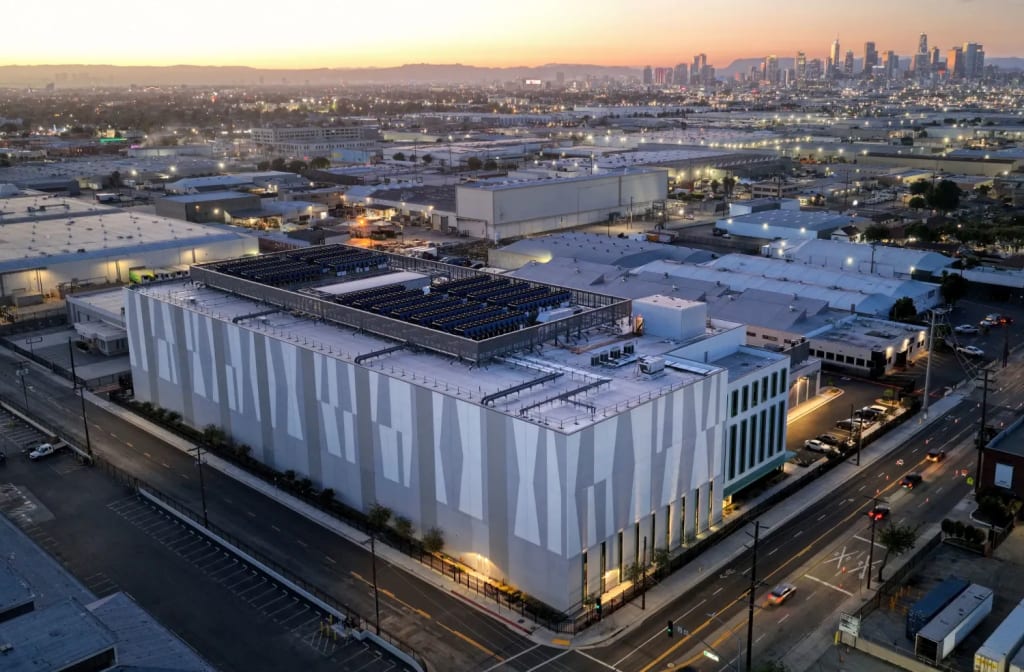
They may look like anonymous warehouses from the outside.
Inside, however, they increasingly contain the computing systems powering some of the world's most valuable companies.
And outside, they rely upon something profoundly physical:
electricity, water, land, transmission lines, and communities willing to host them.
AI may feel digital.
Its infrastructure is anything but.
The 70% Opposition Number Should Worry the Technology Industry
Perhaps the biggest warning for AI companies is not Executive Order 62.
It is public opinion.
Gallup found that roughly seven in ten Americans oppose an AI data center being built in their local area, including almost half who strongly oppose one.
That creates a classic infrastructure problem.
People may enjoy the service.
They may appreciate cloud computing and AI.
But they may not want the facilities powering those services nearby.
Energy projects have faced similar dynamics for decades.
AI companies are now discovering that software politics eventually becomes land-use politics.
The Bottom Line
The viral claim is substantially true.
On July 14, 2026, Governor Kathy Hochul signed Executive Order 62, establishing what New York calls the first statewide moratorium in the United States on new hyperscale data centers.
But the precise story is more nuanced than “New York banned data centers.”
The order:
Targets facilities consuming or capable of consuming 50 MW or more.
Pauses certain incomplete state environmental permits for up to one year.
Does not shut down existing data centers.
Does not automatically cancel already-complete permitting applications.
Exempts qualifying manufacturing, research, university, Empire AI, and medical facilities.
During the pause, the state plans to develop rules covering:
electricity costs,
grid infrastructure,
clean-energy generation,
water consumption,
environmental impacts,
community compensation,
labor standards,
and large-load interconnection.
New York also plans to consider requiring data centers to finance new power capacity or pay more for grid access, and Hochul wants lawmakers to repeal sales-tax exemptions for the largest facilities.
The timing is no accident.
Nearly 12 GW of proposed data-center demand was already in New York's grid interconnection queue by May 2026. Nationally, DOE projects data centers could rise from 4.4% of U.S. electricity consumption in 2023 to as much as 12% by 2028.
Meanwhile, Gallup finds roughly 71% of Americans oppose an AI data center being constructed near them.
Those numbers explain why this is no longer a technical debate confined to utility engineers.
Data centers have become a political issue.
And New York has just posed a question that other states may soon have to answer:
Who should pay for the physical infrastructure behind the AI revolution—the technology companies benefiting from it, or everyone connected to the same power grid?
New York's answer is increasingly clear.
AI can grow.
Data centers can eventually be built.
But the state wants the companies consuming enormous quantities of electricity and water to pay far more of the true cost themselves.
That may turn out to be much more important than a one-year moratorium.
Frequently Asked Questions
Did New York really ban new data centers?
Not all of them. New York temporarily paused certain state permits for new or expanded hyperscale facilities consuming or capable of consuming 50 MW or more.
Is this the first statewide data-center moratorium in America?
New York's government and the National Conference of State Legislatures describe it as the first statewide moratorium of its kind.
When did the moratorium start?
Governor Kathy Hochul signed Executive Order No. 62 on July 14, 2026.
How long will it last?
Up to one year while New York completes its Generic Environmental Impact Statement and new regulatory framework.
What size data center is covered?
A covered facility must consume or be capable of consuming 50 MW or more, alongside the other characteristics included in the executive order's definition.
How much electricity is 50 MW?
NCSL describes it as roughly enough electricity to power 50,000 homes, although that is an approximate comparison.
Are existing data centers being shut down?
No.
The order concerns new construction and expansions requiring covered state approvals. Existing operating facilities remain in service.
What about projects already permitted?
The state pause applies to covered DEC applications that had not already been deemed complete when the executive order took effect.
Are universities affected?
Facilities primarily used for qualifying academic research are excluded, including accredited colleges and universities and the Empire AI consortium.
Are hospitals affected?
Facilities primarily used to provide medical care are excluded.
Why is New York worried about electricity?
Nearly 12 GW of proposed data-center load was in the NYISO interconnection queue as of May 2026, with more than 8 GW entering during 2025 alone.
Could data centers raise utility bills?
New York argues that major grid upgrades needed to serve hyperscale facilities could impose costs on other customers unless rate structures ensure developers pay their share. The new policy is specifically designed to prevent that outcome.
Will data centers have to generate their own electricity?
Not necessarily every facility, but New York is examining rules under which large centers would either supply more of their own power, finance dedicated clean generation, or pay more for grid service and upgrades.
What is the Grid Acceleration Fund?
It is a proposed mechanism under which data centers could provide upfront funding for grid upgrades, clean energy, storage, demand-response systems, and protection against stranded infrastructure costs.
Why is water an issue?
Some data-center cooling systems can use substantial quantities of water. New York is reviewing how hyperscale facilities could affect municipal systems, aquifers, surface water, wastewater infrastructure, and drought resilience.
Is New York ending tax breaks for data centers?
Not yet. Hochul says she will seek legislation to repeal sales-tax exemptions for massive data centers. That requires legislative action and is separate from the executive-order moratorium.
How much electricity do U.S. data centers consume?
DOE estimates they consumed approximately 176 TWh, or 4.4% of U.S. electricity, in 2023. By 2028, consumption could reach 325–580 TWh, representing approximately 6.7%–12% of national electricity use.
Is AI responsible for all of that electricity demand?
No. Cloud computing, storage, streaming, enterprise computing, and other digital services also contribute. But DOE identifies the rapid growth of AI applications as an important driver.
Do Americans really oppose AI data centers?
Gallup found 71% opposed construction of an AI data center in their local area, including 48% who strongly opposed it.
Could this hurt America's AI competitiveness?
Industry and business critics argue that delays and higher infrastructure costs could cause investment to move to other states and slow U.S. AI expansion. New York argues that rapid AI development can continue without shifting infrastructure costs onto residents.
Could other states follow New York?
Yes. NCSL has already highlighted the New York policy as a potential precedent for other states confronting similar electricity, water, and community concerns.
Is New York against artificial intelligence?
No. The state continues investing in AI, including its Empire AI research initiative. The policy targets the infrastructure and cost structure surrounding enormous commercial data centers rather than AI research itself.
What happens after the moratorium?
Once New York completes its new environmental and regulatory standards, the administration says the pause will be lifted and projects may proceed if they comply with state requirements, local zoning, and other applicable approvals.
What is the bigger significance?
New York is attempting to establish a new principle for the AI era:
Hyperscale computing infrastructure should pay for the power, grid upgrades, environmental impacts, and community costs it creates rather than transferring those costs to ordinary residents.
Whether other states adopt that model may determine how—and where—the next generation of America's AI infrastructure is built.