
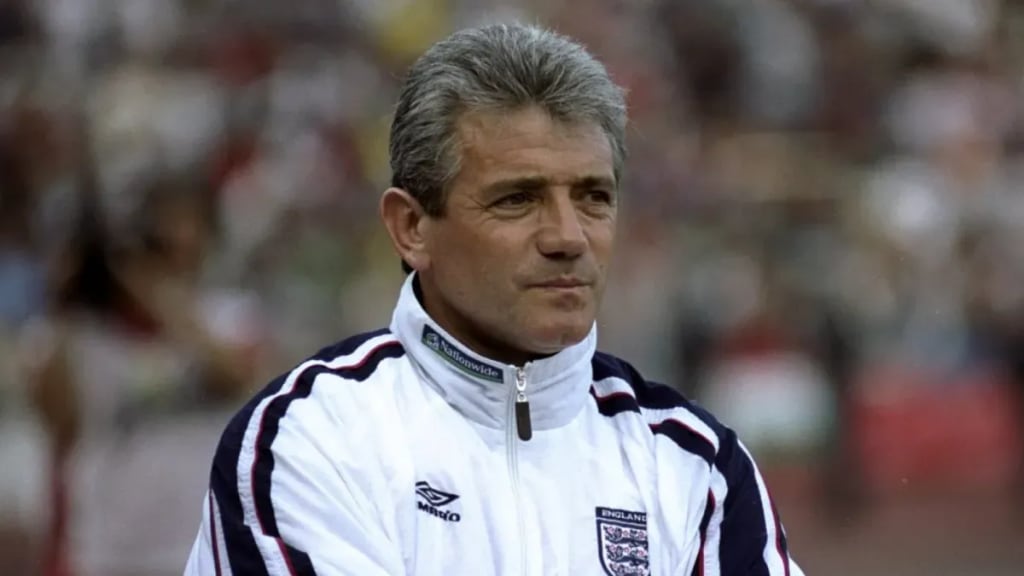
Kevin Keegan Dies at 75: Remembering the Two-Time Ballon d’Or Winner and English Football Icon
Kevin Keegan, the two-time Ballon d’Or winner who became one of English football’s most celebrated players, managers and personalities, has died at the age of 75 following a battle with cancer.
Keegan died on July 20, 2026, surrounded by his wife and daughters. His family described him as a deeply loved husband, father and grandfather, thanked the medical professionals who had supported him and requested privacy during their loss.
His cancer diagnosis was first made public in January 2026 after he experienced persistent abdominal symptoms. In June, Keegan revealed that the disease was stage four and spoke publicly about the treatment he was receiving.
The news prompted tributes from across the football world, including Liverpool, Newcastle United, Hamburger SV, Southampton, Manchester City, the Football Association, UEFA and former players whose careers Keegan had influenced.
Few individuals have occupied as many important places in English football history.
Keegan was a European Cup-winning Liverpool forward, a Bundesliga champion with Hamburg, England captain, Newcastle United hero, national-team manager and the emotional architect of one of the Premier League’s most entertaining sides.
Above all, he was a football figure whose enthusiasm never appeared manufactured. Whether scoring goals, inspiring players or discussing the game, Keegan communicated a sincere belief that football should excite the people watching it.
Kevin Keegan’s Family Confirms His Death
Keegan’s family confirmed that the former England player and manager died at 75 after battling cancer. He was with his wife, Jean, and his daughters during his final moments.
Newcastle United described him as one of the most influential and deeply loved figures in the club’s history, while Liverpool mourned a legendary former No. 7 whose achievements helped establish the club as a dominant force in England and Europe.
England’s Football Association announced that a full tribute would be paid when the national team played Spain at Wembley in September 2026. The FA remembered Keegan as a player and manager who represented the Three Lions with pride.
A Football Life That Began in Yorkshire
Joseph Kevin Keegan was born on February 14, 1951, in Armthorpe, near Doncaster.
He did not enter professional football as an obvious future global superstar. Standing around 5 feet 8 inches tall, he lacked the imposing frame traditionally associated with English centre-forwards of the era.
What he possessed instead was tremendous energy, determination, physical strength, movement and an almost relentless desire to improve.
Keegan began his professional career with Scunthorpe United, making more than 100 appearances before attracting Liverpool’s attention. In 1971, manager Bill Shankly signed the 20-year-old and initially viewed him as a midfielder. After watching him train, Shankly moved him into attack—a decision that transformed Keegan’s career.
Becoming a Liverpool Legend
Keegan immediately began justifying Shankly’s faith.
He scored on his Liverpool debut against Nottingham Forest and developed a famous partnership with Welsh striker John Toshack. Toshack provided height, aerial presence and physical power, while Keegan attacked the spaces around him with speed, intelligence and extraordinary work rate.
The partnership became one of the most recognizable in English football.
Across six seasons at Anfield, Keegan made 323 appearances and scored 100 goals. He helped Liverpool win three First Division championships, two UEFA Cups, the FA Cup and the club’s first European Cup.
During the 1972–73 season, he contributed 22 goals and 19 assists as Liverpool won both the league title and its first European trophy. In the UEFA Cup final against Borussia Mönchengladbach, Keegan scored twice and created another goal as Liverpool prevailed 3–2 on aggregate.
He delivered another decisive performance in the 1974 FA Cup final, scoring twice as Liverpool defeated Newcastle United 3–0 at Wembley.
The opponents that day could not have known that the man helping deny them the trophy would eventually become one of the most beloved figures in their own history.
Winning Liverpool’s First European Cup
Keegan’s final season at Liverpool ended with one of the greatest achievements in the club’s history.
Liverpool won the First Division title in 1976–77 before reaching the European Cup final against Borussia Mönchengladbach in Rome.
Keegan’s speed and movement caused serious problems throughout the match. He won the penalty converted by Phil Neal as Liverpool secured a 3–1 victory and lifted the European Cup for the first time.
He left Liverpool at the height of his powers, having already announced his intention to test himself abroad.
Keegan later credited Liverpool with shaping him both as a footballer and as a person. His performances, trophies and relationship with supporters secured his place among the defining players of the club’s rise under Shankly and Bob Paisley.
The Bold Move to Hamburger SV
In 1977, Keegan made the courageous decision to leave the European champions and join Hamburger SV.
English players rarely moved to major continental clubs during that period. Keegan’s transfer therefore represented both a professional gamble and a cultural challenge.
His early months in Germany were difficult. He had to adapt to a new language, different tactical expectations and the pressure created by his status and salary.
He eventually won over teammates and supporters through the same qualities that had defined him at Liverpool: intensity, discipline, courage and tireless effort.
Keegan helped Hamburg win the Bundesliga championship in 1978–79 and reach the 1980 European Cup final. Across his time with the club, he made 90 competitive appearances and scored 32 goals.
Hamburg remembered him as one of the greatest footballers ever to wear its colours and the first—and still only—HSV player to win the Ballon d’Or.


Back-to-Back Ballon d’Or Victories
Keegan won the Ballon d’Or in 1978 and 1979, then formally known as the European Footballer of the Year award.
The victories established him as one of the world’s leading footballers and rewarded his success in adapting to German football.
Winning the award once placed Keegan among an elite group. Winning it in consecutive years made him exceptional.
He remains the only British player to have won the men’s Ballon d’Or twice.
His achievement was particularly remarkable because he did not fit the traditional image of an individually dominant superstar.
Keegan’s greatness was based on collective qualities: movement, combination play, endurance, bravery and an ability to improve the teammates around him. He was technically gifted, but his determination elevated that ability into something much more influential.
Hamburg supporters affectionately called him “Mighty Mouse,” a reference to the strength, energy and aerial ability he displayed despite his relatively small stature.
Returning to England With Southampton
Keegan returned to English football in 1980 by joining Southampton.
His transfer was another significant moment. A reigning two-time Ballon d’Or winner had chosen a club outside England’s traditional dominant group, adding glamour and ambition to Lawrie McMenemy’s side.
Keegan scored 42 goals in 80 appearances during his two seasons at Southampton.
The 1981–82 campaign became the most prolific of his career. He scored 30 goals in all competitions, was named PFA Players’ Player of the Year and helped Southampton challenge near the top of the First Division before the team eventually finished seventh.
His performances confirmed that his success in Germany had not diminished his effectiveness in English football.
“King Kev” Arrives at Newcastle United
In 1982, Keegan shocked football again by joining Newcastle United, then competing in the Second Division.
For Newcastle supporters, signing one of the world’s most famous players felt almost impossible.
Keegan immediately gave the club renewed belief and visibility. His arrival attracted enormous attention, increased attendances and convinced supporters that Newcastle could return to the top flight.
He scored 48 goals in 78 appearances and helped Newcastle secure promotion in 1984, playing alongside emerging talents including Peter Beardsley and Chris Waddle.
By the time he retired, Keegan was no longer simply a famous player temporarily representing Newcastle.
He had become “King Kev.”
His connection with Tyneside was emotional and enduring. Supporters recognized in him the same qualities they valued in their club: passion, ambition, resilience and a willingness to take risks.
Keegan’s playing career ended with 204 goals in 592 club matches, as well as trophies and individual honours earned in England and Germany.
Kevin Keegan’s England Career
Keegan made his senior England debut in November 1972 during a World Cup qualifier against Wales.
He went on to win 63 international caps, score 21 goals and captain England 31 times.
His international career occurred during a difficult period for the national team.
England failed to qualify for the 1974 and 1978 World Cups, meaning one of Europe’s finest players spent much of his peak without appearing on football’s biggest international stage.
Keegan captained England at the 1980 European Championship and travelled to the 1982 World Cup in Spain. A back injury limited him to one substitute appearance during that tournament, which became his final England match.
Although he never enjoyed the international tournament success his talent deserved, he remained one of the most recognizable England players of his era.
Football’s First Modern English Superstar
Keegan’s influence extended beyond the pitch.
During the 1970s, he became one of the first English footballers to fully enter mainstream celebrity culture. His distinctive hairstyle was widely copied, he appeared in advertising campaigns and television programmes, and he recorded the song Head Over Heels in Love.
His popularity helped redefine what an English football star could be.
Keegan was approachable, energetic and emotionally expressive. He connected with supporters who saw his rise from a working-class Yorkshire background as evidence that determination could overcome physical and social limitations.
Despite the glamour surrounding him, his football never appeared casual.
Former teammates regularly emphasized his work ethic. The celebrity image attracted attention, but the relentless training and competitive commitment sustained his career.
Returning to Newcastle as Manager
Keegan was away from professional football for several years after retirement.
In 1992, he returned to Newcastle United as manager with the club in danger of falling into the third tier.
His appointment changed the atmosphere almost immediately.
Newcastle survived and then won promotion to the Premier League as First Division champions in Keegan’s first full season.
The club did not merely stabilize. It became ambitious.
Under Keegan, Newcastle attacked relentlessly, signed exciting players and refused to approach matches cautiously. The team became known as “The Entertainers.”
Players such as Peter Beardsley, Andy Cole, Les Ferdinand, David Ginola, Faustino Asprilla and Alan Shearer helped produce one of the most thrilling teams in Premier League history.
The 1995–96 Premier League Title Race
Newcastle’s 1995–96 campaign remains inseparable from Keegan’s legacy.
His side established a 12-point lead at the top of the Premier League and appeared capable of ending the club’s long wait for an English league title.
Newcastle’s attacking style produced extraordinary football, including the famous 4–3 defeat at Liverpool that is frequently remembered among the Premier League’s greatest matches.
Manchester United eventually overturned the deficit and won the title.
The pressure of the race also produced one of Keegan’s most remembered media appearances. Responding emotionally to comments from Manchester United manager Alex Ferguson, Keegan declared that he would “love it” if Newcastle defeated them.
The interview has often been presented as evidence that Ferguson’s psychological tactics had succeeded.
Yet its enduring popularity reflects something deeper: Keegan cared openly.
He did not hide behind rehearsed language. His frustration, hope and competitive determination were visible to everyone.
Newcastle did not win the title, but Keegan’s side gave supporters a period of belief and excitement that became part of the club’s identity.
Fulham, England and Manchester City
After leaving Newcastle in 1997, Keegan became involved with Fulham and later took full control of the first team.
He then became England manager in February 1999.
Keegan led the national side at Euro 2000 but resigned in October that year after a 1–0 defeat to Germany in the final match played at the old Wembley Stadium.
He subsequently returned to club management with Manchester City in 2001.
At City, Keegan again produced attacking football and led the club to promotion to the Premier League during his first season. He remained in charge until 2005 before later returning briefly to Newcastle for a second managerial spell in 2008.
His managerial career was never defined primarily by tactical caution.
Keegan believed football should be positive, ambitious and emotionally engaging. His teams sometimes conceded too many goals, but they rarely lacked intent.
Tributes From Across Football
Liverpool described Keegan as a legendary player whose legacy would remain permanently written into the club’s history. The club remembered the forward who scored 100 goals, won seven major trophies and helped deliver its first European Cup.
Hamburger SV honoured the man who helped deliver the 1979 Bundesliga championship and won consecutive Ballon d’Or awards while representing the club.
Southampton remembered an international superstar who produced one of the most prolific seasons in the club’s history.
The FA highlighted his 63 England appearances, 21 goals and service as both captain and manager.
Tributes also came from players who had worked under him, including Alan Shearer, whose relationship with Keegan extended from childhood admiration to playing for him at Newcastle.
The messages consistently emphasized not only Keegan’s football achievements but also his energy, generosity, optimism and ability to make people believe in themselves.
Why Kevin Keegan Mattered So Much to Newcastle
Keegan’s relationship with Newcastle cannot be explained entirely through statistics or league positions.
He arrived as a world-famous player when Newcastle were outside the top flight and gave supporters hope.
A decade later, he returned as manager when the club faced another crisis and transformed it into a Premier League challenger.
Keegan understood the emotional importance of football in the city.
His teams reflected Newcastle’s appetite for courage and entertainment. They attacked because he believed supporters deserved ambition rather than survival alone.
Even without winning the Premier League, he altered expectations.
Newcastle were no longer thinking only about preserving their status. They were attempting to defeat the strongest teams in England and compete for the title.
That transformation explains why Keegan remained such a deeply loved figure on Tyneside.
He did not simply manage Newcastle United.
He made the club dream again.
Kevin Keegan’s Lasting Football Legacy
Keegan’s career was remarkable for its range.
He succeeded in the disciplined, physically demanding English game.
He moved abroad and became the Bundesliga’s outstanding player.
He won Europe’s greatest individual prize twice.
He returned to England and continued scoring.
He joined Newcastle in the second division when he could have chosen a more fashionable destination.
He later rescued and transformed the same club as a manager.
He captained England and eventually managed his country.
Keegan also represented a style of leadership that has become increasingly rare in elite football.
He motivated through belief, emotional connection and personal enthusiasm. Players often wanted to perform for him because he made them feel capable of achieving more than they had imagined.
His managerial imperfections were visible, but so were his values.
He preferred attacking possibility to defensive fear.
He believed supporters should leave the stadium feeling entertained.
He was willing to show disappointment, excitement and vulnerability rather than presenting an artificial image of control.
A Two-Time Ballon d’Or Winner Who Never Forgot Supporters
Keegan reached the highest level of the sport without losing his connection to ordinary football supporters.
Perhaps that was because his journey had not appeared inevitable.
He was a relatively small forward from a Yorkshire mining community who began at Scunthorpe United and worked his way to Liverpool, European glory and consecutive Ballon d’Or awards.
His story was not built around effortless superiority.
It was built around effort itself.
That quality made him especially relatable.
Supporters saw a player who chased every ball, challenged larger defenders, attacked crosses and refused to accept physical limitations. Managers saw someone who could inspire the same intensity in others.
Keegan’s football was emotional because he understood that the game belonged to people before it belonged to statistics, corporations or tactical theories.
Remembering “King Kev”
Kevin Keegan leaves behind a legacy shared by several clubs but owned by none of them exclusively.
At Liverpool, he was the energetic forward who helped turn domestic excellence into European conquest.
At Hamburg, he was the English pioneer who became Germany’s finest player and a global superstar.
At Southampton, he was the reigning Ballon d’Or winner who produced the most prolific season of his career.
At Newcastle, he was “King Kev”—the player who brought hope and the manager who created the Entertainers.
For England, he was captain, goalscorer and later national-team manager.
Across football, he was a symbol of passion.
Keegan did not need to win every battle to remain unforgettable. His career contained defeats, disappointments and difficult departures, but none erased the joy he created.
The trophies establish his greatness.
The memories explain the affection.
Kevin Keegan died as one of the most influential and recognizable figures English football has produced—a twice-crowned Ballon d’Or winner whose energy, courage and love of the game inspired generations.
Rest in peace, King Kev.
Kevin Keegan: February 14, 1951–July 20, 2026.
Frequently Asked Questions
When did Kevin Keegan die?
Kevin Keegan died on July 20, 2026, at the age of 75.
What was Kevin Keegan’s cause of death?
Keegan died following a battle with cancer. He had revealed in June 2026 that he had stage four cancer.
Was Kevin Keegan with his family when he died?
Yes. His family said he was surrounded by his wife and daughters during his final moments.
How many Ballon d’Or awards did Kevin Keegan win?
Keegan won the Ballon d’Or twice, in 1978 and 1979, while playing for Hamburger SV.
Is Kevin Keegan the only British two-time Ballon d’Or winner?
Yes. Keegan remains the only British player to have won the men’s award twice.
Which clubs did Kevin Keegan play for?
He represented Scunthorpe United, Liverpool, Hamburger SV, Southampton and Newcastle United during his professional club career.
How many goals did Kevin Keegan score for Liverpool?
Keegan scored 100 goals in 323 appearances for Liverpool.
What trophies did Kevin Keegan win with Liverpool?
He won three First Division titles, two UEFA Cups, one FA Cup and the 1977 European Cup with Liverpool.
Did Kevin Keegan win the Bundesliga?
Yes. He helped Hamburger SV win the Bundesliga championship during the 1978–79 season.
How many times did Kevin Keegan play for England?
Keegan won 63 England caps, scored 21 goals and captained the national team 31 times.
Did Kevin Keegan play at a World Cup?
Yes. He appeared as a substitute at the 1982 World Cup in Spain after struggling with a back injury.
Which teams did Kevin Keegan manage?
He managed Newcastle United, Fulham, England and Manchester City, before returning to Newcastle for a second spell in 2008.
Did Kevin Keegan win the Premier League with Newcastle?
No. Newcastle finished second behind Manchester United in the 1995–96 season after leading the table by 12 points earlier in the campaign.
Why was Kevin Keegan called “King Kev”?
The nickname reflected his extraordinary popularity, achievements and emotional connection with supporters, particularly at Newcastle United.
What was Kevin Keegan’s other famous nickname?
Liverpool and Hamburg supporters also knew him as “Mighty Mouse” because of his strength, energy and determination despite his relatively small stature.
Why is Kevin Keegan considered an English football legend?
Keegan won major domestic and European trophies, earned two Ballon d’Or awards, captained England, became a pioneering English star abroad and inspired Newcastle United as both a player and manager.


