
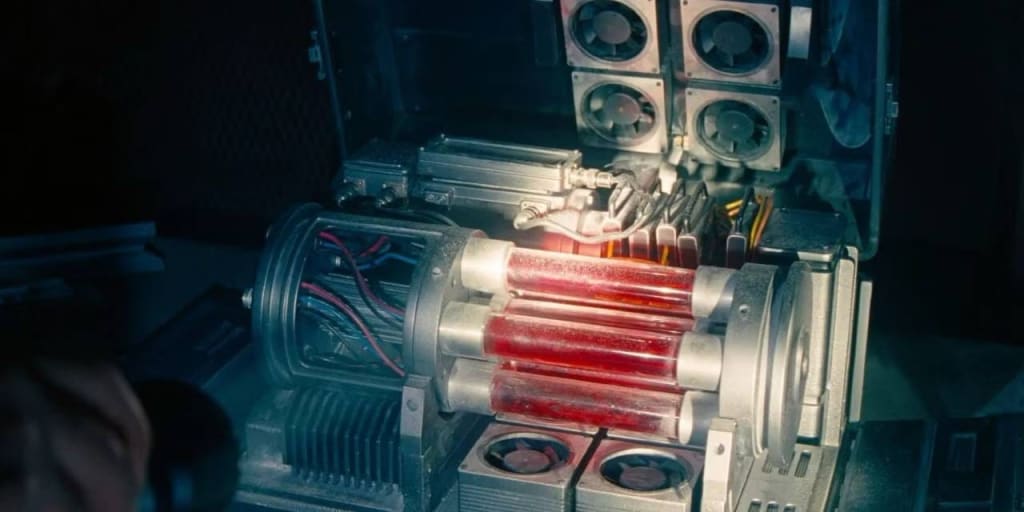
Red Mercury: The Secret Nuclear Super-Substance That Never Existed—and the Black-Market Scam That Refuses to Die
Imagine someone approaches you with a small metal capsule.
They will not open it.
They say opening it could be dangerous.
The label is written in Russian.
Perhaps there is a radiation symbol.
Perhaps the container feels unusually heavy.
Inside, the seller claims, is one of the most valuable substances on Earth.
A secret material created by Soviet nuclear scientists.
Governments desperately want it.
Intelligence agencies suppress knowledge of it.
A few kilograms are supposedly worth millions.
Depending on which version of the story you hear, this mysterious substance can make devastating weapons smaller, improve missile systems, defeat radar, locate buried gold—or even interact with supernatural forces.
Its name is:
Red mercury.
There is one major problem.
The legendary substance does not exist.
The International Atomic Energy Agency has explicitly identified “red mercury” transactions as a recurring class of nuclear-material hoax. Its nuclear-security guidance says claims that red mercury is an essential constituent of nuclear weapons have “no technical merit” and describes most cases as profit-driven schemes intended to deceive buyers.
Over several decades, police and scientists have seized containers supposedly holding the mysterious material.
Laboratories opened them.
They found ordinary mercury.
Mercury compounds.
Mercury mixed with coloring.
Or other unrelated substances.
A 2007 scientific analysis of a capsule seized by Croatian police found that its mysterious heavy liquid was simply elemental mercury. The antimony expected under one popular red-mercury formula was not even present.
Another German investigation of illegally imported “red mercury” reached essentially the same conclusion: the supposedly extraordinary material was just mercury inside specially prepared packaging.
Yet the myth survived.
It survived the collapse of the Soviet Union.
It survived laboratory testing.
It survived statements from nuclear authorities.
It survived failed terrorism prosecutions.
It migrated from the arms black market into folklore about treasure hunting and magic.
In 2009, rumors that antique Singer sewing machines contained red mercury caused buyers in Saudi Arabia to offer tens of thousands of dollars for machines that had previously been worth a few hundred riyals.
In parts of southern Africa, the myth became considerably more dangerous. People were reported to have tampered with military explosives because they had been told valuable red mercury was hidden inside, with authorities linking the belief to deadly explosions and warning communities that no such material existed in the ordnance.
Red mercury may therefore be the perfect modern myth.
It combines nuclear secrecy, Cold War paranoia, greed, conspiracy thinking, real chemistry and just enough scientific vocabulary to make nonsense sound plausible.
And unlike most imaginary substances, people have lost fortunes—and sometimes their lives—trying to obtain it.
First, an Important Clarification: Red-Colored Mercury Compounds Are Real
Saying “red mercury does not exist” requires a small but important scientific qualification.
There are absolutely real chemical compounds containing mercury that happen to be red.
For example, mercury sulfide, HgS, occurs naturally as the mineral cinnabar. Its red form has historically been associated with the pigment vermilion. PubChem identifies cinnabar as mercury(II) sulfide and notes its characteristic red form.
Mercury(II) iodide is another genuine compound. It can appear as a scarlet-red solid and is toxic.
So if someone uses the words red mercury casually to describe a red mercury compound, that does not violate chemistry.
That is not what the famous legend means.
The mythical Red Mercury, usually capitalized in Cold War stories, is supposedly a secret strategic substance possessing extraordinary nuclear, explosive, military or supernatural properties.
That material has never been scientifically authenticated.
No analyzed sample has established the existence of the legendary substance.
The difference is similar to the difference between:
A real mineral that happens to be red
and
a mythical red mineral that supposedly gives its owner supernatural powers.
The color may exist.
The magical properties do not.
The Myth Emerged From the Shadow World of the Cold War
The precise origin of the red-mercury story is difficult to identify because the legend evolved through intelligence rumors, journalists, arms dealers, scammers and political speculation.
Published accounts trace versions of the story into the late Cold War, with the myth becoming increasingly visible internationally during the 1980s and exploding during the early 1990s. A peer-reviewed analysis of a seized “red mercury” object notes that the material began appearing prominently in international media in the late 1980s and that the phenomenon accelerated dramatically following the Soviet Union's collapse.
The timing was ideal for a scam.
The Soviet Union possessed:
- Nuclear weapons.
- Secret research institutes.
- Closed military cities.
- Advanced missile technology.
- Huge stockpiles hidden behind extraordinary secrecy.
Western publics knew Soviet scientists had developed things they were not allowed to discuss.
Then, beginning in the late 1980s and culminating with the Soviet collapse in 1991, the political structure surrounding those secrets began falling apart.
Scientists went unpaid.
Military property disappeared.
Borders became more permeable.
Smuggling fears increased.
Suddenly the idea that a former Soviet insider might possess a mysterious nuclear material did not sound completely impossible.
That uncertainty became the scammer's greatest asset.
The Collapse of the Soviet Union Made the Hoax Almost Perfect
In March 1992, The Washington Post reported a surge of alleged red-mercury trading across Eastern Europe.
Salesmen claimed they were offering a secret Soviet nuclear substance.
Police operations occurred in several countries.
The IAEA was receiving repeated inquiries.
And the agency's information director at the time described the product unequivocally as bogus, saying fraudulent sellers were offering fake certificates for a material that did not exist.
The post-Soviet environment gave scammers something ordinary fraudsters rarely possess:
Plausible secrecy.
Suppose a buyer asked:
“Why has no university published a paper about this substance?”
The seller could answer:
“Because it was classified.”
Why had nobody seen it in Western laboratories?
“Because the Soviets kept it secret.”
Why did the container have Russian lettering?
“Military stock.”
Why did the seller want cash?
“Obviously this is illegal.”
Why was the price extraordinary?
“Because governments would kill to obtain it.”
Every missing piece of evidence could itself be explained as evidence of secrecy.
That is a remarkably durable structure for a conspiracy.
The Myth Was Designed to Be Impossible to Fact-Check
A good scam must survive questions.
Red mercury survived them by changing shape.
Ask ten sellers what it was and you might receive ten different answers.
It was supposedly:
A secret nuclear material.
A revolutionary explosive.
A strategic Soviet chemical.
A component of tiny nuclear weapons.
A missile technology.
A radar-defeating material.
A source of enormous energy.
A radioactive substance.
A non-radioactive substance.
A liquid.
A powder.
A dense red compound.
A secret code name for something else.
The IAEA eventually highlighted exactly this type of deception in its guidance on illicit nuclear trafficking. Hoaxes can claim that benign materials are strategic or radioactive, forcing authorities to investigate because genuine illicit nuclear trafficking is a real security concern.
The scam's flexibility was its strength.
When one claim was disproved, another could replace it.
 Mike Wendling
How Much Was Red Mercury Supposedly Worth?
Enormous sums.
A U.S. Air Force Center for Unconventional Weapons Studies publication summarizing earlier nuclear-security literature reported historical asking prices of approximately $100,000 to $300,000 per kilogram during the 1990s.
The precise price varied according to seller, buyer and story.
That was part of the psychology.
If an unknown powder cost $20, most people would assume it was worthless.
If a secretive dealer demanded $300,000, the price itself could make the product seem important.
Scarcity and secrecy reinforce each other:
It is expensive because it is secret.
It must be important because it is expensive.
That circular logic works especially well when buyers believe they have privileged access to something governments are hiding.
The Packaging Was Part of the Trick
Some supposed red-mercury samples were made deliberately theatrical.
Containers could carry radiation markings.
Documentation might include impressive-looking technical certificates.
A material might be packaged inside heavy metal.
Some samples were allegedly exposed to radiation or placed in radioactive environments so detectors would respond, creating the impression that the substance itself had extraordinary nuclear characteristics.
The earlier nuclear-security literature summarized by the U.S. Air Force notes that containers and samples were sometimes manipulated in ways designed to convince buyers that the material had strategic value.
It is the black-market equivalent of counterfeit luxury packaging.
You are not merely selling the substance.
You are selling a story.
One Seller Apparently Used Red Nail Polish
The absurdity of the scam occasionally became almost comic.
During the early 1990s wave in Eastern Europe, The Washington Post reported that people caught selling supposed red mercury commonly possessed ordinary mercury colored or presented to look mysterious.
One Hungarian seller apparently did not even color the mercury itself.
He reportedly painted the vial with red nail polish.
That detail tells us something important.
The scam did not require sophisticated nuclear scientists.
It required buyers who desperately wanted the story to be true.
Laboratories Kept Opening “Red Mercury” Containers
Scientific analysis repeatedly destroyed the mythology.
In one documented German investigation, radiometric and chemical testing of material illegally imported as red mercury concluded that it was simply pure mercury in specially prepared containment.
Then came another instructive case.
Croatian Police Seized a Suspicious Capsule in 2003
In November 2003, the Organized Crime Division of the Zagreb Police Authority confiscated a small metal cylinder during an investigation into suspected illicit trafficking.
The object was believed to contain red mercury.
Scientists at Croatia's Ruđer Bošković Institute examined it using nondestructive analytical techniques.
The container felt as though it held a dense liquid.
Tests detected mercury along with metals belonging to the capsule itself.
The researchers concluded that the liquid was elemental mercury.
They specifically found no antimony, despite antimony appearing in one of the widely circulated supposed formulas for mythical red mercury.
The investigators' conclusion fit earlier cases.
Another legendary sample had become ordinary chemistry.
Nuclear-Forensics Researchers Found the Same Pattern
Lawrence Livermore National Laboratory researchers have documented nuclear-forensics work involving suspected materials used in scams and hoaxes.
A later LLNL review describes a purported red-mercury sample analyzed in earlier work as a fictional substance at the center of multiple hoaxes. Laboratory testing showed ordinary chemical constituents rather than a secret strategic material.
This matters because red mercury is sometimes defended with a familiar conspiracy argument:
“Scientists have never tested the real version.”
That statement makes the myth unfalsifiable.
Every fake sample becomes irrelevant.
Every laboratory failure supposedly proves only that the scientists received the wrong sample.
But after decades of trading stories, arrests, seizures and analyses, the evidentiary pattern is remarkable:
Extraordinary claims.
Ordinary substances.
Again.
And again.
And again.
The IAEA Eventually Put Red Mercury Into Its Nuclear-Scam Guidance
The International Atomic Energy Agency's treatment is particularly important because the IAEA deals with genuine nuclear-security threats.
It is not an organization with the luxury of assuming every suspicious material is harmless.
If someone claims to possess illicit radioactive or weapons-related material, authorities have to investigate.
The IAEA's technical guidance on detecting nuclear and radioactive material outside regulatory control specifically identifies red mercury as one of the noteworthy recurring hoaxes.
Its assessment is direct:
Claims that it is a nuclear-weapons constituent have no technical merit.
That does not mean nuclear smuggling itself is imaginary.
The IAEA maintains an Incident and Trafficking Database containing real cases involving unauthorized possession, theft, trafficking and loss of nuclear or radioactive material.
Interestingly, the same database also tracks scams in which ordinary material is intentionally offered for sale as supposedly nuclear or radioactive.
Red mercury lives at the boundary between those two worlds.
The real danger of nuclear trafficking makes the fake product believable.
The Hoax Can Waste Real Counterterrorism Resources
Imagine receiving credible intelligence that someone is offering a nuclear material to a criminal group.
Authorities cannot simply reply:
“Probably a scam.”
They must investigate.
Is the substance radioactive?
Who is selling it?
Who is trying to buy it?
Does the network have access to genuine materials?
Is the transaction being used to conceal something else?
The IAEA notes that false representations and nuclear-material scams can divert investigative resources from genuine cases.
This is another way red mercury causes harm even though the mythical material itself does not exist.
A fake nuclear commodity can still trigger real police operations.
Then Red Mercury Entered the World of Terrorism
After the September 11 attacks, intelligence services paid even greater attention to terrorist interest in unconventional weapons.
Red mercury occasionally appeared in those investigations.
A 2002 Washington Post report noted evidence that al-Qaeda's attempts to acquire nuclear-related materials had sometimes encountered fraudsters, including scammers offering the nonexistent substance.
This is one of the strangest features of illicit weapons markets.
Criminal buyers do not automatically know more than ordinary people.
A terrorist seeking exotic technology can be conned.
A dictator's agent can be conned.
An arms trafficker can be conned.
The secrecy of illegal markets makes normal verification extremely difficult.
No Amazon reviews.
No certified laboratory report.
No refund policy.
No legitimate manufacturer to call.
The very act of shopping illegally makes the buyer vulnerable.
The 2004 London Red-Mercury Case Became Almost Surreal
One of the most famous later episodes began in Britain in 2004.
An undercover News of the World reporter, Mazher Mahmood, became involved in a sting centered on claims that buyers wanted red mercury.
Police arrested several men amid allegations that the material might be intended for terrorism.
There was a bizarre problem at the heart of the case.
Even the journalist involved knew the substance did not exist.
During the eventual trial, Mahmood testified that he had initially found the supposed transaction so strange that he wondered whether another newspaper was setting him up.
Three defendants went on trial at London's Old Bailey.
In July 2006, after a lengthy proceeding, the jury acquitted all three.
A mythical substance had generated:
An undercover newspaper investigation.
A counterterrorism operation.
Arrests.
Years of legal proceedings.
A major criminal trial.
And ultimately acquittals.
Nothing about red mercury physically existed.
Its social consequences certainly did.
Why Not Simply Ignore Anyone Trying to Buy It?
Because intent and capability are different questions.
Suppose someone genuinely believes a nonexistent substance could produce a catastrophic weapon and tries to buy it.
The substance may be imaginary.
The buyer's intentions may not be.
That creates a difficult problem for law enforcement.
An investigator may still want to know:
Who is trying to obtain it?
Why?
What else are they trying to acquire?
Who introduced them to the market?
Are they merely greedy middlemen?
Are they being entrapped?
Are they seeking actual dangerous material too?
Red mercury therefore became useful not as a weapon, but as a window into illicit networks.
Was Red Mercury Invented by an Intelligence Agency?
This is one of the myth's most persistent secondary legends.
The story goes like this:
A government deliberately invented red mercury so intelligence agencies could identify people seeking secret nuclear technology.
A criminal buyer asks for red mercury.
An undercover agent offers it.
The buyer exposes himself.
It is an elegant idea.
It is also difficult to prove as the singular origin of the phenomenon.
Nuclear-security literature has discussed theories that intelligence services may at times have exploited or encouraged the myth, but that is different from demonstrating that one agency invented the entire legend. The Nuclear Threat Initiative's historical material on South Africa, for example, notes speculation that some extraordinary red-mercury claims may have been connected to sting operations intended to monitor trafficking in sensitive materials.
The safest conclusion is:
Intelligence agencies may have found the myth useful. That does not establish that they created it.
A successful rumor rarely has only one author anyway.
Dealers copy it.
Journalists amplify it.
Governments investigate it.
Criminals adapt it.
Each retelling changes the product.
Nuclear Secrecy Was Red Mercury’s Greatest Marketing Department
Why did people believe it for so long?
Because actual nuclear weapons programs are secret.
Real classified technologies do exist.
Real nuclear materials are tightly controlled.
Real scientific details have historically remained hidden for national-security reasons.
So when scientists say:
“That substance does not exist,”
a conspiracy theorist can respond:
“Of course you would say that.”
This creates a fascinating informational trap.
Secrecy surrounding real technology becomes evidence supporting fake technology.
Real Science Made the Fraud Sound Better
Another reason the scam survives is that mercury is not an imaginary element.
Mercury is strange enough already.
Elemental mercury is a dense metal that is liquid at room temperature.
Its compounds can display striking colors.
Some mercury compounds are toxic.
Some are red.
Cinnabar has been valued historically as an ore and pigment.
Mercury(II) iodide can appear bright scarlet and change appearance with temperature.
A scammer therefore does not need to invent everything.
The best pseudoscience usually mixes:
90% recognizable science
with
10% impossible conclusion.
Mercury exists.
Nuclear weapons exist.
Classified research exists.
Red mercury compounds exist.
Therefore, perhaps secret nuclear red mercury exists.
The conclusion does not logically follow.
But it sounds better than inventing an element called Magicbombium.
Why Did the Name “Red Mercury” Sound So Soviet?
The name itself was perfect branding.
During the Cold War, red was strongly associated in Western political language with communism and the Soviet Union.
Mercury already sounded technical, mysterious and dangerous.
Combine them:
Red Mercury.
The phrase feels simultaneously chemical and geopolitical.
It sounds exactly like the kind of secret Cold War project a novelist would invent.
That may be one reason the legend traveled so effectively even when nobody could agree what the substance actually was.
Then the Myth Escaped the Arms Trade
Most frauds disappear when their original market collapses.
Red mercury evolved.
Instead of remaining only a mythical nuclear commodity, it entered folklore.
In different regions, the substance became associated with:
- Buried treasure.
- Gold.
- Ancient artifacts.
- Spirits.
- Magical power.
- Antique machinery.
- Military ordnance.
At that point the myth became even harder to kill.
A nuclear scientist can explain that red mercury has no role in a secret superweapon.
That argument may mean little to someone who believes the material helps locate buried treasure.
The scientific target has changed.
The Great Singer Sewing Machine Mania of 2009
One of the strangest episodes occurred in Saudi Arabia.
Rumors began circulating that certain old Singer sewing machines contained hidden red mercury.
Suddenly obsolete household equipment became extraordinarily valuable.
Saudi reports described people rushing to markets and paying enormous prices for machines that had previously been worth only a few hundred riyals. Some rumored sale prices reached SR200,000, equivalent at the time to tens of thousands of U.S. dollars.
People were not necessarily seeking nuclear technology.
Versions of the rumor claimed that red mercury could:
Locate treasure.
Help obtain gold.
Interact with jinn.
Provide extraordinary wealth.
Saudi authorities publicly described the claims as false and deceptive.
People Used Mobile Phones as Fake Red-Mercury Detectors
The rumor developed its own home experiment.
Hold a mobile telephone near the sewing-machine needle.
If the connection failed, believers claimed, red mercury must be present.
This was scientifically meaningless.
But it gave buyers something psychologically powerful:
A test.
People no longer had to rely solely on rumors.
They could “verify” the substance themselves.
Saudi reporting documented buyers using mobile phones around sewing machines and rumors spreading that signal disruption proved the presence of the mythical material.
This is classic pseudoscience.
Give people:
A mysterious phenomenon.
A simple test.
A positive result they can interpret flexibly.
Then allow confirmation bias to do the rest.
A Nearly Worthless Sewing Machine Could Suddenly Sell for a Fortune
That creates the perfect speculative bubble.
Person A hears an old Singer contains red mercury.
Person A buys one for 5,000 riyals.
Not because he believes deeply in the chemistry.
Because he thinks Person B will pay 20,000.
Person B buys it because he thinks Person C will pay 100,000.
Soon the value of the machine has almost nothing to do with sewing.
It represents the expected value of the rumor.
This is essentially the same psychology that powers many financial manias.
The object matters less than the belief that another buyer will value it more.
Red Mercury Also Became Associated With Jinn and Treasure
Some Middle Eastern versions of the myth moved completely beyond nuclear technology.
The substance supposedly had supernatural properties.
It could reveal buried gold.
Control or attract spirits.
Assist treasure hunters.
The 2009 Saudi Singer frenzy included exactly these beliefs. Arab News reported rumors connecting the supposed substance with jinn and wish fulfillment, while authorities rejected the claims as deceptive.
At this stage, “red mercury” no longer described one claim.
It had become a cultural container.
People placed whatever extraordinary power they desired inside it.
In Southern Africa, the Hoax Became Deadly
The most disturbing version involved military explosives.
In parts of southern Africa, rumors circulated that landmines, grenades or other munitions contained valuable red mercury.
If someone could open the device and extract it, the story went, enormous wealth awaited.
The danger should be obvious.
An unexploded munition is not a treasure chest.
It is an explosive device that failed to detonate when originally intended—or remains designed to detonate under particular conditions.
Tampering with one can be fatal.
Zimbabwean military authorities later specifically warned communities that rumors of red mercury inside landmines were false and noted that such beliefs had been associated with mine incidents.
Five People Were Killed in a 2013 Zimbabwe Explosion
In January 2013, an explosion in Chitungwiza, Zimbabwe, killed five people.
Police said explosives were responsible and discussed evidence that people had been trading or tampering with explosive devices because of a belief that valuable red mercury could be recovered from them.
Subsequent Zimbabwean reporting warned that the nonexistent-material scam had transformed military ordnance into supposed get-rich-quick objects.
That is where the red-mercury story stops being funny.
Someone coloring ordinary mercury with dye is fraud.
Someone persuading another person to dismantle a landmine to find imaginary treasure creates a pathway to death.
The Hoax Exploits Economic Desperation
Why would someone risk opening an explosive device?
The obvious answer is:
Because they believe what is inside could transform their life.
A mythical material supposedly worth hundreds of thousands or millions creates irrationally powerful incentives in communities experiencing severe economic hardship.
The seller does not need the buyer to understand nuclear physics.
The seller only needs the buyer to think:
If there is even a small chance this is true, I could become rich.
This is how low-probability fantasies overpower obvious risk.
Lotteries work on a benign version of the same psychological principle.
Red-mercury fraud can weaponize it.
The Scammer Often Does Not Sell Red Mercury at All
This is one of the cleverest variants.
Imagine trying to sell someone a bottle of fake red mercury for $100,000.
The buyer may become suspicious.
Instead, sell him something that supposedly contains red mercury.
An antique sewing machine.
A military component.
An old radio.
An artifact.
An explosive device.
Now the mystery cannot easily be checked before purchase.
The buyer thinks the valuable material is hidden inside.
This introduces another psychological effect:
Treasure hunting.
Humans love the idea that something ordinary conceals extraordinary value.
An old machine becomes a lottery ticket.
Why Red Mercury Is a Perfect Confidence Scam
The basic structure usually includes several ingredients.
Authority: The seller claims access to military, intelligence or scientific insiders.
Secrecy: You cannot independently verify the story because the information is supposedly classified.
Scarcity: Only a tiny quantity exists.
Urgency: Another buyer is interested.
Huge upside: The substance is supposedly worth millions.
Technical language: Nuclear terms make the story sound sophisticated.
Physical theater: Heavy containers, warning labels or suspicious equipment make the material look authentic.
Verification tricks: Fake certificates or meaningless demonstrations reassure the buyer.
Fear: Asking too many questions supposedly risks police or intelligence attention.
This is not unique to red mercury.
It is a general blueprint for high-value fraud.
Why Intelligent People Can Still Fall for It
Fraud is often described as something that happens to stupid people.
That is comforting and wrong.
Expertise is narrow.
A wealthy businessman may understand finance but know little about nuclear materials.
A military officer may understand logistics but not chemistry.
A treasure hunter may know antiques but not spectroscopy.
The scammer needs only to operate outside the victim's expertise while projecting inside knowledge.
Red mercury adds another advantage:
The buyer may be participating in something illegal.
That prevents him from asking legitimate experts.
Imagine telling a university chemistry department:
“I am about to spend $500,000 on a secret Soviet nuclear substance. Can you verify it?”
The buyer may fear arrest.
So he seeks confirmation from people already inside the fraudulent network.
Isolation makes fraud easier.
Why the Myth Survived Scientific Debunking
Scientific debunking assumes both sides accept a shared standard of evidence.
The red-mercury myth often rejects that standard.
Scientist:
“We tested a supposed sample. It was ordinary mercury.”
Believer:
“That was fake red mercury.”
Scientist:
“Another sample was also ordinary.”
Believer:
“Also fake.”
Scientist:
“The IAEA says the claimed properties have no technical merit.”
Believer:
“They are hiding the truth.”
Scientist:
“No verified sample has ever been demonstrated.”
Believer:
“That proves how secret it is.”
At this point, the claim has become impossible to falsify.
And an unfalsifiable claim can survive forever.
Conspiracy Thinking Turns Disproof Into Confirmation
This is perhaps the most durable psychological engine.
When evidence disproves an ordinary claim, belief should weaken.
When evidence disproves a conspiracy theory, believers can interpret the disproof as evidence that the conspiracy is effective.
No public samples?
The government confiscates them.
Scientists deny it?
Scientists are controlled.
No weapons program acknowledges using it?
Classified.
Sellers keep getting arrested with fake material?
Those are decoys.
The genuine material therefore becomes increasingly perfect precisely because nobody can produce it.
This is logically backward but psychologically powerful.
Red Mercury Shows Why Nuclear Misinformation Is Unusually Persistent
Nuclear science has characteristics that encourage mythology.
It is complex.
Many people have little direct experience with it.
Some information genuinely is classified.
Radiation is invisible.
Technical terminology is intimidating.
Historical nuclear programs involved deception and secrecy.
Governments have sometimes lied about nuclear activities.
Therefore, when someone claims to possess a secret nuclear substance, ordinary people may struggle to distinguish impossible claims from merely classified ones.
Red mercury occupied this uncertainty brilliantly.
Genuine Nuclear Material Smuggling Made the Myth More Believable
Another subtle point matters.
Not every post-Soviet nuclear-smuggling story was fake.
Real incidents involving nuclear and radioactive materials did occur.
The IAEA's trafficking database exists precisely because unauthorized acquisition and movement of genuine nuclear or radioactive material is a real security problem.
That meant authorities could not dismiss every shadowy Soviet-material transaction as nonsense.
The existence of genuine trafficking gave fake trafficking camouflage.
A counterfeiter thrives best in an economy where real currency exists.
The Most Successful Lie Is Attached to a Truth
Red mercury depended on several truths:
The Soviet Union had nuclear weapons.
Its nuclear program was secretive.
The Soviet state collapsed chaotically.
Real radioactive materials sometimes moved outside proper control.
Scientists with sensitive expertise experienced financial hardship.
Black markets expanded.
Mercury is a real chemical element.
Some mercury compounds are red.
Each statement is plausible or true.
Then comes the false conclusion:
Therefore a secret substance called red mercury exists and possesses revolutionary nuclear properties.
This is how sophisticated misinformation often works.
Not by inventing everything.
By connecting real facts incorrectly.
Has Any Authentic “Red Mercury” Ever Been Verified?
Not in the legendary sense.
Publicly analyzed alleged red-mercury samples have repeatedly turned out to be known substances.
Croatian researchers found elemental mercury.
German researchers reported pure mercury in deceptive containment.
Nuclear-forensics literature has described purported samples containing familiar mercury-related compounds or ordinary materials rather than a revolutionary secret substance.
The IAEA says the nuclear-weapons claims surrounding red mercury have no technical merit.
That is about as strong as the evidence can realistically become.
But What About People Who Claim They Worked With It?
Extraordinary claims about red mercury have occasionally been made by individuals with genuine military or scientific backgrounds.
This is sometimes presented as decisive proof.
It is not.
Credentials matter.
They do not override empirical verification.
Scientists can:
Be mistaken.
Misinterpret information.
Repeat rumors.
Speculate.
Overstate conclusions.
A scientifically meaningful claim about a material should eventually produce something testable:
A reproducible composition.
Measured properties.
Independent analysis.
A physical sample.
A clear mechanism consistent with known physics.
Red mercury never reached that threshold.
Could “Red Mercury” Have Been a Secret Code Name?
Possibly—as a phrase.
Governments use code names.
A particular program or ordinary material could theoretically have been referred to colloquially as red mercury.
That would not prove the mythical substance exists.
Suppose an intelligence archive tomorrow revealed:
“Project RED MERCURY was the code name for a Soviet radar program.”
Interesting.
It would tell us nothing about the supposed miracle chemical.
Code names do not create chemistry.
Why the Hoax Still Matters in the Internet Age
Modern communication should make red mercury harder to sell.
A potential buyer can search the phrase in seconds.
Laboratory analyses are publicly accessible.
The IAEA's position is searchable.
Historical scams are documented.
Yet the internet also gives myths new distribution channels.
Private messaging applications.
Social media.
Online marketplaces.
Conspiracy videos.
AI-generated technical documents.
Fake laboratory certificates.
Manipulated photographs.
A scammer no longer needs access to a secretive arms bazaar.
He needs a smartphone.
AI Could Make the Next Red Mercury Scam More Convincing
This is a broader lesson extending beyond this particular myth.
A modern fraudster can generate:
Professional-looking certificates.
Fake scientific diagrams.
Invented research abstracts.
Fabricated corporate correspondence.
Synthetic voices.
Fake video calls.
False photographs of laboratories.
Documents in convincing technical English.
The historical red-mercury scam often relied on badly forged Soviet paperwork.
The next version may look significantly more credible.
The defense remains the same:
Independent verification.
Not presentation.
How Can You Recognize a Red-Mercury Scam?
The simplest rule is:
If someone offers you legendary “red mercury” as a rare nuclear, military, treasure-finding or supernatural substance, do not buy it.
The mythical commodity has never been scientifically verified.
If a suspicious container may actually contain mercury, radioactive material or an explosive device, do not open or handle it merely to prove the seller wrong.
Ordinary mercury is toxic.
Unknown industrial chemicals may be hazardous.
Unexploded ordnance can kill.
A fraudulent story does not guarantee the physical object is harmless.
“Nonexistent” Does Not Mean Every Fake Sample Is Safe
This distinction is crucial.
Red mercury does not exist as the mythical super-material.
But a scammer can put something dangerous inside the container.
It could contain:
Elemental mercury.
A toxic mercury compound.
Another hazardous chemical.
Radioactive material unrelated to red mercury.
An explosive.
Unknown industrial waste.
Therefore:
Do not taste it.
Do not heat it.
Do not cut open suspicious containers.
Do not dismantle military ordnance.
The correct response to a mysterious substance is professional analysis, not curiosity.
The Hoax’s Greatest Achievement Was Making Absence Look Valuable
Ordinary commodities are valuable because they possess something.
Gold has physical properties and scarcity.
Oil contains usable chemical energy.
Uranium has identifiable nuclear properties.
Red mercury became valuable because of what nobody could verify.
Its uncertainty became the product.
Every unanswered question increased the mystique.
Nobody knows the formula.
Exactly—that's why it's valuable.
Nobody can prove the sample is real.
Exactly—that's why it's secret.
Nobody knows where it is manufactured.
Exactly—that's why governments want it.
This inversion turns ignorance into evidence.
Few scams are conceptually cleaner.
Red Mercury Is Really a Story About Human Desire
Why did different cultures give the substance completely different powers?
Nuclear ambitions in one market.
Treasure hunting in another.
Spiritual powers somewhere else.
Gold extraction elsewhere.
Because the substance itself was empty.
It could become whatever buyers wanted.
Someone who wanted military power heard:
Superweapon.
Someone who wanted wealth heard:
Million-dollar commodity.
Someone searching for treasure heard:
Gold detector.
Someone interested in the supernatural heard:
Spirit-controlling substance.
Red mercury functions almost like a psychological mirror.
It reflects the desire of whoever believes in it.
The Scam Also Reveals a Dark Truth About Secret Markets
In normal commerce, value is constrained by transparency.
You can compare sellers.
Check specifications.
Read reviews.
Test the product.
Sue for fraud.
In black markets, many of those safeguards disappear.
The buyer may actively avoid:
Police.
Banks.
Regulators.
Customs officers.
Scientists.
Lawyers.
That leaves exactly the environment scammers want.
Secrecy protects both the illegal buyer and the fraudster selling to him.
The Buyer May Be Unable to Admit He Was Cheated
Suppose someone spends $200,000 on red mercury.
He discovers it is ordinary mercury.
What now?
Report it to police?
“Officer, I was attempting to buy a secret nuclear material.”
Sue the seller?
Publicly admit being fooled?
The illegality or embarrassment of the transaction discourages victims from seeking help.
That makes black-market scams especially attractive.
The victim's own conduct becomes the scammer's insurance policy.
Red Mercury Became Valuable Without Ever Existing
This may be the strangest economic feature of the story.
A nonexistent commodity generated real:
Prices.
Police investigations.
International inquiries.
Scientific analyses.
Court cases.
Media stories.
Financial losses.
Smuggling networks.
Deaths associated with dangerous attempts to find it.
That means red mercury had economic and political effects despite lacking the physical properties attributed to it.
In social terms, the myth became real.
It Is the Nuclear Age’s Philosopher’s Stone
For centuries, alchemists pursued substances believed to transform ordinary matter, prolong life or unlock extraordinary wealth.
Red mercury is a modern technological version of the same dream.
Replace:
Alchemy
with
Nuclear physics.
Replace:
Secret medieval manuscripts
with
Classified Soviet documents.
Replace:
The philosopher's stone
with
A mysterious metal capsule.
The emotional promise remains unchanged.
There is a hidden substance.
A few insiders know about it.
Find it and ordinary rules no longer apply.
You become powerful.
Or rich.
Human technology changed.
The mythology did not.
Frequently Asked Questions About Red Mercury
Is red mercury real?
The legendary red mercury sold as a secret nuclear, military or supernatural substance has never been scientifically verified.
The International Atomic Energy Agency describes red-mercury nuclear claims as having no technical merit and treats such transactions as notable scams or hoaxes.
Is red mercury a complete hoax?
Yes, when the term refers to the mythical strategic substance supposedly possessing extraordinary nuclear or military properties.
Decades of alleged samples have failed to establish its existence.
However, real mercury compounds can naturally be red, so the phrase should not be confused with ordinary red-colored mercury chemistry.
Are there real red mercury compounds?
Yes.
Cinnabar is red mercury(II) sulfide, HgS, and mercury(II) iodide can appear scarlet red.
These are real chemicals with known properties.
They are not the legendary red-mercury super-material sold through black-market scams.
Can red mercury be used to make nuclear weapons?
The IAEA says claims that mythical red mercury is an essential nuclear-weapons constituent have no technical merit.
There is no authenticated material with the extraordinary nuclear capabilities claimed by black-market sellers.
Was red mercury invented by the Soviet Union?
There is no verified evidence that the Soviet Union produced the mythical substance described in black-market legends.
The rumor became strongly associated with Soviet nuclear secrecy and spread dramatically during and after the Soviet collapse.
When did the red-mercury myth begin?
Versions of the rumor circulated during the late Cold War and became widely visible internationally by the late 1980s.
The trade expanded dramatically during the early 1990s after the breakup of the Soviet Union.
Why did people associate red mercury with Russia?
The Soviet Union operated highly secretive nuclear and military programs.
After its collapse, fears about uncontrolled weapons technology and radioactive materials created an environment in which claims of smuggled Soviet super-materials sounded plausible.
Scammers exploited that fear.
What does red mercury supposedly look like?
There is no legitimate answer because no standardized mythical substance exists.
Different alleged samples have been liquids, powders or materials inside sealed capsules.
Their inconsistent appearance is itself evidence of the fraud.
What have laboratories found when testing supposed red mercury?
Different analyses have found familiar substances such as elemental mercury and ordinary mercury compounds.
A Croatian police seizure analyzed scientifically in 2003 was found to contain elemental mercury rather than a secret material.
What did German scientists find in alleged red mercury?
A German radiometric and chemical investigation of illegally imported alleged red mercury concluded that it was simply pure mercury inside specially prepared containment.
What did Croatian scientists find?
Researchers analyzing a metal capsule seized by Zagreb police determined that the liquid inside was elemental mercury.
Antimony—expected under one widely circulated mythical formula—was not detected in the substance.
Does the IAEA recognize red mercury?
It recognizes red-mercury scams, not the mythical substance as a valid strategic material.
IAEA nuclear-security guidance specifically lists red mercury among recurring hoaxes and says its supposed nuclear-weapons role has no technical merit.
Is nuclear-material smuggling itself a hoax?
No.
Real cases involving stolen, lost or illicitly trafficked nuclear and radioactive materials exist.
The IAEA maintains an Incident and Trafficking Database covering such events.
The database also tracks fraud involving harmless materials falsely marketed as nuclear or radioactive.
Why does that matter for red mercury?
Real nuclear trafficking makes fake nuclear trafficking more believable.
Authorities cannot automatically ignore suspicious offers because some illicit radioactive-material cases are genuine.
How much was red mercury supposedly worth?
Historical nuclear-security reporting described asking prices ranging roughly from $100,000 to $300,000 per kilogram during the height of the 1990s black-market mythology.
Prices in individual scams could vary dramatically.
Did scammers really color ordinary mercury red?
Cases involving ordinary mercury, mercury compounds and dyed material have been documented.
A 1992 report from Eastern Europe even described a seller who apparently used red nail polish on the container.
Was red mercury radioactive?
The mythical substance has no verified physical properties.
Some sellers claimed it was radioactive.
Others sold non-radioactive material.
A Croatian suspected sample tested negative for radioactivity before analysis revealed ordinary mercury.
Could scammers make a fake sample appear radioactive?
A container could potentially include or be exposed to real radioactive material, which is one reason suspicious objects should never be handled casually.
Historical reporting notes that deceptive presentation was sometimes used to make supposed red mercury appear strategically important.
Is fake red mercury harmless?
Not necessarily.
Mythical red mercury does not exist, but a counterfeit sample could contain toxic mercury, another dangerous chemical, radioactive material or an explosive object.
Never open or experiment with an unknown substance merely because the story surrounding it is fraudulent.
Is mercury itself dangerous?
Mercury and many mercury compounds are toxic.
The exact hazard depends on chemical form and exposure route.
A fake red-mercury transaction can therefore involve genuine chemical danger even though the claimed super-material is fictitious.
Was red mercury connected to al-Qaeda?
Historical reporting indicates that al-Qaeda and other actors seeking unconventional weapons may have encountered scammers offering supposed red mercury or other fake nuclear-related materials.
That demonstrates the vulnerability of illicit buyers to fraud rather than proving the material exists.
Was there really a red-mercury terrorism case in Britain?
Yes.
A 2004 newspaper and police sting led to arrests involving an alleged transaction for red mercury.
Three men were later tried at the Old Bailey and acquitted in July 2006.
Did the British court prove red mercury existed?
No.
The trial concerned the defendants' alleged conduct and intentions, not scientific verification of the mythical substance.
The men were ultimately acquitted.
Did the undercover journalist know red mercury was probably fake?
During the trial, journalist Mazher Mahmood reportedly testified that the proposed deal appeared so bizarre that he initially suspected it might itself be a setup and acknowledged that the substance did not exist.
Was red mercury invented by intelligence agencies to catch terrorists?
That theory has circulated for decades.
There is evidence that intelligence and law-enforcement agencies may have exploited the mythology in sting operations.
There is not conclusive public evidence establishing that a particular intelligence service originally invented the entire red-mercury legend.
Can red mercury hide objects from radar?
There is no verified scientific evidence that the mythical red-mercury material possesses the extraordinary radar-related capabilities sometimes attributed to it.
These claims belong to the evolving black-market mythology.
Can red mercury locate gold?
No scientific evidence supports claims that mythical red mercury can locate buried gold or treasure.
Such beliefs became particularly prominent in Middle Eastern versions of the legend.
Can red mercury summon or control jinn?
No scientific evidence supports such claims.
During the 2009 Saudi sewing-machine craze, rumors connected red mercury with jinn, treasure and extraordinary wealth, but authorities publicly described the stories as false and deceptive.
Did Singer sewing machines contain red mercury?
No.
In 2009, rumors that old Singer sewing machines contained red mercury produced a speculative buying frenzy in Saudi Arabia.
The claims were false.
How expensive did the sewing machines become?
Saudi reports said some buyers were willing to pay as much as SR200,000 for old machines that had previously been worth only a fraction of that amount.
Why did people hold mobile phones near Singer machines?
A rumor claimed that a mobile-phone connection would fail when placed near a machine containing red mercury.
There was no scientific basis for this supposed test.
Is red mercury hidden inside landmines?
No.
Military authorities in Zimbabwe have specifically warned that landmines do not contain the mythical red mercury people were searching for.
Have people died looking for red mercury?
Yes.
Belief that valuable red mercury could be extracted from explosives has been associated with deadly incidents in southern Africa.
Zimbabwean authorities linked a 2013 Chitungwiza explosion that killed five people to dangerous dealing and tampering involving the red-mercury myth.
Why would scammers say red mercury is inside explosives?
It gives a low-value or dangerous object a fictional hidden value.
A buyer may purchase military ordnance believing a tiny quantity of material inside can later be sold for an enormous profit.
Why does the red-mercury myth survive?
It combines several psychologically powerful elements:
- Secrecy
- Nuclear fear
- Enormous promised wealth
- Real mercury chemistry
- Cold War history
- Conspiracy thinking
- Difficulty independently verifying illegal transactions
The absence of evidence can then be reinterpreted as evidence that governments are hiding the truth.
Is cinnabar the legendary red mercury?
No.
Cinnabar is a real mineral composed primarily of mercury sulfide.
Its red color is genuine and scientifically understood.
It does not possess the mythical nuclear or supernatural properties attributed to red mercury.
Is mercury iodide red mercury?
Mercury(II) iodide is a real scarlet-red mercury compound.
It has occasionally appeared in discussions of alleged red-mercury samples, but it is a known chemical—not the mythical secret substance.
Could a seller possess a genuinely dangerous substance while falsely calling it red mercury?
Yes.
That is why suspected red-mercury packages should not simply be dismissed and opened.
Fraudsters could use real mercury, industrial chemicals, radioactive substances or dangerous objects.
Authorities are correct to treat suspicious material carefully even when the marketing claim is nonsense.
Should I buy red mercury offered online?
No.
There is no authenticated market for the legendary material.
An offer claiming to sell secret nuclear red mercury is an enormous fraud warning sign.
What should I do if someone claims to possess red mercury?
Do not purchase, open, heat, taste or experimentally test it.
If the object could genuinely contain a hazardous chemical, radioactive material or explosive, keep away and contact the appropriate local emergency or hazardous-material authorities.
What is the simplest scientific verdict on red mercury?
The verdict can be summarized in one sentence:
Real red-colored mercury compounds exist; the legendary high-value “red mercury” super-material of nuclear black-market folklore does not.
Laboratory analyses, nuclear-forensics investigations and IAEA guidance all point in the same direction.
What is the strangest thing about the red-mercury story?
Perhaps that something nonexistent managed to create so many real consequences.
People paid real money.
Police made real arrests.
Scientists performed real laboratory tests.
Courts held real trials.
Governments spent real resources investigating claims.
Speculative markets formed around sewing machines.
People tampered with real explosives.
Some died.
The mythical substance itself remained exactly where it had always been:
Nowhere.
That may be red mercury's greatest lesson.
A commodity does not have to exist physically to become powerful socially.
It only needs enough people to believe that someone else desperately wants it.
The Soviet superweapon story gave the myth credibility.
Secrecy protected it from verification.
Greed gave it a market.
Conspiracy theories protected it from disproof.
And every generation found a new object in which the substance could supposedly be hidden.
A metal capsule.
A military component.
An antique machine.
A landmine.
The container changed.
The promise did not.
Somewhere inside, the victim was told, was a tiny amount of something capable of changing everything.
Power.
Money.
Treasure.
The impossible shortcut.
More than three decades of scientific testing have given the same answer:
There is no shortcut.
There is no secret nuclear miracle material.
There is no legendary red mercury.
There is only one product that has repeatedly proven genuine.
The scam.


