

Ana de Armas in Ballerina: Why the Lethal, High-Octane Assassin Look Is the New “Hot” Archetype for 2026
The hottest archetype of 2026 is not soft-focus glamour. It is not quiet luxury in beige cashmere. It is not even the old bombshell template, polished to perfection and emptied of danger. Right now, the image with the most charge is sharper than that: a woman in motion, trained, precise, bruised but unbroken, dressed for velocity rather than ornament. Ana de Armas in From the World of John Wick: Ballerina has become one of the clearest embodiments of that shift. The film places her inside the John Wick universe as Eve Macarro, a ballerina-assassin tied to the Ruska Roma, and critics repeatedly framed the performance around a mix of physical elegance and ruthless force.
That combination is exactly why the Ballerina image lands so hard. The assassin look in 2026 is no longer just about leather, weapons, and severity. It is about contradiction done beautifully: grace fused with violence, satin or tulle brushing against gunmetal stakes, hair pulled back for combat but face still composed enough to hold a close-up. In official trailers and promotional imagery, Lionsgate presents de Armas not as a generic action heroine but as a figure suspended between dance discipline and kill-shot precision, explicitly positioning the film as an expansion of the John Wick world ahead of its June 6, 2025 theatrical release.
What makes the aesthetic so potent now is that it speaks to a wider fashion mood. Across celebrity style and runway-adjacent glamour, there is growing appetite for women who look controlled, dangerous, and composed under pressure. The fantasy has shifted away from passive prettiness and toward weaponized elegance. Ballerina does not merely participate in that mood. It crystallizes it. Ana de Armas becomes the face of an archetype that feels built for this moment: lethal, lithe, high-octane, and deeply image-aware.
Why Ballerina Reframed Ana de Armas’s Glamour
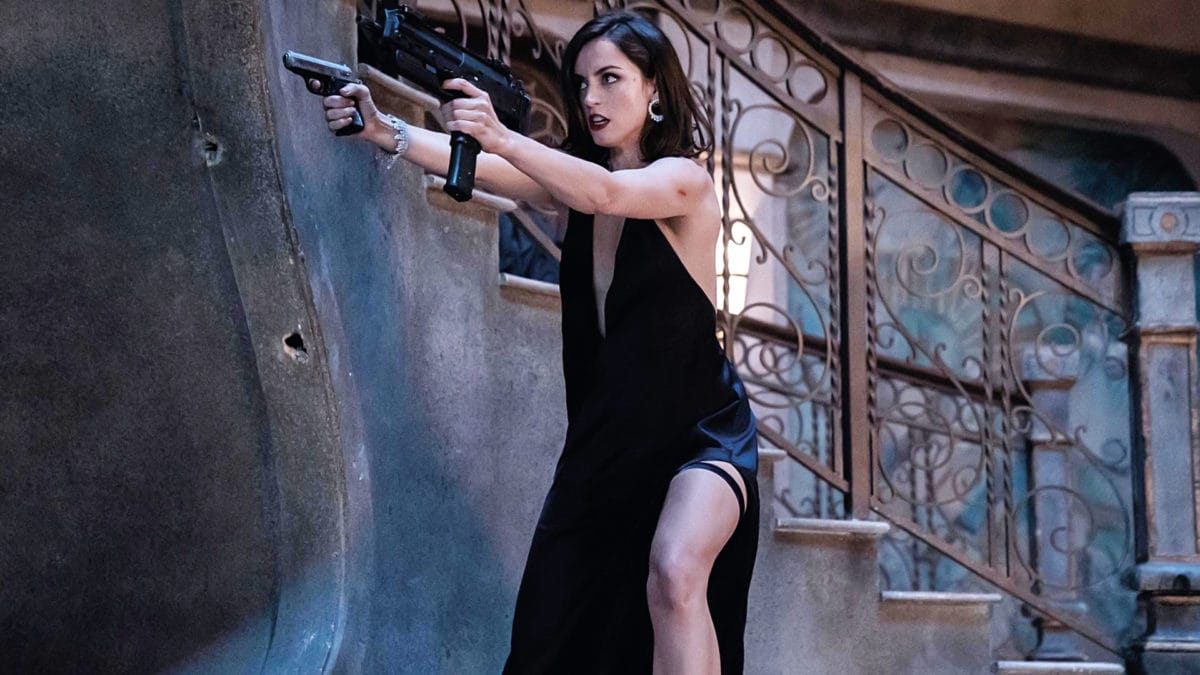
Ana de Armas has never lacked screen allure, but Ballerina gives that allure a more dangerous architecture. In earlier star text, her beauty could be read as luminous, classic, even delicately old-Hollywood. In this franchise setting, that same face gets repurposed into something more electric. Reviews and coverage around the film consistently describe Eve as an assassin driven by revenge, trained in the traditions of the Ruska Roma, moving through a world defined by ritualized violence and immaculate style. That premise matters because it turns physical beauty into tactical surface. The glamour is no longer ornamental. It is part of the threat.
That is the real secret of the assassin archetype at its best: it makes beauty feel functional. Hair is sleek because distraction is dangerous. Dresses cling or slice because motion matters. Bodices, boots, straps, and silhouettes read less like decoration and more like chosen armor. Even when the styling is overtly feminine, it carries an undercurrent of intent. De Armas’s Ballerina imagery leans hard into that duality, especially in the promotional posters and trailers that pair her with saturated red, violet, and black palettes while keeping her body language taut and unsmiling.
The John Wick franchise already understands this visual language better than most action series. Its universe has always treated violence as choreography and wardrobes as myth-building. Ballerina extends that logic through a female lead whose training in ballet gives the action an even more elegant premise. Variety’s review and The Hollywood Reporter’s review both centered the idea of de Armas as an assassin formed by discipline and revenge rather than sheer brute force, which is precisely what makes her image feel so contemporary. She is not “hot” because she is merely beautiful. She is hot because she looks exact.
The New 2026 Fantasy: Precision Over Softness
For years, mainstream “hot” was sold through accessibility. The woman was desirable because she seemed available to the gaze. The assassin fantasy rewrites that. Here, desirability comes from control. She is not there to be consumed. She is there to finish the mission, and the glamour rides shotgun.
That is why the high-octane assassin look feels so current. It answers a broader cultural appetite for female archetypes that are sleek without being submissive, sensual without being passive, and polished without losing brutality. In Ballerina, Eve Macarro is explicitly defined by training and vengeance, which keeps the character from sliding into generic action-babe territory. The body is not just displayed. It is honed.
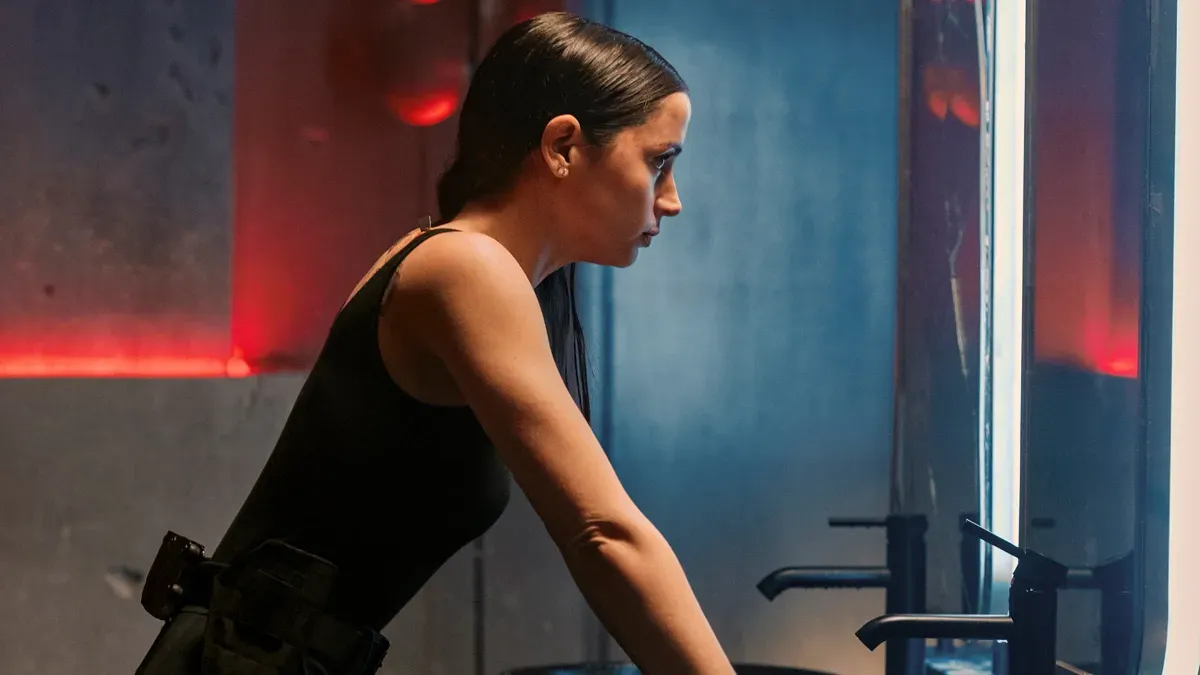
This distinction changes everything visually. A conventional glamour image wants to soften edges. The assassin look sharpens them. Fabrics may shimmer, but silhouettes stay tense. Makeup may glow, but expression stays cool. The camera is invited close, then denied emotional ease. In the trailer footage and promotional stills, de Armas frequently appears with slicked-back hair, fitted silhouettes, clean lines, and the kind of focused stare that makes the image hum with contained aggression.
And that, more than anything, is the 2026 switch. The new hot archetype is not centered on softness alone. It is centered on precision under pressure.
Ballet Discipline Makes the Violence Look More Luxurious
The genius of Ballerina is embedded in the title. “Ballerina” is not just a backstory detail. It is the whole aesthetic engine.
Ballet already carries enormous fashion symbolism: posture, control, pain hidden beneath elegance, repetition turned into beauty, fragility disguising extreme athleticism. When that symbolism gets welded to the John Wick universe, the result is irresistible. Suddenly the assassin is not simply deadly. She is trained to make discipline look exquisite. The body becomes both instrument and image. Variety’s review notes that Eve is shaped by assassin training within the Ruska Roma traditions, while franchise materials and trailers foreground the ballet lineage as part of the character’s identity.
That ballet component matters because it raises the aesthetic temperature. Violence on its own can be blunt. Violence filtered through dance becomes more hypnotic. It suggests line, posture, extension, rhythm. Even when the character is bloodied or cornered, the body still carries the memory of precision. That is why the Ballerina look does not feel merely tactical. It feels composed.
In editorial terms, this is catnip. Think of the image through an f/1.8 lens: background neon dissolving, shoulders squared, collarbones catching light, weapon held like a final punctuation mark, expression flat enough to read dangerous. The tension between grace and force is what turns the look into fantasy.
Ana de Armas Makes Violence Look Cinematic, Not Chaotic
Not every actor can carry an aesthetic like this. It requires physical believability, yes, but also face control. De Armas has that rare ability to look soft in one frame and utterly unapproachable in the next. Ballerina exploits that contrast relentlessly.
The film’s reviews and promos present her as a woman moving through a revenge narrative in a highly stylized underworld, which means every look has to balance vulnerability and competence. Too much vulnerability and the fantasy collapses. Too much hardness and the visual becomes flat. De Armas threads the gap. Her Eve Macarro registers as emotionally charged but never messy, glamorous but never ornamental, wounded but never weak.
This is why she feels like such a strong emblem for 2026. Many stars can deliver polished red-carpet beauty. Fewer can make lethality look this elegant. De Armas’s face carries enough classic movie-star softness to keep the image seductive, but enough steel in the eyes to let the danger read instantly. In franchise terms, that is valuable. In fashion terms, it is gold.
The Assassin Look Is Also a Red-Carpet Story
What pushes this archetype from screen fantasy into 2026 cultural dominance is that de Armas has mirrored the Ballerina energy across the film’s premiere circuit. WWD documented a string of Louis Vuitton looks during the film’s rollout: a shimmering custom dress for the London premiere, a strapless black-and-white floral-skirt look for Paris, a peplum-accented plunging dress in Berlin, and a lilac embroidered custom gown for the Los Angeles premiere. Across all of them, the styling stayed in conversation with the film’s core image—sharp, feminine, controlled, never sugary.
That matters because archetypes become real when they migrate from screen to publicity. De Armas did not promote Ballerina in a completely unrelated style vocabulary. The red carpets extended the myth. In London, WWD described a shimmering custom Louis Vuitton look; in Paris, a strapless gown with a severe black bodice and dramatic white floral skirt; in L.A., a lilac embroidered dress with an ethereal edge. Different silhouettes, same core proposition: softness sharpened into danger.
Even the premiere imagery reinforces the point. Getty images from the premieres show de Armas oscillating between silvered softness and black-and-white sculptural drama, yet always holding herself with the same cool, unsentimental poise. She looks less like a star dressing up and more like a woman carrying her own visual franchise.
Why This Archetype Feels New Again
The female assassin is hardly a brand-new screen type, but the Ballerina version feels refreshed because it is less about generic empowerment slogans and more about aesthetic rigor. The John Wick franchise has always understood that style is part of the action, not an accessory to it. Suits, coats, weapons, hotels, rituals, lighting—everything is curated. By placing de Armas inside that system, Ballerina lets her inherit the franchise’s visual discipline while bringing a different silhouette logic to it.
That is why this assassin feels like a 2026 archetype rather than a recycled one. She is not coded as “cool” only because she can fight. She is coded as hot because every element around her—movement, styling, posture, mood, palette—works together. The modern audience is more visually literate than ever. We do not just respond to plot. We respond to aura. Ballerina is an aura machine.
And aura, in 2026, is increasingly built through contradiction. Innocent name, deadly profession. Ballet body, assassin reflexes. Satin flash, firearm grip. That friction is what makes the image travel.
The Fashion Angle: Weaponized Femininity Is Back
If you zoom out from the film and look at the broader style climate, Ballerina makes even more sense. Fashion right now is fascinated by women who look polished enough for a gala and dangerous enough to survive a collapse. The mood is less ingenue, more operative. Less decorative muse, more woman with a contingency plan.
De Armas fits that shift beautifully. Her Ballerina image offers a form of weaponized femininity that never feels cartoonish. She is not overburdened with gimmickry. The styling stays clean. The body stays mobile. The glamour stays selective. That economy is what makes the whole thing feel expensive.
WWD’s coverage of her press-tour wardrobe supports this reading. Even when the dresses are overtly elegant, they avoid saccharine softness. The silhouettes are controlled, the fabrics luminous but not fluffy, the mood elevated rather than romanticized. The result is a star image that feels perfectly aligned with the assassin fantasy: dangerous, yes, but in a way that still photographs like luxury.
Why the “Hot” Part Is Really About Competence
The easiest mistake in writing about this kind of image is to reduce it to surface heat. But what makes the lethal assassin look so attractive right now is not just visual styling. It is competence.
Competence is having a plan.
Competence is knowing where your body is in space.
Competence is looking composed inside threat.
Competence is glamour without helplessness.
That is the fantasy Ballerina sells, and it is why Eve Macarro feels culturally resonant. Review coverage describes her as a revenge-driven assassin formed by intense traditions and high-risk combat, not as a woman simply thrown into action for spectacle. The appeal comes from the sense that she has earned the silhouette she inhabits.
In 2026, that reads hotter than passivity ever could.
The John Wick Universe Gives the Archetype Prestige
Another reason the Ballerina look has such traction is that it arrives with franchise legitimacy. This is not a random streaming thriller trying to invent cool from scratch. It is an extension of one of the most visually codified action worlds in contemporary cinema. Lionsgate’s John Wick franchise materials explicitly place Ballerina within that larger universe, and trade coverage treated the film as a significant spinoff event rather than disposable genre filler.
That prestige matters aesthetically. Audiences already expect John Wick-adjacent worlds to deliver immaculate suits, ceremonial violence, neon-lit interiors, and an almost fetishistic respect for surface. Ballerina inherits all that visual discipline, then adds a female lead whose dance-trained body changes the geometry of the action. So the assassin look does not feel pasted on. It feels canonized.
That is how an archetype becomes dominant: when it is stylish enough for fashion pages and credible enough for action audiences.
Why Ana de Armas Owns This Specific Fantasy
Plenty of actresses could have played an assassin. Fewer could have made the part feel this glossy without draining it of menace.
Ana de Armas can. That is the difference.
She carries old-school beauty without becoming retrograde. She can wear Louis Vuitton at a premiere and still plausibly inhabit a revenge machine on screen. Her face holds softness and severity at once. And because Ballerina wrapped those qualities in the visual codes of the John Wick universe, the final result feels larger than one role. It feels like a template.
The assassin archetype of 2026 is not about looking unreachable in an icy way. It is about looking hyper-capable, physically exact, and stylish enough to make danger look like a design choice. De Armas nails that.
Final Verdict
Ana de Armas in Ballerina helps explain why the lethal, high-octane assassin look has become the new “hot” archetype for 2026. The film positions her as Eve Macarro, a revenge-driven ballerina-assassin formed by Ruska Roma traditions inside the John Wick universe, and that setup generates the perfect modern glamour fantasy: discipline, danger, elegance, and motion fused into one image.
What makes the archetype feel fresh is not just the violence. It is the precision. The slick hair, the held posture, the clean silhouettes, the refusal of softness without purpose. And because de Armas echoed that same mood throughout the film’s Louis Vuitton-heavy premiere tour, the image spilled beyond the screen and into celebrity fashion itself.
In other words, Ballerina did not just give Ana de Armas a hit action persona. It gave 2026 one of its defining beauty and fashion archetypes: the woman who looks like a dream at a distance and a fatal decision up close.


