Nature-Filled Horror Films: When Wilderness Becomes Supernatural Terror
Nature is often sold to us as healing.
A forest is peaceful. A mountain is majestic. A lake is calming. A cabin is an escape. A trail is freedom. A cave is adventure. The wilderness promises silence, fresh air, beauty, and distance from the noise of modern life. It offers a return to something older and purer than traffic, screens, deadlines, and crowded cities.
But horror has always known the other side of nature.
The forest can hide something. The mountain can trap you. The lake can keep secrets. The cave can swallow sound. The river can carry the dead. The field can feel too open. The snow can erase your footprints. The trees can make every direction look the same. The deeper you walk into nature, the less human the world becomes.
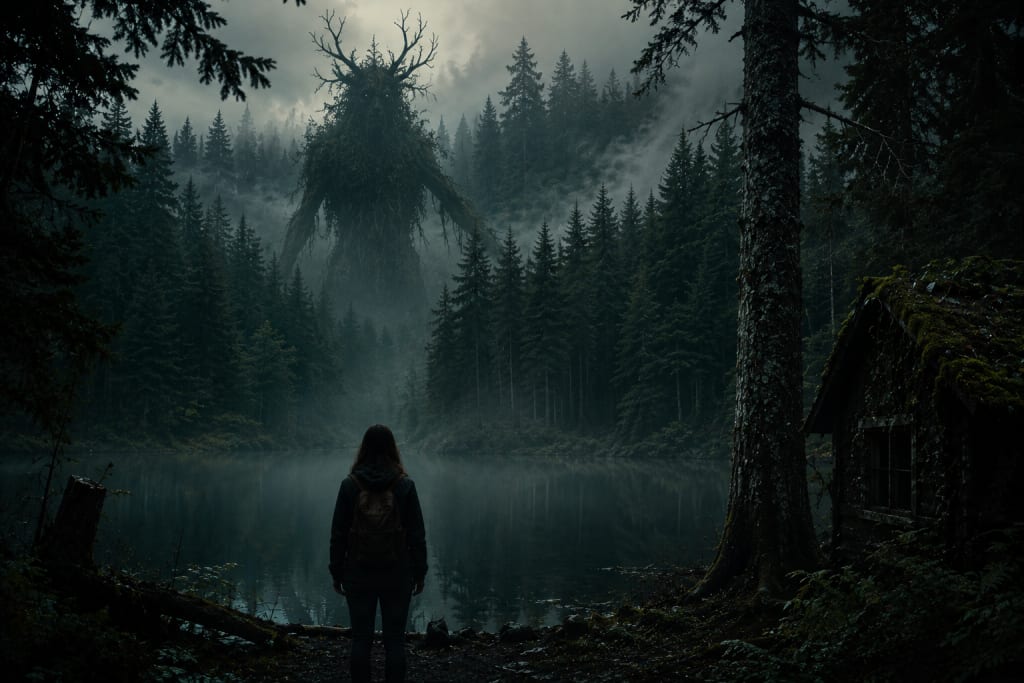
That is why nature-filled horror films are so powerful. They turn beautiful landscapes into places of dread. They use wilderness not merely as a background, but as an active force. In these films, nature is not a postcard. It is a presence. Sometimes it is haunted. Sometimes it is cursed. Sometimes it is ancient. Sometimes it is hungry. Sometimes the monster is hiding in the wild, and sometimes the wild itself is the monster.
From folk horror classics to modern survival nightmares, supernatural wilderness films have created some of the most unsettling images in cinema: a group of hikers lost in a forest where something is watching them, a cabin surrounded by forces older than Christianity, a cave system filled with things that evolved in darkness, an isolated village ruled by seasonal ritual, a mountain landscape where grief becomes a ghost, or a swamp where reality itself seems to rot.
The genre works because it touches a primal fear. Human beings may build cities, roads, machines, and digital worlds, but nature remains older, larger, and less interested in us than we like to admit. The wilderness does not have to hate us to terrify us. It only has to be indifferent.
And when horror adds the supernatural to that indifference, nature becomes a nightmare with roots.
Why Wilderness Horror Feels So Primal
Wilderness horror works because nature strips people down.
In a city, fear is surrounded by systems. There are lights, police, hospitals, neighbors, cameras, transport, and noise. In the wild, those systems disappear. A phone has no signal. A broken ankle becomes a crisis. A wrong turn can become a death sentence. Night arrives without streetlights. The weather cannot be negotiated with. Help is far away.
This isolation makes supernatural horror stronger. A ghost in an apartment may be terrifying, but there are doors, neighbors, and roads. A ghost in a forest has the advantage of endless space. If something whispers your name from the trees, where do you run? If a path changes behind you, how do you prove it? If the mountain refuses to let you leave, who will believe you?
Nature also removes human authority. A police officer cannot arrest a storm. A priest may not understand an old forest spirit. A scientist may not have the instruments to explain a cursed valley. A map may fail. A compass may spin. A trail may vanish.
That is what makes wilderness horror feel ancient. It returns people to a time before modern control. It asks what happens when civilization becomes thin and the old powers of land, weather, animal, spirit, and darkness return.
The best nature-filled horror films do not simply place characters outdoors. They make the environment shape the fear. The forest limits vision. The cave limits movement. The desert removes water. The snow removes direction. The ocean removes escape. The mountain reduces people to tiny figures against something vast.
In these films, nature is not empty.
It is waiting.
The Forest: Horror’s Oldest Living Maze
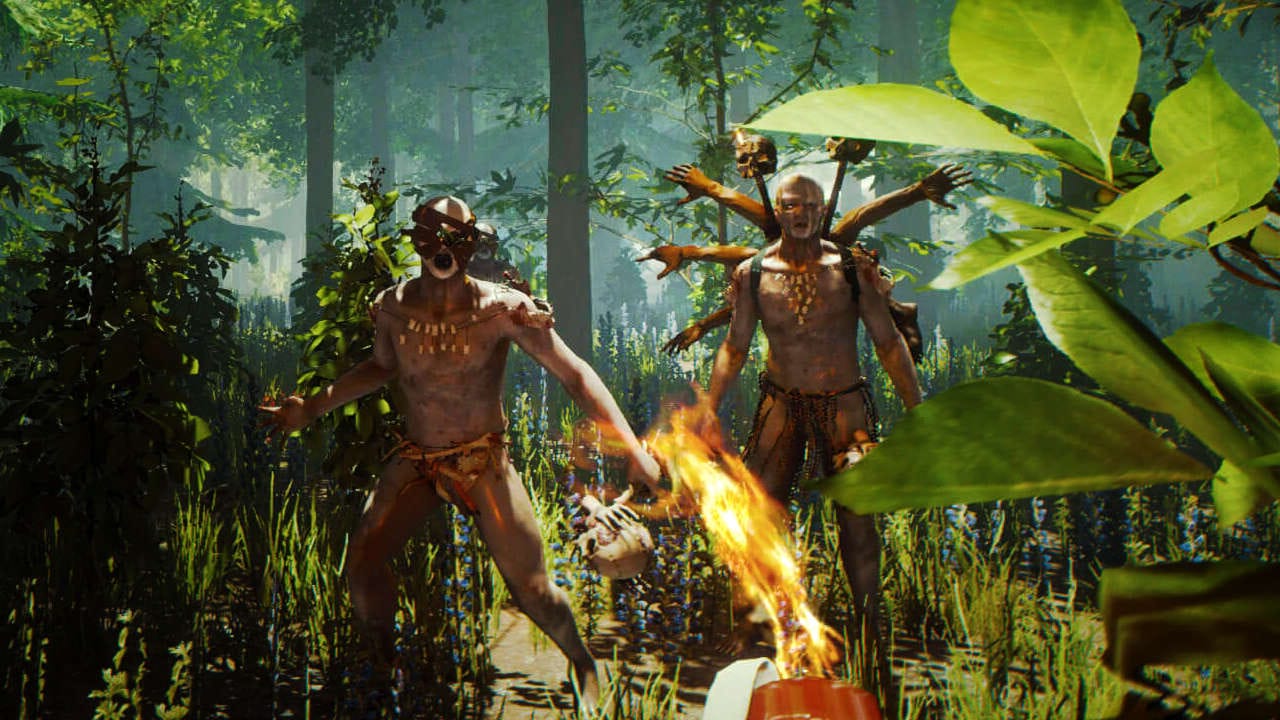
The forest is the most iconic setting in nature horror. It is beautiful by daylight and terrifying after dark. It is full of life, but also full of concealment. Trees block sight. Leaves swallow sound. Paths split and loop. Shadows move. Animals call from unseen places. A person can be only a few meters from safety and still feel completely lost.
This is why forest horror appears across cultures. Fairy tales warned children about the woods long before cinema existed. The forest was where wolves lived, witches hid, children disappeared, and the rules of the village no longer applied. Modern horror inherited that fear.
Films like The Blair Witch Project, The Ritual, The Witch, and Evil Dead all use the forest differently, but they share the same basic terror: once you enter the trees, human logic weakens.
In The Blair Witch Project, the forest becomes a psychological trap. The horror is not only the witch. It is the repeated failure to escape. The characters walk all day and return to the same place. The map becomes useless. The woods become an impossible loop. The unseen presence is frightening, but the real nightmare is that the environment itself seems to be participating.
In The Ritual, the Scandinavian forest is vast, wet, ancient, and full of grief. The characters are already emotionally wounded before they enter, and the forest exposes those wounds. The supernatural creature in the film is terrifying because it belongs to the landscape. It does not feel randomly inserted. It feels like something the forest has been hiding for centuries.
In The Witch, the forest is spiritual exile. The Puritan family lives at the edge of the woods, and the trees represent everything outside their fragile religious order: temptation, paganism, wilderness, sexuality, hunger, and the unknown. The forest is not merely a place where the witch lives. It is the border between controlled belief and terrifying freedom.
The forest is effective because it confuses the senses. You hear something but cannot see it. You see movement but cannot identify it. You feel watched, but the watcher may be animal, human, spirit, or imagination.
A forest horror film does not need constant jump scares. A single shot of trees in silence can be enough.
Folk Horror: When the Land Remembers Old Rituals
Nature-filled horror often overlaps with folk horror, one of the richest branches of the genre. Folk horror is built around rural isolation, ancient customs, pagan survivals, local religion, sacrifice, seasonal rituals, and communities whose relationship with the land is darker than outsiders understand.
In folk horror, nature is not neutral. It is sacred, hungry, and bound to tradition.
Films like The Wicker Man, Midsommar, A Field in England, Hagazussa, The Blood on Satan’s Claw, and Men show how rural landscapes can become ritual spaces. The horror does not come only from monsters. It comes from belief systems rooted in land, harvest, fertility, death, and renewal.
The key idea is that the countryside is not innocent. Outsiders often arrive thinking the village, island, field, or rural commune is quaint and backward. Then they discover that the local customs are not decorative. They are functional. The rituals are real. The songs, dances, masks, fires, and sacrifices have purpose.
This is what makes folk horror so chilling. It suggests that beneath modern civilization, older agreements remain in force. The land gives crops, but demands payment. The sun returns, but only through blood. The village survives because someone is chosen to suffer. The old gods did not vanish; they simply waited for people to need them again.
Nature in folk horror is often beautiful. Flowers bloom. Fields glow. Maypoles rise. Sunlight floods the frame. But beauty becomes part of the trap. In Midsommar, the terror happens mostly in daylight. The landscape is bright, floral, and open, yet deeply oppressive. The horror is not hidden in darkness. It is woven into ceremony, community, and seasonal rhythm.
This is one of folk horror’s greatest strengths: it makes nature feel organized by forces older than morality.
Cabins: The False Safety of Shelter
The cabin is one of horror cinema’s most familiar wilderness images. It promises safety but usually delivers the opposite.
A cabin in the woods looks like shelter from nature. It has walls, a roof, beds, a fireplace, maybe food, maybe an old radio. But in horror, the cabin is rarely secure. It is isolated, vulnerable, surrounded, and often already contaminated by the land around it.
In The Evil Dead, the cabin becomes a doorway to demonic forces awakened by forbidden words. The woods outside are hostile, but the cabin itself is not safe either. The horror crosses the threshold. Doors slam, floors open, bodies change, and the shelter becomes a prison.
In Cabin in the Woods, the familiar setup is turned into meta-horror, exposing how wilderness horror functions as ritual sacrifice. The cabin is not simply remote; it is staged. The forest, the basement, the monsters, and the choices are part of a system.
In more serious survival-supernatural films, the cabin often represents human arrogance. The characters believe they can bring comfort into the wild. They bring alcohol, technology, cameras, relationships, and urban assumptions. The cabin gives them the illusion that they are still in control. Then the forest proves otherwise.
Cabins are scary because they are liminal. They are human spaces inside nonhuman territory. They do not truly belong to either world. They are a temporary agreement between people and wilderness.
In horror, that agreement usually breaks.
Caves: The Terror Below Nature
If forests are horror’s living maze, caves are horror’s underworld.
Cave horror is uniquely claustrophobic. The sky disappears. Direction becomes confusing. The air feels limited. Light becomes precious. Sound echoes strangely. Rock presses from every side. A cave removes not only civilization but the surface world itself.
Films like The Descent, As Above, So Below, The Cave, and The Empty Man use underground space to create both physical and supernatural terror. The deeper the characters go, the less certain reality becomes.
In The Descent, the cave is terrifying even before the creatures appear. Tight passages, darkness, injury, panic, and disorientation create enough horror on their own. The monsters intensify the fear, but the cave is already a predator. It traps, wounds, and isolates.
Caves also carry mythic meaning. Across cultures, caves are linked to birth, death, initiation, hidden knowledge, underworld journeys, and contact with spirits. To enter a cave is to enter the body of the earth. It can be sacred or deadly.
That makes cave horror especially powerful when supernatural elements appear. A monster in a cave may feel ancient, hidden from evolution or civilization. A ritual chamber underground may suggest cults, sacrifices, or forgotten gods. A cave painting may become a warning left by people who understood the darkness better than we do.
The fear of caves is not only fear of being trapped. It is fear of discovering that something has always lived beneath us.
Mountains: Beauty, Madness, and the Thin Air of Terror
Mountains inspire awe, and awe is close to fear.
A mountain landscape is beautiful because it is vast, difficult, and indifferent. Snowfields, cliffs, glaciers, high passes, and thin air remind people how small they are. In horror, mountains become places where survival is already hard before anything supernatural happens.
Mountain horror often blends isolation, weather, altitude, and psychological breakdown. The supernatural may appear as ghosts, ancient presences, cursed peaks, strange lights, or unseen forces that prey on exhausted climbers.
Films and stories set in snowy or mountainous wilderness often use whiteness as a horror tool. Snow hides tracks, bodies, blood, and direction. Fog erases distance. Wind destroys communication. Cold makes everything slower and more desperate.
The mountain also has spiritual weight. Many cultures see mountains as homes of gods, spirits, ancestors, or forbidden powers. A haunted mountain is frightening because it suggests vertical trespass. Humans climb upward into territory not meant for them.
In nature-filled horror, the mountain often punishes arrogance. Characters believe they can conquer the peak, map the route, survive the storm, or ignore local warnings. Then the mountain proves that it cannot be conquered. At best, it allows passage.
This kind of horror works because it does not need a villain in the usual sense. The mountain is not evil. It is simply beyond human scale. Add a supernatural presence, and the landscape becomes almost divine in its cruelty.
Rivers, Lakes, and Swamps: Water That Keeps Secrets
Water is one of horror’s most flexible natural elements. It can cleanse, reflect, drown, hide, preserve, and corrupt. It can be still or violent, beautiful or rotten, sacred or cursed.
Nature-filled horror films often use rivers, lakes, and swamps as places where the past refuses to stay buried.
A lake can hide a body for years. A river can carry a curse downstream. A swamp can swallow evidence. A pond can reflect someone who is not standing there. Water distorts vision, sound, and memory. Something beneath the surface can be inches away and still invisible.
Films like Lake Mungo, The Night House, The Bayou, A Dark Song, The Marshes, and swamp-centered Southern Gothic horror use water as emotional and supernatural terrain. Water often becomes linked with grief, guilt, disappearance, and return.
Swamps are especially strong horror settings because they feel like unstable land. They are neither solid nor open water. They rot, breathe, bubble, and hide. Trees grow out of water. Fog lingers. Insects swarm. Footsteps sink. The landscape itself feels half-alive.
In folklore, water is often a boundary between worlds. Spirits live in wells, lakes, rivers, and marshes. Drowned people return as ghosts. Offerings are thrown into water. Curses travel through water. Monsters wait below.
In horror cinema, water’s greatest power is concealment. The viewer knows something may be there but cannot see clearly. That uncertainty creates dread.
The lake is calm.
That is the problem.
Desert Horror: Empty Space as Supernatural Threat
Forests hide too much. Deserts hide too little.
In desert horror, exposure becomes terrifying. There are no trees, no shelter, no easy water, and no softness. The sun becomes an enemy. Distance becomes deceptive. The horizon offers no comfort. A person can see for miles and still be lost.
Desert horror often uses heat, thirst, mirage, isolation, ancient ruins, cults, cursed land, and cosmic dread. The supernatural feels different in the desert. It is not whispering from behind trees. It is radiating from the emptiness.
Films like The Hills Have Eyes, It Stains the Sands Red, The Objective, Southbound, and various desert-set occult horrors use barren landscapes to create a sense that civilization has been stripped away. Even roads become suspicious because they seem to lead nowhere.
The desert is also a place where time feels exposed. Bones remain. Ruins stand. Sun-bleached objects look like relics. A supernatural force in the desert often feels ancient, patient, and pitiless.
Unlike forest horror, where the threat may stalk, desert horror often makes characters confront themselves. There is nowhere to hide from the landscape, and often nowhere to hide from guilt, madness, or memory.
The wilderness is not always lush and green. Sometimes it is empty, bright, and merciless.
Animal Horror and the Supernatural Wild
Nature horror often includes animals, but supernatural wilderness films use animals in symbolic ways. A deer appears where it should not. A fox watches too intelligently. Birds gather before disaster. Wolves howl in impossible patterns. Insects move like one mind. A bear is not only a bear.
Animals in supernatural horror often become messengers. They signal that the natural order has shifted. In folk horror, animals may be linked to gods, witches, curses, or transformations. In ecological horror, they may represent nature fighting back. In demonic horror, they may become vessels or omens.
The power of animal imagery comes from the fact that animals already live outside human language. They know the land differently. When animals behave strangely in horror, it feels like the wilderness has noticed something before humans have.
A silent deer staring from the tree line can be more unsettling than a monster reveal. Why is it there? Why is it not afraid? What does it know?
Supernatural wilderness horror often uses this unease beautifully. The animal is not necessarily evil. It may be warning, watching, guiding, or marking the boundary of forbidden ground.
Nature speaks first through animals.
Humans usually listen too late.
Eco-Horror: When Nature Fights Back
Nature-filled horror also connects to eco-horror, a subgenre where the environment itself becomes threatening, often because of human abuse, pollution, scientific arrogance, climate anxiety, or ecological imbalance.
Eco-horror may involve mutated animals, toxic landscapes, invasive plants, contaminated water, fungal infection, climate disaster, or nature taking revenge. But when blended with the supernatural, eco-horror becomes even more haunting. The land does not merely react biologically. It remembers spiritually.
Films like Annihilation, In the Earth, Gaia, The Ruins, and The Happening explore versions of this fear. Some are more scientific, some more mystical, but all treat nature as something capable of transforming or punishing human bodies.
In Annihilation, the wilderness is beautiful and monstrous at once. Flowers grow in strange patterns. Animals mutate. Human identity dissolves. The landscape does not simply kill; it refracts. It changes everything inside it.
In Gaia, the forest becomes fungal, sacred, and terrifying. Human survival is measured against a vast ecological intelligence. The horror is not that nature is evil, but that it may have a logic beyond human survival.
Eco-horror feels especially relevant now because modern audiences live with climate fear, habitat loss, pollution, pandemics, and environmental collapse. Nature-filled supernatural horror gives those anxieties mythic shape. It imagines the planet not as passive victim but as force.
The scariest question is no longer “What if nature attacks us?”
It is “What if nature finally recognizes us as the infection?”
Cosmic Nature: When the Wild Becomes Unknowable
Some nature-filled horror films go beyond ghosts, witches, or monsters and enter cosmic territory. In these stories, the wilderness is not merely haunted. It is connected to something incomprehensible.
A meteor lands in a forest. A valley changes people. A lighthouse bends reality. A fungus communicates with something beyond human understanding. A lake reflects another world. A cave leads not to monsters but to a truth the mind cannot survive.
This type of horror often treats nature as a gateway to the unknowable. The wild is frightening because it is not fully separate from the universe. It may contain forces older than humanity, older than Earth, older than meaning.
Films like Annihilation, The Endless, Color Out of Space, and The Empty Man use natural landscapes as contact zones between human perception and cosmic forces. The terror comes from transformation, contamination, and the failure of language.
Cosmic nature horror is powerful because it removes moral comfort. A ghost may want justice. A demon may want corruption. A witch may want power. But a cosmic force may want nothing humans can understand. It may change us simply because we are there.
Nature already makes humans feel small. Cosmic horror makes that smallness infinite.
Why Supernatural Wilderness Horror Often Begins With Grief
Many nature-filled horror films begin with grief, trauma, or emotional rupture. A character goes into the wilderness after a death, breakup, failure, guilt, or family tragedy. The landscape then externalizes their inner state.
This works because wilderness is often marketed as escape. People go to cabins, retreats, hikes, forests, lakes, and mountains to heal. Horror twists that promise. Instead of healing, nature reveals what the character tried to avoid.
In The Ritual, grief and guilt follow the characters into the forest. In The Night House, a lakeside home becomes a landscape of mourning and supernatural architecture. In Midsommar, emotional devastation makes the protagonist vulnerable to a beautiful but terrifying rural community. In Antichrist, the forest becomes a brutal mirror of grief, guilt, and bodily horror.
The wilderness is not always the cause of horror. Sometimes it is the place where horror already inside the characters becomes visible.
This emotional structure gives nature horror depth. The forest is scary, but so is memory. The mountain is dangerous, but so is guilt. The lake is haunted, but so is loss.
The wild removes distraction. Whatever a person carries into it becomes louder.
Isolation: The Real Monster Beneath the Supernatural
Even when supernatural elements are present, isolation is often the true engine of wilderness horror.
Isolation changes decision-making. People become suspicious. Small conflicts grow. Fear spreads. Sleep becomes difficult. The group fractures. One person sees something others do not. Another hides an injury. Someone wants to leave. Someone refuses. The environment presses on everyone until civilization collapses within the group.
This is why wilderness horror often uses small ensembles: friends on a hike, a couple at a cabin, researchers in a remote station, campers, cult survivors, climbers, or families trying to reconnect. The group begins with social rules, but nature strips those rules away.
The supernatural presence then exploits isolation. It separates people, mimics voices, creates visions, controls paths, or turns the group against itself.
In city horror, characters can seek outside validation. In wilderness horror, there is no outside. The group becomes its own society, and that society often fails.
The monster in the woods is terrifying.
But the moment when humans stop trusting each other may be worse.
Sound Design: The Voice of the Wilderness
Nature-filled horror depends heavily on sound.
Wind through trees. Branches cracking. Distant animal calls. Water dripping in a cave. Snow crunching underfoot. Insects buzzing. A lake lapping against a dock. Thunder rolling over hills. Leaves moving when no one is there. A voice carried by wind. Silence that arrives too suddenly.
Sound turns nature into a character. In many supernatural wilderness films, the environment seems to speak before the monster appears. The audience hears something wrong before seeing it.
Silence is equally important. A forest with no birdsong feels immediately unnatural. A swamp with no insects feels dead. A cave where echoes stop too quickly feels impossible. Horror directors use these sound absences to suggest that nature has noticed the intruders.
The best wilderness horror does not rely only on music. It lets the landscape create its own score.
Sometimes the scariest sound in nature is not a scream.
It is the moment everything stops.
Daylight Horror in Natural Settings
Nature horror does not always need darkness. Some of the most unsettling wilderness horror happens in broad daylight.
Daylight horror works especially well in fields, mountains, deserts, snowy landscapes, and open forests. It removes the comfort that fear belongs only to night. If something terrible can happen under blue sky, then nowhere is safe.
Midsommar is the obvious modern example. The film’s bright rural setting makes the violence more disturbing. There are flowers, sunlight, white clothing, singing, communal meals, and open fields. The horror is not hidden. It is normalized.
Daylight nature horror is powerful because it denies the usual visual language of fear. The viewer cannot blame shadows. The characters cannot say they imagined something in the dark. The landscape is visible, but still wrong.
This approach often works best in folk horror because rituals do not need darkness. A sacrifice at noon can be more frightening than one at midnight. It suggests a community so confident in its violence that it does not hide.
The sun can reveal.
It can also burn.
Wilderness as a Moral Test
Many supernatural nature horror films use the wilderness as a moral test.
Characters enter the wild with secrets, guilt, arrogance, disrespect, or emotional weakness. The land exposes them. The person who mocks local warnings dies first. The one who lies becomes isolated. The one carrying guilt is forced to confront it. The one who thinks nature is a playground learns otherwise.
This is especially common in folk horror and survival horror. The wilderness has rules, and the characters break them. They trespass. They disturb a burial site. They take an artifact. They ignore a boundary. They kill an animal. They disrespect a ritual. They enter sacred land as tourists, researchers, or thrill-seekers.
The supernatural punishment may feel harsh, but within the film’s logic, it often has moral structure. The land responds to violation.
This is why nature horror can feel almost mythological. It is not simply “bad things happen in the woods.” It is “the woods punish those who forget they are guests.”
Modern audiences may not literally believe in forest gods, river spirits, or mountain curses, but the emotional truth remains clear. Nature deserves respect. Horror makes that lesson bloody.
The Best Nature-Filled Horror Films Understand Place
Not every horror film set outdoors is good wilderness horror. The strongest examples understand place.
A forest in Sweden should not feel the same as a forest in New England. A Welsh valley should not feel the same as an Appalachian hollow. A Japanese mountain village should not feel the same as a Scandinavian commune. A desert in the American Southwest should not feel like a generic wasteland.
Place carries culture, climate, folklore, history, and mood. Good nature horror studies those details. It uses local myths, weather, plants, architecture, language, rituals, and geography to make the fear specific.
Bad nature horror treats wilderness as a blank scary backdrop. Good nature horror makes the viewer feel that this particular place has its own memory.
That is why films like The Witch, The Ritual, Midsommar, The Wailing, A Field in England, Hagazussa, Annihilation, and The Descent are memorable. Their landscapes are not interchangeable. They have texture.
The land matters.
When the land matters, the horror matters more.
Why We Keep Returning to Wilderness Horror
Nature-filled horror endures because it speaks to a contradiction inside modern life. People long for nature, but they also fear it. We want escape from civilization, but we do not want to lose civilization’s protection. We romanticize the wild while forgetting that the wild does not exist for us.
This genre restores the danger to beauty. It reminds viewers that forests are not only peaceful, mountains are not only scenic, lakes are not only reflective, and cabins are not automatically cozy. Nature can heal, but it can also erase.
Supernatural wilderness horror adds one more layer: what if the old stories about the land were true? What if the warnings existed for a reason? What if the forest was not empty? What if the mountain had a guardian? What if the cave was sealed to keep something in? What if the lake wanted something back?
These questions feel ancient because they come from the same place as myth. Long before cinema, people told stories to explain why certain places felt dangerous. Horror films continue that tradition with cameras, sound design, and modern psychology.
The wilderness remains one of horror’s greatest stages because it is both real and symbolic.
You can walk into the woods.
You may not come out the same.
Final Verdict
Nature-filled horror films are powerful because they transform the world’s most beautiful places into sites of supernatural terror. Forests become living mazes. Mountains become ancient judges. Caves become underworlds. Lakes become mirrors for grief. Swamps become rotting memory. Deserts become cosmic emptiness. Cabins become false shelters. Fields become ritual grounds.
The best films in this genre understand that nature is not just scenery. It is pressure, presence, history, and force. Whether through folk rituals, cursed landscapes, ancient spirits, ecological revenge, cosmic contamination, or unseen watchers in the trees, wilderness horror reminds us that the natural world is far older than human comfort.
This is why the genre continues to grow. In an age of climate anxiety, digital exhaustion, urban isolation, and spiritual uncertainty, nature horror offers something both frightening and necessary. It strips away technology and asks what remains when people face land, darkness, weather, hunger, fear, and forces they cannot control.
The answer is rarely comforting.
A city can be haunted by memory. A house can be haunted by family. But the wilderness is haunted by something deeper: the possibility that the world was never truly ours.
And when the trees go silent, the path disappears, and something unseen begins moving just beyond the firelight, nature stops being an escape.
It becomes the oldest nightmare we have.